

What exactly does hardware refer to?
In the hardware industry, some people can make a net profit of almost one million yuan in that year, while there are also people who have been working for ten years and still lose money there. What exactly is the difference between these?
Today I am going to explain all the ways to make profits from the five categories of products clearly and thoroughly at once. For everyone who has worked in this industry, they will naturally understand it after reading it.
Traditional hardware five metal base
Gold element, silver element, copper element, iron element and tin element, these five metal substances are included in "Cihai" and "Modern Chinese Dictionary" at the same time. They are together called "hardware".
In ancient times, they were mainly used to make ornaments, agricultural tools and weapons. They were the most basic metal resources in various historical dynasties. Their smelting costs directly determined the upper limit of the maximum profit.
Until now, that old-fashioned definition has been there and has not been thrown away at all. However, its scope of use in practice has been greatly expanded. From your door handle to the faucet, to the screws for fixing on the wall, and even a thin wire, all these items have been included in the big basket of so-called "hardware". Even the notes given in reference books use this term.
Hardware tools profits are the most transparent

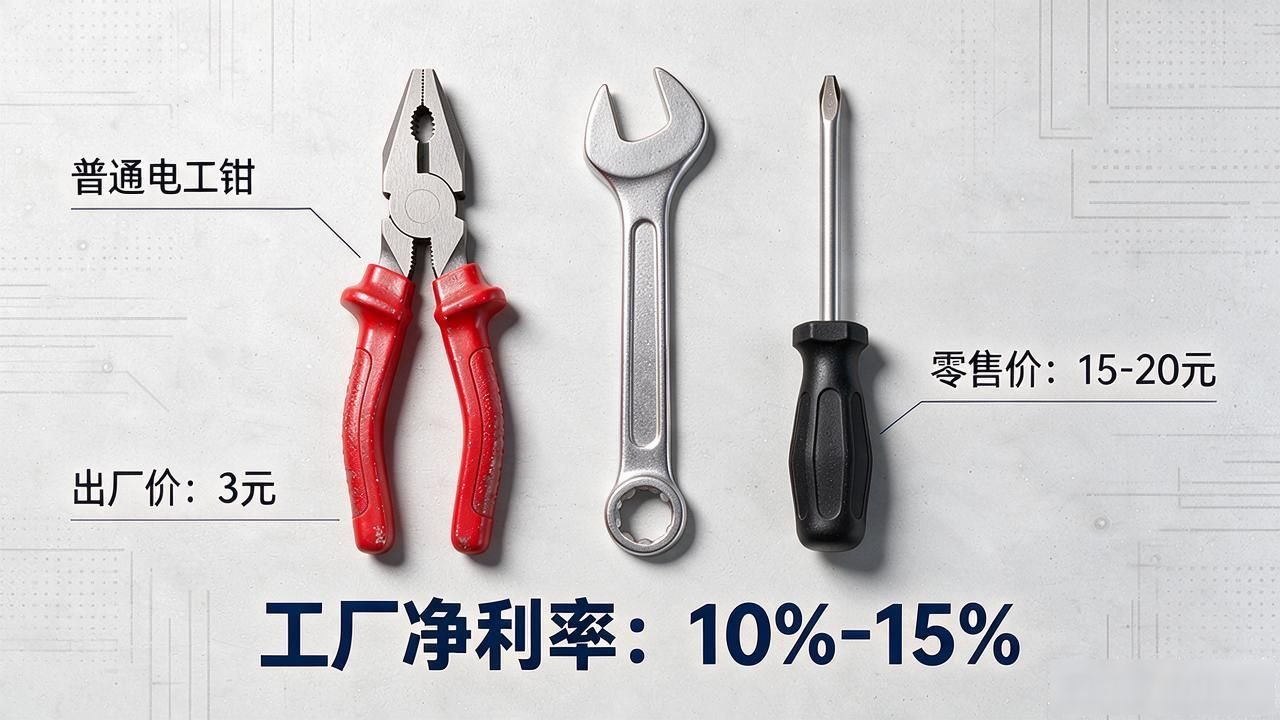
The cost structure of hand tools like pliers, wrenches, and screwdrivers is almost always transparent. The ex-factory price of an ordinary pair of electrician's pliers is only three yuan, and in the retail sector, the price usually reaches the range of fifteen to twenty yuan. The price difference in the middle is basically consumed by the channel and stores, so the net profit rate obtained by the factory is maintained at about ten to fifteen percent.
Nowadays, people's written language looks like this, and the profit of power tools seems a little higher. The material cost of a domestic hand drill is between 60 and 80 yuan. The selling price of the terminal is two to three hundred yuan, and the space looks large. But the investment in molds and R&D is spread out. The actual gross profit margin is only 20%. The after-sale and return fees will also be deducted.
Hardware parts rely on volume to make a living
Screws, nuts, washers, bearings, the individual prices of these parts are incredibly low. A standard part costs anywhere from a few cents to a few cents. However, a piece of equipment uses hundreds or even thousands of such parts. What do customers really care about? It’s the consistency between product batches and the stability of supply. Whoever can keep costs down will be able to make profits.
The core elements are molds and production lines. The investment amount for an automated screw production line reaches two to three million yuan, but after it is put into operation, the daily output can reach millions, and the cost of a single piece can be reduced to two or three cents. The advantage of scale forms a deep moat, and small-scale factories simply cannot enter this threshold.
Daily hardware attached to the home scene
Items that are just needed during the decoration and after-sales processes include locks, hinges, door catches, showerheads and sinks. For a brand of home door lock, its ex-factory price is about 80 yuan, and the sales price in the terminal retail market can reach two to three hundred yuan. In this chain, dealers will share part of the profits, and stores will also share part of the profits. In the end, the profit margin that the factory can get is only about 30%.
In the past two years, the two categories of sinks and showerheads have been greatly impacted by e-commerce and live broadcasting. The factories in Foshan and Taizhou that produce these products directly put up relevant links for sale.
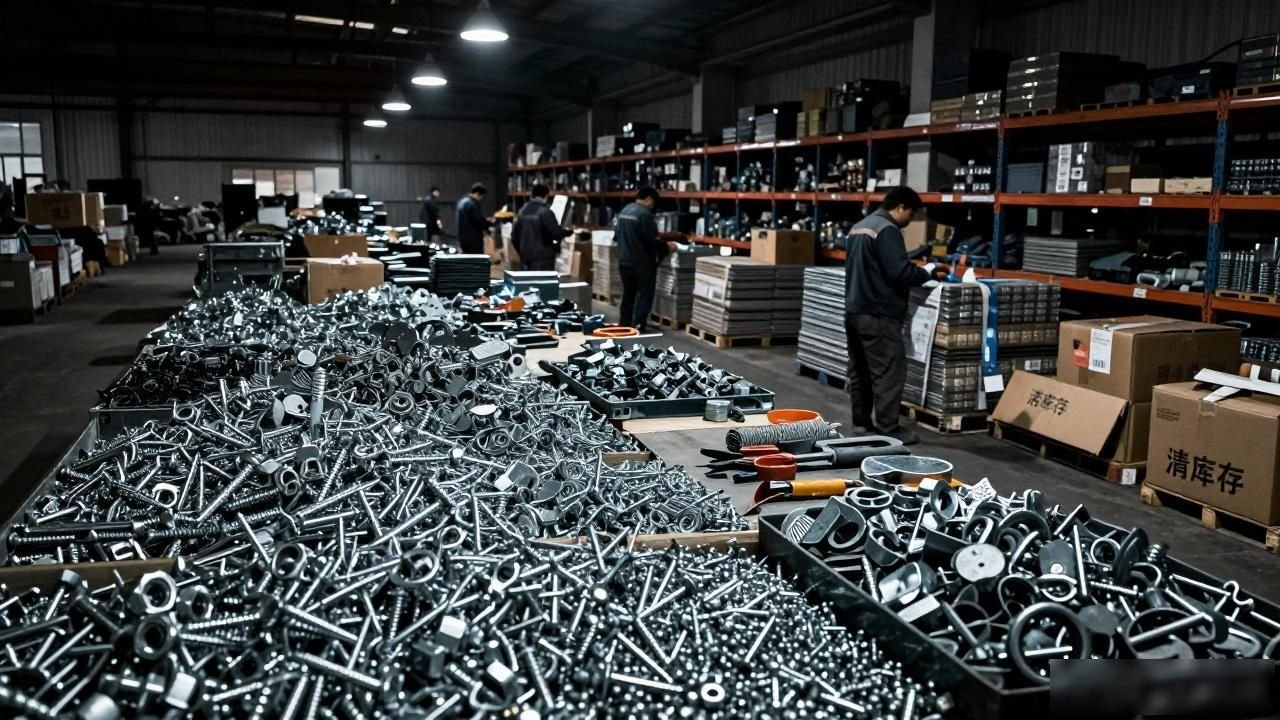
The original intermediate link was cut off. This forced the factory's profit to drop from about 30% to just over 10%. Under such circumstances, many factories have begun to clear inventory to recover funds.
Architectural hardware follows the project
Steel bars, steel plates, scaffolding fasteners and expansion bolts are all consumables on construction sites. In a residential project, the amount of scaffolding fasteners alone will reach hundreds of thousands. The unit price of each piece is only more than one yuan, but the total amount is very astonishing. However, the actual situation is that it is a normal phenomenon for Party A and the general contractor to press payment. As a result, the entire payment cycle can easily become as long as half a year.
From a book perspective, profits seem to exist, but cash flow is often negative in many cases. It’s not that many small factories are unprofitable, but that they are overwhelmed by the billing period. A strong ability to advance capital is the real threshold for this industry. In this case, profits need to be calculated at a 30% discount.
Security hardware has the fastest growth rate
In the past two years, there has been an obvious demand for products such as anti-theft doors, safes, and monitoring brackets, as well as smart home and security upgrade services. The ex-factory price of a set of home security doors is between RMB 400 and RMB 800, and the retail price is upwards of RMB 1,500. The brand premium space is the largest among these five categories.
Safes and related monitoring accessories are sold through engineering channels. Under this business model, the gross profit margin can be maintained at a level of more than 30%. However, this industry has high entry barriers. Not only must it obtain 3C certification, but it must also undergo explosion-proof testing. These two links are indispensable. Therefore, those small and medium-sized manufacturers without corresponding qualifications can basically only OEM for big brands to earn a small amount of processing fees.
What type of hardware products are you currently dealing with, and which field do you think is the most profitable? You can interact and communicate in the comment area. If you think this content has a certain degree of practical value, you can click the like button, forward it, and share it with practitioners in the same industry around you to take a look.



No comments yet