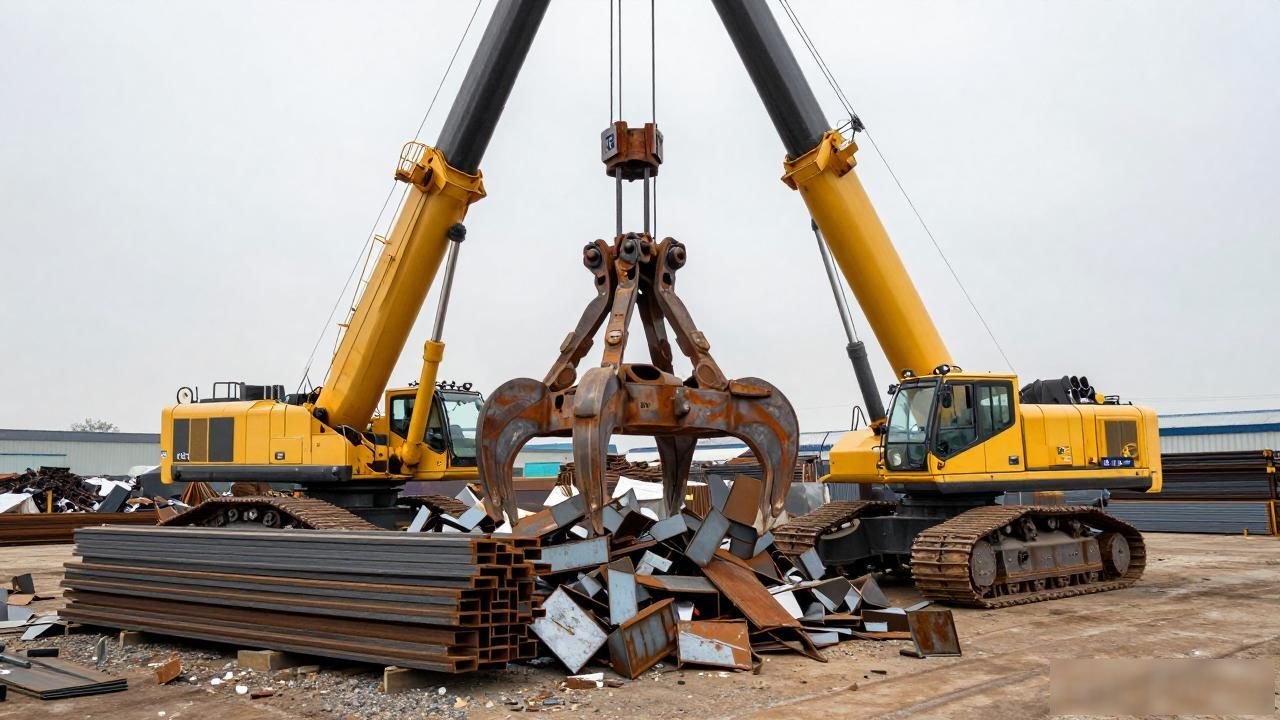


Machine for grabbing steel materials
Many people will transform the excavator into a steel grabber. Some bosses think that just by welding a grabber, the equipment can be put to use directly. However, when it is actually started, it will be found that the length of the robotic arm is insufficient and cannot even hold the material. The result is a waste of hundreds of thousands of yuan in capital investment.
Why can’t the standard arm reach distant materials?
The standard boom in an ordinary excavator and the standard stick are designed specifically for close-range earth excavation operations. Therefore, the distance from its front end to the rear axle is generally only a little over four meters in length. The steel grabber is to remove scrap steel and scrap steel bars from the piles where they are piled. Then throwing these items into the interior of the truck, the radius range required for work often reaches a long distance of seven or eight meters. If a standard robotic arm is used, it will definitely be completely impossible to reach that working point.
The bending angle and cross-sectional strength of the standard arm are calculated based on excavation conditions. If you repeatedly perform long-distance and large-angle grabbing actions, the hinge of the arm will wear out very quickly. It will have to be shut down for repairs within a few months. Just repairing the hinge seat once will cost thousands more.
When can the extension arm be saved?
If the actual business you are dealing with on-site is to perform professional riveting and welding repair of the large and small arms (boom sticks) of the excavator , which is to pick up the scrap steel that fell on the ground and put it into the flatbed transport vehicle adjacent to the side, and the height of the stacked objects does not exceed the upper limit of two meters, and the lateral transfer distance required to perform the loading action is only a short distance of about three or four meters, then you choose to configure a conventional length robotic arm plus accessories such as grabbing clamps that match the specifications. It is indeed fully capable of completing this task. It does not even need to operate the luffing mechanism of the big arm and the small arm for linkage.
However, in some steel plants , the large and small arms (boom sticks) of excavators are professionally riveted and repaired , or in car scrapping plants, including those that process recycled metals. Most of the work scenarios involve pouring high-piled materials from high to the bottom of the truck bucket, or performing long-distance transfer work.

Under this working condition, if the material grabbing area is not lengthened, then each cycle will take more than ten seconds. Then at the end of the day, it will look like dozens of tons of less stuff have been loaded, and the efficiency will be cut in half.
Why does the bucket need to be replaced with grippers?
The bucket teeth and bucket wall of the bucket are a closed shovel-mounted structure. They rely on hydraulic oil to propel earth and ore. However, parts such as scrap steel, round steel, and pipes have no integrity in themselves. When the bucket is closed, it cannot hold the material at all. The material will slide away directly from the bucket mouth. This is a waste of time.
The plum blossom type hydraulic grab relies on the claws in one or two directions, or four or six petals to close and clamp, so that it can not only bite single things, such as round steel, pipes, angle steel, etc., it can also grab those piles of thin plates, anyway, it will not let go. This is something that a digging bucket cannot do in terms of physical structure, so it is necessary to use another tool to perform the operation.
How to determine the number and opening of claw flaps
Because the four-petal claw is suitable for grabbing pipes or round steel, it is characterized by its large opening and fast movement, while the six-petal claw is more suitable for grabbing those thin plates and shaped steel mixed together, because it has more clamping surfaces, so it is not easy to slip. Then the size of the opening should be determined according to the largest outer diameter of the material. A more suitable choice is about 50 mm to 100 mm larger than the maximum outer diameter. If it is too large, it will not be able to clamp. If it's too small, it won't fit in.
The material of the claw flap is tetrachromium manganese or thirty chromium molybdenum steel, and the surface is surfacing with tungsten carbide, so its wear-resistant life can reach thousands of hours, which is sustainable.
In contrast, small workshops use professional riveting repairs on the large and small arms (boom and stick) of claw-flap excavators that are welded from ordinary carbon steel. Such claw flaps will be worn round within two to three months. Every once in a while, a rivet welder will be required to perform repair welding operations, which will in turn delay production efficiency.
The hydraulic system needs to be rematched
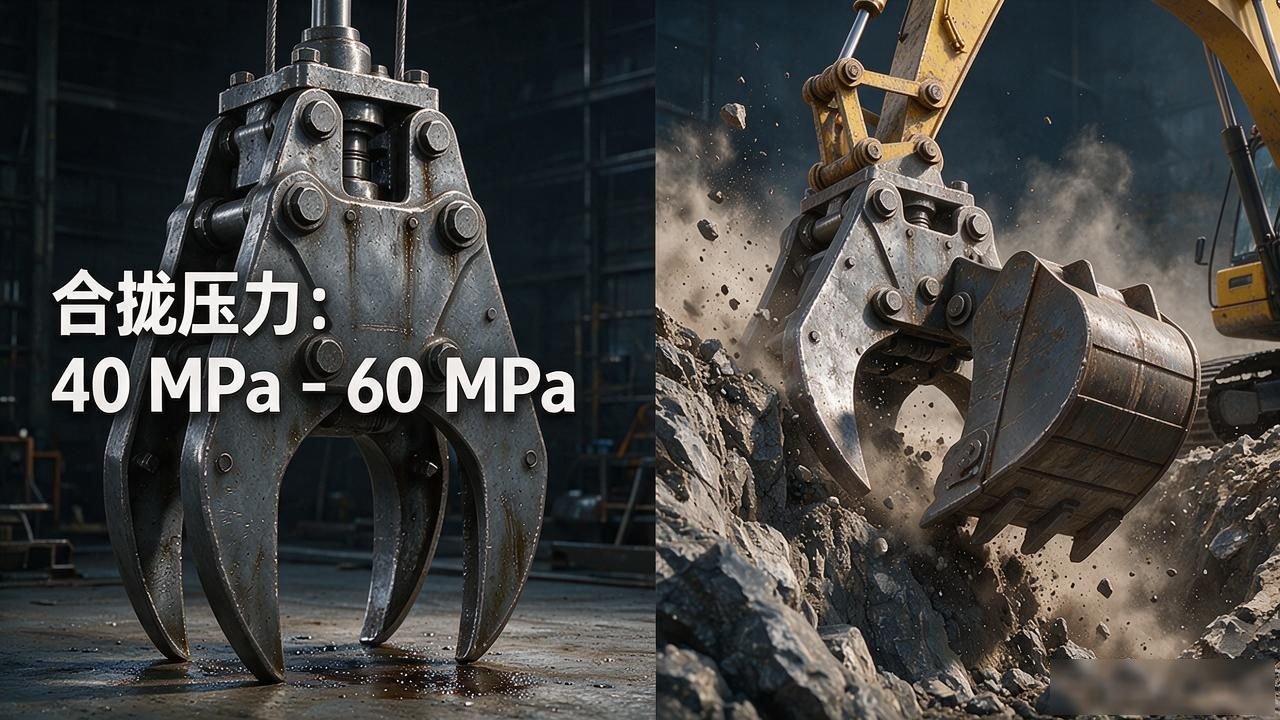
The clamping force generated when the gripper is in its closed state and the excavation force generated by the bucket during excavation operations are two completely different things. Because the pressure exerted by the four-petal gripper when it closes is usually in the range of 40 MPa to 60 MPa, this pressure value is much higher than the pressure required when the bucket moves.
So if you plan to directly use the pump and valve components from the original excavator, it will result in either the gripper not being able to tighten tightly, or the movement being so slow that you can't use it at all.
An independent hydraulic circuit for the gripper must be added and a dedicated oil cylinder must be configured. The flow rate is controlled in the range of forty to sixty liters per minute. The direction of the pipeline should correspond to the pipe routing groove of the extension arm. If the bending radius of the pipe is not enough, the location is particularly prone to pipe bursting. Once a pipe burst occurs, hydraulic oil will flow everywhere.
After the modification, we still need to weld the big and small arms.
After the standard arm is replaced with the extended arm, the position of the hinge pin hole is completely different, and the layout of the reinforcing ribs is also completely changed. If the joint between the old and new arms is welded according to the original drawings, the stress concentration points will cause fatigue cracking in advance. It will take half a year for something big to happen. This situation is even more obvious when operating at low temperatures in winter.
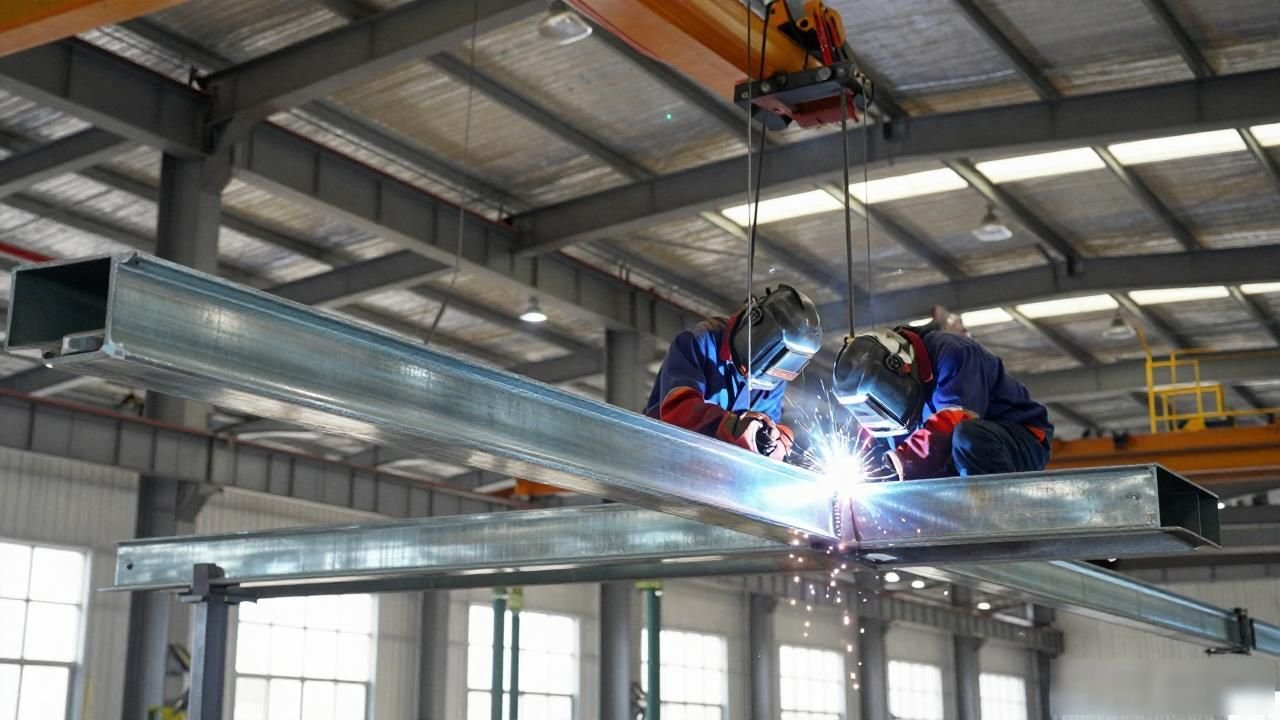
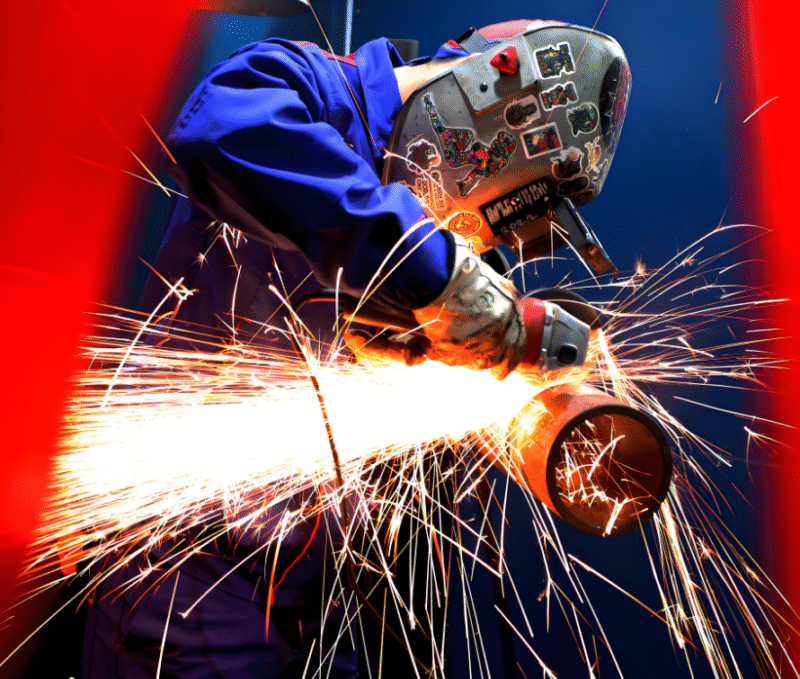
In the actual modification work, the two parts of the hinge seat and the arm connecting plate must be re-cut. The riveting operation will then be carried out. Then the bottom groove needs to be made with argon arc welding. On this basis, secondary welding is added for cover processing. After welding is completed, ultrasonic flaw detection must be performed. It is best to go to a manufacturer that specializes in riveting and welding repairs of excavator and large arms for this set of procedures. Don't just do some welding in the workshop and forget about it.
Could you please clarify what types of materials your local steel grabber usually mainly grabs, and how many meters the loading distance is? I hope everyone can leave a message in the comment area to explain the relevant details, so that I can help you make a judgment based on these data, and decide whether you need to switch to a model with an extended arm.
If you think this information is really helpful to you, you might as well give it a like and forward it to your colleagues and friends.


No comments yet