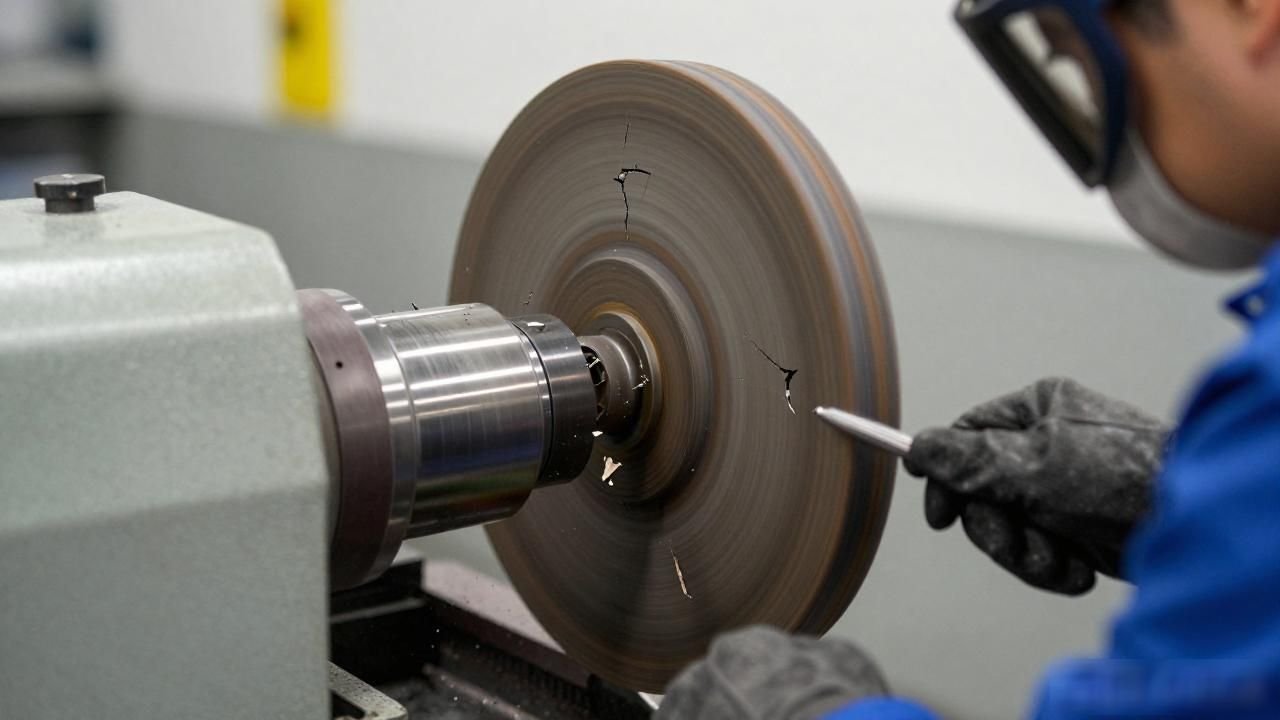


Grinder training safety operating procedures
Every year in the training workshop, some people have their scalps hit by the grinding wheel because they are not wearing hats. Some people just close the switch without checking to save trouble. Eventually, workpieces fly out and hit people. On the surface, these accidents are caused by bad luck, but in fact they are all caused by the failure to implement relevant regulations.
If you don't tie your clothes tightly before entering the workshop, you're setting yourself up for trouble.
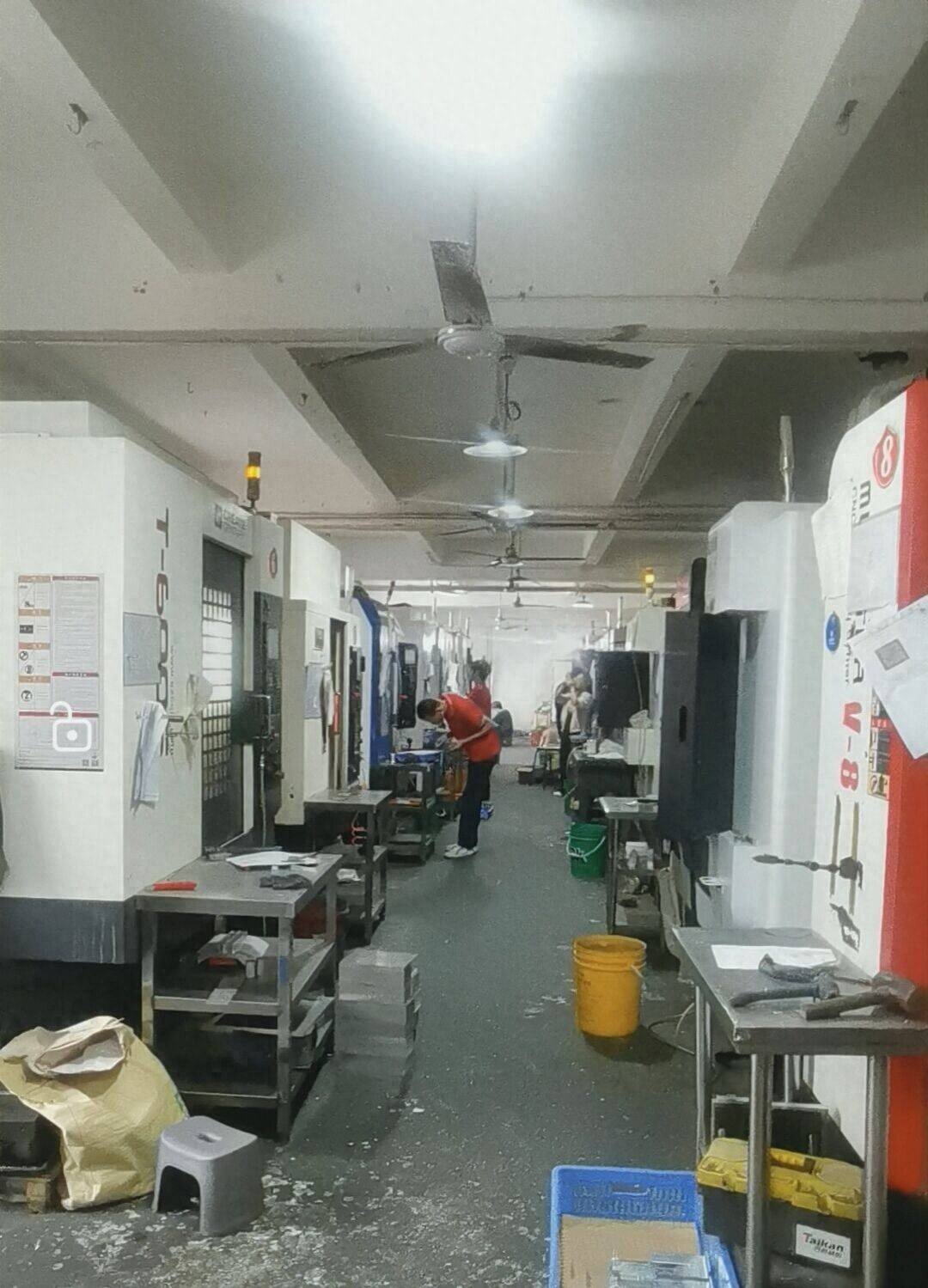
Before entering the internship site, you must put on work clothes and tie up the cuffs and placket. In addition, girls must wear hats. This is because in the workshop, they are most afraid of loose cuffs or long hair getting entangled in the rotating parts. Once caught, the whole person will be sucked in. At the same time, slippers and sandals are absolutely not allowed to be worn, because metal shavings falling on the feet will directly penetrate into the flesh.
Another thing that many people don't care about is that it is strictly forbidden to operate a lathe with gloves on. If your hands slip due to sweat, it is just a small thing. But if the gloves are caught by the drill or grinding wheel, then the entire arm will be dragged directly in. In this case, the situation will be very dangerous. This is clearly stipulated in our practical training courses.
The new grinding wheel must be inspected before closing and must be run dry for two minutes.
Before starting the machine tool, you need to check the status of each handle one by one to confirm whether these handles are in the normal position where they should be, and whether the workpiece and tool are firmly installed. Only when everything is confirmed to be no problem, can you close the switch.
Many people press their hands to start the machine when they are rushing to work. As a result, the loose tool handles fly out. Accidents like this caused by careless operation are recorded every year.
After using a new grinding wheel, you should not rush to start work. You should first perform an idling test operation for two minutes. During this period, listen to the changes in the sound, observe the vibration during operation, and confirm that there are no cracks or deflections in the grinding wheel before it is officially put into use.

Because once the grinding wheel breaks and generates fragments while rotating at high speed, the movement speed of these fragments can exceed 200 meters per second, so the two-minute trial rotation process is definitely not a mere formality but has important safety significance.
Grinding wheel speed and protective cover are the two most serious consequences.
The maximum circumferential speed that can be achieved at the edge of the grinding wheel must be firmly controlled within the range of 35 meters per second. Exceeding this value will cause the centrifugal force to increase sharply, causing the grinding wheel to be cracked from the inside to the outside, and the broken blocks will fly directly in the direction of the operator. This value is a rigid upper limit standard, and there is no room for adjustment or flexibility.
Regarding the grinding wheel protective cover, except for special circumstances such as maintenance, it is absolutely forbidden for anyone to remove the protective cover. Because what the protective cover blocks is definitely not just simple grinding debris, it is actually the first barrier to prevent the grinding wheel from breaking.
Another point that requires special attention is that it is strictly prohibited to grind tools on the grinding wheel of a grinder by hand. If there is even a leather pad between the hand and the grinding wheel, the fact that the moment of high-speed friction is enough to directly grind away the meat, so this must be prohibited.
People standing to the side, don’t leave the machine and don’t chat.
When the machine tool is running, the operator must stand on the side of the grinding wheel, and must not face the rotating surface. This means that in case the grinding wheel breaks, the trajectory of the flying fragments must not directly pass through the human body, because just a few tens of centimeters apart in the standing position, the final result will change from a mere scratch to a fatal injury.
When the machine tool is running, personnel cannot leave their posts, nor can they go back and talk to the classmates next to them. Once the attention wanders, the hand may come into contact with the rotating part, or the tool may not be exited in time when the tool needs to be exited at the appropriate time. This will cause the workpiece to directly become a scrap product, or even cause personal injury.
If multiple people share a machine tool and there is an electrical failure, don’t try to fix it yourself.
When two or three people operate a machine tool at the same time, they must communicate the specific division of labor in advance, make sure that everyone is in their positions, and ensure that no one's fingers are within the clamping area before turning on the equipment together. During a practical training activity at a school last year, a dispute occurred where one person was still adjusting the workpiece while another person had already closed the gate.
If something goes wrong with the machine tool's electrical appliances, for example, the circuit breaker suddenly trips, or the buttons don't work, the operator must not dismantle the electrical box to troubleshoot the problem.
The correct way to deal with it is to stop the machine immediately, cut off the main power supply, report the matter to the instructor, and then let an electrician with the corresponding qualification certificate handle it. If non-professionals touch the electrical cabinet, the risk of electric shock is very high.
Wiping the table clean and turning off the power before calling it a day is the last step.
Before leaving get off work every day, the machine tool table should be cleaned, and all metal debris and oil stains on the ground around the work site should be cleaned up. If there are iron filings on the ground, someone will easily slip and fall if they step on them the next day.
Also, if oil stains get on the gloves, they will become more slippery. These seemingly inconspicuous little things are actually the starting point of frequent accidents.
When all the work is done, the main power supply of the machine tool must be turned off. This cannot be done by just pressing the stop button, because many old training equipment have problems or hidden dangers of leakage, so if no one is watching, the power must be physically disconnected. This sentence means that this thing must be done at the time of handover and the last step before leaving the venue.
During your internship, have you ever encountered a situation where your classmate did not wear the required work clothes or hat, and was criticized in person by his master?
We very much welcome you to come to the comment area to share your safety habits and things in the workshop. If you think this content is useful to you, please remember to like us and forward it to your classmates who have not yet entered the workshop.






No comments yet