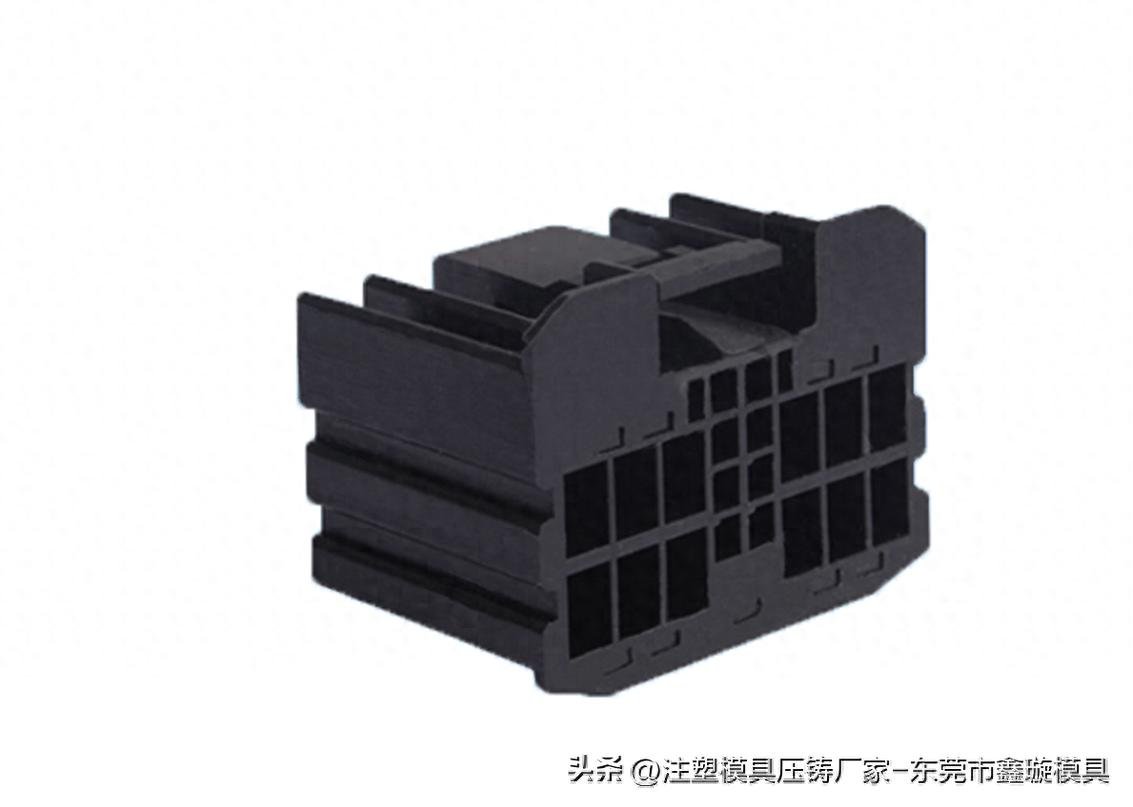


What is the mold opening process of connector plastic mold? Dongguan Xinxuan precision connector mold customization
In the process of making connector plastic molds, what is the connector plastic mold opening process that everyone is most worried about? Dongguan Xinxuan Precision Connector Mold Customization discovered that there was a difference of 0.02 mm in the tolerance of the clamping position during the mold trial stage, which resulted in the terminal being unable to be installed at all. Dongguan Xinxuan Mold focuses on the production and service of precision injection molds for electronic connectors, connector bases and sheaths. They will break down the entire mold opening process and explain it in detail, which can help you avoid many unnecessary detours.

Drawing receipt and DFM structural review
After the customer delivers the three-dimensional drawing of the connector to Xinxuan Mold, the technical team will immediately start the DFM structure review. At this stage, it is necessary to focus on checking the location of the pinhole, the depth of the terminal clamping position and the demoulding angle of the buckle. At the same time, it is also necessary to clearly mark which thin-walled structures are prone to shrinkage or flashing problems, and then simultaneously provide specific suggestions on structural optimization.
This review cycle usually takes three or five days. If problems are discovered, we must immediately communicate with the customer on site and make adjustments. The advantage of this is that it can avoid the situation where unreasonable parts of the structure are exposed only halfway through the design. This not only saves time, but also avoids the doubling of costs due to later modifications to the mold.
Mold design and CNC machining
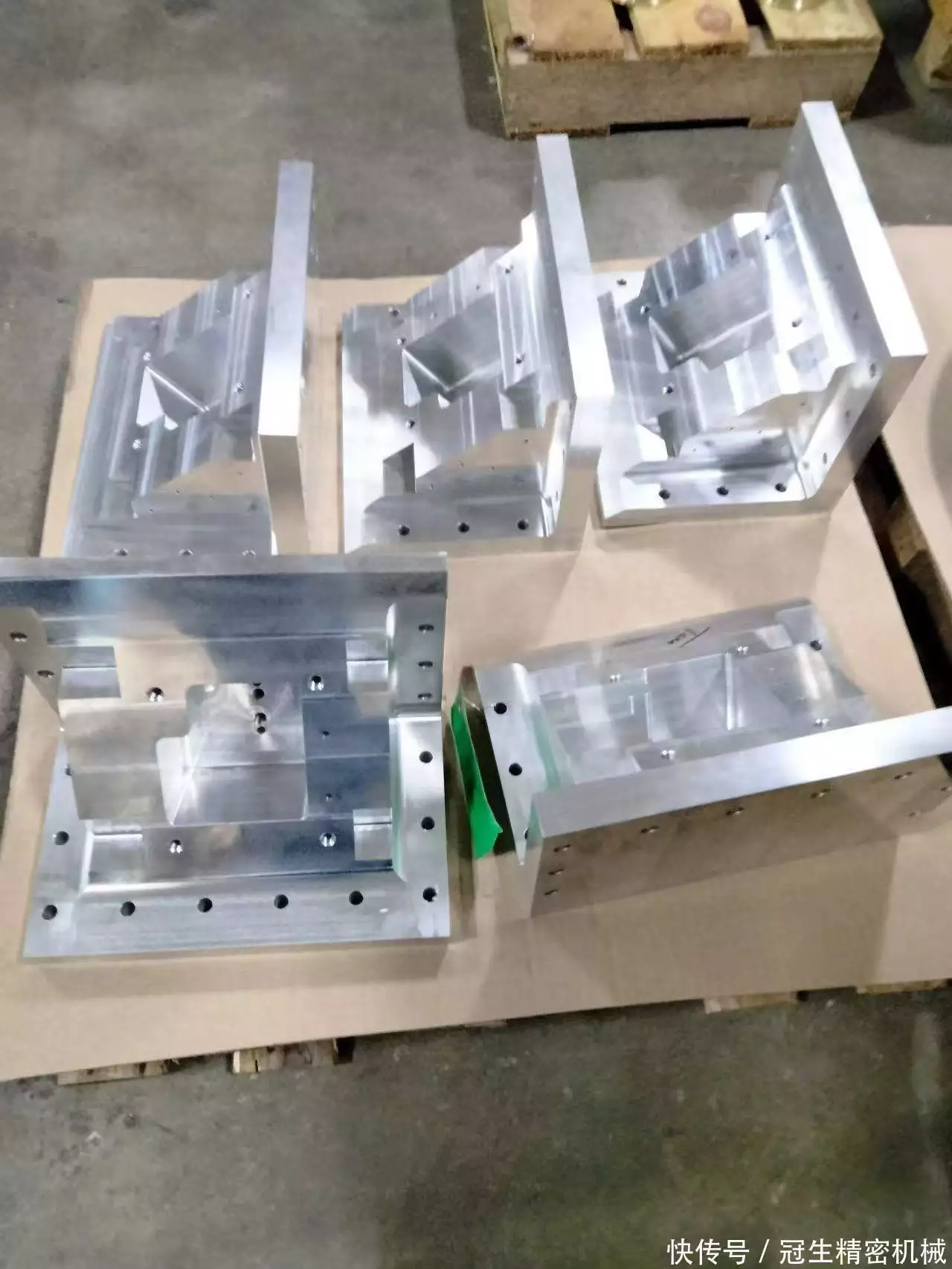
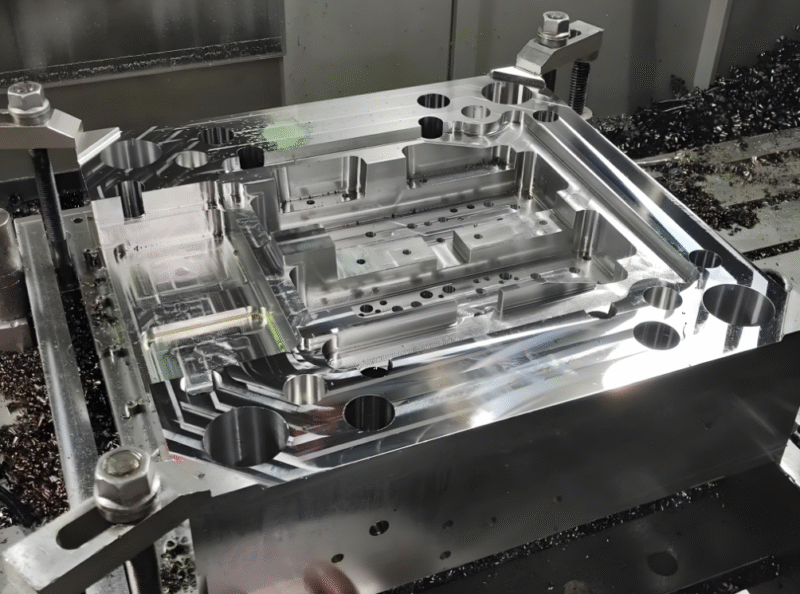
After the DFM is confirmed, the next step is to enter the mold design process. For multi-cavity molds, the pouring system, cooling water channels and ejection sequence need to be planned at the same time. After the design drawings have been reviewed and approved, the precision parts of the connector terminals will be processed by CNC and spark machines. They will be operated according to the requirements of the drawings and the dimensional data will be strictly recorded between each process.
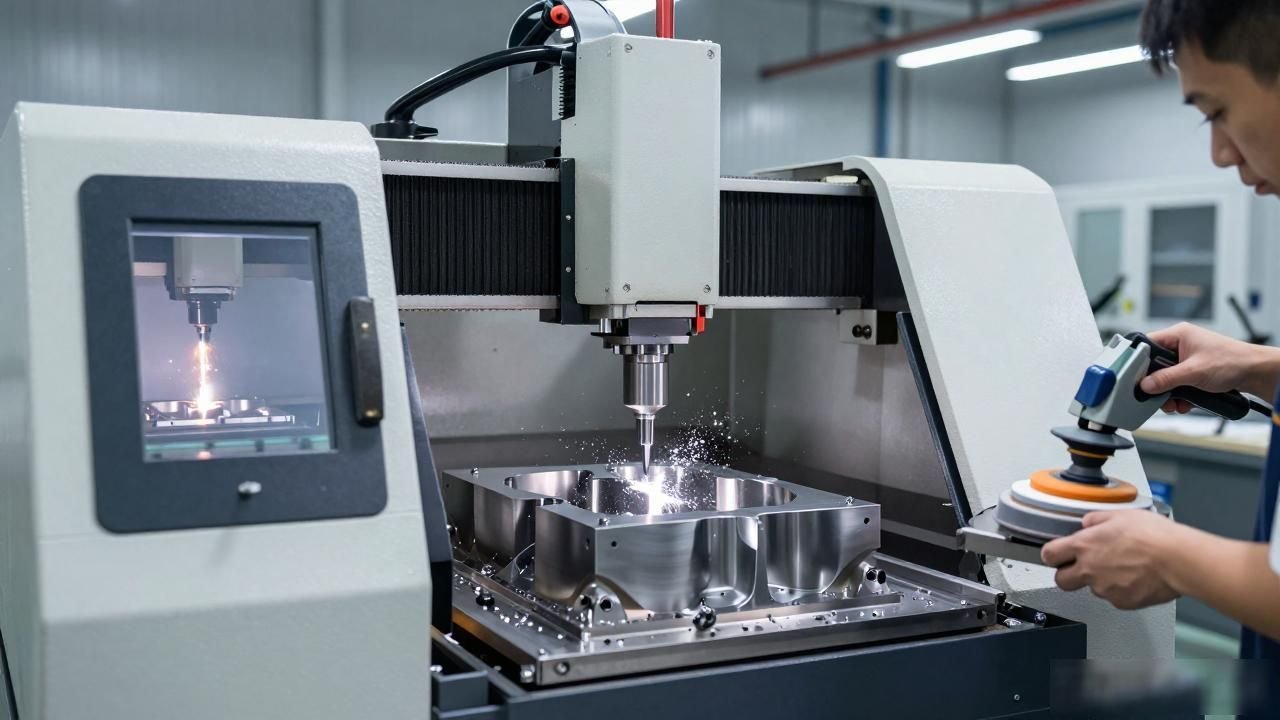
CNC will be responsible for the milling of the cavity and inclined walls. The spark machine will handle the details of small draft angles and deep holes. In the polishing process, the surface roughness needs to be controlled below Ra0.8. Through these steps, a solid foundation will be laid for producing qualified samples for subsequent mold trials.
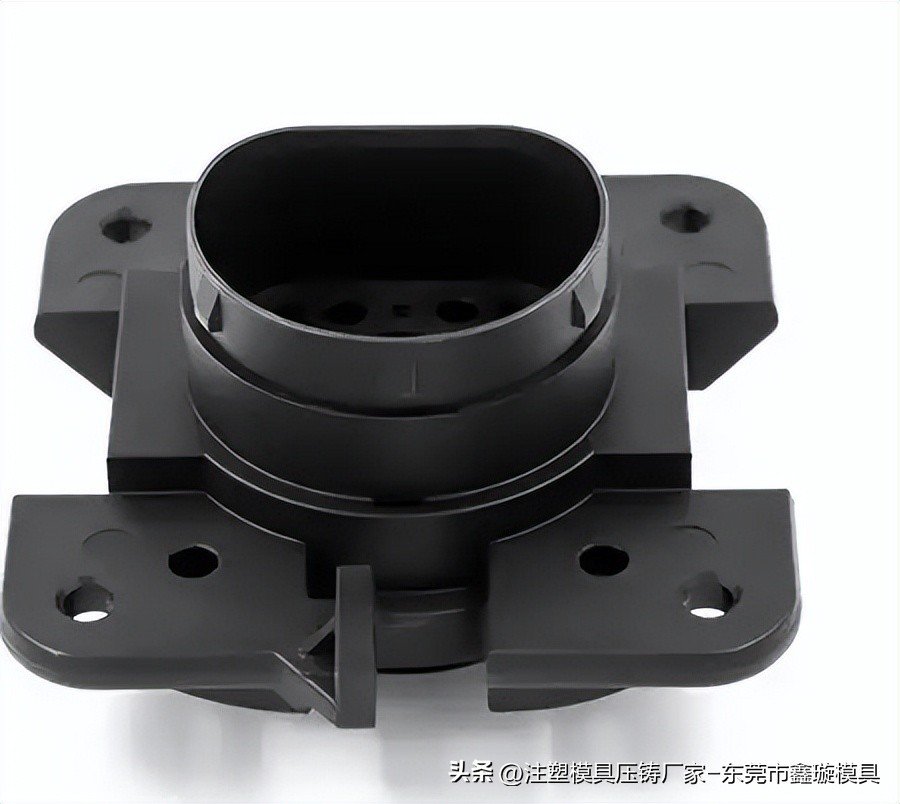
Multi-cavity model cavity consistency control
In the connector mold industry, it is very common for one mold to be able to produce 8, 16 or even 32 pieces of products. As the number of product cavities continues to increase, the requirements for consistency between each cavity become more and more stringent.
Xinxuan Mold adopts the method of milling all the cavities of the same plate in one processing process. This method can reduce from the source some error problems caused by multiple clamping and repositioning.
The positioning system uses precision guide posts and guide bushes. During the T1 mold trial stage, parts need to be taken out cavity by cavity for measurement. The measured items include the depth of the clamping position and the diameter of the pinhole. The deviation of the key dimensions is controlled within 0.01 mm to ensure that there is no interference in batch assembly.
LCP and PBT high temperature material molding
In the base manufacturing process of plastic joints and connector terminal precision parts processing , the industry generally uses engineering plastics with high temperature resistance such as LCP, PA66 and PBT for molding and processing. When the material is in a molten state, the required temperature parameters often need to exceed the limit of two thousand degrees Kelvin.
Since the thermal balance within the mold system cannot be properly controlled and stably maintained, the final plastic component is likely to directly change its shape or adhere to the surface of the mold, which will result in the complete loss of feasibility of subsequent installation and assembly steps and result in complete scrapping.
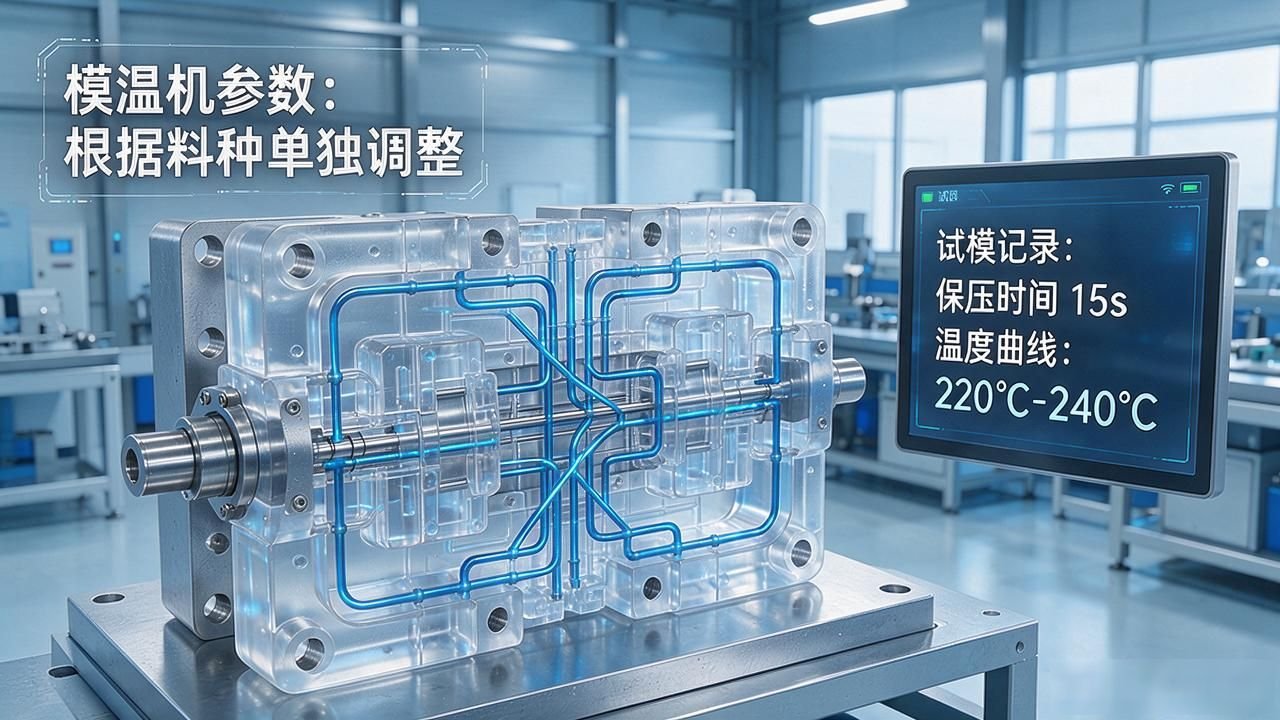
Xinxuan Mold has optimized the specific layout of the cooling water path according to the situation of the high-temperature material. The parameters of the mold temperature machine must be adjusted individually according to the specific material type. During the mold trial, the holding time and temperature curve will be recorded cavity by cavity. The purpose of this is to ensure that during the mass production stage, the dimensions can remain stable and no drift will occur.
T1 to T2 trial mold modification process
After the mold is tested for the first time and samples are produced, the customer will personally confirm the feel of the terminal assembly and the appearance of the product. Any areas that do not meet the requirements will be included in the mold modification list. Common modification items include adjusting and matching the insert, changing the position of the ejector pin, and polishing the parting surface again.
Modify the mold, and then run the T2 test mold. After all the key dimensions are qualified, the consistency of multiple cavities has passed inspection, and there is no interference during the assembly process, the connector terminal precision parts are processed , and then the acceptance process is entered. When delivering, a mold trial report and a set of samples must be brought to the customer for archiving.
Multi-cavity mold cost and subsequent cavity addition
Customers often ask whether the initial investment for multi-cavity molds is too high. The number of cavities will indeed push up the price of the mold, but in the mass production stage, the injection molding cost of a single piece will be significantly diluted. Therefore, for projects with an annual production capacity of more than one million pieces, it is very cost-effective after calculation.
If you want to add a cavity in the later stage, you need to check how much margin there is in the mold base structure, and you also need to check the space on the parting surface. Some older molds are theoretically possible to be modified, but most cases need to be re-evaluated to determine, and Xinxuan molds have reserved positions for adding cavities in the entire initial design stage. The purpose of this is to leave necessary room for subsequent expansion of production scale.
The connector project you have now, how many cavities does the mold have and what materials are used? Please tell me in the comment area so that everyone can use it for comparison and reference. If you find this information useful, please click like and save it so that you can look it up directly the next time you open a mold.




暂无评论内容