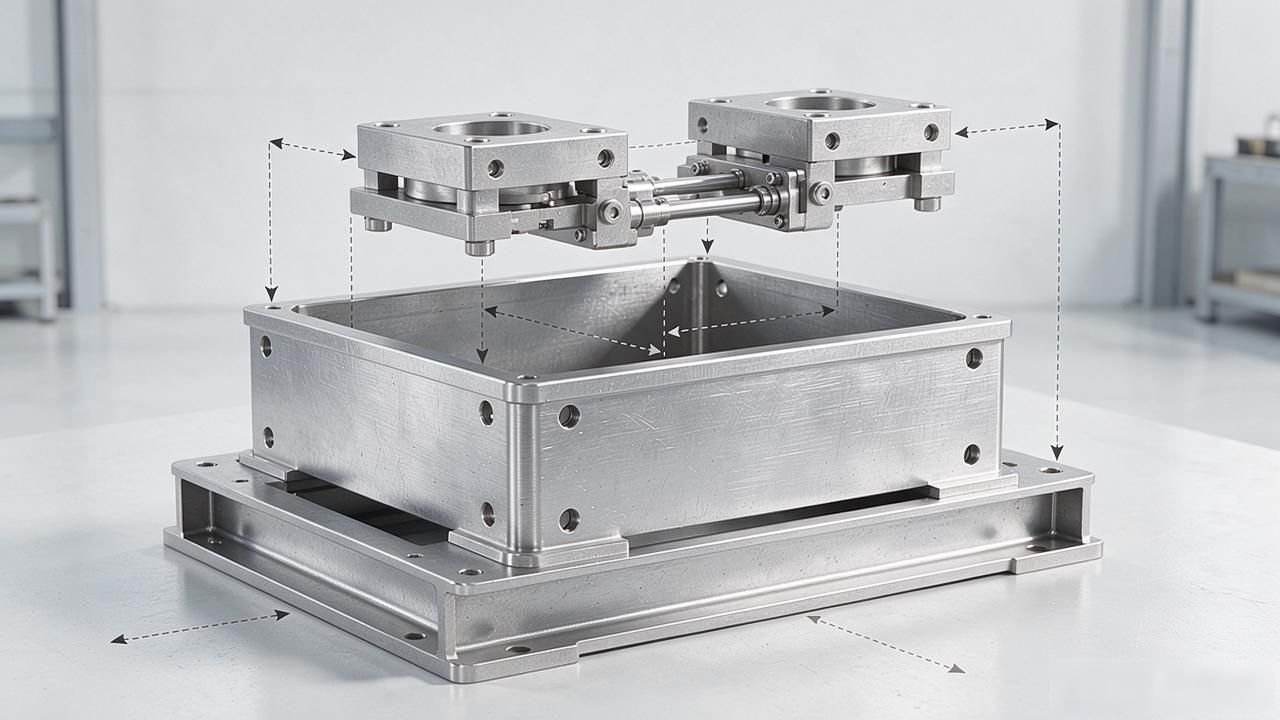


Weihai Hengke Precision applied for a patent for a burr removal equipment for metal stamping parts to improve the grinding range and fixing range of hardware plates.
Burr processing on metal stamping parts has always been a stuck problem in the efficiency of the production line. Because plates of different specifications require repeated replacement of fixtures, it is very time-consuming. A new patent applied for in March 2023 targeted this pain point.
How to build the overall structure of the equipment
The base and chassis form a whole, and this part is the main frame. At the bottom, there is a bottom support component at work. Its task is to hold the board and prevent it from falling. The grinding device is installed on the chassis assembly.
At the same time, the drive adjustment device and the bottom support assembly are connected together. The entire structure looks very clear and distinct, so it is more convenient when performing assembly operations or disassembly and maintenance.
This modular design approach. It allows the equipment to flexibly adjust its installation location according to the existing production lines in the workshop. Because there is no need to carry out extensive renovation work on the workshop. So for small and medium-sized stamping companies. The threshold for landing is actually not too high.
How to realize multi-specification adaptation of bottom support

The bottom box component and the bottom frame component are connected together. The first positioning component is installed on the bottom box component. The function of the hardware parts processing and deburring process is to support and limit the fixation of hardware plates of different sizes, so that one set of structures can accommodate a variety of specifications.
In the current actual production process, a production line usually needs to run and process dozens of products of different specifications. In the past traditional operation mode, if the specifications needed to be exchanged, the positioning blocks were often replaced manually. This method is actually very troublesome. The design structure in this technical solution integrates the functional components for support and the functional components for limiting all into the same bottom box. When we change specifications, we only need to adjust the positioning components. In this way, the time required for machine downtime is significantly shortened.
How to orient the grinding device
The grinding device is directly connected to the chassis assembly. It is a directional grinding work for the corners and flanged areas where burrs are concentrated. It does not mean to use the entire board for a one-size-fits-all grinding method, but to focus on the areas where burrs exist.
This directional idea is more accurate than the traditional method of using vibration to remove burrs. In this way, excessive wear on the flat parts of the plate can be reduced. Especially for some stamping parts that require surface smoothness, this method is very suitable. For example, decorative parts for car interiors, and panels for home appliance casings.
What is the purpose of the drive adjustment device?
This drive adjustment device is connected to the support component at the bottom, and is used in conjunction with the second positioning component to fine-tune the position of the plate in the grinding direction so that the grinding head is always aligned with the burr area.
If the flanging angle and depth of the stamping parts are different, the locations where the burrs appear will be different. The drive adjustment device can automatically control small changes in the angle of the grinding head according to the relevant parameters of the plate. This eliminates the need for manual calibration every time, and also shortens the operator's learning period.
Public information and application background
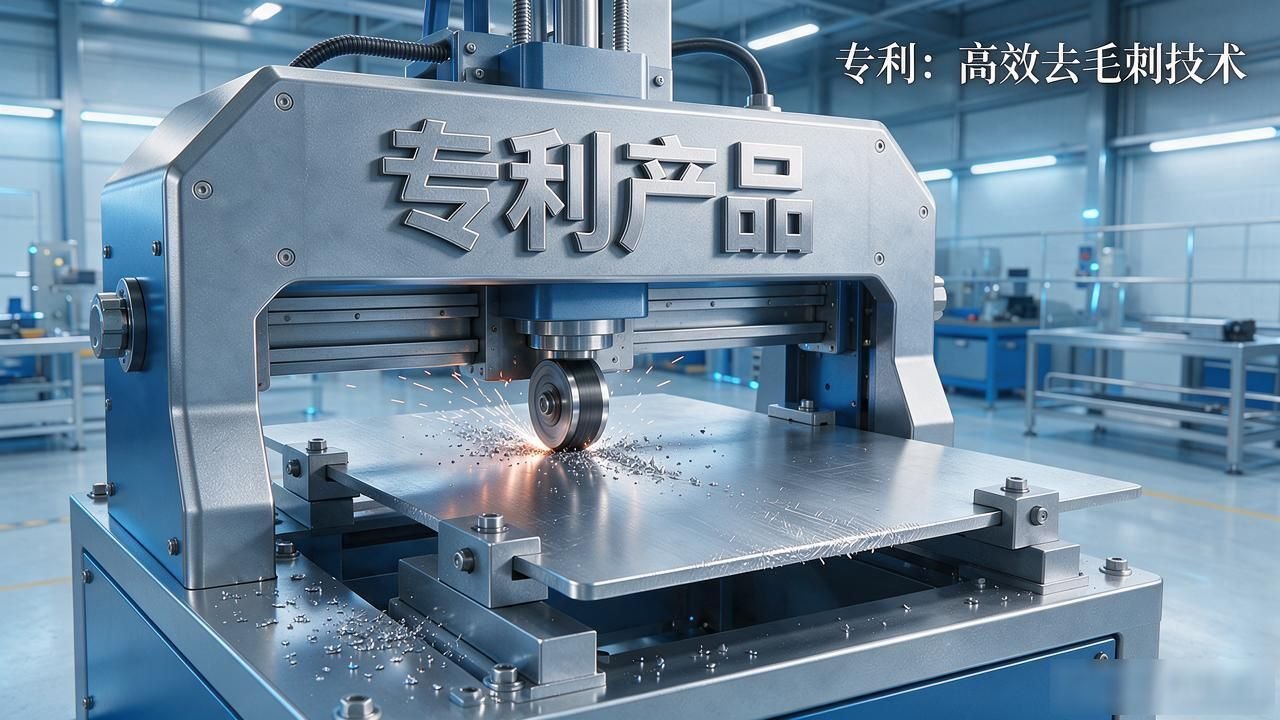
One thing that can be clearly seen from the intellectual property information of Tianyancha is that the publication number of the patent is marked as CN2.
The number of patents for this type of equipment is in the hardware processing industry, which does not mean that there are many. Most factories still use manual sanding or vibration grinding, so if they can use automated directional grinding equipment, it does belong to a segmented track, and it is a direction for technological upgrading.
Practical implications for stamping shops
The equipment can support, limit and directional grinding operations corresponding to plates of different specifications. This situation is equivalent to allowing one machine to replace the previous two process combinations of changing fixtures and manual grinding. The resulting auxiliary time savings can reach approximately 30 to 40%.
However, a patent is just a technical solution. When it comes to actual large-scale mass production, it also depends on the machining accuracy, how high the loss cost of the tool is, and whether the production rhythm matches the existing production line. Therefore, it is recommended that those factories that have relevant needs for the deburring process of hardware parts should first go to the patent holder and conduct a small batch trial production to verify the effect.
Do you think the most time-consuming part of the deburring process in the workshop is the replacement of specifications or the wear and tear of the grinding head? Everyone is welcome to communicate and discuss in the message area. If you think these contents are useful, please click the like button and forward this article to your colleagues.


暂无评论内容