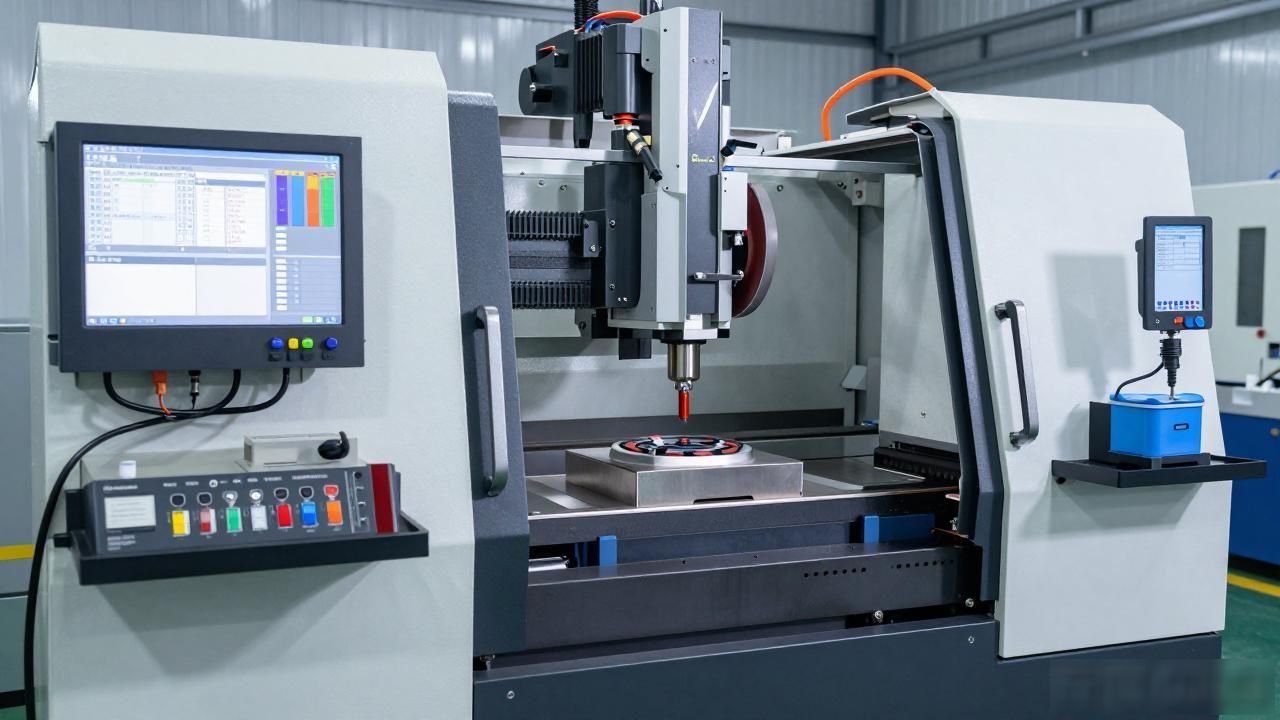


Reducing costs and automation will become a hot spot for the future development of grinding machines
At this point in time in 2026, there are many tool grinding factories in China, and they are still worried about the situation that "one person can only watch one grinding machine." However, colleagues from Germany and Japan have already realized the situation of having one person manage three pieces of equipment early on.
Regarding the automation of grinding machines, it is no longer a bonus that companies use to increase their advantages, but a critical requirement that companies must cross in order to survive, like a threshold.
Four real goals for grinder automation
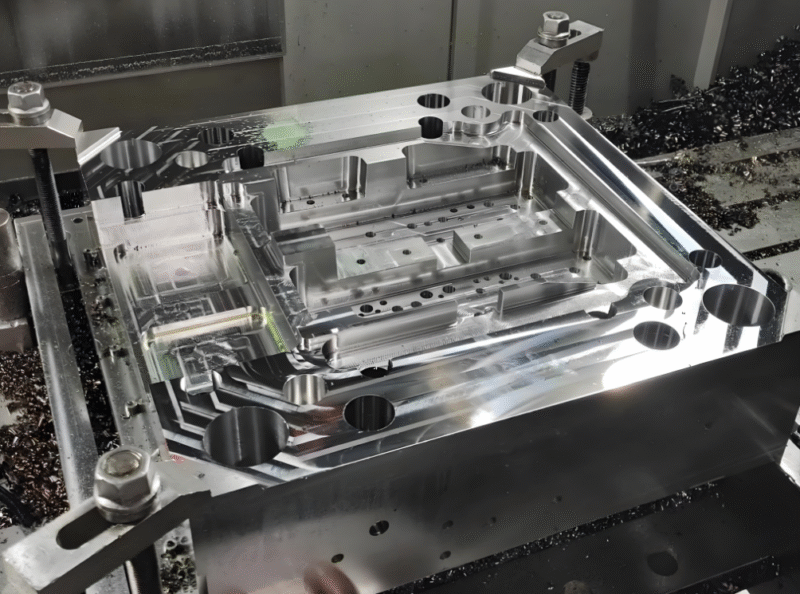
Grinding is a precise process to ensure the final size and accuracy. It is not enough to rely solely on the manufacturing quality and assembly accuracy of the machine tool itself . Grinding processing research hot spots Grinding processing research hot spots . In modern manufacturing, it is now required that grinders must have a very high degree of automation. This is a very clear development trend in this industry in recent years.
To summarize the situation, automation needs to solve four problems. The first is to achieve a level of accuracy that even untrained human hands cannot achieve. The second is to ensure that the quality of each batch of products produced can be consistent. The third is to break through the extreme bottleneck in production efficiency caused by manual operations. The fourth is to massively shorten the time and cost spent on equipment settings and adjustments and part clamping.
CNC system is the ticket to automated grinding machines
Whether it is the domestic market or the foreign market, fully automated grinders have a basic feature that must be equipped with a digital control system. Without the CNC system, there would be absolutely no automation. This is the bottom line consensus of the entire industry.

A CNC system alone is not enough. It also requires optimization software, online measurement systems, grinding wheel dressing systems, cooling systems and other accessories to work together. The lack of any link will affect the automation effect.
The Efficiency Dilemma of the Grinding Plant
When a tool manufacturing factory carries out mass production of new tools, it is a very normal state that its work efficiency is high. But on the other hand, grinding plants often receive sporadic orders, and most of these orders consist of single products or small batches of products. Therefore, if the operations are performed entirely manually, there is no way to control the labor costs.
For grinders, they are not pursuing unmanned workshops at all. For them, the real core appeal is actually only one line, which is to allow one operator to take care of several machine tools at the same time. To reduce costs, automation has become a hot spot for the future development of grinders, so that the labor cost can be diluted. This is the fundamental reason why they are willing to spend money to upgrade.
Grinder upgrades on high-precision tracks
Some manufacturers regard shortening operation time as their primary goal, while others put the quality of parts at the most important position. Typical representatives here are people or groups such as high-precision tool and medical parts manufacturers. For themselves, there is no room for even a slight deviation.
With the continuous improvement of grinding machine production technology, many domestic companies have launched new grinding machines in 2025. The new grinders have tolerances within three microns. Its surface finish reaches nanometer level. This marks a new level of accuracy.
Software is replacing old masters
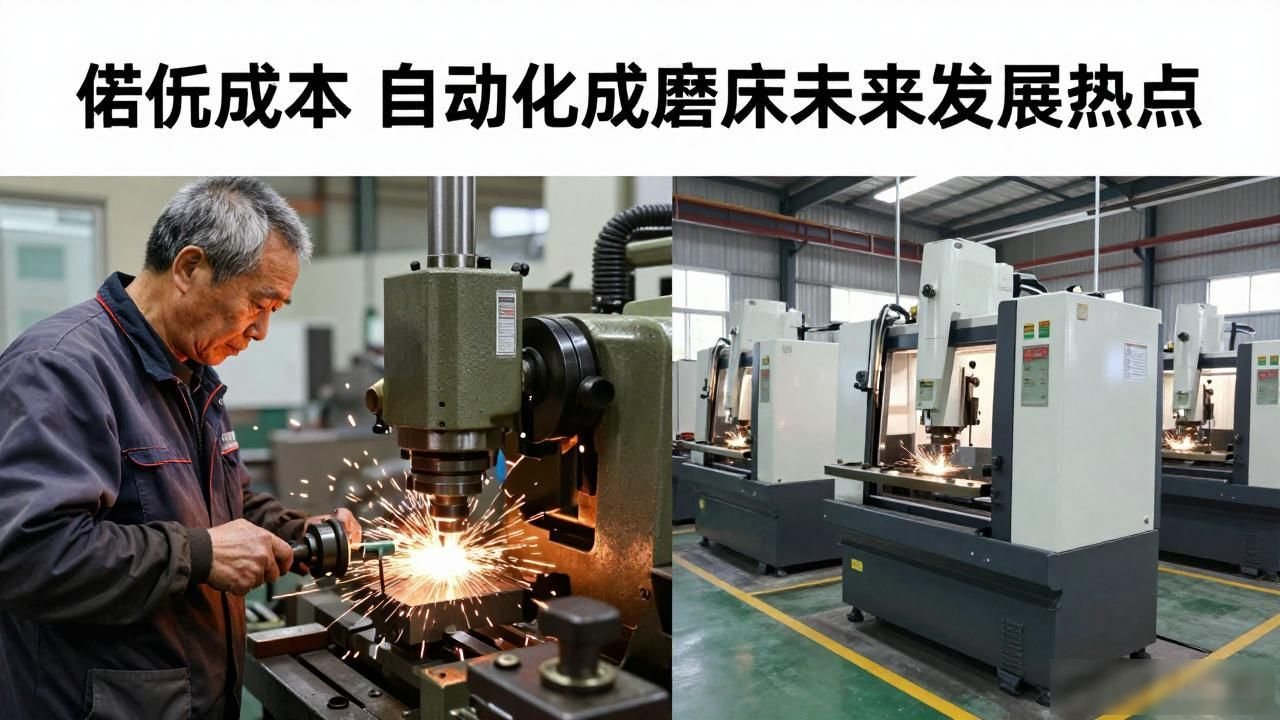
The number of master craftsmen who are relatively high-level and have the ability to process tools with complex structures by hand is decreasing year by year. This is indeed a reality that cannot be avoided in the industry.
Because there are fewer and fewer people engaged in this work, but the actual work that needs to be handled will not decrease, so we can only rely on application software for final protection. The role and importance of these software in the entire industry is becoming more and more prominent.
Compared with CNC grinding, manual grinding will have a significant negative impact on the quality and consistency of the cutting edge. Experienced workers all know that there are very obvious gaps between different production batches of tool products made by manual operations, so it is difficult to achieve the goal of standardization.
Grinding direction determines edge quality
When performing manual grinding operations, the tool must rest on the support piece, and the grinding direction of the grinding wheel must point toward the cutting edge. This will cause burrs to easily occur on the edge of the tool. Then, a special process will have to be added for deburring, which consumes more time and materials.
The CNC grinding method is completely opposite. It does not use a supporting piece when working, and the grinding direction is away from the cutting edge. This eliminates the conditions for burr generation from the source, thus eliminating a process, and even the scrap rate is significantly reduced.
In the factories you are currently working in, which specific step is stuck on when it comes to grinding machine automation? Is this problem a question of what type of CNC system needs to be selected, or is it a problem with software programming, or is it because the operators simply do not have the skills to take care of multiple pieces of equipment at the same time?
Please invite everyone to enter the comment area for communication and interaction. If you think this content has certain practical value, then please be sure to like it and forward it to share it with your peers who are also engaged in related industries.




暂无评论内容