

Key technologies and equipment development of ultra-high-speed grinding
The technology of ultra-high-speed grinding has been blocked by Japan and Germany for a long time. For more than ten years, many domestic companies have had no choice but to spend millions of yuan to buy equipment. However, the core grinding head part must be obtained entirely through imported channels. At present, the probability of this passive situation is decreasing, which means that this state is being broken bit by bit.
How fast is ultra-high-speed grinding?
The linear speed of ultra-high-speed grinding usually exceeds 600 meters per minute, while the corresponding situation of traditional grinding technology is only between 50 meters and 100 meters. In the development of technology in this area, at this stage around 2010, Japan's Maruei and Germany's Pfeiffer worked together to push the relevant speed index to 1,600 meters per second.
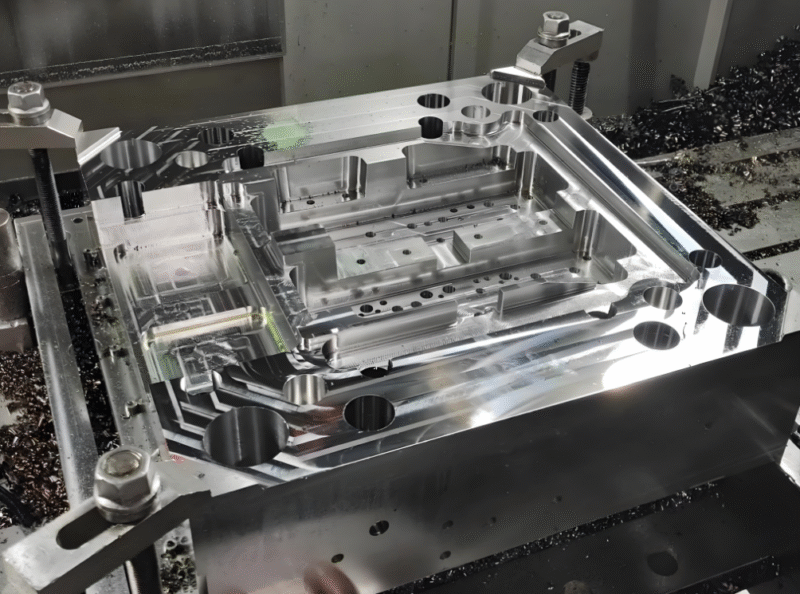
At the same time, the processed surface roughness has been controlled within the precision requirement of less than 0.2 microns, and these complex processes can be completed in one clamping state.
The team led by Yin Songlin of Northeastern University in China began to carry out research work around 2015, and it was not until 2023 that the experimental platform with a linear speed of more than one thousand meters was built. However, in terms of engineering mass production, it still lags behind the leading international companies by five to eight years. The gap between the two is mainly concentrated in the two areas of spindle bearings and cooling systems.
What problems does rapid point grinding solve?
The process of rapid point grinding has emerged and developed in the past five years. This process uses extremely short pulses to perform impact operations to remove trace amounts of material to avoid thermal damage problems during the continuous grinding process. The Japanese company NTT used this method in 2018 to triple the processing efficiency of optical glass and reduce the heat-affected zone from tens of microns to less than two microns.

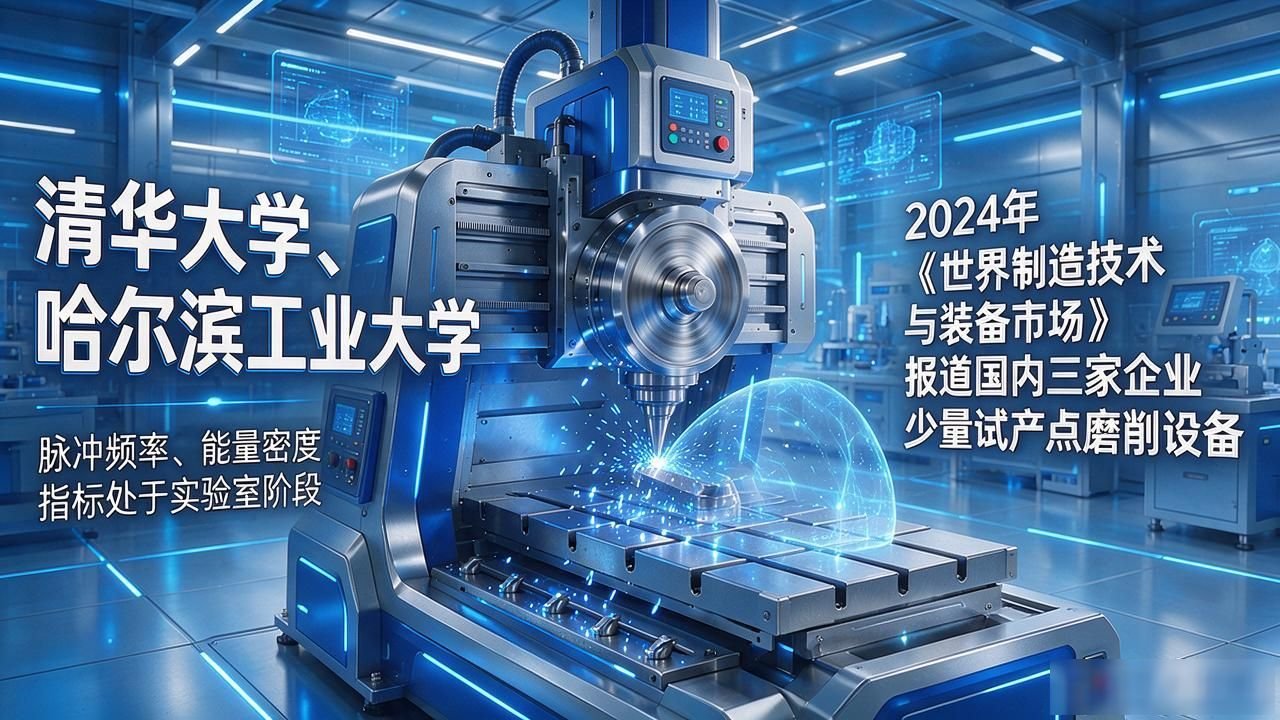
Domestic Tsinghua University and Harbin Institute of Technology waited until 2020 to catch up with this follow-up move, and their two indicators of pulse frequency and energy density are still at the laboratory stage. In 2024, it was reported in the "World Manufacturing Technology and Equipment Market" that there were already three domestic companies producing this kind of small-scale, trial-production point grinding equipment.
What the Northeastern University Grinding Team Did
Yin Songlin's team started in 2008. They built the country's first ultra-high-speed grinding pilot line in Shenyang in 2019. They undertook the national 863 project and published more than 200 SCI papers.
In 2022, their team applied gas-liquid two-phase grinding fluid to ultra-high-speed conditions. In doing so, the grinding temperature was reduced from a high of 80 degrees to a range below 35 degrees, thus achieving the purpose of reducing workpiece burns. This result was evaluated by the Liaoning Provincial Organization in 2023, and was eventually recognized as reaching the international advanced level.
Core components are still stuck
Ultra-high-speed spindle bearings are the biggest bottleneck currently faced. In the field of providing stable spindles above 60,000 rpm, only Japan's NSK and Germany's FAG can do this. In China, that is, Luozhou and Taimiao, their highest level can only reach 45,000 rpm.
From a reliability perspective, they are one or two generations behind the advanced foreign standards. Regarding the price of machine tools, the price of imported grinding machines is usually three to four million to five million. In comparison, the price of a domestically produced grinder with the same precision is about 1.5 million, but its service life is shortened by one-half, which means the service life is halved.
In the current high-end CBN grinding wheel market, two companies, Sumitomo Electric and Saint-Gobain, occupy approximately 70% of the market share. Domestically, Chengdu Tool Research Institute and Zhengzhou Abrasives Factory have the ability to produce mid- to low-end products.
However, it needs to be pointed out that when faced with ultra-high-speed operating conditions, the current products produced by these domestic manufacturers still have a relatively obvious gap in terms of thermal shock resistance and product consistency, and are still far from the international advanced level.
The path and rhythm of domestic catch-up
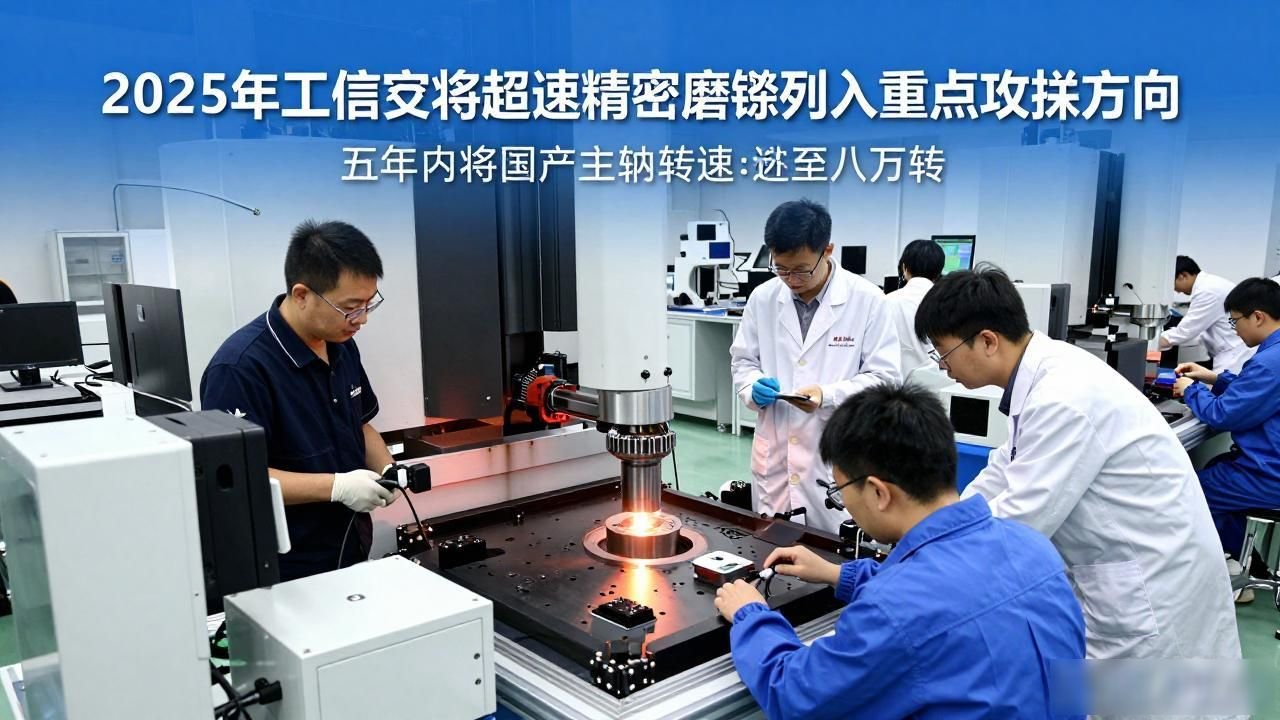
In 2025, the Ministry of Industry and Information Technology listed ultra-high-speed precision grinding as a key research direction. The goal is to push the domestic spindle speed to 80,000 rpm, a process that will be completed within five years. Northeastern University, Lanzhou Institute of Precision, Chinese Academy of Sciences, and Harbin Institute of Technology formed a research team. This research team has launched pilot verification work in 2024. The work was carried out in Shenyang and Lanzhou.
The situation on the industrial side is this. Beijing Institute of Precision Mechanical and Electrical Engineering and Shenyang Machine Tool are already using domestic solutions. This trial is conducted on the line of aviation blades and turbine disks. By the end of the second quarter of 2025, the first round of industrial verification work will be completed, and the efficiency will be increased by about 40%. As for the issue of continuous stability, it will take another six to twelve months to continue to observe.
How do practitioners view the window period?
For engineers engaged in grinding work, the next three to five years will be a window period for process switching, because ultra-high-speed grinding has completely different requirements for grinding wheels, cooling systems, and machine tool rigidity than in the past. The old method of adjusting parameters based on experience has had to be overthrown and re-established. Therefore, it is recommended to pay more attention to professional publications in the industry and the actual progress of relevant domestic manufacturing plants in the trial production stage.
For managers, replacing the ultra-high-speed equipment can reduce the consumption of grinding wheels and labor costs by about 15 to 20 percent, but this will take an extra two to three weeks during initial debugging.
The key point here is that the supplier must provide services along with the production line. If you just buy back the machine but do not integrate it with the relevant process, then this is equivalent to investing resources in vain.
Have you ever run ultra-high-speed grinding equipment in your factory? Is the actual gap between domestically produced and imported products big? Welcome to chat in the comment area. If you find it useful, give it a like and forward it to your peers.




暂无评论内容