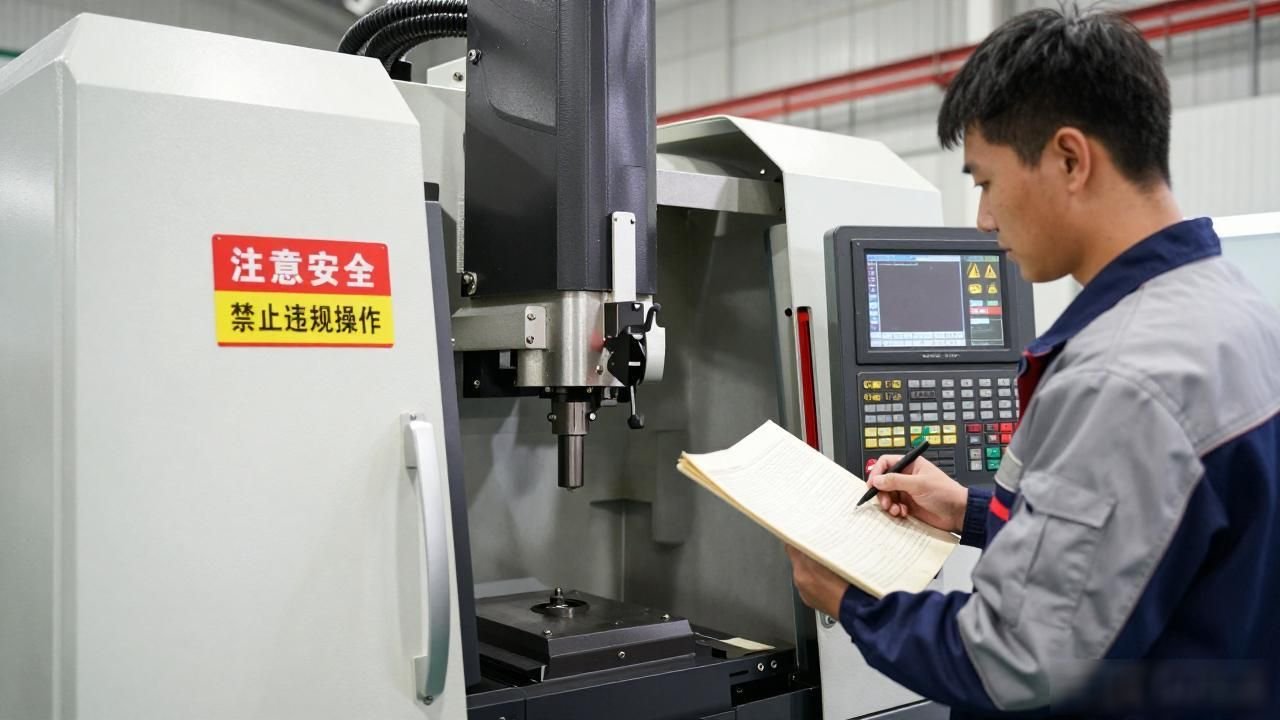


Please list some common operating precautions for five-axis turning, milling, drilling and tapping machine tools.
If the first trial cutting is not handled properly when using a five-axis turning, milling, drilling and tapping machine tool, the consequences can be light or serious. In mild cases, all the tools will be scrapped, and in serious cases, the spindle will be directly collided. Next, we will conduct a comprehensive and thorough analysis of the six steps where errors are most likely to occur before trial cutting.
Training qualifications cannot be saved
The operating threshold for five-axis machine tools is very high. Starting without training is the primary cause of collision accidents. Operators must obtain an operation certificate issued by a formal training institution, and must be familiar with the linkage logic of each axis and the location of the emergency stop button, and must complete at least forty hours of actual machine operation.
In actual workshop work scenarios, a considerable number of companies, in order to catch up with production progress, let inexperienced new employees directly perform actual operations. Once an accident occurs, this approach will cause serious economic losses of tens of thousands or even hundreds of thousands of yuan.
Obtaining relevant certificates is by no means superficial, but a basic and vital skill to ensure the life safety of workers. In 2024, a certain auto parts manufacturing factory encountered illegal operations due to lack of operating licenses, which eventually led to a tool collision accident in the dual spindles of the equipment. The repair cost alone cost RMB 120,000.
The operation manual should be read item by item
Before trial cutting, one thing you must do is to read the manual carefully from beginning to end, and take out a pen to mark the three key places. Which three places? They are zero point return, coordinate system setting and interference check. These three steps must not be careless.
The reason is very simple, because different machine tool brands follow different sequences when resetting. If you get the sequence of these actions wrong, especially the order of the axes, then the equipment will directly generate an alarm and stop running immediately, and you will have to worry.

You cannot rely on the old experience accumulated in the past to operate new machine tools and equipment.
Even if it is found that the path of the G coordinate code in only one place has changed, the entire manual verification step must be re-executed from beginning to end. Only after it is repeatedly confirmed that the moving directions of all motion axes are completely correct, and the posture of the robot arm holding the tool has no errors, is it allowed to finally click the button to start and run the machining program flow.
Keep machine tool surfaces clean
Before trial cutting, be sure to spend ten minutes cleaning all the chips and dust on the workbench, guide rails and protective cover. If debris gets stuck on the balls of the guide rail, it will definitely cause the positioning of the shaft to deviate during high-speed operation. As a result, the machined dimensions will directly exceed the standard range, which is often referred to as out-of-tolerance.
It is not allowed to pile up debris such as workpieces, cartons, and oilcloth around the machine tool. This is because the swing range of the tool arm is very large under five-axis linkage processing. Once any debris invades the interior of the motion envelope area, an accident such as a machine collision is almost inevitable. Therefore, cleaning up should be developed into a habitual thing that must be done before going to work every day.
Lubrication and coolant must be in place
Check whether the oil level in the lubrication pump exceeds the scale line, and also check whether each oil nozzle is clogged or leaking. The concentration of coolant should usually be controlled within the range of eight to ten percent. If the concentration is not enough, the anti-rust effect will be poor. If the concentration is too high, it will easily block the pipeline, so it needs to be tested once a month.
Trial cutting is a heavy-load working condition and the cutting heat generated is very large. If the flow of coolant is insufficient or the nozzle is blocked, tool life will drop sharply, and the surface of the workpiece will easily undergo thermal deformation, resulting in dimensional accuracy that cannot be maintained at all.
Don’t be careless when selecting and installing tools
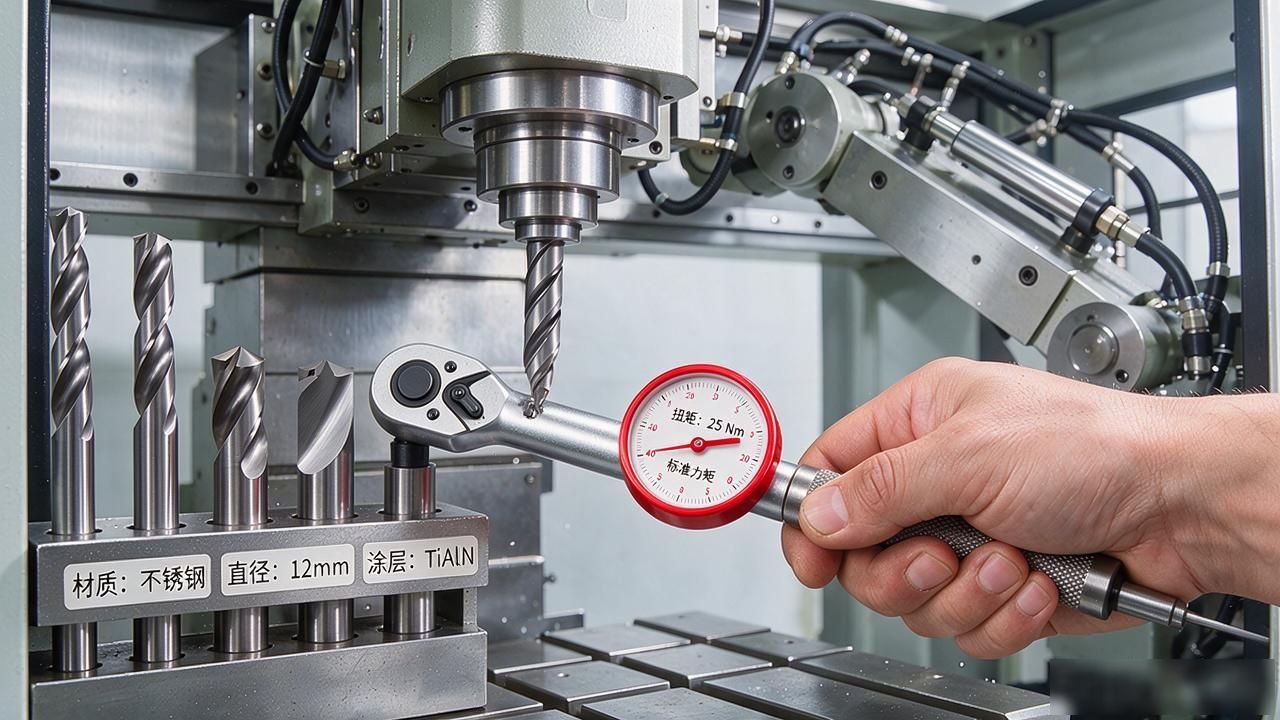
We need to choose the tool based on the material of the trial-cut part and the specific process. The hardness of the tool must match, the diameter must match, and the coating must match. During installation, the tool handle must be tightened according to the torque specified in the manual. If it is loosened, it will jump. If it is tightened, it will cause the tool handle to break. Therefore, we must use a torque wrench to operate, and cannot rely on personal feel to tighten.
After installing the tool, you must perform a dry run to set the tool in the program to confirm whether the tool length and tool diameter compensation values are correct. In the state of five-axis linkage, the attitude angle of the tool changes greatly. If any value in the compensation parameter is wrong, the position of the tool tip will be offset, which will directly cause a collision accident with the fixture.
Keep an eye on processing parameters and operating status
When performing a trial cutting operation, the cutting speed, feed amount and depth of cut must be strictly implemented according to the settings in the process card. Never increase the values casually just to keep up with the progress. When performing trial cutting for the first time, it is recommended to adjust the parameters to between 50% and 70% of the normal value. After confirming that no abnormality occurs, gradually increase these values.
During the machining process, your eyes must not leave the machine tool equipment. You need to always pay attention to the pointer jump of the spindle ammeter, whether there is an alarm signal in the servo system, the sound made by the machine, and whether there is any abnormal vibration.
If anything amiss is found, the emergency stop button must be pressed immediately. Five-axis linkage machining technology is different from ordinary three-axis machines. Once the control system loses control, the distance required to stop operation is much larger than that of a three-axis machine tool, so the operator's remaining reaction time becomes shorter.
Please clarify, in the five-axis test cutting process in the workshop you are currently in, which specific link is most likely to cause problems? You are very welcome to come to the message area to chat. If you find this content useful, please like it. Then, please forward this article to your colleagues who are doing machining work to take a look.







暂无评论内容