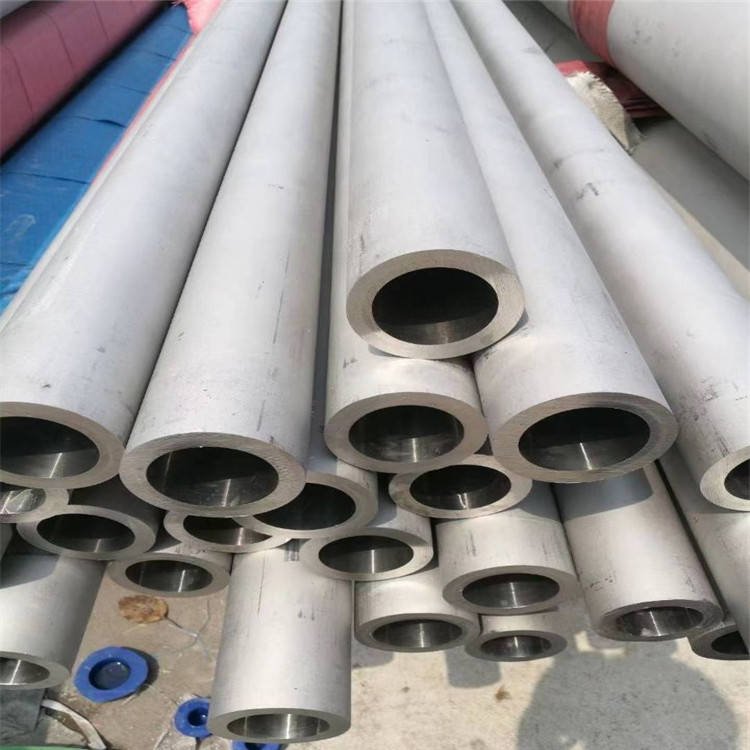


Processing and welding: Discuss the processing performance and welding characteristics of 430 and 304 stainless steel

430 stainless steel and 304 stainless steel, although they both look like silver-white plates. However, as soon as it is placed in front of the welding gun for welding, or as soon as it is processed by the stamping machine. Their expressions will appear completely different. Once a mistake occurs when selecting materials. Then the cost of rework will directly double.
The difference in hardness increases the difficulty of processing
The material 430 has a ferrite structure and its hardness is generally above 200HB. During turning and drilling operations, the cutting force it withstands is about 30% higher than that of 304 stainless steel. People who actually work in the workshop know very well that after the same tool is directly applied to the 430 material, the wear rate of the tool will become significantly accelerated, so that new tools must be replaced within one work shift. This situation is inevitable.
The hardness of 304 material generally hovers around the value of 187HB. The yield strength of 304 stainless steel is only about 205MPa, so the tool can hardly feel the strain on it.
In sheet metal factories in Guangzhou and Dongguan, when people use 304 material for blanking processing, a conventional carbide blade can work continuously for up to half a day. However, for 430 material, it is completely unable to do this.
Deep drawing shapes go their own way
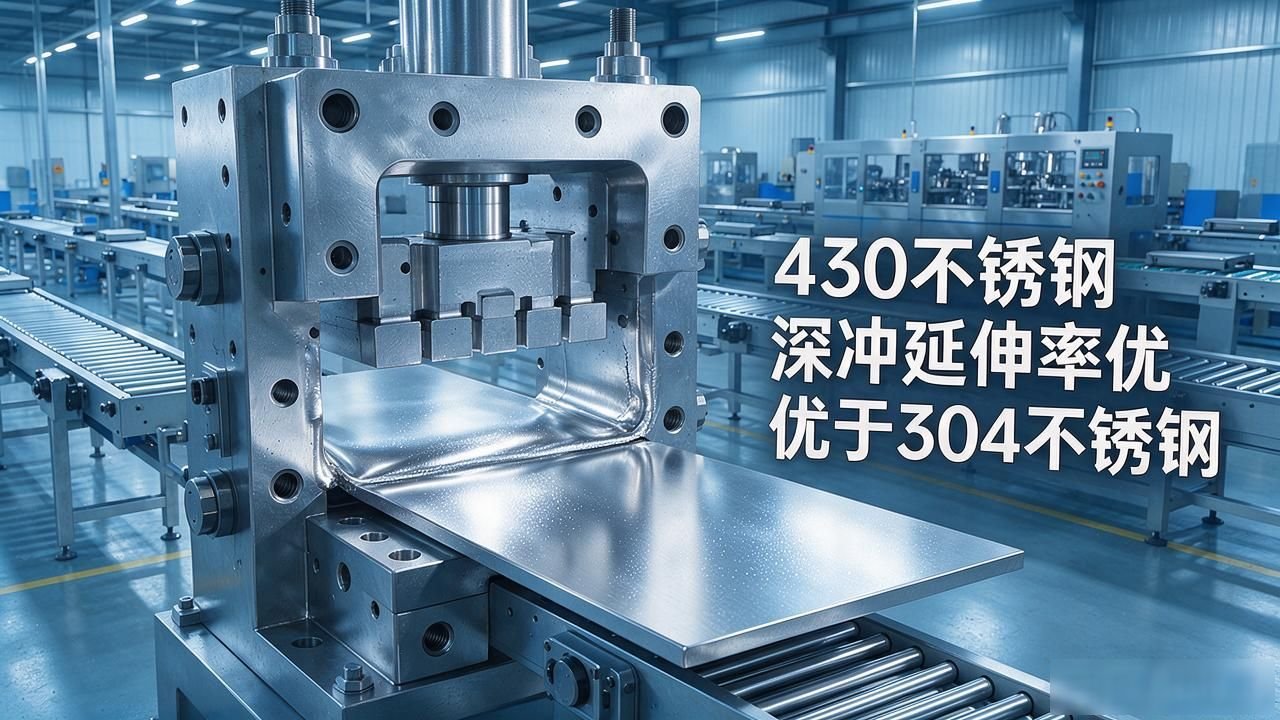
The nickel content of 430 stainless steel is less than 0.75%. Since the alloy composition is relatively simple, its deep drawing elongation is better than that of 304 stainless steel. When the home appliance casing factory uses 430 stainless steel to make the inner pot of the rice cooker, the deep drawing process with a depth of 80 mm is not prone to cracks and can be formed into place in one go.
The overall toughness of 304 steel is very strong, but when it is cold formed, the work hardening speed is very fast. Once the deformation exceeds 30%, it must be tempered again. If it is used to make kitchen utensils with complex curved surfaces, using 304 steel for stamping in two steps will be more stable than 430 steel and less prone to orange peel.
Cold working stress relief is different
When 430 stainless steel is cold-bent and the bending angle reaches 90 degrees, there will be a large residual stress inside the bending part. If the annealing heat treatment is not performed by heating to above 650 degrees Celsius to eliminate such stress, then the component will gradually change in shape or even deform. Local pipe fitting manufacturers in Wuxi, Jiangsu generally say that for 430 material pipe fittings that have been bent. Special stress relief processing must be carried out before the next manufacturing process.
After cold bending of 304 stainless steel, due to the buffering effect produced by the nickel element, the residual stress inside the material can be more fully released. Therefore, it only needs to be stored at room temperature for 48 hours before its performance can be stabilized.
When used to manufacture parts such as automobile engine exhaust pipe brackets, 304 stainless steel can directly enter the assembly process after being processed by the bending and forming process, without the need for additional annealing heat treatment operations.
Thermal conductivity determines weld performance
The thermal conductivity of 430 is approximately 24W/(m·K). During welding operations, the heat cannot be dissipated smoothly. This causes the temperature in the heat-affected zone to accumulate.
As a result, the risk of thermal cracking becomes higher. A factory in Beijing that produces structural parts has conducted a field survey. Their results show that when the thickness of the 430 plate exceeds 6mm, cracking will almost certainly occur if preheating is not performed.
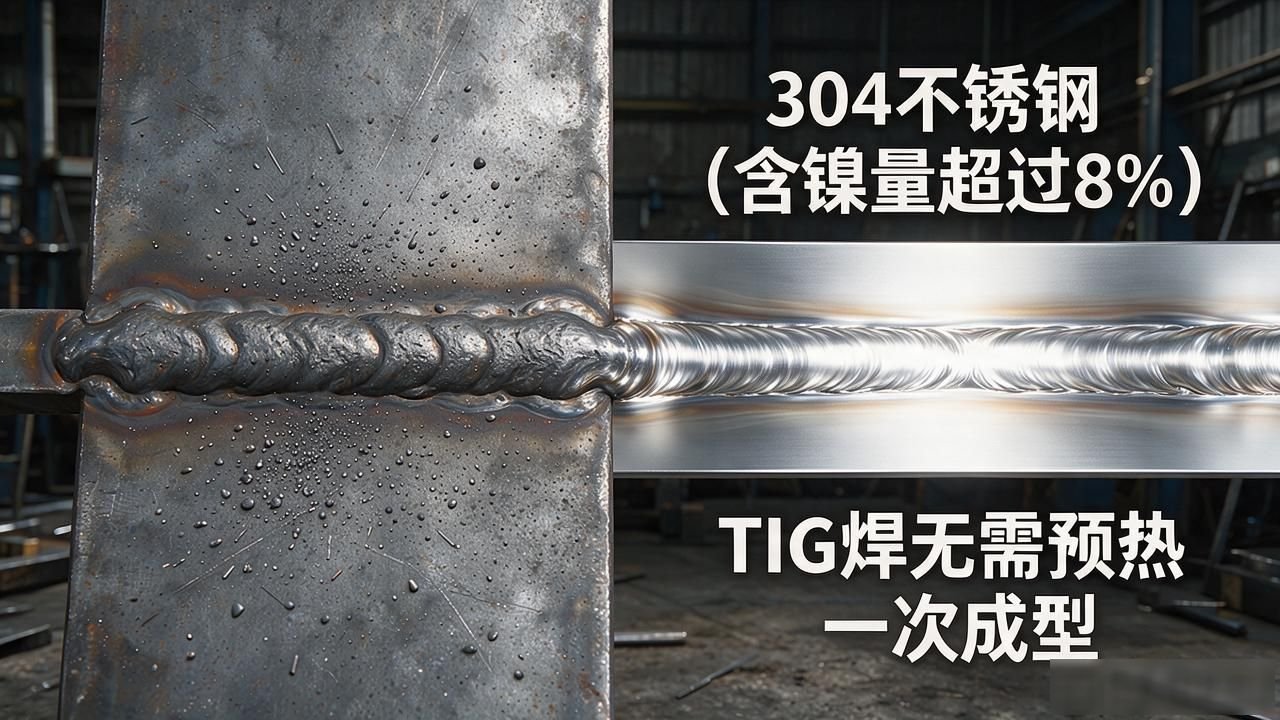
The nickel content of 304 steel is more than 8%. This material has very good toughness in the weld area. Therefore, when using conventional TIG welding or MIG welding, the difference between 304 stainless steel and carbon steel riveting welding process is that the welding can be completed in one go without preheating at all.
For a 304 plate with a thickness of 3mm, only a single pass of argon arc welding is enough. After all the welding work is completed, there will be no obvious deformation on the plate.
Preheat annealing is a hard threshold for 430
Before welding 430 steel, it is generally necessary to preheat it to a range of 150 degrees Celsius to 200 degrees Celsius. After welding is completed, it must be annealed at a temperature of 650 degrees Celsius. If this is not the case, processing and welding: Discuss the processing performance and welding characteristics of 430 and 304 stainless steel, it will easily lead to embrittlement in the area near the weld. After such a complete process flow, The man-hours required to complete a weld will be nearly twice as long as those of 304 steel.
When the plate thickness is within 10 mm, using ordinary welding conditions is enough to ensure that the strength of the weld can reach or exceed 90% of the strength of the base metal. Kitchenware production lines from the Zhejiang region weld more than 300 workpieces made of 304 material every day. These processes basically do not require a preheating step, making the pace of production efficiency faster.
Choose materials based on craftsmanship, don’t just look at price
The price of 430 per ton is 800 to 1,200 yuan cheaper than that of 304. However, if the extra working hours, tool loss and annealing energy consumption are also taken into account, for small parts made of thin materials, the cost difference between the two is not large, but for large thick plate structures, the total cost of 430 may be higher.
When making actual selection, we must first look at the part forming complexity and weld location. If you are making food contact parts and deep-drawing shells, it is economical to choose 430; if you are making precision structural parts that require multiple welding and assembly, then choosing 304 is more worry-free and can be formed in one time without rework.
In terms of the materials currently being used in your factory, are they using 430 or 304? Have you encountered any troublesome pitfalls during processing and welding? Welcome to the comment area to chat. If you find this thing useful, please like it and forward it to your colleagues.






暂无评论内容