

Where is the threshold for five-axis one-time clamping of large workpieces? ——Starting from Grob GP1350
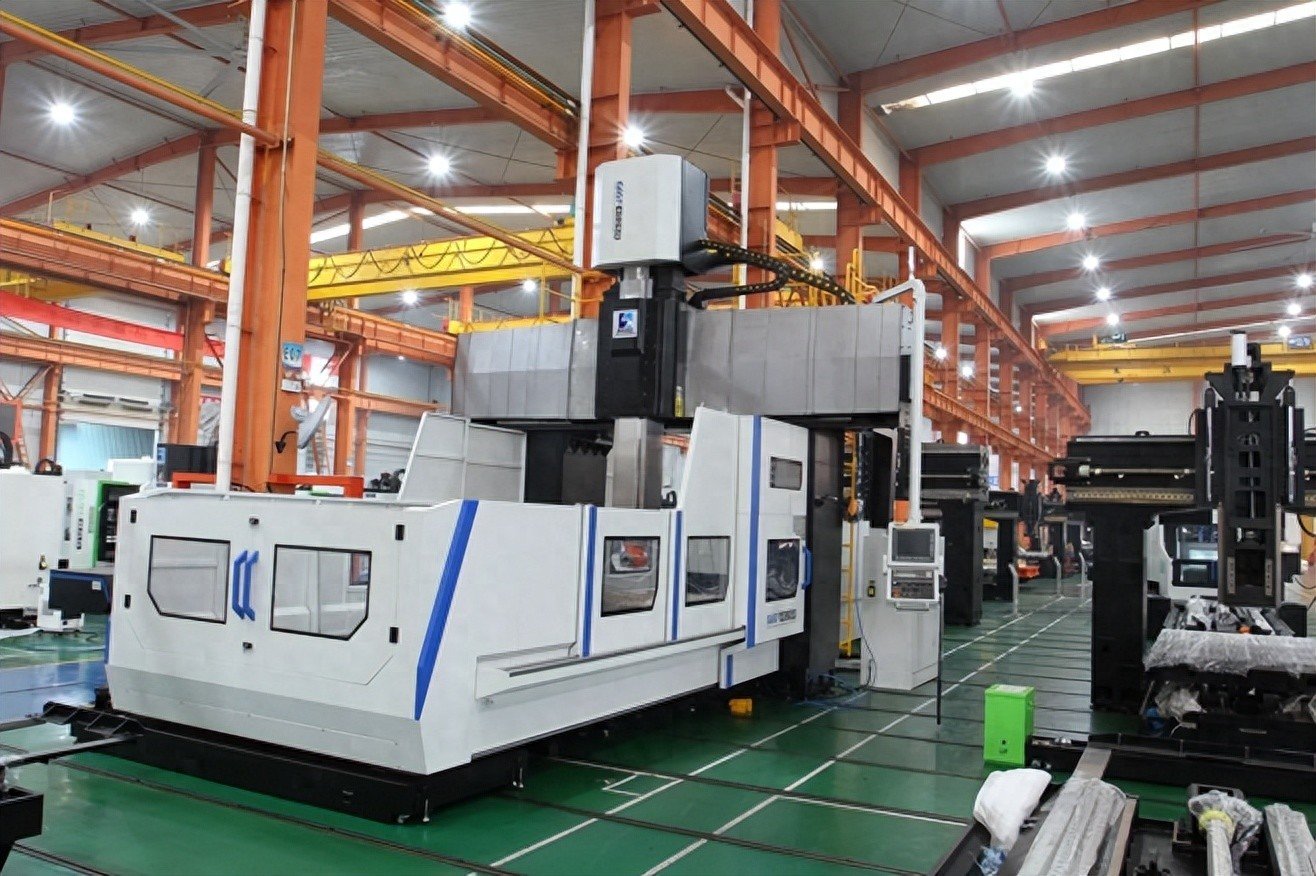
Five-axis machine tools such as small and medium-sized parts have long been rolled into the Red Sea market. However, as long as the weight of the workpiece reaches more than one ton, or the size exceeds one meter, the accuracy will directly suffer a large collapse problem. Grob Company displayed a five-axis milling gantry machining center at the AMB 2026 exhibition. This is actually aimed at the difficult-to-conquer field of high-precision machining of large parts.
Boundaries drawn by trip data
The maximum workpiece size corresponding to the travel of the X, Y, and Z axes is 1400 mm by 1750 mm, and its maximum load capacity can reach 3.6 tons. This set of data can very directly indicate the positioning of the equipment, that is, it is not designed for small and medium-sized workpieces, but is specially used to handle large and complex structural workpieces.
By using a universal milling head that can perform undercut angle processing and set the angle to minus 2.5 degrees, it is possible to directly complete the milling operation on the lower end of the workpiece without turning the workpiece over. This processing method effectively eliminates the need for a second clamping process. For larger workpieces, each reduction in the number of clamping operations can reduce the accuracy loss of the workpiece to a certain extent.

Gantry rigidity is the foundation
The weight of large parts can reach several tons, and the force during cutting is very strong. If the rigidity of the machine's gantry cannot meet the standard or the damping link is not done well, the vibration phenomenon will directly lead to the loss of processing accuracy. The equipment produced by Grob uses a gantry structure with a damping design to maintain stability. This approach is actually laying the foundation for subsequent precision processing like the foundation of a building.
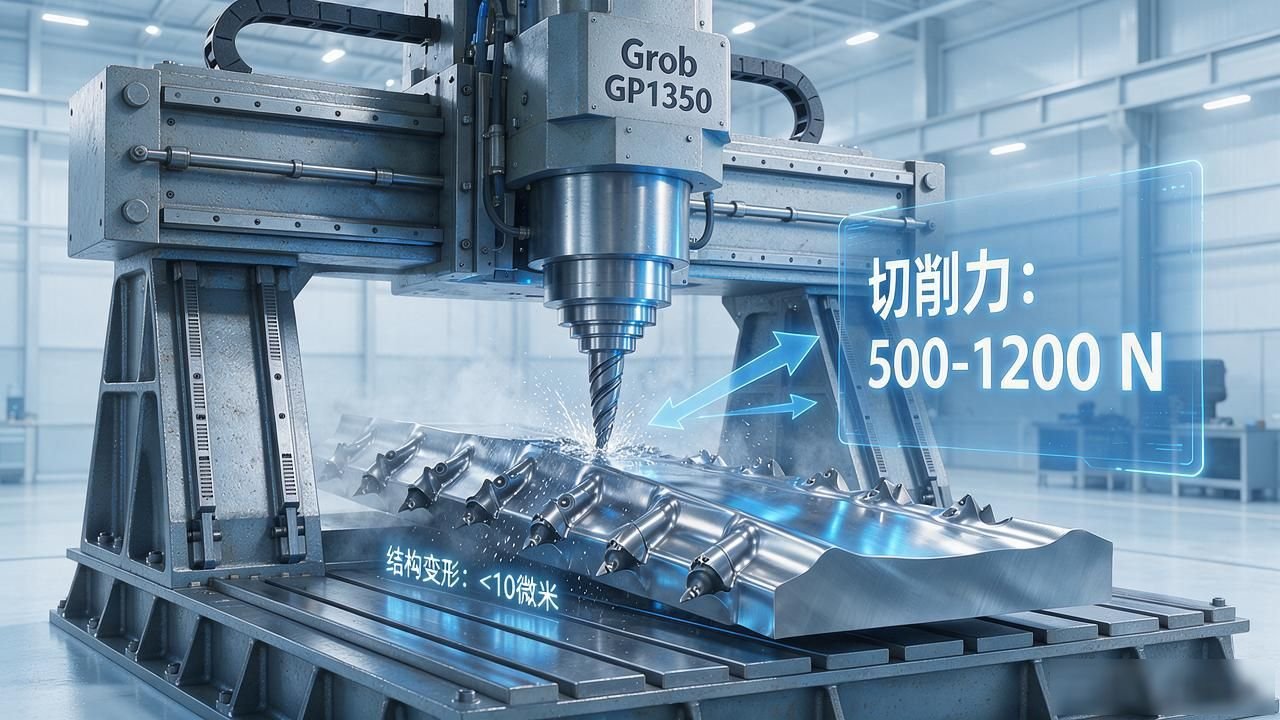
The processing intensity of small parts is maintained at the level of tens of Newtons, while the processing intensity of large parts can easily reach the range of hundreds or even thousands of Newtons. In this case, the deformation amplitude of the structure needs to be reduced from the millimeter level to the micron level, which is indeed very worrying. Due to such differences, the design ideas adopted for small machine tools cannot be directly applied to the current scenario.
error amplification effect
Errors such as thermal deformation, gravity deformation, and tool wear may only be a few tenths of a micron on small parts, but when the scale reaches large parts, the absolute value is directly amplified several times. Because the workpiece is larger, the error becomes more conspicuous and obvious.
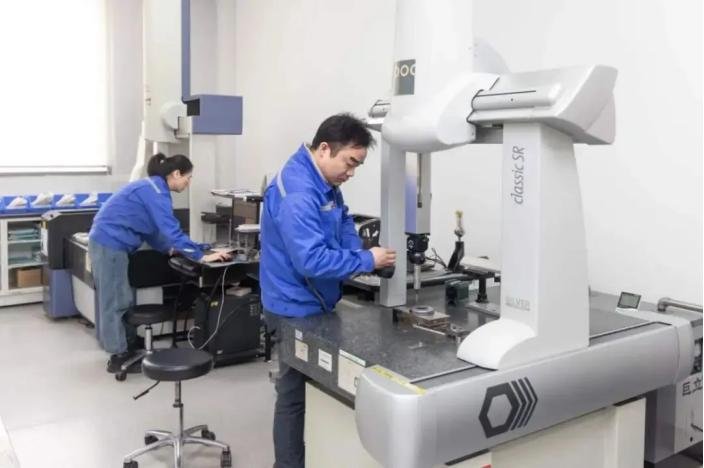
Relying on one item of compensation alone is not enough. It must be solved by a whole system from structural design to thermal compensation algorithm. This is also the reason why large-scale five-axis has always been a high-threshold track.
Automated loading and unloading is a real bottleneck
GroB is a device that can connect to pallet changing systems and pallet storage units, and can also be used with GroB Robot. However, its requirements for pallet loading and positioning accuracy are a whole order of magnitude higher than the requirements for handling small and medium-sized parts.
Carrying a few hundred grams of weight and carrying a weight of two tons are two completely different things. The rigidity of the pallet, the locking method and the accuracy of the alignment are all different. If this problem cannot be solved, even if the machine tool is very good, it will be useless and wasted effort.
The abacus of the 408 tool magazine
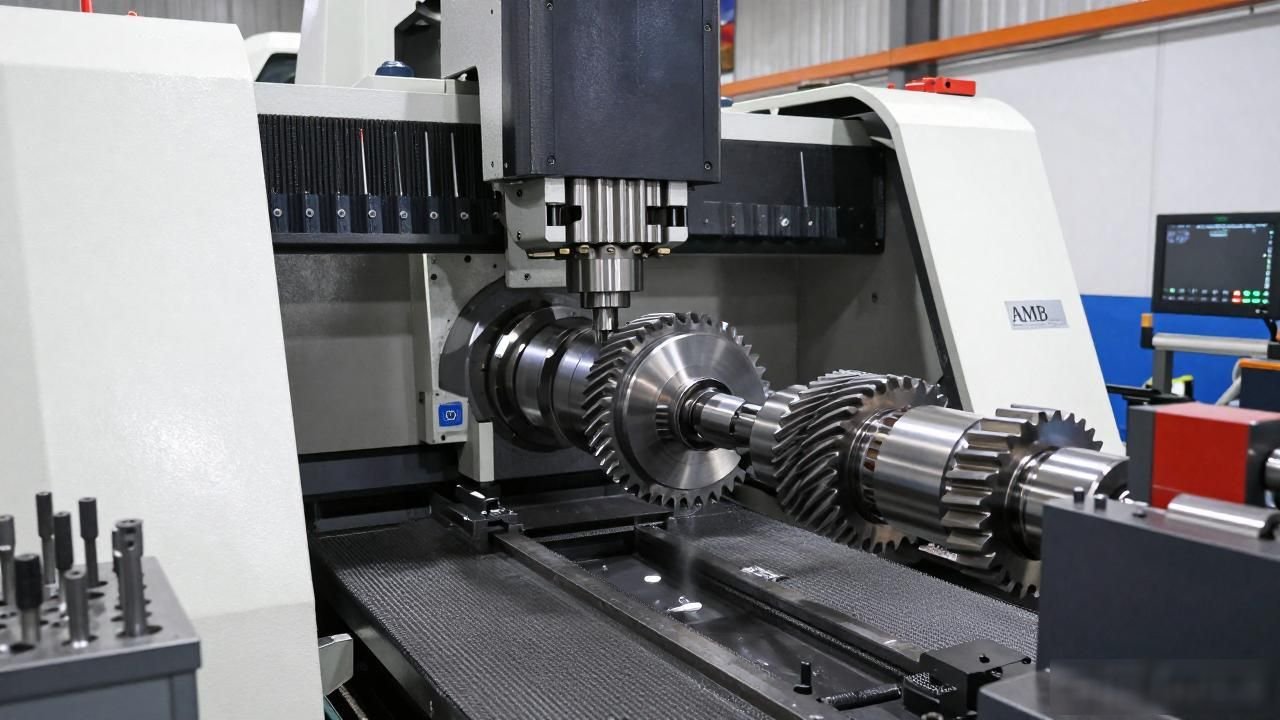
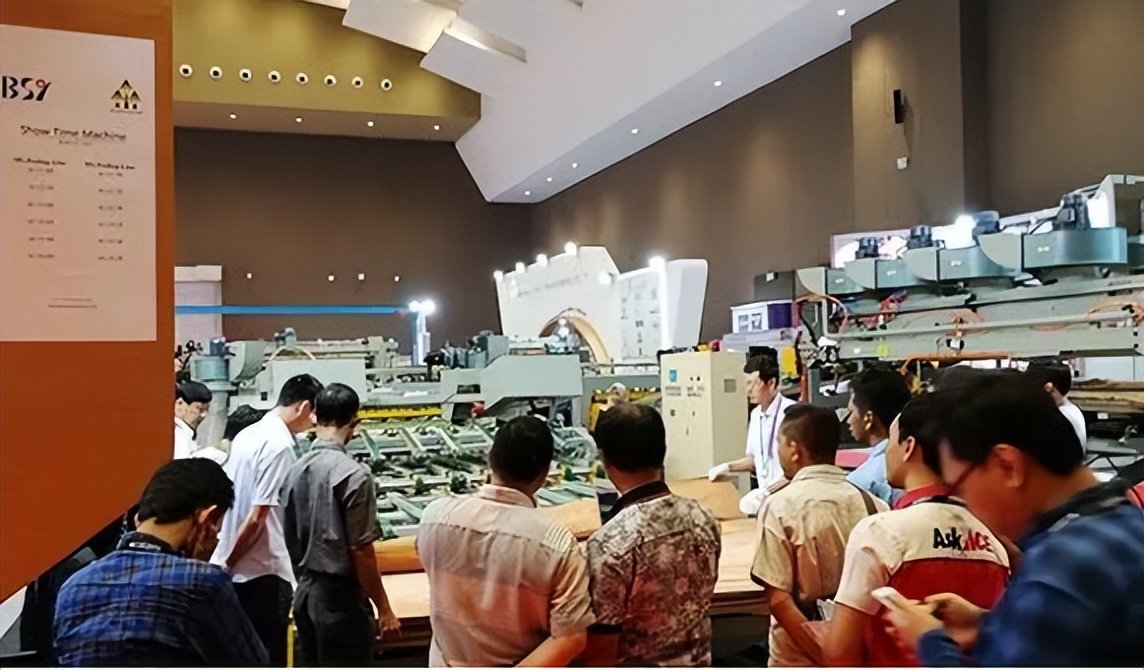
AMB demonstrated the processing of bevel gears on site. Its tool magazine can accommodate up to 408 tools and adopts a double-row layout. For the processing of large workpieces, whether it is from rough milling to fine milling, or from drilling tasks to positioning profile processing, the entire process can be completed independently by one machine.
Every move of the process will cause an additional accumulation of positioning errors. Five-axis machining technology exchange group , and the multiple processes of the 408 handheld cutting tools are forced to be installed on the same equipment. After five-axis machining technology exchange group five-axis clamping of large workpieces, where is the threshold? ——Starting from Grob GP1350, the length of the precision chain from the starting point to the end point has been directly shortened.
The product line is still developing
Grob has made plans to launch a turn-milling compound version that will be launched in 2027, as well as a model with larger specifications than now. This direction can be said to be very clear, which is to develop towards larger equipment and more complex functions. It will continue to expand in the field of five-axis machining of large parts.
For those manufacturers that manufacture energy equipment and large machinery, they will face more and more purchasing choices in the future. However, the threshold of those technologies can only produce higher and higher changes, so they need to plan and deploy in advance to occupy the corresponding position as soon as possible.
Have you ever encountered a situation in the production line where "the five-axis accuracy of large parts is lost as soon as it is put on"? Let’s talk about the five-axis machining technology exchange group in the comment area. If you find it useful, please like it and forward it to your peers.





暂无评论内容