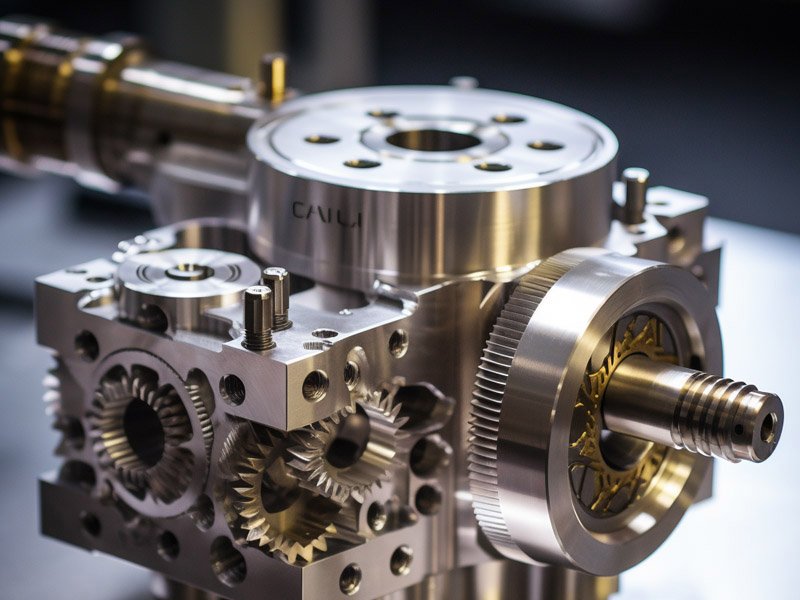


Optimization of boring process parameters in CNC machining (what is optimization of boring process parameters in CNC machining)
In fact, nowadays, there are still many CNC operators who rely heavily on their personal touch when adjusting boring parameters. This will lead to a slight difference in the cutting speed of tens of meters per minute, then there will be a huge difference in the service life of the tool and the roughness of the part surface, which will directly lead to a terrible situation of doubling the scrap rate.
Material hardness determines the upper limit of cutting speed
According to actual test data from a factory in Guangzhou in 2024, when processing No. 45 steel, the set cutting speed is 180 meters per minute. At this time, the tool life can reach approximately 2 hours. However, using the same parameters, if the material to be processed is replaced by bearing steel with a hardness of HRC58, the angular wear of the tool will exceed 0.3 mm after only 30 minutes of processing.

When dealing with hard materials, the basic logic is to reduce the speed and increase the depth of cut. The original speed was 180 meters per minute, but now it has been reduced to 80 meters per minute. The depth of cut has been increased to 2 mm. The service life of the tool has been extended to more than 5 hours. Although the efficiency has been reduced, the cost of the tool has been saved a lot.
Tool geometry affects surface quality
The value of the main deflection angle was modified from the original 90 degrees to 105 degrees. This change changed the distribution of cutting force. The surface roughness index has been reduced from Ra1.6 to Ra0.8.
A shell manufacturer located in Shenzhen will process aluminum shell parts during 2025. By changing to a 105-degree tool angle, the factory's first-time acceptance rate of products has increased from 72% to 94%.
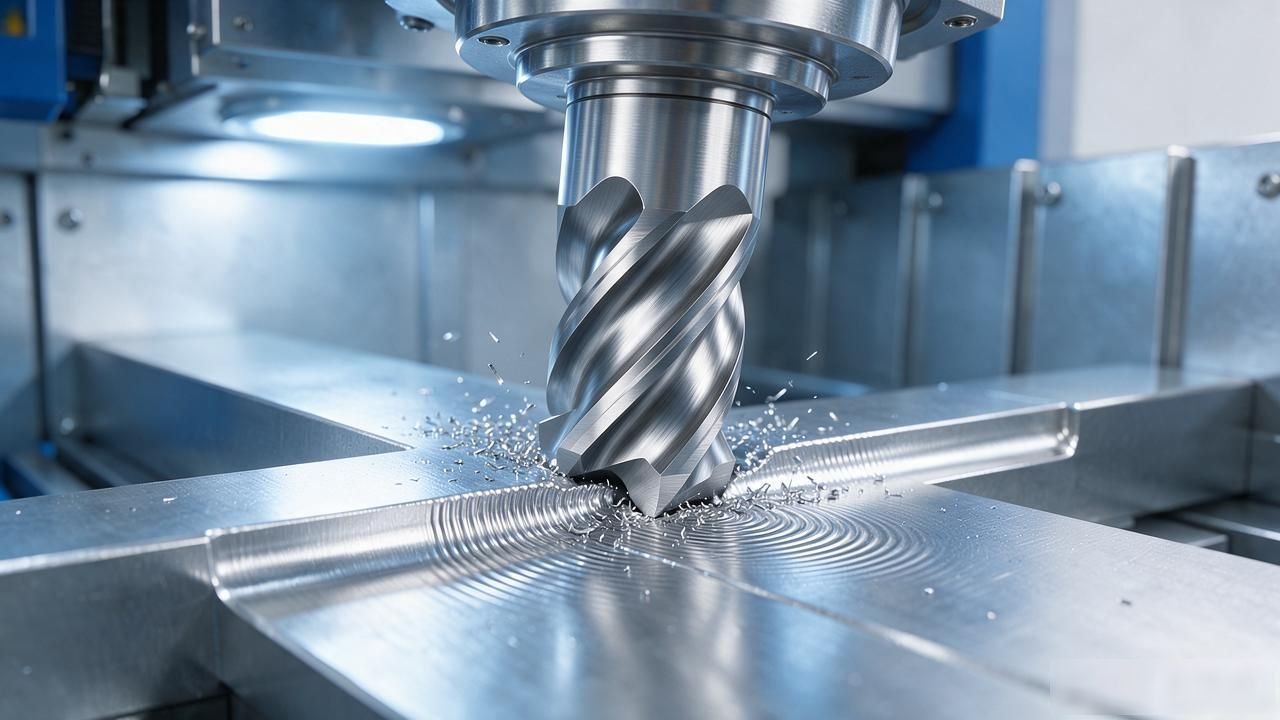
When the blunt radius of the cutting edge is 0.2 mm, the surface ripples produced when processing stainless steel materials are relatively small, but this situation is better than using a sharp cutting edge. However, the depth of cut cannot exceed 1.5 mm. If the depth of cut exceeds 1.5 mm, the chip discharge will be blocked, and the entire production efficiency will be delayed.
Feed and coolant should be adjusted together
When the feed rate is set to 0.2 mm per revolution and the boring processing parameters are set , although the surface roughness can be controlled within Ra0.4, doing so will double the processing time.
By 2025, there will be a factory in Dongguan to process hydraulic valve bodies. This factory uses a feed rate of 0.15 mm per revolution and uses fully water-soluble cutting fluid to carry out the operation. In this way, not only the accuracy is firmly maintained, but the construction period is not delayed.
If the concentration of the water-based fluid is lower than the level of 5%, then its cooling effect will show a sharp drop, which will cause the temperature of the tool to exceed 200 degrees Celsius. Due to the occurrence of thermal deformation, the original size of the aperture will be forcibly expanded by two to three degrees. This is actually a real reason why many factories suddenly have inexplicable out-of-tolerance problems during the production process.
Don’t ignore depth of cut and residual stress
When the depth of cut exceeds 5 mm, the tensile stress on the inner wall of the boring hole will increase significantly . Boring processing parameter settings . In 2024, during the processing of titanium alloy cylinders, a factory called an aviation factory changed the depth of cut from 6 mm to a method of dividing the cutting tool into two, each cutting 3 mm. Optimization of boring process parameters in CNC machining (what is the optimization of boring process parameters in CNC machining), in this way, The stress was reduced from 80MPa to 25MPa, which improved the fatigue life by nearly twice the boring processing parameter setting .
For precision holes with a hole diameter tolerance within plus or minus 0.02 mm, it is a standard practice to gradually process them through three processes: rough machining, semi-machining, and finishing. If you try to pursue surface speed by cutting all the way to the bottom, this method will lead to huge internal stress in the material. After two days of placement, the size and shape of the holes will gradually change slowly.
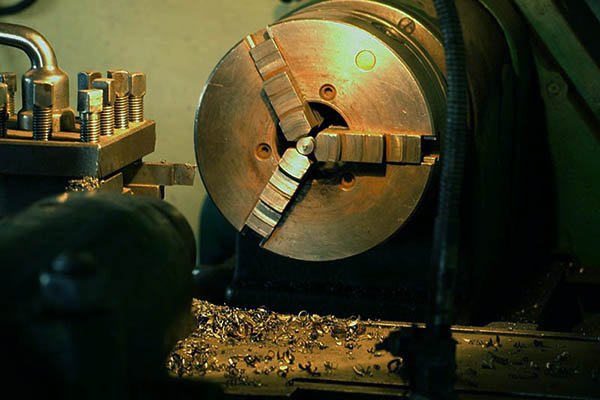
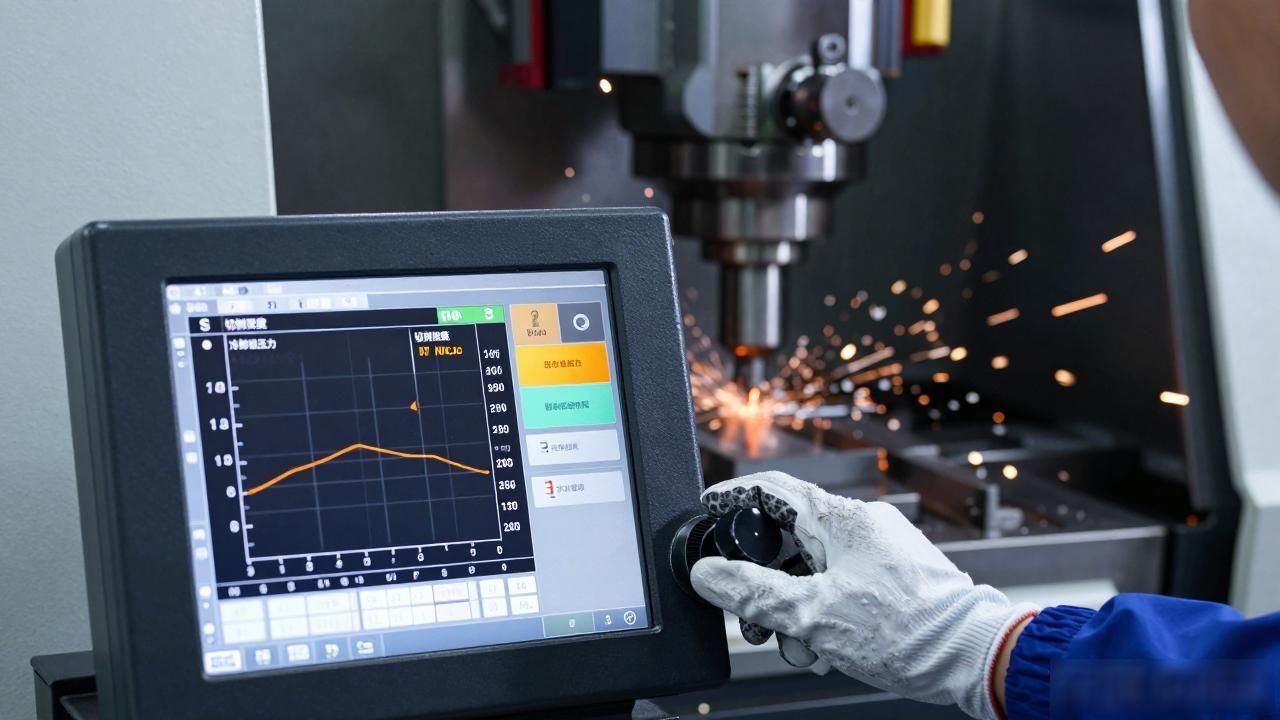
Don’t just focus on the speed and feed of CNC system parameters
In the year 2025, a local factory in Suzhou used DMG machine tools to process thin-walled shell parts. The interpolation step was adjusted from the original 0.1 mm to 0.01 mm, which ultimately reduced the roundness error from the original 8 microns to less than 2 microns. However, manual adjustment of the S value and F value alone cannot solve this type of technical problem.
The wear amount data of tool compensation needs to be updated every two hours. If the update operation is not performed, the diameter of the machined hole will gradually become larger. After a day of accumulation, the error value can reach as many as five wires. Therefore, the resulting rework cost far exceeds the effort spent to update the tool compensation in those two minutes.
Simulation verification is ten times faster than trial cutting
In 2025, a non-standard manufacturer in Chengdu used Adaptive cutting software to conduct three sets of parameter simulations for the motor housing. After two hours of calculation and analysis, the cutting speed was finally locked at 120 meters per minute and the feed rate was 0.18 mm per revolution. This approach saves at least two days compared to the traditional trial cutting method.
Simulation is never a panacea, so before going into mass production for the first time, you have to do a trial cutting of three pieces, and do some actual inspection with a roughness meter and a pass gauge. Only when the collected data is really consistent, should you go into mass production. Don't just start with a simulation picture.
In your factory, when performing boring processing, which parameter setting are you most worried about making mistakes? You can talk about it in the comment area. If you think this information is useful, please like it and forward this content to the teachers in the workshop for everyone to see.


No comments yet