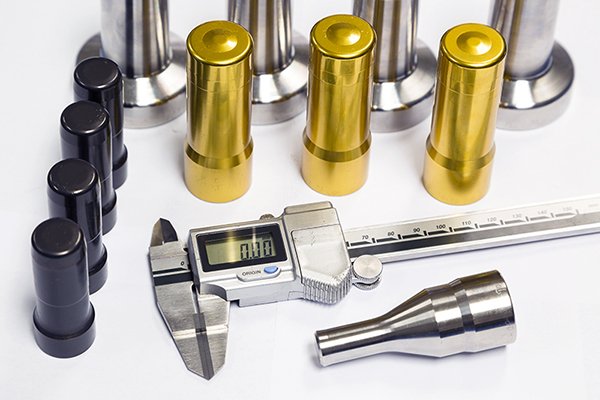


Difficulties encountered in metal parts processing and solutions
When carrying out metal parts processing activities, if inappropriate materials are selected, dimensional accuracy cannot be controlled, and costs cannot be effectively reduced, these three problems will choke most small and medium-sized processing plants, causing profits to become thinner and thinner.

Wrong material selection leads to sharp reduction in tool life
By 2025, there will be a company in Suzhou that specializes in aviation aluminum parts. In the past, they used ordinary carbide knives to process 7075 aluminum alloy. As a result, the tool life was extremely short, and the tool had to be replaced after only 12 minutes. Because the tool is always changed frequently, the cost of a single product is increased by 8 yuan.
Later, they changed their approach and used cobalt-containing high-speed steel knives, coupled with micro-quantity lubrication technology. After such a tossing, the life of the tool was suddenly extended to 45 minutes. Not only that, the scrap rate has also dropped from 3.2% before to 0.8% now.
Titanium, a material called Ti-6Al-4V alloy, has very high hardness and very poor thermal conductivity. If it is processed directly under dry cutting conditions, the tool will easily crack. This is a pain point in the metal parts processing industry . Therefore, liquid coolant must be used to strictly control the temperature of the blade tip below 300 degrees Celsius. There is a factory in Dongguan that specializes in the production of medical devices. In 2024 In 2006, we switched to water-soluble cutting fluid. This change reduced the surface roughness of the product from the original Ra1.6 to Ra0.8, and the rework situation basically disappeared completely.
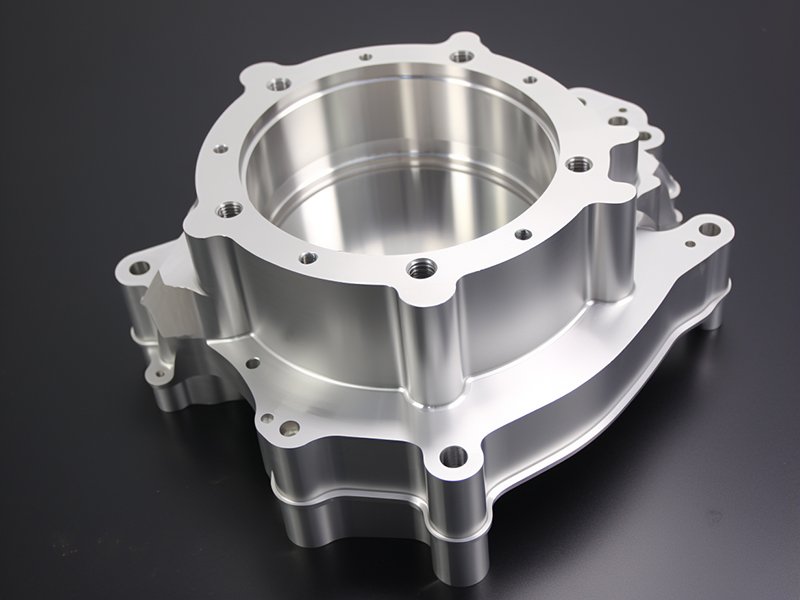
Equipment alone is not enough for micron-level size control
In Shenzhen, there is a factory that makes the middle frame of mobile phones, using CNC machine tools. In 2025, they received an order with a tolerance requirement within 0.01 mm. The result was a deviation of 0.03 mm when measured on a coordinate measuring machine. As soon as the customer saw it, he immediately returned the goods.
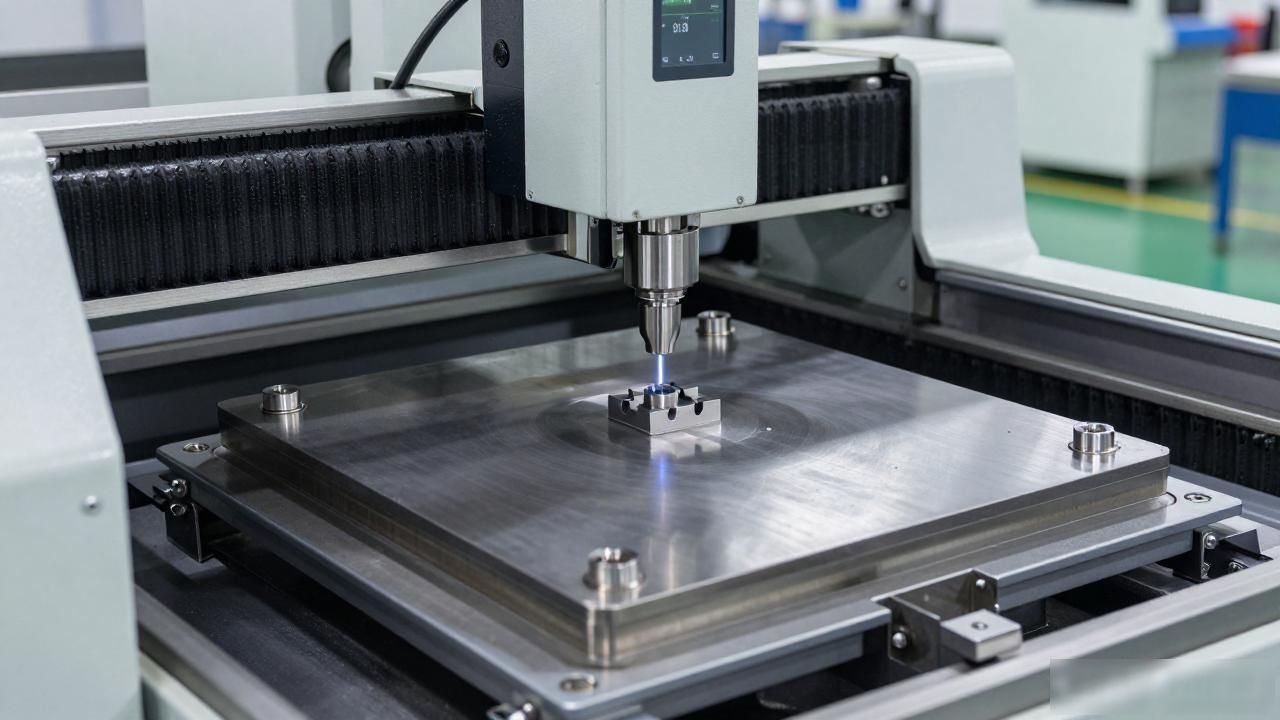
Later, the factory replaced the original ordinary pressure plate with a vacuum adsorption method, and also added a five-point positioning method. In addition, it is equipped with laser online measurement equipment. Finally, the stability control of the size is achieved to plus or minus 0.01 mm.
Simply upgrading the equipment is not enough. The problem of thermal deformation of the fixtures must also be controlled. A factory in Shanghai that processes precision parts found that the size difference can be as large as two microns in the summer afternoon and early morning. Later, they locked the temperature of the constant-temperature workshop at 22 degrees plus or minus one degree, and allowed the fixtures to preheat for fifteen minutes before putting them on the machine. In this way, the fluctuations were suppressed to within one meter.
Cutting back and forth between batch and customization consumes the most production capacity.
There is a factory in Foshan that produces hydraulic valve bodies. By 2025, it will process 12 different product models in parallel. Each time it changes product models, it takes more than 40 minutes, resulting in an average of less than 6 hours of actual effective time for cutting per day. Since the introduction of quick-change fixture tools and supporting production scheduling management software, the process time for changing product models has been reduced to only 8 minutes. This increased the average daily actual cutting processing to 9.5 hours, ultimately doubling the overall production capacity.
The cost must be calculated clearly.
In Changzhou, there is a factory that produces five-axis equipment. By 2024, they will have transformed the deburring, cleaning, and inspection links into automatic assembly lines. After such transformation, the labor cost of each product has been reduced from 14 yuan to 5 yuan, and the total number of pieces that can be produced per month has also increased from 800 to 2,200. The time customers wait for delivery has also been significantly shortened from the original 21 days to 9 days.
Cooling and lubrication is a waste of money.
Nowadays, most people have the idea that the higher the concentration of the cutting fluid, the better. However, in 2025, a local factory in Wuxi tested their situation and found that if the concentration reached 12%, it was a bit too high. As a result, bacteria multiplied very quickly, and then tiny corrosion spots appeared on the machined surface of the workpiece. Later, they adjusted the concentration to 7%. And after adding a sufficient amount of antibacterial agent at the same time, the service life of the tool was extended by about 15%, and the surface condition became cleaner.
Dry cutting is not a be-all and end-all solution. When processing Inconel718, a high-temperature alloy material, dry cutting will cause the tip temperature of the tool to soar to more than 700 degrees, so that the tool will become dull within a few cuts.
Later, the technicians changed the plan and switched to the method of micro-oil mist lubrication. It was found that the temperature of the tool tip dropped to about 400 degrees. In this case, a tool can continuously process 8,250 products, while the original method could only run 25 products. In this way, the cost of consuming materials was saved by as much as 40%.
The inspection link slows down the entire production line
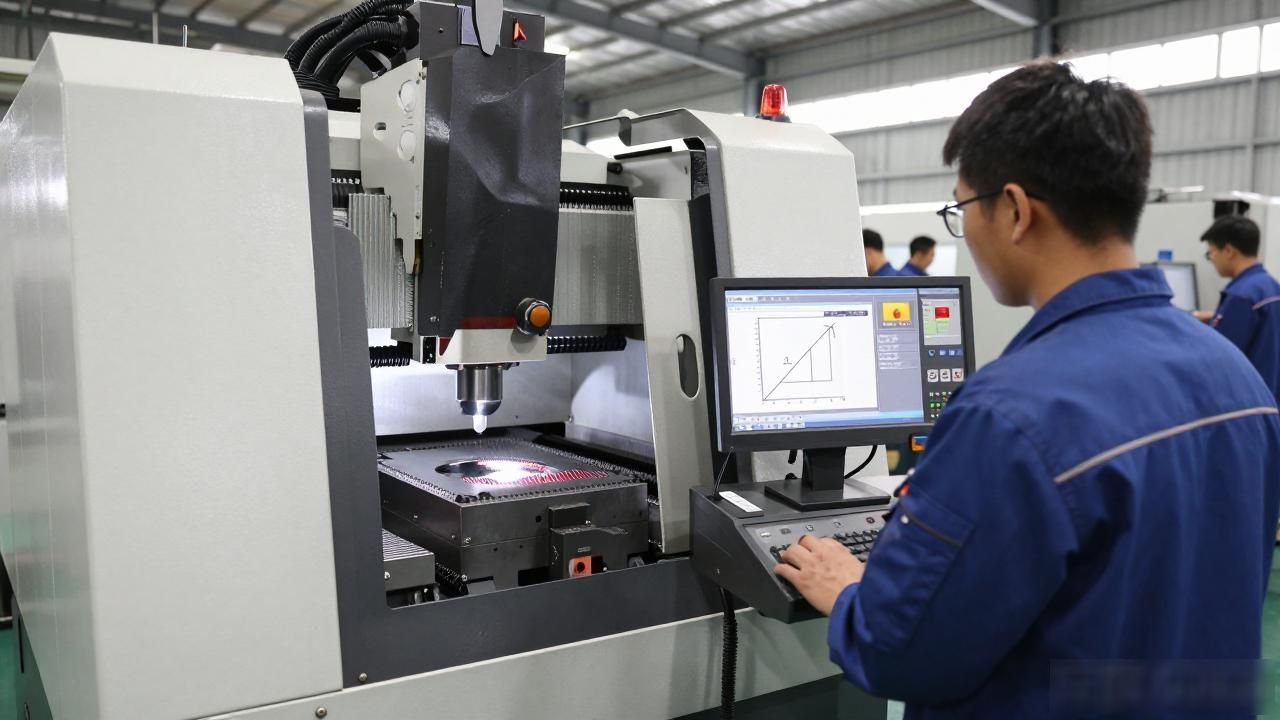
There is a gear factory in Ningbo. After using CNC equipment to process a product, it had to wait two hours for the three-coordinate inspection link to be inspected. This caused more than 40 products to be scrapped in batches when the dimensions were found to be out of tolerance. After the factory installed an internal probe in 2025, the situation has been greatly improved, because the CNC equipment will output data in just 5 seconds after the processing is completed. Once an out-of-tolerance situation is discovered, an alarm program is immediately issued on site, resulting in a significant reduction in the number of product scraps per month from 60 in the past to only 5 today.
The core point of automatic detection is to achieve a closed loop of data. There is a factory in Suzhou that specializes in the production of sensor brackets. They send the detected data directly back to the CNC equipment. When the tool wear reaches a critical value, the system will automatically compensate. This increases the dimensional process capability index CPK from the original 1.33 to 1.8. The customer passed the audit at one time, and the final order volume directly increased by two product lines.
Talent gap makes equipment idle
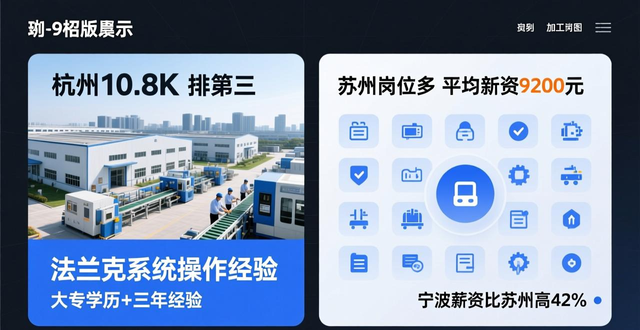
In the era of 2025, the average monthly salary of employees engaged in CNC operations in the Yangtze River Delta region has reached a level of 9,500 yuan. At the same time, resources for masters who are skilled in five-axis programming are still in short supply.
Normally, such a skilled master can only take care of three pieces of equipment at most, which is already the limit of her energy and workload. Take a local manufacturing factory in Hangzhou as an example. The factory recruited six programmers for a period of time, but lost four of them in the following six months, which directly caused the equipment utilization rate of the entire factory to drop significantly to 60%.
The solution is to lower the threshold. CAM automatic programming technology is used to establish a process parameter library, allowing junior masters who have just entered the industry to master the processing of conventional parts in half a day. The experience accumulated by the senior masters is summarized into a cutting parameter card, and then the newcomer only needs to follow the instructions on the card.
That factory brought its equipment utilization rate back to 85% in the second half of 2025, and staff shortages were no longer a problem hindering production capacity improvement.
In your workshop, which link makes you feel most constrained and unable to proceed smoothly? You can share your views in the comment area below , the pain points of the metal parts processing industry, the difficulties encountered in metal parts processing and their solutions. If you find this content useful to you, give it a like and forward it to friends in other industries.


No comments yet