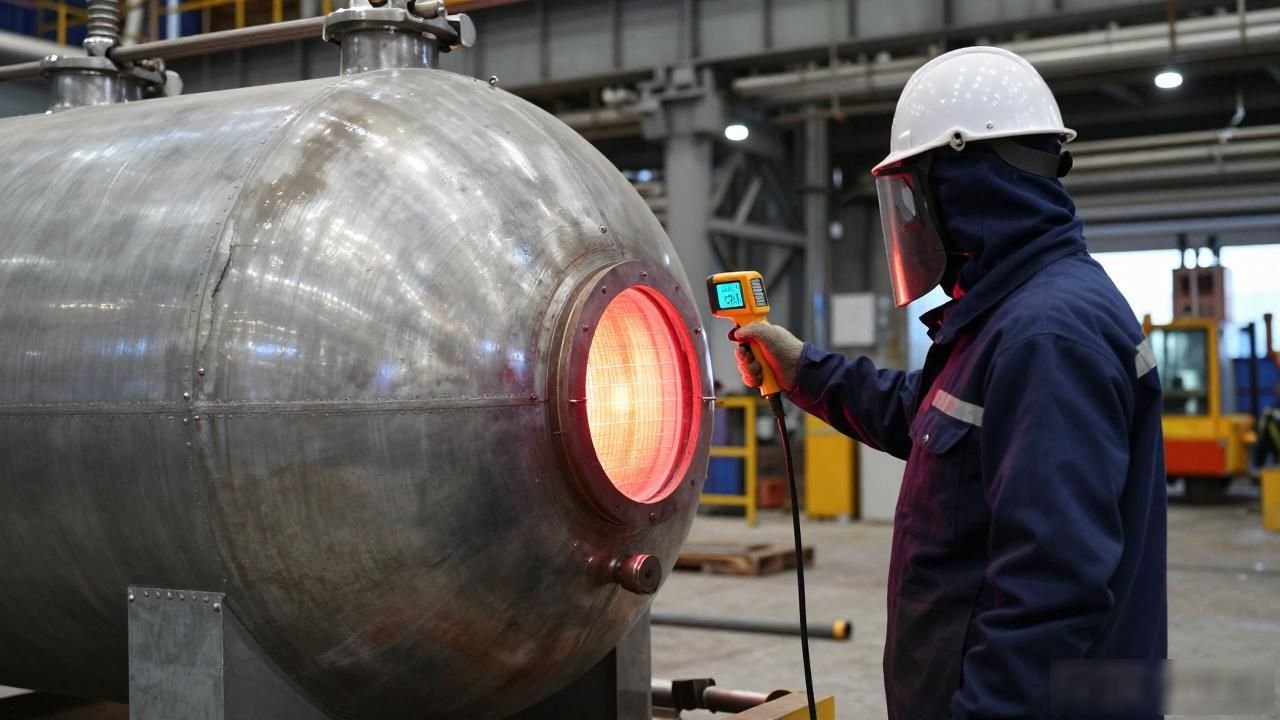


Preheating the spherical tank before welding
During the construction process of spherical tank welding, the most easily overlooked things include the preheating treatment of the weld and the subsequent heat treatment step. If the temperature here deviates by a few dozen degrees, the probability of cracks in the weld will directly double. It can be said that the root cause of many safety accidents has actually been laid in this neglected step.
Why can’t we save on preheating?
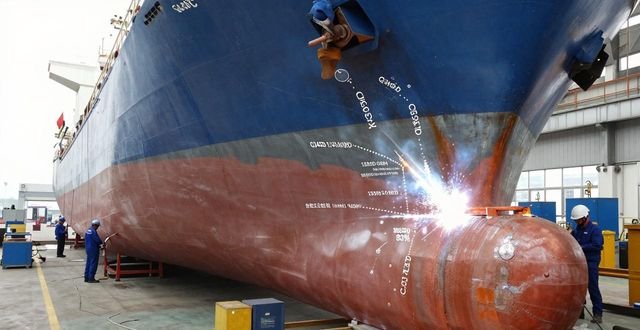
Nowadays, most of the materials for spherical tanks are high-strength alloy steel hull riveting preheating and post-welding insulation. Pre-welding pre-welding and post-welding insulation spherical tanks. When the welding is completed and the cooling shrinkage is particularly fast, the heat-affected zone is very prone to cold cracks, and even brittle fractures may occur. Therefore, the role of preheating is to minimize the risk of cracks and reduce the amount of deformation caused by stress. It can also prevent the plasticity and toughness inside the heat-affected zone from declining, and at the same time, it can also evaporate the moisture attached to the surface of the workpiece into the air.
If operated in accordance with construction standards, the setting of the preheating temperature cannot be determined arbitrarily based on personal experience. It is necessary to conduct a comprehensive analysis and consideration of multiple factors such as the material condition of the weldment, the thickness of the plate, the restraint of the joint, the welding materials used, and the temperature and wind speed of the day. When implementing heating, it is necessary to achieve uniform heat distribution, and the heating range should cover the position where the distance between the two sides of the weld center line is greater than three times the plate thickness value. At the same time, the width of this range cannot be less than one hundred millimeters in length. If the above-mentioned range cannot be fully covered, then the work done before will be equivalent to not having been done.
Temperature and time of post-weld hydrogen elimination treatment
After the welding is completed, the spherical tank must not be left aside at will. Post-weld heat treatment must be carried out immediately. The core goal of this work can be divided into two main parts. The first part is to release the remaining stress state and simultaneously optimize the plastic performance and toughness level of the weld structure. The second part is to force the remaining diffuse hydrogen elements inside the weld to be discharged to the outside, thereby eliminating the crack problem caused by the delay phenomenon.

The hydrogen elimination temperature is generally the same as the preheating temperature, so it is the kind of value that exists in the range of 200 to 350 degrees Celsius. The preheating and post-welding insulation of hull riveting welding , and the holding time is controlled to be as long as 0.5 to 1 hour. As for the exact value, it must be based on the welding process qualification report of the tank. You cannot directly apply the data from the projects next door to this one.
Which welds must be dehydrogenated immediately?
For Class III welds, hydrogen elimination treatment must be carried out immediately after welding, and there is no time to buffer this process. Specific welds involved include: high-strength steel welds with a thickness exceeding 32 mm, other low-alloy steel welds with a thickness exceeding 38 mm, and butt welds between forged flanges and spherical shell plates. If any of the above situations are ignored, the cost of subsequent rework will be very high.
In the construction records, the time point at which each weld is completed must be marked very accurately. At the same time, the time point at which the hydrogen action begins to be eliminated must be marked. If the specified time limit is exceeded, the hydrogen inside will not have time to dissipate. Even if any remedial heat treatment work is done later, the potential risk of delayed cracks has already been set in it.
What problems does overall heat treatment solve?
The method of eliminating hydrogen in a single-pass weld can only take care of a little bit of the local area. After all the components of the spherical tank are assembled and welded, the remaining stress distribution inside it will become very complicated and difficult to understand. And its geometric dimensions will slowly drift and change over time.
As for overall heat treatment, it is specifically used to eliminate all residual stress in the entire tank. At the same time, it can also play a role in stabilizing the external dimensions. It can also change the metallographic structure of the welded part. The main purpose is to improve the toughness index of the metal. It is also to greatly increase the ability to resist damage such as stress cracks.
If this step is not done well, during the subsequent pressurization and operation of the spherical tank, fatigue will continue to occur in those areas where stress is concentrated. In severe cases, new cracks will appear in the welds. Therefore, the overall heat treatment is a link that must be passed before the spherical tank is shipped out of the factory. It is not an option that can be chosen casually.
How to choose between internal combustion method and electric heating method
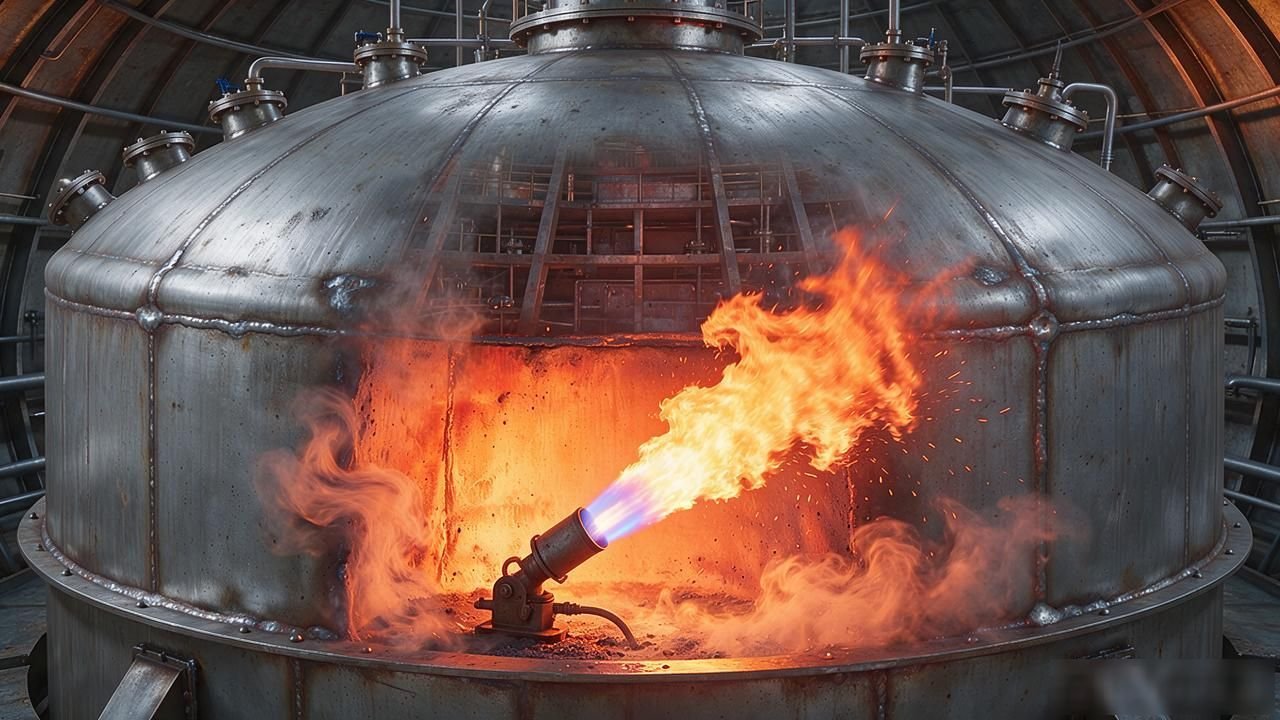
There are two commonly used methods for overall heat treatment of spherical tanks. The first is the internal combustion method. The internal combustion method refers to igniting oil gas or natural gas in the tank for heating. The advantage of this method is that the investment in equipment is relatively small and the cost is relatively low. However, the disadvantage is that the temperature control accuracy is limited.
The second is the electrothermal method. This method uses resistance wires or induction coils to complete the work. The temperature curve of the electrothermal method is relatively stable and can be controlled. Therefore, it is suitable for large-diameter tanks that have strict requirements on the heating rate. This is also something that needs to be noted.
Which option should you actually choose? This depends on the specific volume of the tank, whether the on-site air source conditions are feasible, and how the construction schedule is determined. If the internal combustion method is chosen, the fuel consumption must be accurately calculated in advance, and the ventilation volume must also be calculated properly.
If you choose to use the electric heating method, you must carefully calculate the specific heating power and the total duration. No matter which method is finally adopted, the heating curve, heat preservation curve and cooling curve must be written into those heat treatment process documents, and must be retained for later reference.
I would like to ask, when your company is engaged in the overall heat treatment of spherical tanks, does it usually choose the internal combustion method, or is it more inclined to use electric heating? What is the specific value of how many degrees per hour is the heating rate controlled to be more appropriate?
I hope you can discuss this topic in the comment area. If you think this answer is useful to you, please give it a like and forward it to your colleagues who are doing riveting and welding work to take a look.



No comments yet