

Steel structure connection methods and processes
After many steel structure engineers get the drawings, their first reaction is usually to think about whether the nodes should be connected with bolts, rivets, or completely welded. If you make the wrong choice, the cost of rework will be very high. Today's article is to explain all the process details of these three methods at once, so that everyone can see it very thoroughly.
Core parameters of bolted connections
High-strength bolts are divided into two types: large hexagonal head type and torsion shear type. Grades 10.9 and 8.8 are the main strength grades. Controlling the pretightening force during construction is the most critical link. The torque method needs to be adjusted from 0.10 to 0.15 according to the coefficient. The unit of this coefficient is N·m/N. After the adjustment is completed, a dial indicator must be used to re-measure the elongation to confirm the actual situation.
Friction type connection, its force transmission method mainly relies on the friction between the plates. As for the pressure-bearing type, it allows the rod to undergo shearing force after slippage occurs. The new specifications coming out in 2024 will increase the anti-slip coefficient from the original 0.45 to 0.50. When sand blasting and rust removal is performed on site, the grade must reach the Sa2.5 standard. Only when the roughness is large enough can it be bitten.
The end of riveting in steel structures
Riveting technology used to be the main force in the construction of bridges and old factory buildings. That kind of rivets need to be manually heated to a temperature of more than 600 degrees, and then hammered manually. The overall construction efficiency of this method can be said to be very low. Now in the construction of this new project, everyone basically no longer uses that kind of rivets. However, in some maintenance work scenes of railway bridges built before 2010 or old factory buildings in the industrial field, there are still a large number of nodes connected by riveting. Such a situation still exists.
The residual stress of riveting is more uniform than that of welding, and the fatigue resistance performance is superior. When strengthening the main beams of cranes with high vibrations and old steel bridges, some designers still retain riveting sections, but it is becoming increasingly difficult to find teams who can rivet.

Structure and metallurgical defects of fusion welding
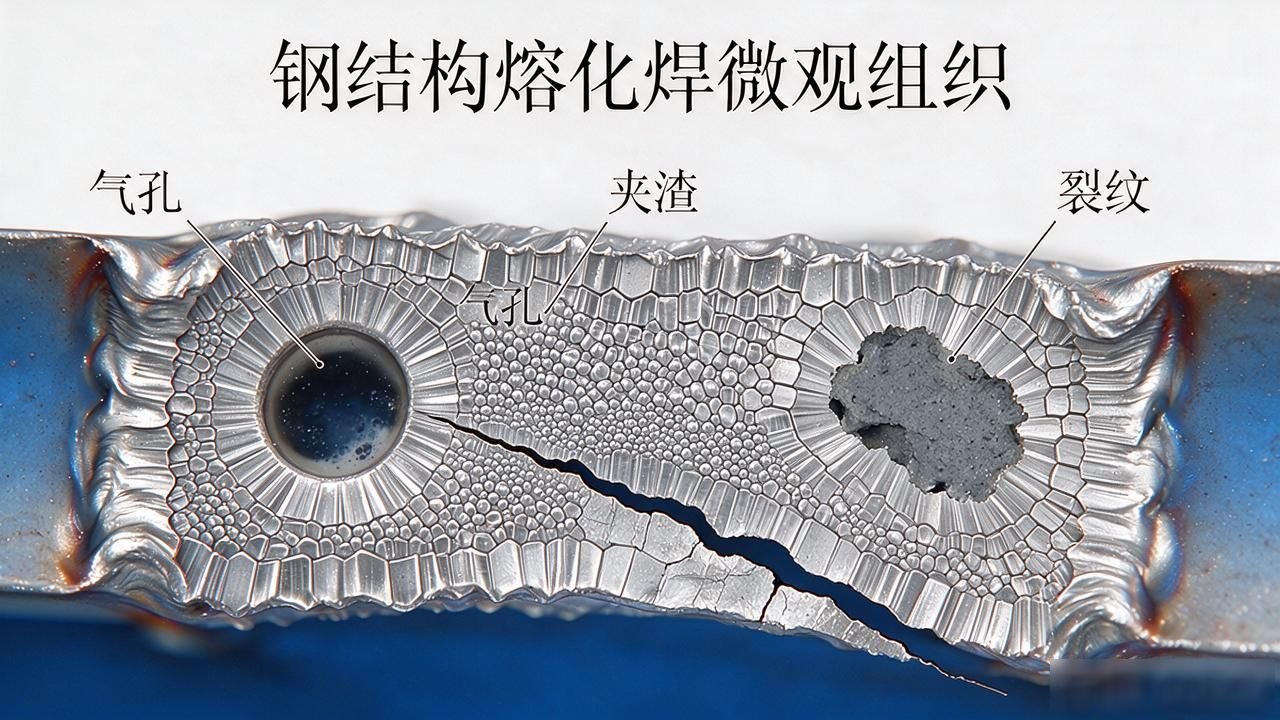
The weld is composed of three parts: fusion line, weld metal and heat-affected zone. The most typical hidden danger here is that the grains in the heat-affected zone will become extremely coarse and the structure will be uneven. Once the cooling rate exceeds a high value such as 200 degrees Celsius per second, it is very easy for a microstructure like martensite to appear, which will directly lead to problems such as cold cracks.
Common metallurgical defects include pores, slag inclusions, lack of fusion and internal cracks. The occurrence of these defects often has specific causes. For example, pores are mostly caused by poor protection work or oil stains on the surface of the base material. As for the slag inclusion problem, it is usually directly related to the slag removal operation during multi-layer welding. The formation of cracks is very directly related to the phenomenon of hydrogen diffusion and restraint stress.
Electrode arc welding and submerged arc automatic welding
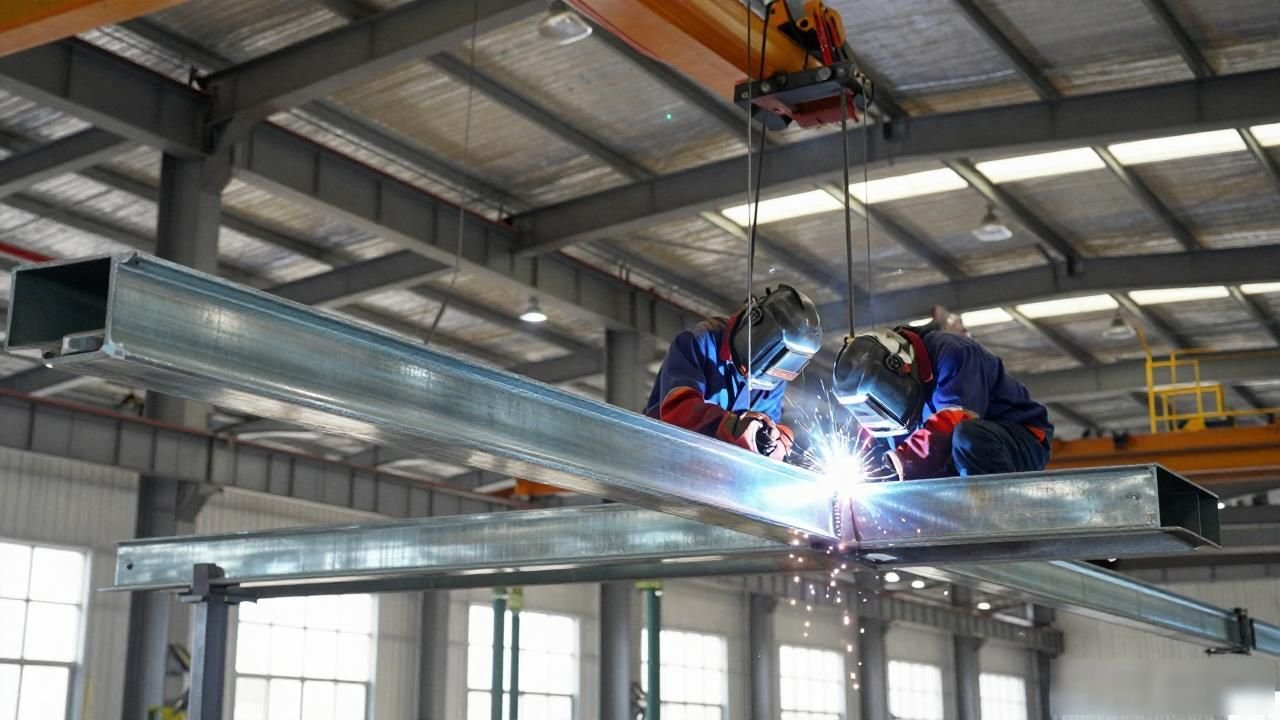
Although the electrode arc welding method is more flexible in use and is very suitable for on-site construction and maintenance operations, it also has shortcomings, that is, the work efficiency is relatively low, and the quality fluctuates greatly. The E7015 brand of electrodes is used to correspond to Q355 steel. Regarding the arc voltage, it needs to be set between 24 and 28 volts. If a single electrode is used to work continuously for four or five hours, Then it must be tempered to remove the moisture.
The efficiency of submerged arc automatic welding, a welding technology, can actually be 3 to 5 times that of manual arc welding. And its corresponding current parameter can rise to a value above 1000A.
Because of this characteristic, it is particularly suitable for welding of straight welds on thick plates. On the Shanghai Baowu H-beam production line, by using submerged arc gas-shielded hybrid welding, the total amount of blanking and welding tasks completed every day can exceed 800 tons.
CO2 gas shielded welding and argon arc welding
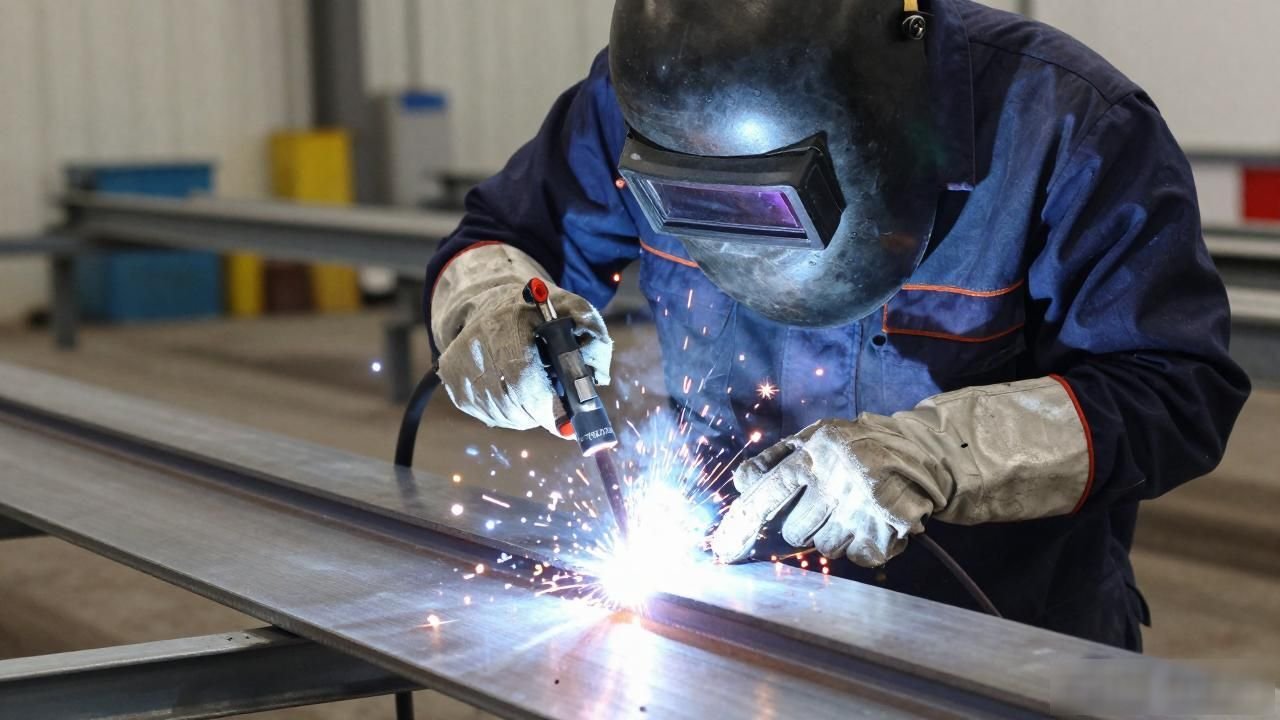
CO2 gas shielded welding, this welding method, is the mainstream process in steel structure thin plates. It usually uses solid core wire, or flux cored wire. Although the splash will be larger, the cost is relatively low. The model of welding wire is ER70S-6. The current range is approximately 200 to 400A. The protective gas flow is controlled at about 15 to 20L/min. This parameter combination has the highest cost performance.
The molten pool of this tungsten arc welding looks very clean, and its forming quality is particularly good, so it is more suitable for base welding of thin plates such as stainless steel and aluminum alloys.
On the other hand, as for the melting pole radon arc welding, it needs to slowly change from the short-circuit transition state to the spray transition state. Only when the current exceeds 500 amps can it truly enter the spray zone. At this time, its penetration depth and the shape of the final weld will become more stable.
Brazing friction welding and nail welding
This method of brazing mainly relies on silver-based or copper-based filler metals with lower melting points than the base materials to be welded, allowing them to wet well and fill the gaps. At the same time, the base material will not deform, so this method is very suitable for welding precision steel structure accessories.
Another method is called friction welding. This method uses the heat generated by the friction between the interfaces to allow the metal to be plastically connected. For a column leg, the entire operation only takes 20 seconds to be completed smoothly, and no filler material is required during the entire process.
The work of welding welding nails is specially used to install fireproof layers, decorative tiles and dampers. During operation, the magnitude of the current is one thousand to two thousand amps, and the welding time of a single welding nail is from zero point five seconds to one second. Take the steel structure project of the 2019 World Expo held in Osaka, Japan, as an example. There are approximately 120,000 welding nails, all of which must be inspected one by one using magnetic particle inspection. The final result is that the number of missed inspections is zero.
In your project, if both bolting and welding methods are used on the nodes, which part of the design and arrangement do you think is the most troublesome and difficult to handle? You are welcome to leave a message below for discussion and exchange. If you think this content is helpful to you, please like it and save it. Please also forward it to your colleagues.



No comments yet