

Core Tools for Machining: Popular Science on Common Tool Types
If the wrong tool is selected, the accuracy will be lost immediately after cutting, and the cost of rework will be doubled. Today, I will explain all the six most commonly used types of tools in machining at once. The purpose is to help you use them from introductory knowledge to practical operation.
turning tool
The turning tool is the most basic tool on the lathe. Its tool head is installed on the tool holder. When working, the workpiece rotates and the tool feeds in a straight line. In this way, the bar material is cut into a cylindrical surface layer by layer. Common types include 45-degree internal hole tools and 90-degree external circular tools. The angle of the tool tip will directly determine the surface roughness.
In 2024, the mainstream style of the domestic turning tool market is carbide inserts, and this type of inserts accounts for more than 70% of the total sales.
A blade like this can cut for about 300 to 500 meters in length before it needs to be replaced. However, if the temperature is too high or the tip of the blade is chipped, it must be replaced immediately, which is also a very common situation. For this novice group, the most common fatal mistake they make is to pull the feed too large, which directly causes the tip of the knife to collapse.
Milling cutter
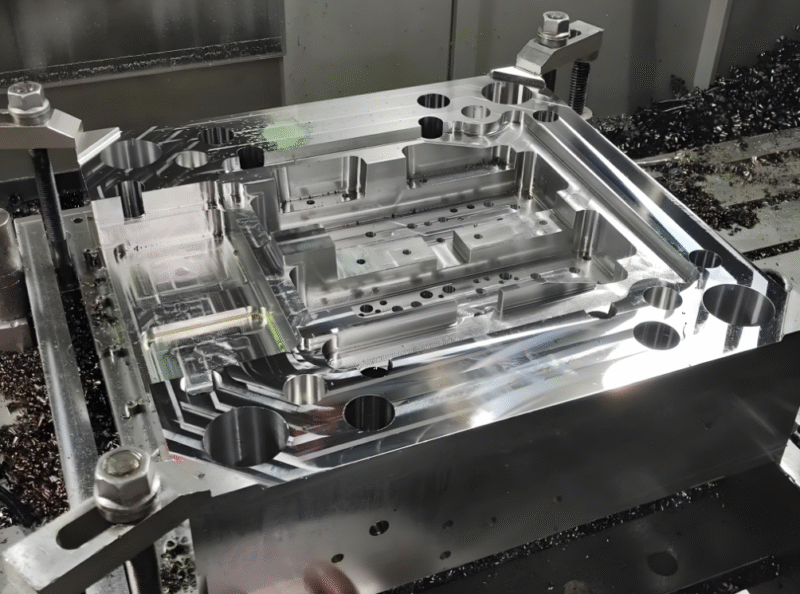
The types of milling cutters are divided into end mills, face mills, ball nose cutters, tool holders, etc. They are installed on milling machines or machining centers to achieve multi-directional cutting.

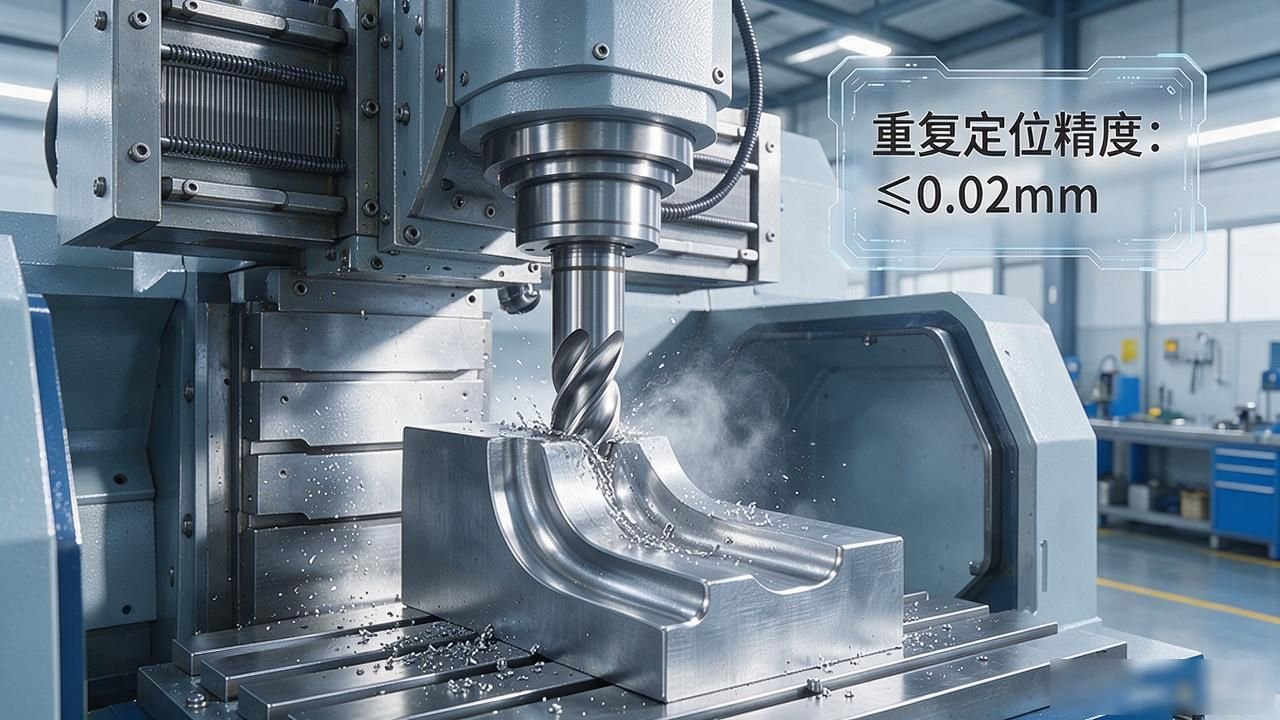
If an end mill with a diameter of 12 mm is used and three-axis linkage is used, a profile structure with R-angle characteristics can be milled. In this case, the repeat positioning accuracy can be stably maintained within a value of 0.02 mm.
When people are processing aluminum parts now, they usually use aluminum-specific milling cutters to process aluminum materials. This kind of aluminum-specific milling cutter is characterized by a relatively large edge angle and a relatively wide chip discharge channel, which is conducive to chip discharge. If you are processing steel parts, you need to change to a carbide milling cutter with a helix angle of 40 degrees. This kind of cutter is more suitable for processing steel parts.
From the perspective of statistics, the types and selection of machining tools . By 2025, the existing number of CNC machining centers in the country has exceeded 1.2 million. Matching these large amounts of processing equipment is the large-scale consumption of approximately 80 million milling cutters per year.
drill
The first step in drilling is to use a drill bit, of which twist drills are the most commonly used. The diameter of this drill bit ranges from 0.5 mm to 100 mm. For ordinary steel parts, the rotation speed during drilling operations is generally between 200 and 500 rpm, while the feed speed is usually maintained at a level of 0.1 mm to 0.2 mm per revolution. It must also be emphasized that the coolant must keep up with the supply.
In the process of deep hole processing, everyone usually needs to use gun drills or BTA drills, because their chip removal methods are completely different.
As far as the actual situation is concerned, the probability of drill bit breakage at the production site is about 5%, and most of the cases are caused by poor alignment or being pushed. Therefore, when selecting a drill bit, the ratio of blade length to total length also needs to be calculated in advance.
Boring tool
Boring tools are specifically responsible for processing large hole diameters. If the hole diameter exceeds 80 mm, the efficiency of using a lathe will be too low, so a boring tool must be used instead. Especially the floating boring tool, which relies on springs to achieve the centering function, can expand the diameter of the hole from 75 mm to 80 mm in one-time processing, while also controlling the roundness value within a range as small as 0.01 mm.
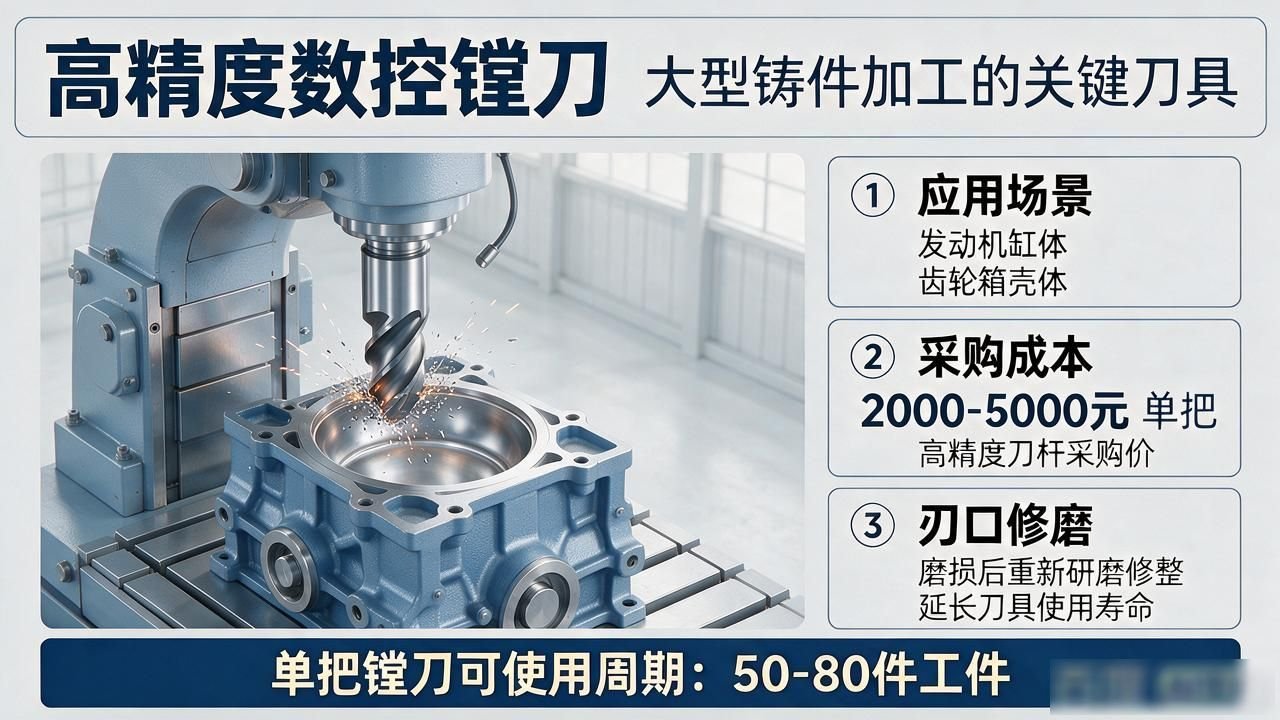
For large castings such as engine blocks and gearbox housings, domestic first-line factories usually use CNC boring tools for processing. The single purchase cost of a high-precision boring tool holder is roughly between 2,000 yuan and 5,000 yuan. When the tool wears, the cutting edge needs to be reground and trimmed. The service life of a single boring tool can usually be maintained within the range of fifty to eighty workpieces.
thread cutter
The thread processing process route is mainly divided into two methods: threading and tapping. When processing internal threads, a special thread turning tool is usually used on a lathe; while for processing external threads, a thread milling cutter can be used. The tapping process mainly relies on taps. Common specifications from M6 to M24 are mostly tapped manually. For holes with larger diameters, machine tapping is used.
In 2025, in the field of thread processing of aviation aluminum alloy parts, imported OSG taps will still account for 60% of the market share. However, the domestic Zhuzhou diamond brand has achieved substitution in the size segment from M3 to M16. For the workshop, controlling the taper breakage rate during the tapping process within 2% is a hard target that must be achieved.
Blade material
Tool Performance The core of the type and selection of machining tools lies in the blade. High-speed steel is cheap, but it is only suitable for use in low-speed situations; cemented carbide can cover 80% of working conditions; CBN is specially used to process hardened steel; PCBN is a material selection solution for grinding cemented carbide. If the material selection is wrong, no matter how good the quality of the tool itself is, the final result will be in vain.
The situation in the domestic tool material market in 2024 is that cemented carbide accounts for 55% and high-speed steel accounts for 12%, and the coating process has become standard. Among the coatings, TiAlN has the highest temperature resistance. If stainless steel is processed, it is recommended to use Al2O3 coating, which can more than double the service life of the tool.
In your workshop, which type of tool needs to be replaced most often? You are very welcome to communicate and discuss related content in the comment area. If you think this content is of practical value, please click the like button and forward it to your colleagues to share.






No comments yet