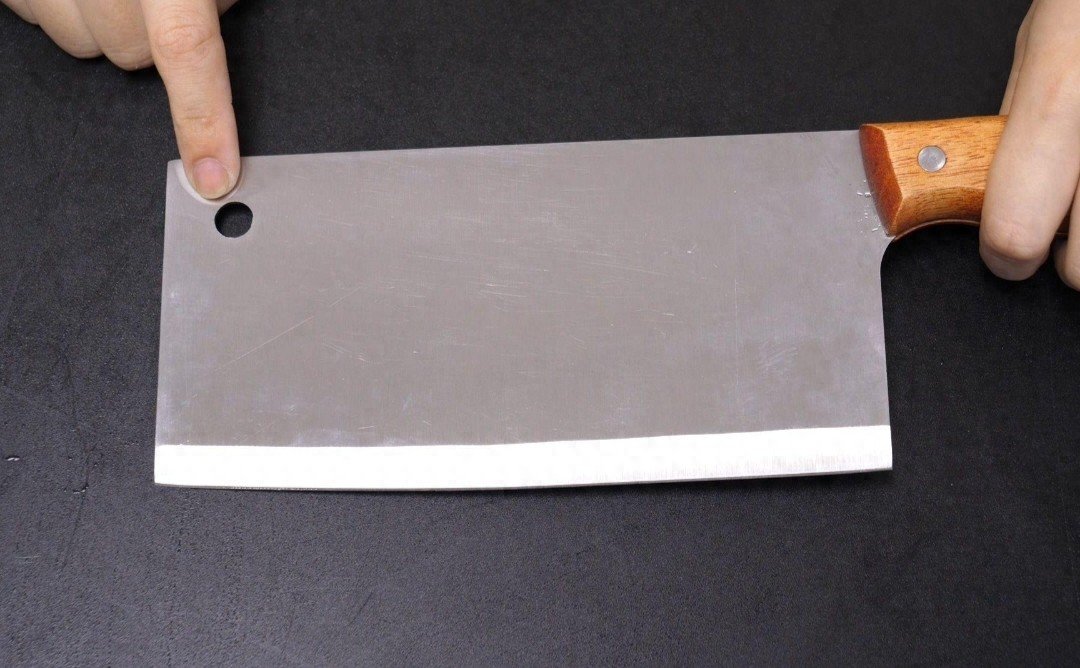


What is the small round hole on the knife for?
There are many factories, and when pursuing holes that require high-precision machining , the rationality of process selection is often ignored. Drilling and reaming only belong to the category of rough machining, and this kind of rough machining cannot meet high requirements higher than IT6 level accuracy. Under such circumstances, reaming has become a key link. It can significantly improve the quality of the hole with the help of micro-cutting and extrusion polishing.
Reaming is not just about making the hole larger. It is a composite process that combines the three actions of cutting, extrusion and correction. It can stably achieve extremely high dimensional accuracy. For precision parts, this stability is very critical, especially for those connection parts where there are strict requirements for fit clearance.
Core principles revealed

The reason why reaming is so precise is that it removes an extremely thin layer of metal, usually only in the range of 0.01 to 0.05 millimeters. This minimally invasive processing method generates extremely little cutting force and heat! Not only will the workpiece not be deformed due to overheating, the tool will not be deformed due to excessive force, thus ensuring the final geometric accuracy.
It is said that the design of this reamer is very particular. It has a relatively large number of teeth and also has a wiper blade. This not only allows the hole diameter to be calibrated, but also flattens the previously made knife marks to prevent the hole wall from showing ripples, even when processing micro holes with a diameter of less than 1 mm. For this, the tolerance can be extremely strictly controlled within 0.005 mm, and the effect is really amazing.
Material matching skills
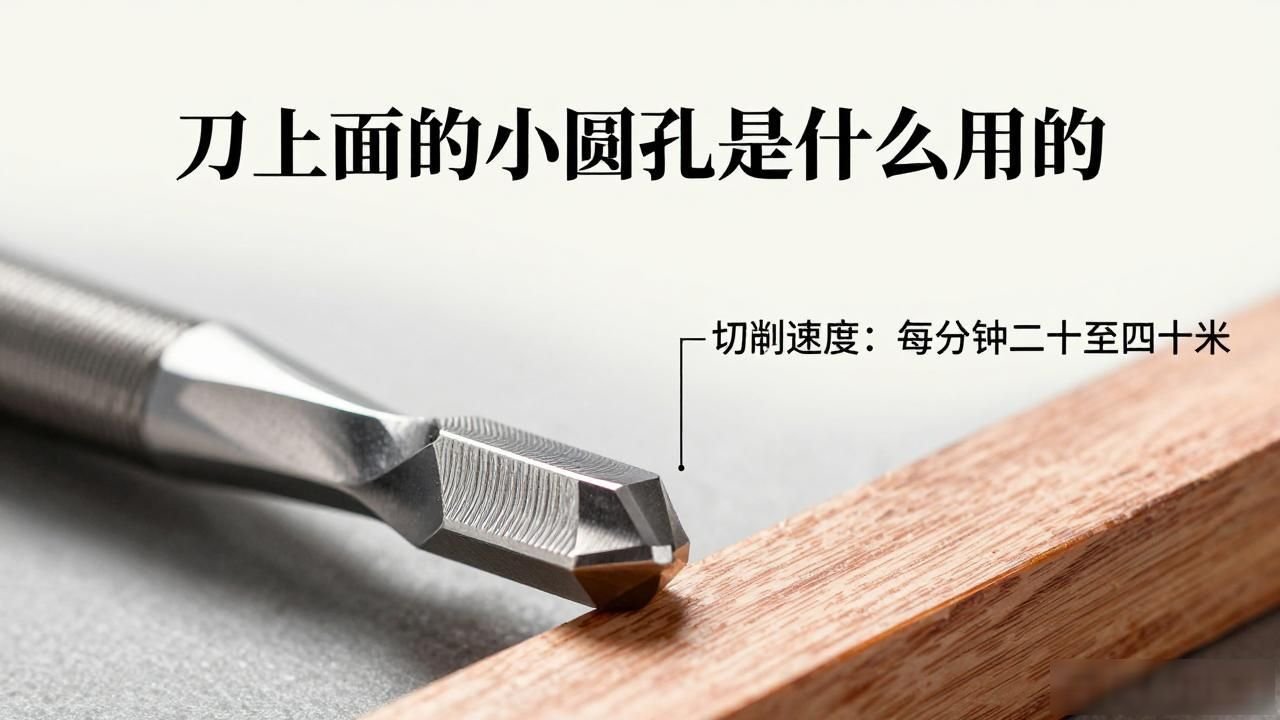
The reaming parameters applicable to workpieces made of different materials will be different. For soft materials such as aluminum alloy and copper, it is recommended to use high-speed steel reamers. The cutting speed can be maintained at 20 to 40 meters per minute. This parameter setting can make the cutting process smoother, prevent tool sticking, and thus improve the surface finish.
If the material is carbon steel or cast iron, cooling lubricant must be added to assist processing. Although the rotation speed can be appropriately reduced, the feed speed must remain uniform and stable. For plastic parts, it is recommended to use a reamer with a floating guide bush, which can effectively prevent edge cracking, ensure the integrity of the hole, and reduce the workload of subsequent trimming.
Key operating points
All experienced mechanics know that the reserve amount of the bottom hole directly determines the success or failure of reaming. If the allowance is too small, the reamer will not be able to perform effective cutting; if the allowance is too much, the cutting force will be too large, which may easily cause the tool to break. And generally speaking, it is necessary to accurately calculate and reserve an appropriate margin based on the hole diameter and material conditions. This is the first step to ensure processing quality.
The details of the operation when entering the tool cannot be ignored, nor can the details of the operation when retracting the tool be ignored. Reverse rotation is strictly prohibited during reaming, otherwise the reamer tooth edge will be easily damaged. In addition, the ratio of coolant is also very critical. It is recommended to use water-soluble oil diluted at 40:1. This oil can take away heat and create a good lubrication effect. At the same time, it increases the service life of the tool itself and improves the overall processing efficiency.
Comprehensive advantage analysis
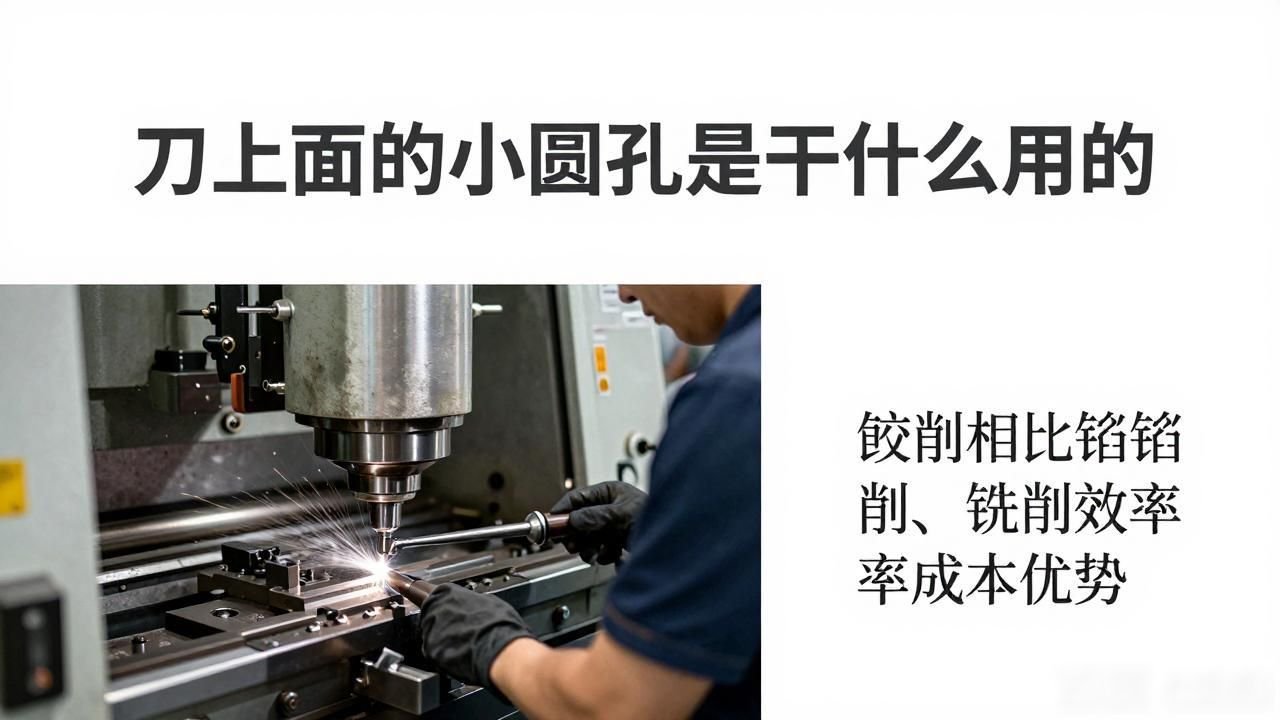
Compared with boring and milling, reaming has significant advantages in terms of efficiency and cost. It does not require complicated programming and multi-axis linkage, and requires relatively little investment in machine equipment. For the mass production of precision small holes, reaming is an extremely cost-effective solution. It can simplify the production process of the product, and at the same time, it can also ensure the consistency of the product.
Reaming is particularly suitable for small hole finishing in soft materials such as mild steel and aluminum. Whether it is the breathing holes of mechanical equipment or the connecting holes of precision instruments, through reaming processing, you can obtain reliable accuracy guarantee. This is almost like performing an extremely delicate cosmetic surgery on the hole, making every detail the best.
Summary of pit avoidance guide
To do a good job in reaming, the first thing to understand is that it is not just a "re-expanding operation", because it is an extremely sophisticated and complex process. This process requires comprehensive consideration of many factors such as tools, parameters, cooling, etc. If you only perform the operation muddle-headedly based on experience, it is extremely easy to increase the rate of scraps and increase the cost of production input. This is really not worth the gain.
Before carrying out the actual operation, the basic principles of reaming should be fully understood. For different working conditions, detailed and specific work instructions must be developed. Tool wear needs to be checked regularly, and failed tools need to be replaced in a timely manner. Only by understanding the principles and then carrying out the actual operation can we avoid those detours in boring processing quality control, what is the small round hole on the tool used for, and produce less wasted workpieces, thereby truly achieving the goal of high-efficiency and high-quality precision machining.
In terms of precision machining, which one, reaming or boring, is more suitable for your production line? Welcome to leave a message to discuss, like and share more useful information!





暂无评论内容