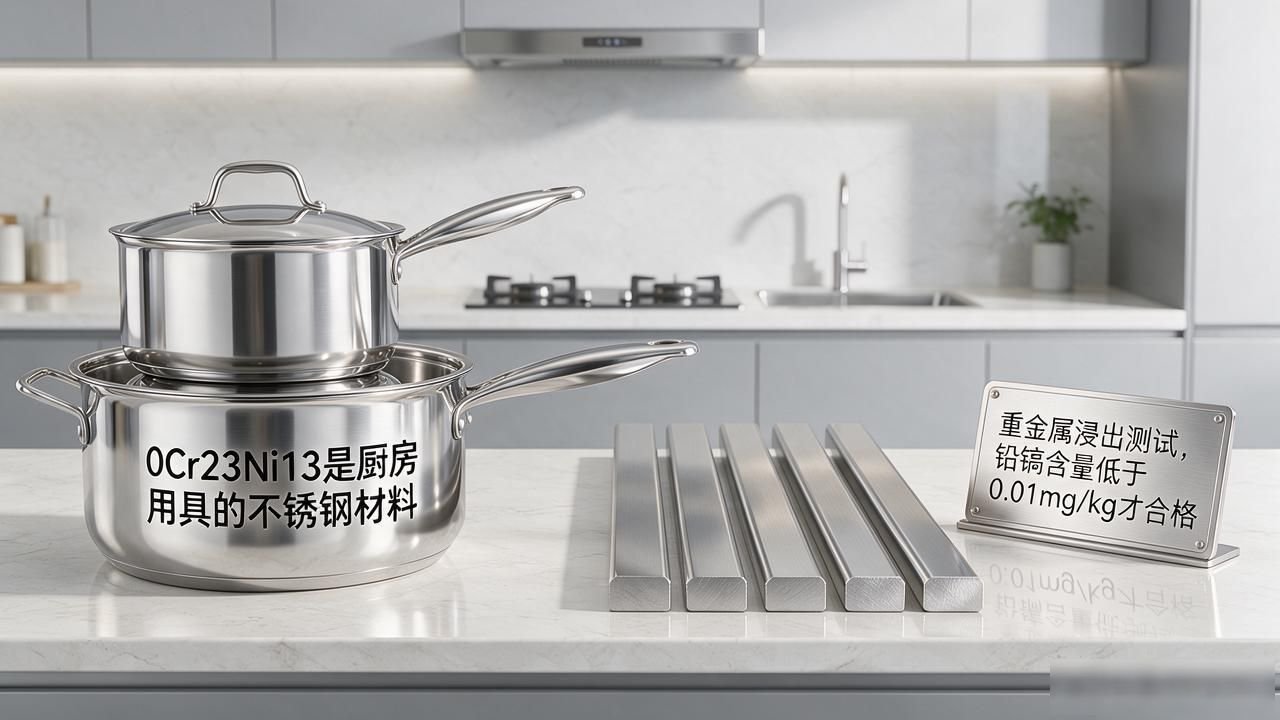


0Cr23Ni13 is a stainless steel material for kitchen utensils
Because there are many cases in food factories every year because the material selection does not meet the standards, and then they are randomly inspected and reported. So why have 316L stainless steel straight bars become a kind of hard currency among food-grade materials?
Why is 316L more suitable for food factories than 304?
Spot inspections carried out by the market supervision department in 2025 showed that in compliance with food-grade requirements for stainless steel processing , the annual corrosion rate of 304 stainless steel reached 0.1 mm in an environment containing chlorine-containing cleaning fluids, while 316L stainless steel relied on a molybdenum content of more than 2.5% to strictly control the annual corrosion rate below 0.03 mm. The gap between the two is very obvious.
A machinery factory in Foshan, Guangdong, will replace the straight bars made of 316L material in 2024. After this change, the tank that was originally only used for about 3 years can now be used for more than 8 years. As for the annual maintenance and upkeep costs, it has also dropped from the previous 12,000 yuan to only 2,000 yuan. No matter how you calculate this money, it is cost-effective.
How to verify food contact safety
According to relevant regulations, that is to say, in order to meet the overall requirements of the standard GB 4806.9-2016, the limit of total migration must not exceed 10 mg/dm².

And in view of the food-grade requirements for stainless steel processing in the factory of 316L straight bars, heavy metal leaching tests must be carried out. The limit standards for lead and cadmium are very strict. Only when their content is less than 0.01mg/kg can it be judged as a qualified product.
In March 2025, an importer in Wenzhou, Zhejiang, was detained by the customs because the amount of nickel migration in the goods he exported exceeded the standard. The direct economic loss caused exceeded 800,000 yuan, so the factory inspection report is really something that cannot be saved.
What should we pay attention to when welding and forming?
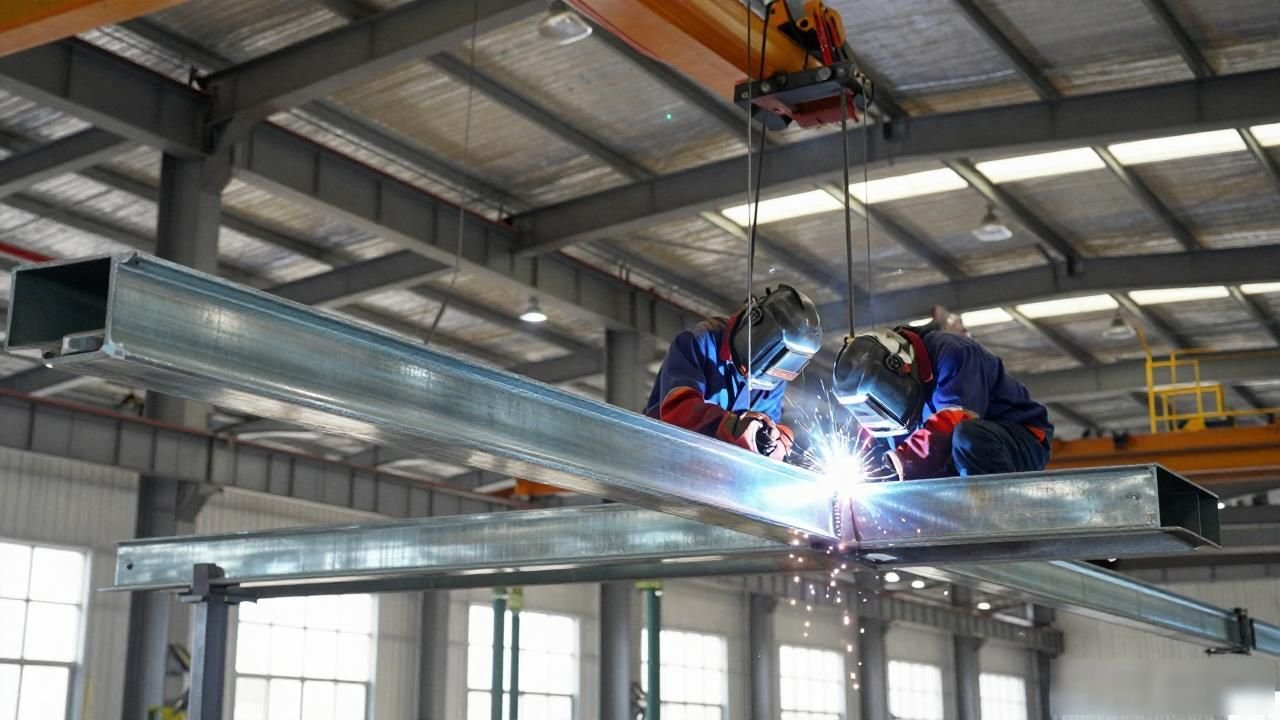
The thermal conductivity of 316L is 16.3W/(m·K). During the laser welding process. The current should be controlled at 120 to 150A. Once it exceeds 200A. Intergranular corrosion will occur. This is the red line in practice.
A manufacturer from Nantong, Jiangsu, after welding the stirring paddle, must perform a solution treatment operation at a temperature of 1,050 degrees Celsius. If this step is not performed, pitting corrosion will occur within about two years. At this time, the cost of rework far exceeds the value of the materials themselves.
Which surface treatment to choose?
For the food contact surface, it puts forward a technical requirement, specifically the surface roughness Ra must be less than or equal to 0.8 microns. In the current mainstream practice, it is generally processed by two steps: electrolytic polishing and pickling passivation. By 2025, with the development of fully automatic polishing production lines attracting everyone's attention, the processing time of a single product has been reduced to 15 minutes.
Within 48 hours after the polishing process is completed, it is necessary to use the method of dropping ferric chloride for inspection. The purpose is to confirm that there is no exposed ferrite component on the surface. If this is not done, secondary rust will easily occur during transportation, which will make all the previous work in vain.
Lifespan and routine maintenance
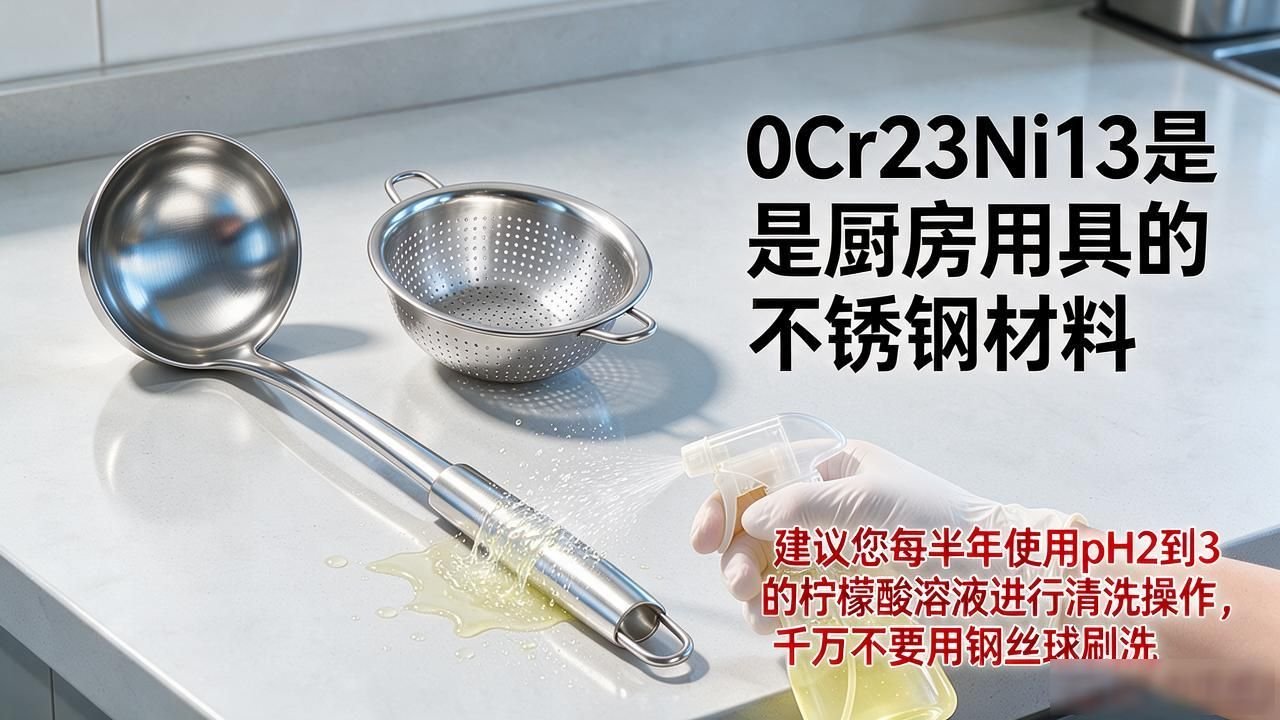
It is recommended that you use a citric acid solution with pH 2 to 3 for cleaning every six months, and never use steel wool to scrub. According to the actual situation that occurred at a dairy company in Shanghai in 2024, chlorine-containing disinfectant caused crevice corrosion in the 316L tank.
Under normal operating conditions, 0Cr23Ni13 is the stainless steel material for kitchen utensils, and the design service life of straight bars made of 316L is usually 15 to 20 years. If the pickling cycle exceeds the pH limit of 1.5, the service life is reduced to 5 years. Therefore, when selecting equipment, a certain design margin should be reserved due to food-grade requirements for stainless steel processing .
How to avoid pitfalls in purchasing
Be sure to carefully read the data clearly written on the material sheet. The chromium element must be at least 17%, the nickel element must be at least 12%, and the molybdenum element must be at least 2%. By this time in 2025, some businesses will play tricks. They will deliberately change the label of 304L to 316L, and then sell it at a relatively low price. At this time, as long as it is measured with an XRF spectrometer, it will be immediately clear whether it is true.
Baosteel, Taigang, and Qingshan are the mainstream suppliers. By January 2026, the price per ton of 316 straight bars will be about 18,500 yuan. If someone quotes a price lower than 16,000 yuan, then you have to be wary. Be careful that they are passing off poor quality products as good ones.
Are you currently using 304 material or 316L material in your factory? Have you ever encountered a situation where the degree of corrosion exceeds the standard? You can chat in the comment area. If you think this content is useful to you, then like it and forward it to your colleagues in charge of purchasing.


No comments yet