

Encyclopedia of stainless steel knowledge: full analysis of classification, characteristics and applications
Because everyone did not choose the right material for stainless steel cutting tools, these tools were seriously worn out after a short period of use, and the processing was not accurate enough. Some factories paid tens of thousands of yuan more every year to replace these blades. Regarding the three materials of 304, 316 and 904L, how to choose the appropriate one? The differences and differences between them are actually more obvious and significant than most people think.
Why is austenitic stainless steel the most commonly used?
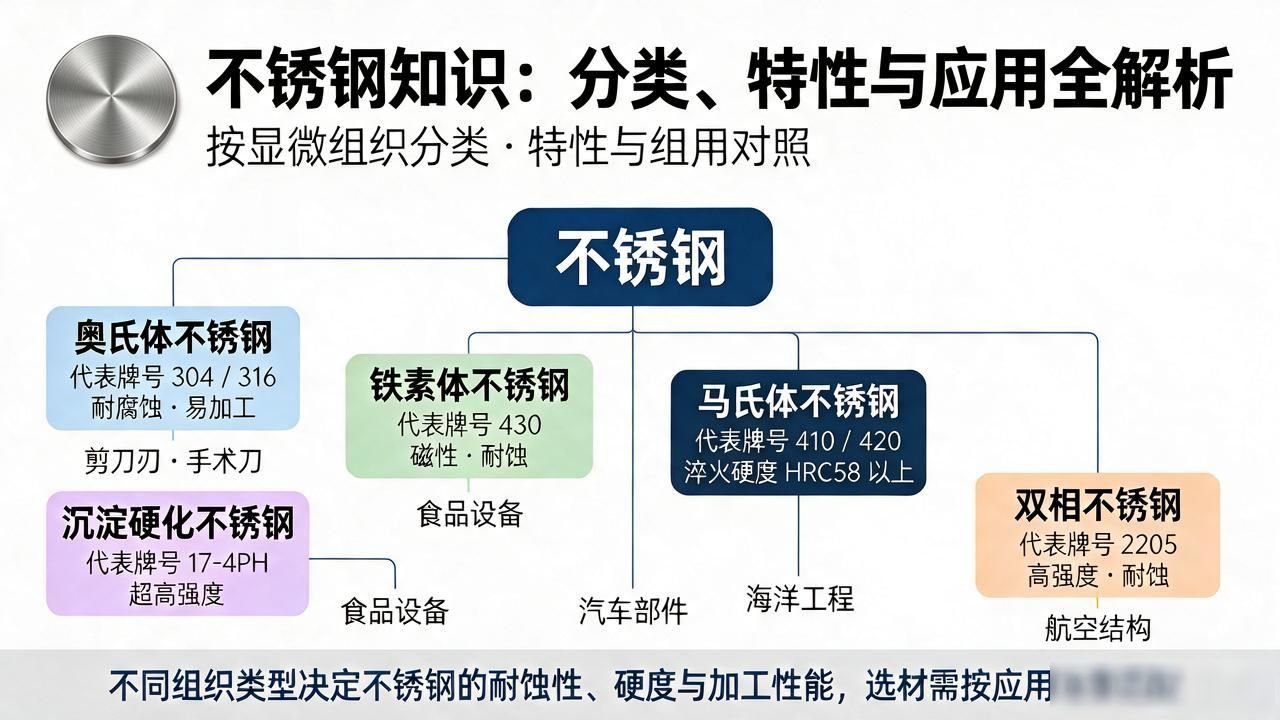
Both 304 and 316 materials have an austenite-like internal structure and are non-magnetic under normal circumstances. They mainly rely on cold working to increase their hardness. In the field of domestic processing and production, about 80% of factories will choose to use 304 as a material because it is very stable during deep drawing and forming operations, so its most common use is to make the casing of instruments or the joints of pipes.
The material composition of 316 contains about two to three percent more molybdenum, which makes it much more resistant to pitting corrosion than other materials. Therefore, it can withstand the test more in complex environments such as places near the sea or chemical plants.
In 2025, the total annual use of 304 plates in East China will exceed 1.2 million tons, while 316 will only be about 350,000 tons. When using a knife to cut 304 materials, you can obviously see the chips sticking to the knife. If you switch to 316, this sticking situation will be more serious.
Therefore, when selecting materials, you must take both viscosity and hardness into consideration, and never just focus on corrosion resistance.
Ferrite and martensite have specialized applications
Steels such as 430 and 446 are ferritic steels. Because they are magnetic, they cannot change their properties through heat treatment. At the same time, their cost is about 30% lower than that of 304 steel. Because of this, they are widely used in kitchen knives and decorative parts.

In addition, the two grades 410 and 420 are martensitic steels. Because their hardness can reach above HRC58 after quenching, they are more commonly used in products such as scissor blades and scalpels.
The strength of duplex steel 329 is half higher than that of 304. Its yield strength has reached a value of 550MPa. Its ability to resist chloride stress corrosion is twice that of 316. Therefore, many stainless steel processing tool materials are recommended in oil platforms and are also used in seawater coolers. However, because its welding window is relatively narrow, when using the tool, you must avoid the heat-affected zone.
Surface technology and tolerances directly affect tool life
Stainless steel sheets are thick in the middle and thin on both sides. This is caused by rolling deformation. The allowable deviation in the large tolerance range is plus or minus ten percent. The material of stainless steel processing tools is recommended . The allowable deviation in the small tolerance range is plus or minus five percent. When the tool cuts to the edge position of the tolerance, the cutting force will change suddenly, which will double the probability of edge chipping. Therefore, the small tolerance specification must be strictly locked when purchasing to be the safest.
The actual situation is that when using the same carbide tool, the tool life of sheet metal processing tolerances within 0.05mm can be about 40% longer than that of a tool processing ±0.1mm. When faced with the processing needs of small batches of precision parts, strictly controlling and maintaining tolerances is a more economical and cost-effective option than spending high prices to replace new tools.
Under what conditions does stainless steel really not rust?
If the chromium content does not exceed 10.5%, a chromium oxide film will not be formed. However, as long as the combined amount of chromium and nickel is higher, the state will be more stable. But this matter depends on the premise of stainless steel knowledge: full analysis of classification, characteristics and applications. The premise is that the environment must be dry and ventilated. For example, during the rainy season in the south, the humidity in the air can suffocate people to death. It exceeds 90%, right?
Even so, yellow spots will still appear on the surface of model 304. If you go and inspect factories in coastal areas, you will find that the rust rate there is more than twice as fast as that of factories in the north. This must be admitted.
During the machining process, chloride ions mixed into the cutting fluid, even at a concentration level of one part per million, may cause damage to the passivation film. There were 304 steel parts from a related factory that rusted directly after being processed on the CNC lathe. After a long period of investigation, it was finally discovered that the cause was that the cutting fluid had not been replaced because it had expired. This detail must not be ignored.
How to save rust spots?
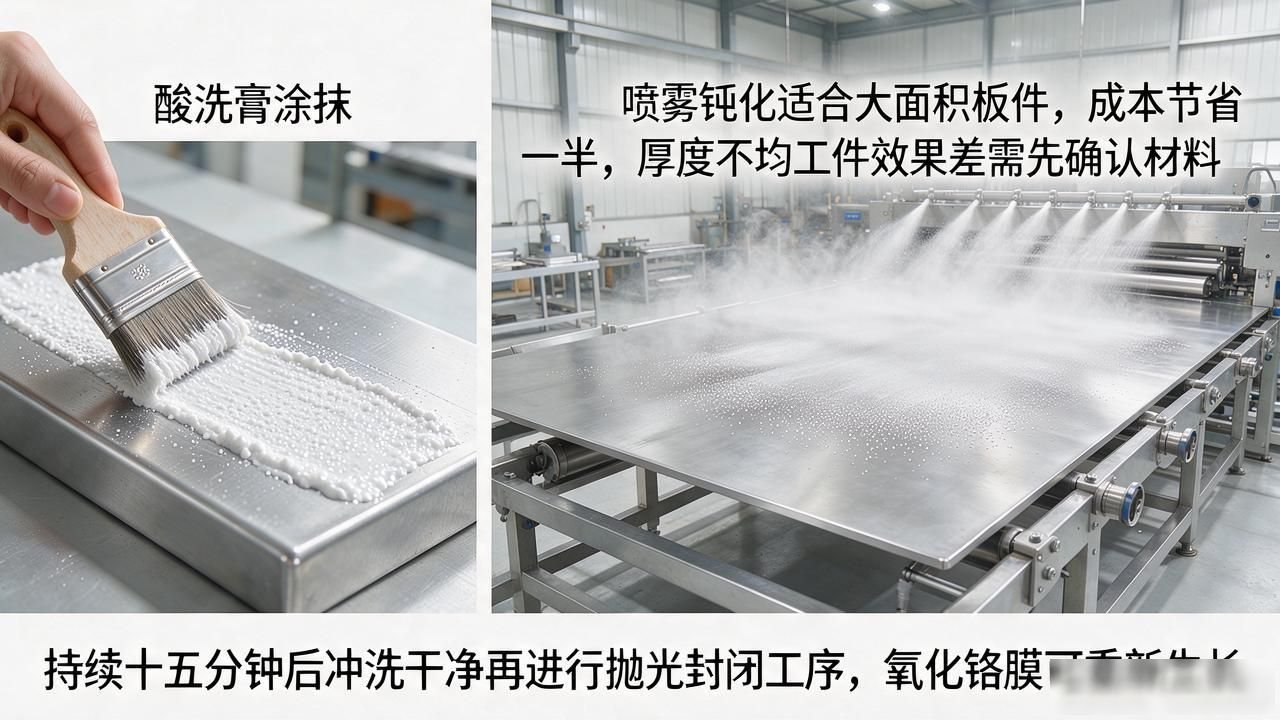
Chemical treatment is carried out by applying pickling paste. After a duration of fifteen minutes, the surface is rinsed clean and the polishing and sealing process is continued. In this way, the chromium oxide film can grow again. The spray passivation method is more suitable for large-area panels and can save about half the cost. However, this effect is relatively poor for workpieces with uneven thickness, so it is necessary to check the specific material conditions before determining the final plan.
When using mechanical processing, you can use 320-mesh aluminum oxide for sandblasting, or you can choose to use glass beads for cleaning. This can indeed remove the rust film, but the corrosion resistance of the base material itself has not changed. After the shot blasting is completed, the stainless steel processing tool material is recommended . The electrolytic polishing process must be connected for sealing treatment. If not, the parts will rust again in just two weeks, so use these two methods together. It can restore the effect to its most stable state.
Don’t be lazy with daily maintenance
When the tool is not in use, be sure to wipe off the cutting fluid, apply a thin layer of anti-rust oil, and store it in a drying cabinet. The method in some factories is to throw the knife directly into the turnover box. As a result, it is soaked in condensation water overnight, and by the next day, the blade is worn.
Precautions also need to be taken for tool holders made of 304 material, because many people mistakenly believe that as long as it is stainless steel, it will not be afraid of water at all, thus neglecting the rust prevention work.
Every month, a microscope with a magnification of 100 times must be used to carefully inspect the blade. As long as a crack with a length of 0.1 millimeter is found, the blade must be replaced immediately. Do not wait until the blade is completely broken and damaged before proceeding with follow-up treatment.
At present, the scrap rate of workpieces can reach more than 3%. If the blade is replaced according to a fixed period, compared with the method of passive replacement after cracking problems occur, the cost can be saved by about 40%. The most practical and effective way is to truthfully record the life data curve of each use.
Do you use the same knife when processing 304 material and 316 material tools in the factory, or distribute them separately? You can talk about your practice in the comment area. If you find this content useful, please give it to your colleagues in the workshop by clicking on it.



暂无评论内容