

How to quote for CNC machining: Revealing the CNC machining quote calculation formula
One of the most troublesome aspects of CNC machining quotations is that even for the same model of parts, if three different factories quote prices, they will end up with three different price levels, and the difference between them can be up to 40%. As for which number should be believed, most people actually cannot calculate this account clearly.
The quotation is not a slap in the face. The core variables must be separated.
There are four core variables in CNC processing quotation, namely processing time, processing unit price, material cost and additional fees. The average gross profit margin of the domestic CNC industry in 2025 will be in the range of 15% to 25%. If the quotation is lower than this range, it is basically selling at a loss. By looking at each variable separately, you can judge whether the offer is reasonable or not, instead of just staring at the final total price and complaining that the price is too expensive.
When many customers get a quotation, they often only focus on that number. Once they feel that the price is high, they start to lower the price.
In 2024, a mold factory in Foshan reported a situation, saying that a customer had cut the price to 12,000 yuan. The factory had no choice but to replace some cheaper tools. The result of this was that the surface roughness changed from the original Ra0.8 to Ra1.6, because it cost an additional 8,000 yuan for rework later.
Therefore, if you can break down the various variables and look at them, it will actually be much more useful than just focusing on the total price.
How to estimate processing time? Don’t just look at the drawings
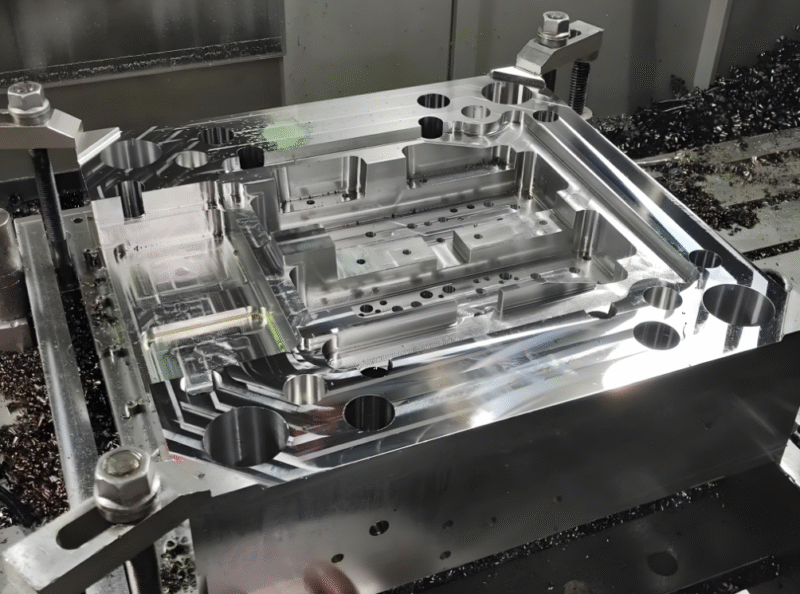
The processing time cannot be calculated simply by measuring a few dimensions. There is a precision parts factory established in Suzhou in 2025. They processed an aluminum alloy bushing. The diameter marked on the drawing is , and then the length is written , which looks really simple.
But what actually needs to be done includes turning, milling, grinding, heat treatment, and finishing. None of these five processes can be omitted, and the total working time reaches 4.5 hours. When the tolerance was tightened from plus or minus 0.1 to plus or minus 0.01, the grinding process alone took an extra 1.2 hours, which ultimately caused the quotation to rise directly.
In June 2025, a factory in Dongguan received a business order for stainless steel flanges. At that time, the customer only provided a three-dimensional drawing, but did not mark the specific tolerance value on it. So the factory carried out processing and testing according to the default IT7 level standard. It was later discovered that the customer actually required the IT5 level standard with higher precision, which caused the engineers to rewrite the processing program and debug the machine. In the end, it took 3 more hours to complete the work. As a result, the overall quotation increased by 18%. Therefore, if the tolerance level, surface roughness requirements and heat treatment related standards are clearly written before placing the order, it will definitely save more time and cost than everyone talking about each other afterwards.
What costs are hidden in the unit price?

There is a three-axis CNC machining center that was manufactured in 2024. Its price range is 650,000 to 800,000 yuan. Calculated based on ten years of depreciation, the annual cost is about 65,000 to 80,000 yuan. In addition to these expenses, the cost of tools and consumables also needs to be paid, which costs 3,000 to 5,000 yuan per month. At the same time, it also costs about 4,000 yuan per month for electricity for double-shift operations, and another 2,000 yuan per quarter for system maintenance. After allocating all these expenses to each processing hour, the hourly cost of a single machine will fall in the range of 80 yuan to 150 yuan. In many quotations, this expense is usually not listed separately.
Labor costs account for the largest proportion in the unit price composition. In 2025, the monthly salary of CNC operators in the Pearl River Delta region is usually between 7,000 and 9,000 yuan, while the monthly salary of programmers is in the range of 12,000 to 18,000 yuan. Under normal circumstances, it is considered normal for one operator to be responsible for managing two pieces of equipment at the same time, but programming work and machine adjustment time cannot be overlapped.
After accounting for relevant expenses, the corresponding indirect labor cost per hour is approximately between 50 yuan and 80 yuan. Although this part of the expenditure is included in the final quotation, it will not be marked separately when specifically listed.
Don’t just look at the price for materials
In October 2025, the average price of domestic 6061 aluminum plates is about 22 yuan per kilogram, the price of 304 stainless steel plates is about 14 yuan per kilogram, while the price of 45 steel is about 4.5 yuan per kilogram. However, when making actual quotations, the material cost needs to add a loss rate between 15% and 25%, which means that for a part weighing 2 kilograms, The actual amount of materials consumed is actually 2.4 kilograms, so it will be accurate if the quotation is calculated based on the quantity of 2.4 kilograms. If the calculation is made by directly multiplying the listed price by the weight, the cost will be less.
In the case of small batch customization, the cost of using bar stock is higher than that of using plates. This is mainly because the unit price of bar stock is high and the loss generated during the cutting process is also relatively large.
In July 2025, a customer of a precision machining factory in Shenzhen reported to us that for the same part, the material cost of choosing bar stock as the material would be 35% more than choosing plate material. However, using bar stock can shorten the delivery time by two days.
What materials to use is itself a variable factor in the quotation, so you must confirm it with the factory before officially placing an order. Don't wait until the matter is completed to worry about it.
Additional costs are most easily missed
The cost of transportation and packaging, including taxes and fees, may not seem like a big deal, but when you add these things together, they cannot be ignored.
If the goods are shipped from the Yangtze River Delta region to Chengdu in 2025, the logistics cost for goods weighing less than 5 kilograms will cost about 35 yuan to 50 yuan, plus the cost of shock-proof packaging will cost 20 yuan. If the order quantity is only 3 pieces, these additional costs are close to 200 yuan.
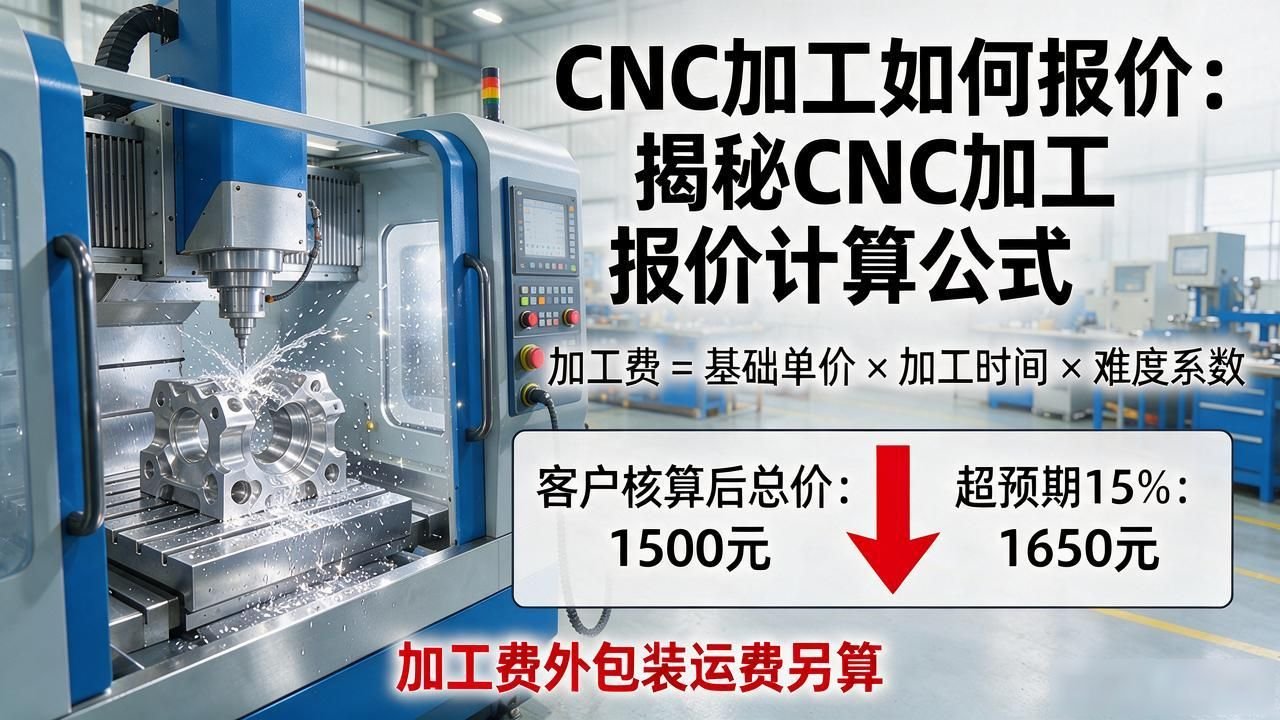
The quotations given by many factories only include processing fees, and packaging and freight have to be calculated separately. When the customer calculates the final total price, they find that it is 15% more than expected.
There is also the tooling fee. When manufacturing non-standard fixtures or special tools, the factory will charge a one-time tooling amortization fee ranging from 500 yuan to 5,000 yuan. In September 2025, a customer of an auto parts factory in Hangzhou wanted to bargain because he disliked the quoted price being too high. After reaching a complete price concession, he discovered that the original quotation did not include the cost of the specific special milling cutter of 800 yuan. As a result, the two parties needed to re-negotiate. This process instead caused a delay in delivery time of up to a full week, and the final situation was not cost-effective.
Don’t just bargain on price. Optimization ideas are more important.
In the industry of 2025, there is a very practical approach. That is to consolidate the original orders of one hundred pieces each into large batches of five hundred pieces for production. If you do this, the unit price can be reduced by about 20% to 30%. Alternatively, the accuracy requirement can be adjusted from IT5 level to IT6 level.
In this way, the processing time can be directly reduced by 40%. There is a factory in Guangzhou that manufactures drone parts. They expanded the tolerance range from plus or minus 0.005 millimeters to plus or minus 0.01 millimeters. After such adjustments, the cost of a single piece dropped from 380 yuan to 260 yuan. The final customer acceptance result was still no problem.
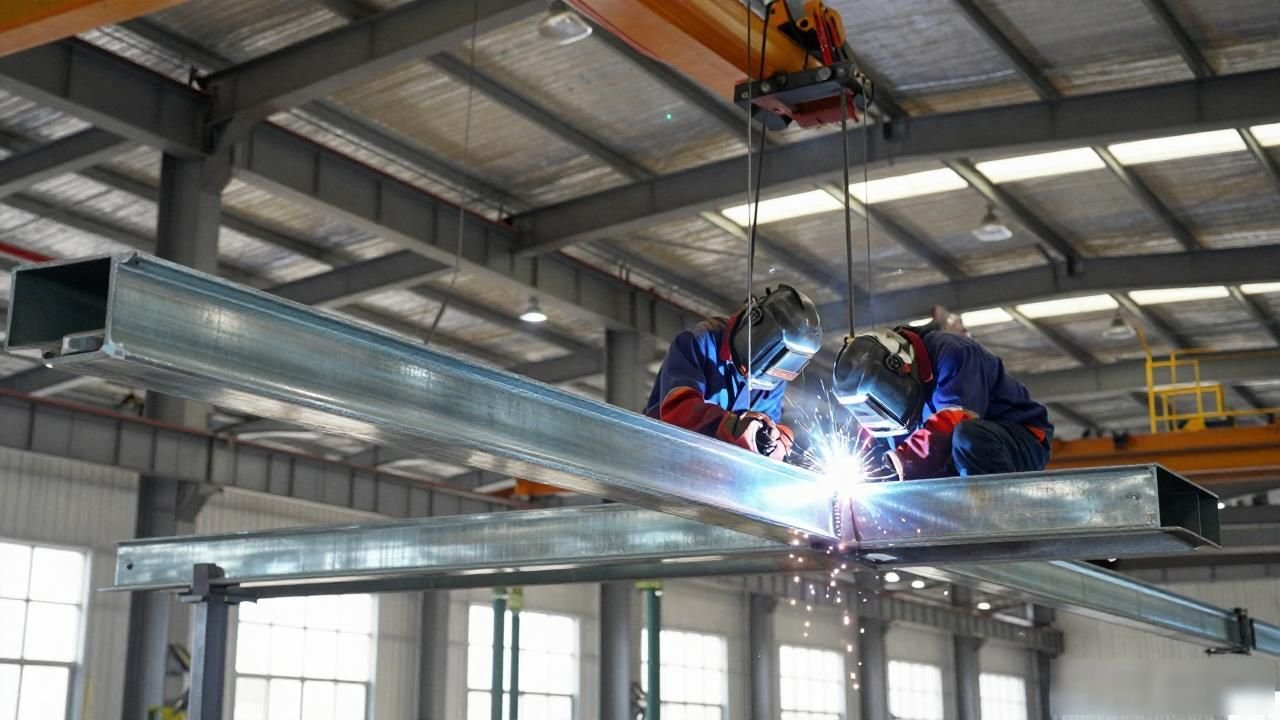
Another idea is to use different manufacturing methods. We can see that starting from 2025, examples of using laser cutting combined with welding to replace complex five-axis milling processing are becoming more and more common.
In the past, it took 6 hours to process an aluminum alloy shell using a traditional five-axis machine tool, but now it uses laser cutting, welding, and finally grinding. The whole process only takes a total of 3 hours. In this way, half of the man-hours saved. However, using this method requires certain prerequisites, that is, the product does not have extremely stringent requirements for surface quality.
Therefore, be sure to communicate relevant matters in advance with colleagues in charge of process engineers, but do not wait until the final quotation is available before considering modifying the production process.
You would like to ask if you have ever encountered a situation in the recent period where the CNC quotation and the actual final settlement are not consistent at all. Then, everyone is particularly welcome to talk about your own experiences in the comment area.
If you find my sharing useful, please like and bookmark my post. Finally, please pass this on to your colleagues who need to go to the processing factory so that they can also refer to these suggestions of mine.


暂无评论内容