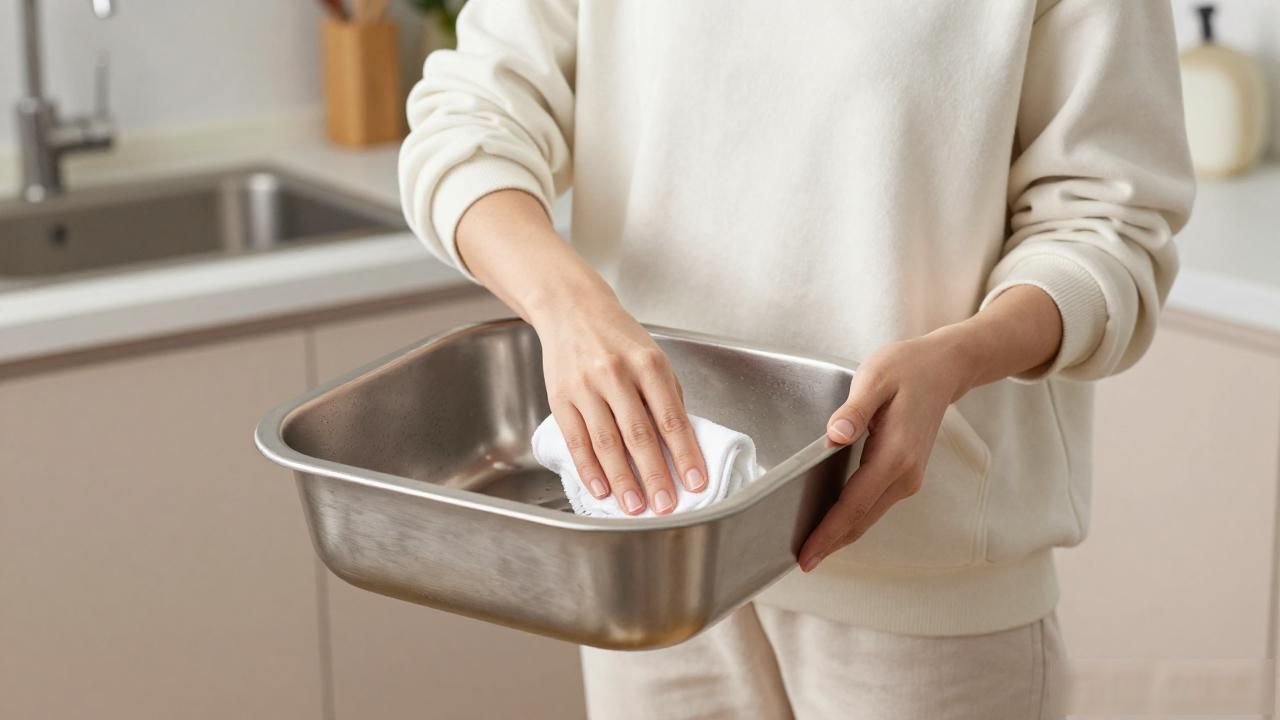


How to clean stainless steel basin
If you have a stainless steel basin, and you have used it for two or three years, but have not carried out deep cleaning frequently, then the gray film that appears on the inner wall is the kind of thing formed by the mixture of grease and bacteria.
The longer you wait, the harder it will be to remove the dirt. It also has a high chance of splashing that dirty water onto the dishes you just rinsed. On the surface, it seems to be clean, but in fact it is always carrying germs.
White vinegar baking soda stain remover
Take 200 ml of white vinegar, add a small spoonful of baking soda, stir until evenly mixed, pour it into a basin and let it sit for 15 minutes, then use a clean soft cloth to wipe it in the direction of the texture. How to clean stainless steel basins after processing . This combination is very effective in treating the daily oil film and slight scale-type dirt. Its overall cost is no more than two yuan, and it does not contain any corrosive ingredients. It will not cause damage to the passivation film with anti-rust function on the surface of stainless steel. It is more affordable and more reassuring than buying a specialized cleaning agent that costs more than ten yuan.
If after processing raw pork or seafood that day, an unpleasant fishy smell will emit from the basin, then you can add a small amount of fresh lemon juice to the prepared white vinegar liquid. The effect of this is to suppress the pungent smell.
Here we must remind everyone of a very important thing. Do not use 84 disinfectant or clean water containing bleaching ingredients instead of white vinegar for wiping, because the chlorine contained in those chemicals will cause corrosion damage to the stainless steel material. After using it for a few months, you will see small rust spots as big as the tip of a needle begin to grow on the surface of the basin, and these rust spots will become more and more as you scrub repeatedly, eventually causing the surface of the entire basin to look mottled and very ugly.
Why can’t you touch steel wool balls?
Many people see black stains on the bottom of the basin and rub it back and forth with a steel wire ball. On the next day, they will find a large silver-white scratch on it, which is even more unsightly than the original black stain. The thickness of the protective film used to prevent rust on stainless steel is only a few tens of microns. Once scratched by the steel wire ball, the protective film immediately breaks. The originally protected base metal encounters moisture and vapor in the humid air in the kitchen. Rust will begin to form soon, and these rust spots will continue to spread outward and become larger and larger, and there is basically no way to wipe them back.
As an alternative, you can choose 3M 0598 green scouring pad or kitchen nano sponge. Then mix baking soda and water to make a paste and wipe gently. This method is perfectly adequate for most oil stains and light dirt.

If there are still rust spots that cannot be wiped off, you can use a soft cloth dipped in a small amount of non-steel wire rust remover. Then perform a circular wiping operation. During the wiping process, the intensity must be kept light and avoid pulling the cloth back and forth to wipe. Just follow the grain direction of the basin.
Drain hole and filter cup
This week, you should dismantle and clean the water filter cup at least once. Clean all the vegetable leaves, small particles of broken eggshells, and grease stuck on your hands. Then take an old toothbrush and brush the gaps around the drainage hole. This step is easily overlooked by everyone. However, if the leftover food residue is stored in a hot hole for two days, it will start to smell bad. The number of bacteria will increase rapidly by multiples, so when you rinse the sink, the dirty water containing a lot of bacteria will splash directly onto the surrounding countertops.
After washing the water filter cup, do not put it back directly with wet water. You must first shake it dry, or wipe off the water on it with a cloth, and then install it back to its original position. If you don't do this, the accumulated moisture at the bottom will breed mold in a few days.
If the drain hole is clogged, do not use a toothpick to prick it. Instead, use boiling water, add a few drops of dish soap, and pour it down through the hole. When the grease becomes soft, it will drain away on its own. Every month, feel the location of the hole with your hand to check if there is any blockage to prevent the odor of the sewer from returning to the indoor space.
Stubborn scale treatment
The water quality in northern areas is generally relatively hard. If the basin is used for a long time, about half a year or more, white dirt will appear on the surface of the arc area directly below the faucet.
There is a specific method to deal with this phenomenon. First, you need to prepare some kitchen towels. Soak these paper towels in white vinegar until they are fully saturated with water. Then directly lay them on the surface with white scale, cover it with a layer of plastic wrap and leave it there for two to three hours.
When the time is up and you remove these things, you will find that the white dirt will basically fall off in flakes. Then rinse it with clean water and it will become very clean. There is no need to use a lot of force to scrub during the whole process.
Never use oxalic acid or any strong acid products for descaling. Although they remove quickly, they will corrode the stainless steel surface into dense pits , which are basically impossible to repair later. If the scale is really thick, it is recommended to do it in two days. On the first day, simmer the white vinegar all night. After wiping it clean the next day, apply a new layer. Don't try to save time and put in a lot of effort, but it will damage the basin surface.
How to determine cleaning frequency
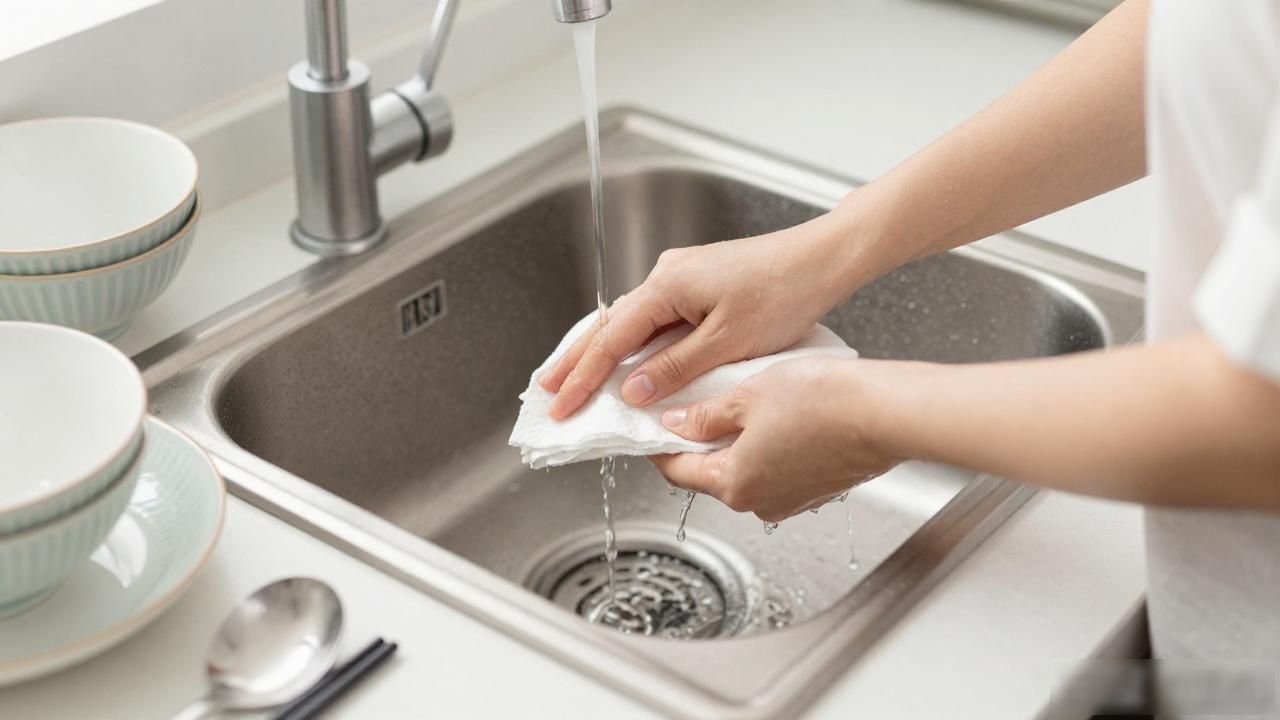
According to the minimum requirements, your daily routine should be to rinse the basin after washing the dishes, and then use kitchen towels to wipe away all the water stains on it. If you have cut raw meat or handled seafood that day, be sure to rinse it immediately with hot soapy water.
Don't think about cleaning up tomorrow, because in a humid environment, bacteria can multiply within eight hours. Come Sunday, you can spend twenty minutes doing a complete deep cleaning. You need to remove the filter to clean it, use a brush to brush the drainage holes, and wipe clean the dead corners at the bottom of the basin.
If there are days in the south that return to the south, or during the rainy season, the air is very humid. We suggest that you shorten the interval for deep cleaning from the original one week to once every five days. Because the mold spots grow very quickly in the gaps in the basin.
If the ventilation in the kitchen is not good, there are no windows, or there is no sunlight for a long time, then it is even more necessary to shorten the cleaning interval. Once you find gray or green mold spots in the bottom corners of the basin, cleaning them will be twice as difficult.
Several pitfalls that are easy to step on
This is a big pit. The dishwashing liquid cannot be rinsed off and will remain at the bottom of the basin. When you wash the dishes next time, the foam will become bitter. This is like using water mixed with oil stains to wash vegetables.
This is the second big pitfall. If the rag is wet after washing, and then placed on the edge of the basin, the rag itself will become a dish for cultivating bacteria. After wiping with such a rag, the items will be dirtier than if they were not wiped. In this case, it is better to throw the kitchen paper directly into the trash can after using it.
The third pitfall is that the stainless steel basin and the aluminum basin are wiped with the same scouring pad. Aluminum powder rubs onto the stainless steel, which will accelerate local corrosion. It is best to wash the two metals separately. In the fourth pit, after wiping the water basin, place it upward to dry. The remaining moisture will flow along the inner wall and accumulate in the corners of the basin bottom, instead of being poured upside down on the rim of the basin. Let the moisture drip away naturally. There will be no water accumulation and mold in the corners.
How long has it been since you took apart and cleaned the water basin in your home and the filtered water cup? Please share your cleaning habits in the comment area. If you find this content useful, then like it and forward it to the person in charge of the kitchen at home.







暂无评论内容