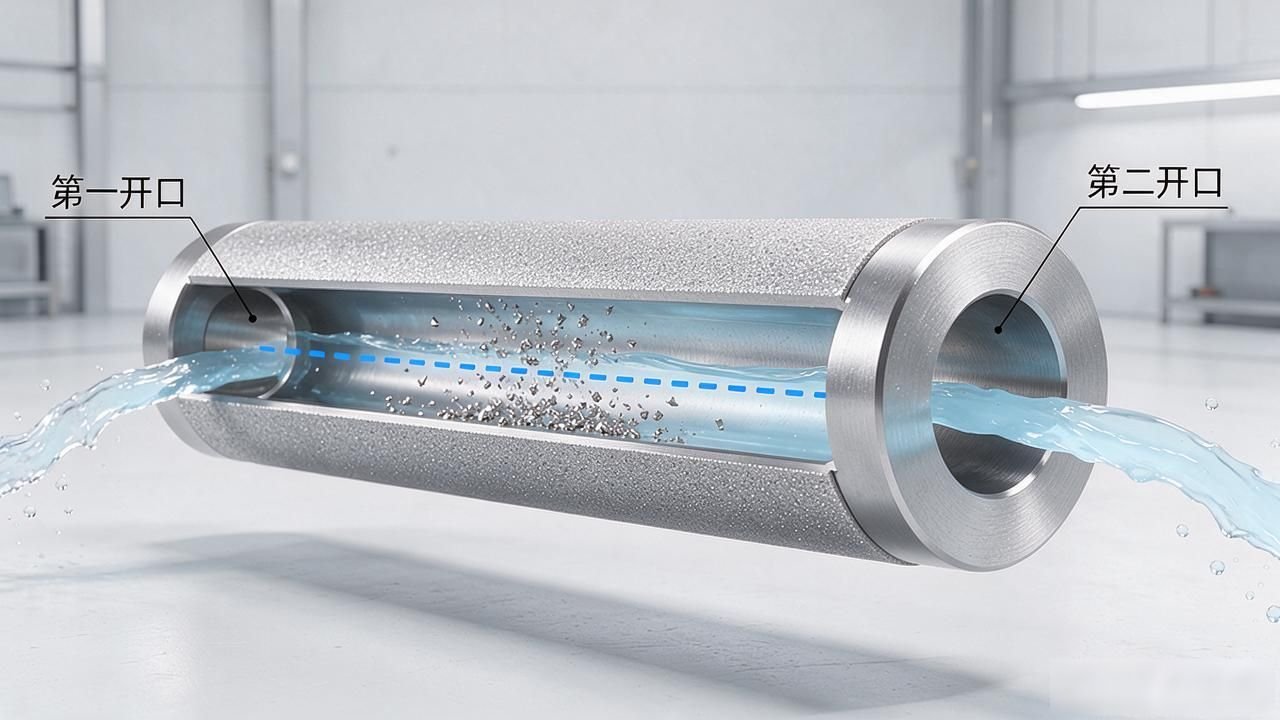


Lens Technology has obtained patents related to grinding wheel bar equipment. Coolant enters and exits for chip removal cooling to improve product processing quality.
Lens Technology has obtained a new patent for grinding equipment. When grinding the end face, grooves are no longer needed. The coolant is directly discharged through the connected holes, so that the quality of sand plating can be fundamentally improved.
Patent authorization and application information
On May 1, 2026, the State Intellectual Property Office officially granted the utility model patent for the grinding wheel bar and grinding equipment belonging to Lens Technology. The application number was CN2.8. The application date at that time was set at May 8, 2025. The inventors were Mr. Zou Zhongfa and Mr. Zuo Youlin, and the patent agent responsible for this matter was Ms. Huang Jiao. Judging from the classification number, It covers the two categories B24B/04 and B24D7/10, which means that the result belongs to the field of grinding tools and related equipment.
Lens Technology was established on December 21, 2006, and later listed on the Shenzhen Stock Exchange on March 18, 2015. The company is registered in Hunan, and its offices are also in Hunan. This company is a major manufacturer of protective glass for electronic products in the world. Its core product is mobile phone window protective screens. By 2025, its revenue will reach 74.41 billion yuan, ranking fifth among 88 peers.
Disassembly of grinding wheel bar structure
The grinding wheel bar in the patent is divided into two parts: the tool holder body and the grinding disc body. The grinding disc body contains three parts: the grinding end surface, the connecting end surface and the forming side surface. Moreover, the connecting end surface is fixedly connected to the tool holder body, and then the forming side surface serves as the transition area between the two. Finally, the overall structure is compact.
A first hole channel and a second hole channel are provided inside the grinding disc body. Among them, the first hole will form a first opening in the middle of the grinding end face, and at the same time, the second tube will form a second opening at the connecting end face or the forming side, and these two holes are connected to each other, thus forming a closed channel for coolant circulation.
Coolant inlet and outlet and chip removal mechanism

During grinding, the coolant enters from the second opening of the second hole, and then flows inside the connected second hole, and then is discharged from the first opening of the first hole, and in the process, the debris generated by grinding is taken away.
In other words, the cooling effect and chip removal tasks are all completed in the same channel, and there is no need to open some additional slot structures here.
The grinding end face is designed as a continuous plane surrounding the first opening. It no longer cuts the cooling groove around the perimeter like the traditional solution. This continuous plane does not have sharp edges and corners, so when grinding with a grinding wheel bar, the contact between it and the workpiece will be more uniform, so that the stress concentration on the sand coating layer will not be caused.
What problem does canceling slotting solve?
After the end face is ground and the surrounding annular notch is machined using the traditional process, a very sharp angular protruding structure will be formed at the edge of the notch.
These parts composed of sharp corners are very prone to aggregation of fine sand grains during subsequent sand plating processes, resulting in uneven overall thickness of the final sand plated layer, and may even cause the surface layer to fall off. This defect will directly cause the protective glass used in the screen to suffer from reduced light transmission performance and damage to the mechanical strength.
After the grooving step is eliminated, the end face to be ground becomes a flat plane that is connected without interruption. In this way, the problem caused by the sharp corner is eliminated from the most fundamental point and no longer exists.
Improving the quality of sand plating means an improvement in product yield. For the production line system of Lens Technology, which produces hundreds of millions of protective panels every year, it can directly reduce the rate of scrap and the costs incurred due to rework.
Industry data and competitive landscape
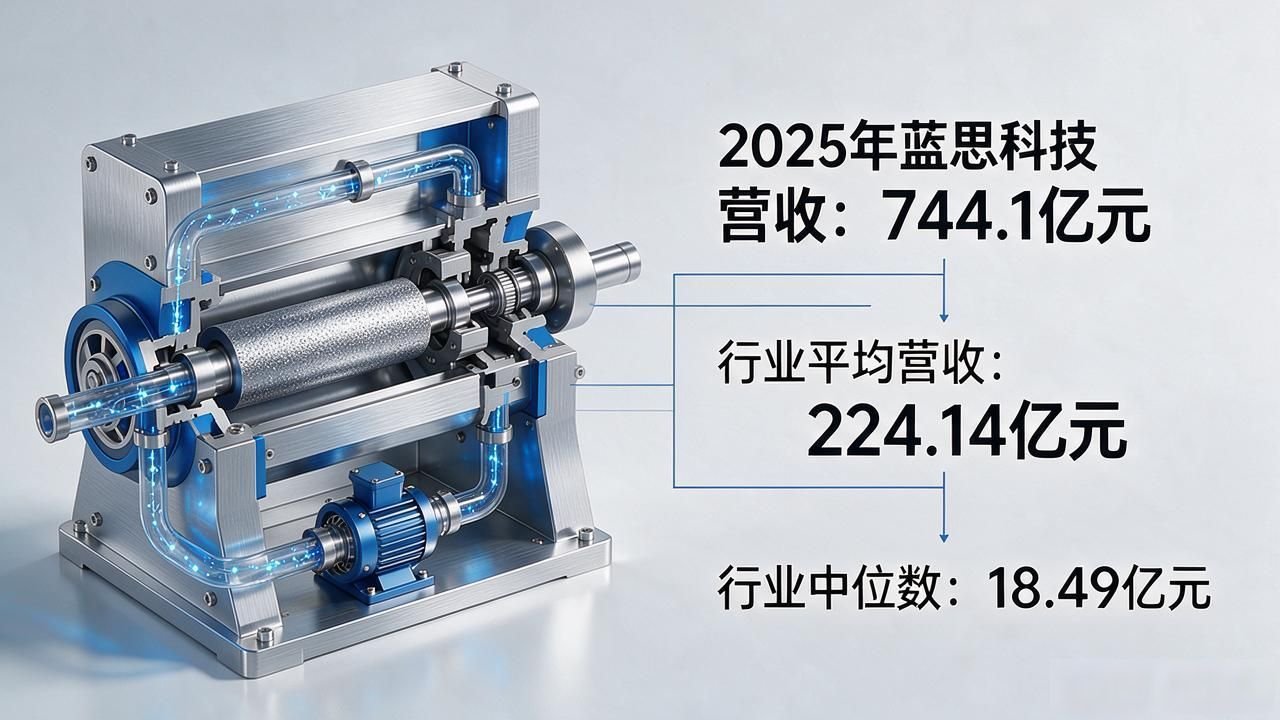
By 2025, Lens Technology’s revenue data will reach 74.41 billion yuan. In comparison, the industry average revenue is only 22.414 billion yuan. The industry median only stayed at 1.849 billion yuan. The gap between these data is very obvious.
In terms of net profit, Lens Technology recorded a value of 4.041 billion yuan. This achievement ranks 4th in the industry. However, Fii, which ranked first, had a net profit of 35.329 billion yuan. Following closely behind, Luxshare Precision, ranked second, also had a net profit of 18.17 billion yuan. The leading advantages of these two companies are still far apart.
In the main business, revenue from smartphones and computers reached 6.1184 billion yuan, which accounted for 82.23% of the company's total revenue. This company is also involved in conceptual areas such as iris recognition, special glass, and brain-computer interfaces. The level of precision of the grinding equipment is the most critical basic link in the process from planning to implementation of these high-end products.
Consumer Electronics Grinding Processing Trend
Protective glass has been upgraded from ordinary 2D curved surfaces to UTG flexible screens, which has led to higher and higher requirements for cooling and chip removal of grinding equipment. Grooving solutions are prone to edge chipping problems in thin glass processing, while continuous grinding surface solutions are more suitable for the current ultra-thin development trend.
Lens Technology chose to focus its patent layout work on the aspect of grinding basic tools. Lens Technology obtained patents related to grinding wheel rod equipment. Coolant enters and exits for chip removal cooling, which improves product processing quality. This behavior shows that at this end of the production line, everyone's pursuit of yield and quality has sunk from the equipment level to the tool level. If it really expands to the fields of automotive glass and folding screen panels in the future, this set of designs for connecting channels will most likely undergo another round of iterations, adjustments and improvements.
When your production line is performing grinding work, does the method of discharging iron chips also rely on grooving? I very much hope that everyone can give a like and share your own opinions. In addition, you are also welcome to discuss the specific chip removal methods you are currently using in the comment area.



暂无评论内容