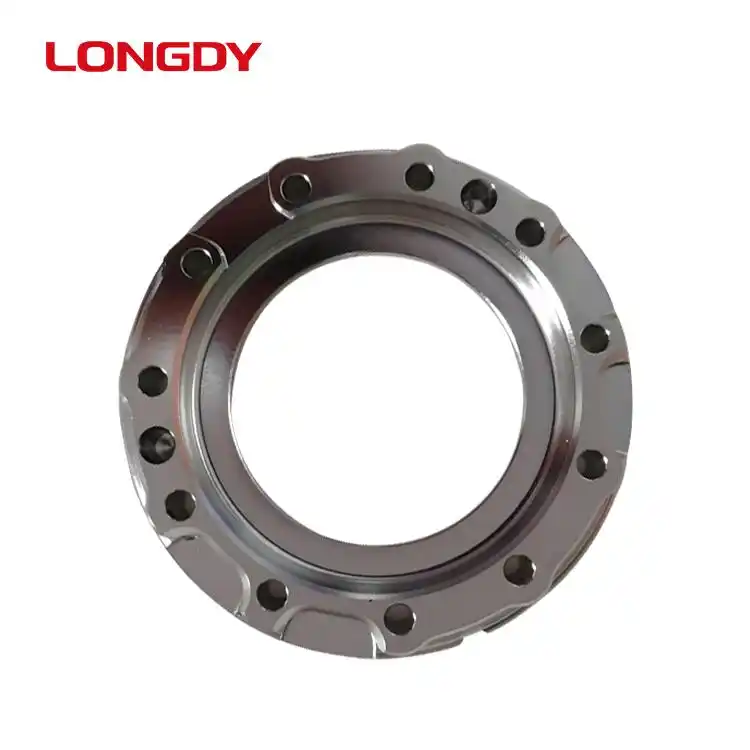


CNC machining VS ordinary lathe: How big is the efficiency gap?
A CNC lathe can achieve 24,000 hours of operation in a year, while the maximum operation time of an ordinary lathe can only maintain 18,000 hours. The significant difference between these two figures actually represents a very tangible economic value.

The most essential difference between manual and automatic
Ordinary lathes rely on old masters with many years of experience to operate them through their feel and experience. For example, in 2024, in a machinery factory in the Yangtze River Delta region, there was a lathe with 30 years of experience. When he adjusted the speed, the machine had to pause for three to five seconds.
The CNC lathe is driven by G code. Its spindle switches from 800 to 6,000 revolutions per minute. It only takes a few tenths of a second. There is no pause in the whole process.
Simply put, when a person operates a machine tool, the person is busy working in front of the machine, but when using a CNC lathe, the program runs automatically inside the equipment. When people work for a long time, their bodies will experience fatigue, which affects the stability of their movements, but there will be no emotional or physiological fluctuations during the execution of the program.
Taking the specific case of manufacturing shaft sleeve parts as a reference, it takes fifty-two minutes to process such a part with a manual lathe. However, if a CNC machine tool is used for processing, it only takes fourteen minutes to complete the production of a single product.
The efficiency of placing batch orders is several times worse
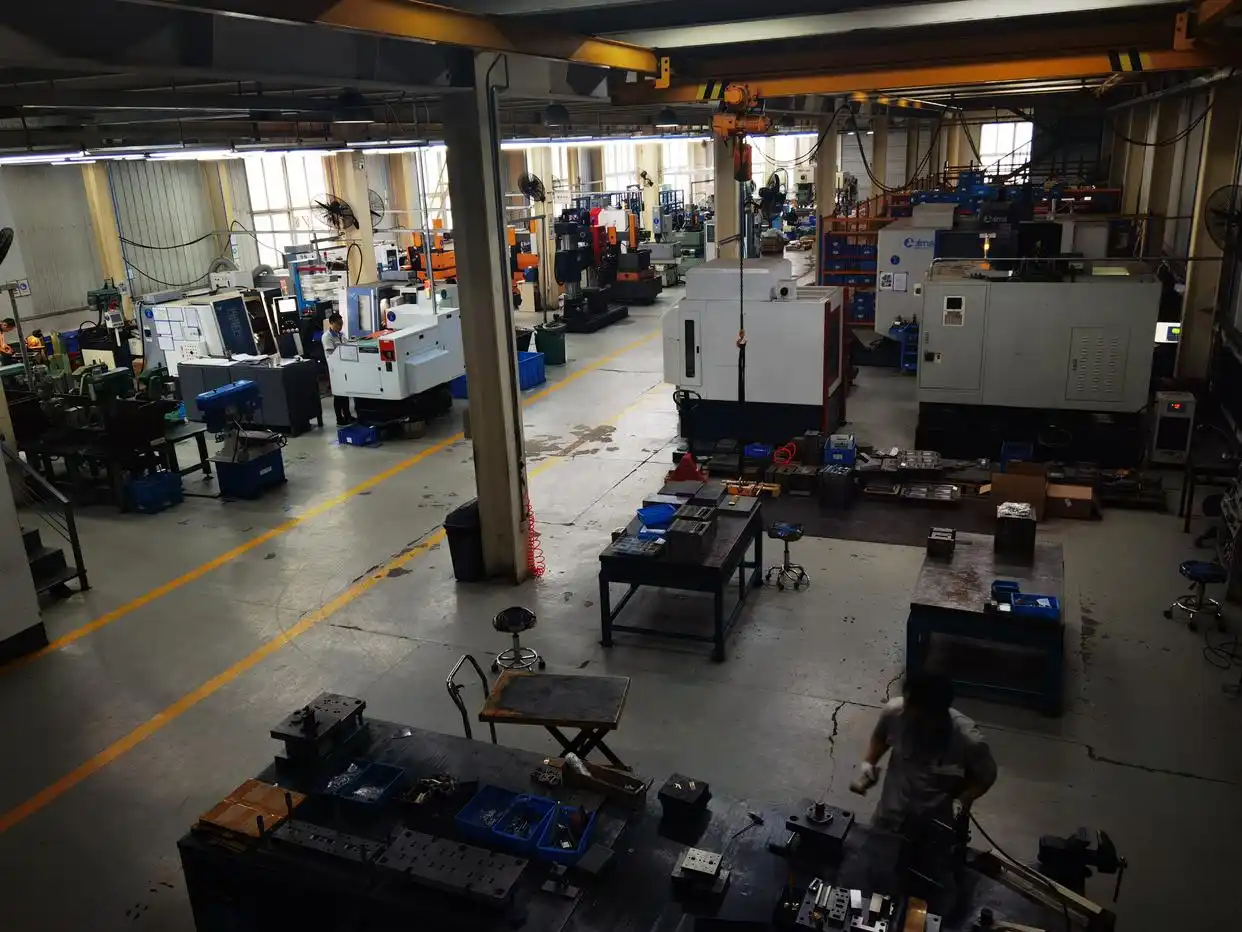
In 2025, a factory in Suzhou specializing in the production of hydraulic valve bodies can produce 30,000 products per month. It is equipped with five ordinary lathes. CNC machining VS ordinary lathes: How big is the efficiency gap? , and the workers work in three shifts, so the delivery time is always delayed by as long as a week.
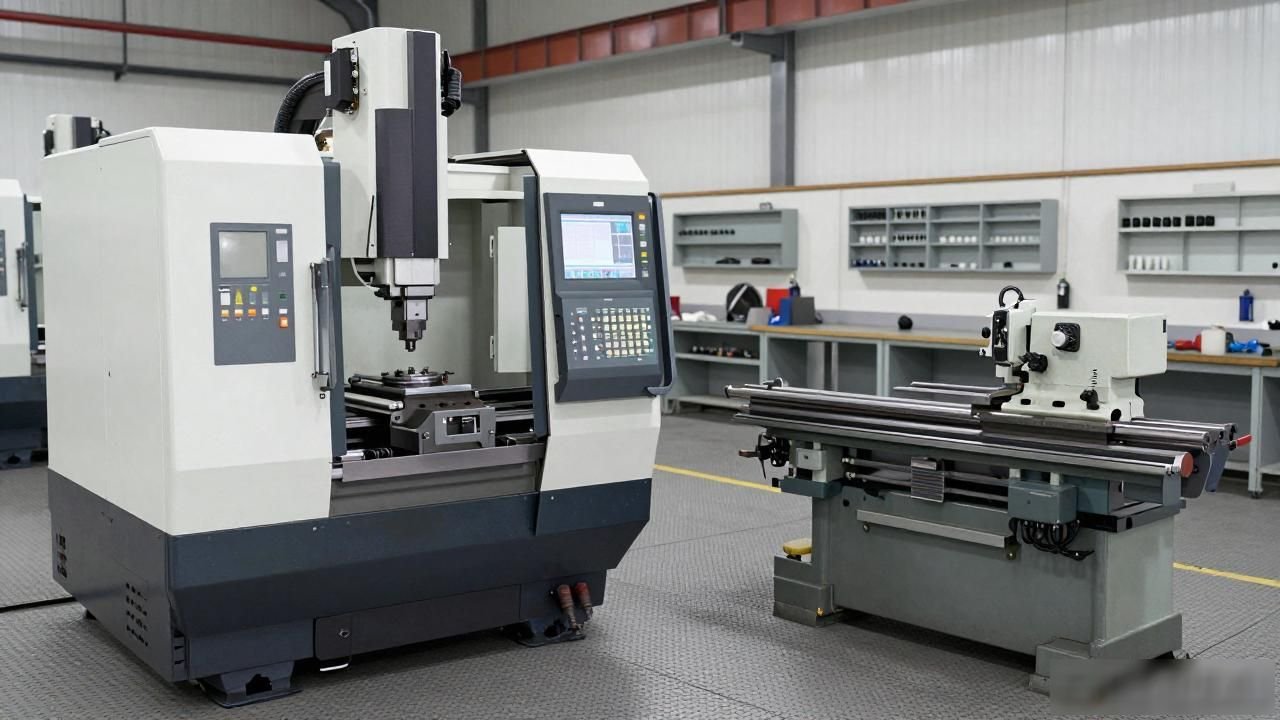
Since the replacement of the two five-axis CNC lathes, it only takes five days to deliver the same order for the same quantity. The production capacity has been greatly increased, almost doubling the original amount.
The real key point is to realize the processing of multiple processes through one clamping. In ordinary machine tool operations, after the outer circle turning is completed, the workpiece needs to be turned around and then the inner hole is turned. In this process, due to the need for repeated tool setting operations and tool replacement, it takes up to twenty minutes.
Looking back at the use of CNC technology, when performing rough turning and finishing operations, the entire processing process can be completed continuously within one cut, and there is no need to move the fixed workpiece during the entire process. In this way, the overall production cycle time is directly shortened to as much as one-third of the original time.
Changes in accuracy and scrap rate
The difference between CNC turning and ordinary lathes when controlling tolerances on ordinary lathes often relies heavily on the operator's vision. If it can achieve an accuracy level of plus or minus 0.02 mm, it is already quite good. Especially when operating during the night shift to meet deadlines, the operator's mentality and movements are prone to erratic situations. However, the tool movement of CNC lathes is completely controlled precisely by the system. Its repeat positioning accuracy can be stably maintained at a high level of plus or minus 0.005 mm, and even a thousand products can be processed continuously without any dimensional errors.
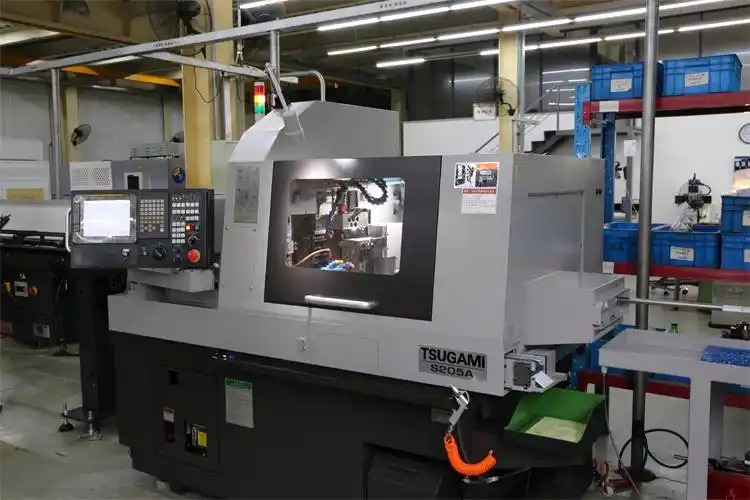
According to statistical work conducted by an electronics factory in Dongguan in 2024, when manual equipment was used before, the proportion of scraps reached a level of 4.3%. After switching to CNC equipment, this figure became 0.3%. If we calculate based on the standard that the raw materials used for each product cost 60 yuan, then relying on the saved material costs, the monthly payment for a machine tool can be paid within a month.
You don’t have to stop for a long time to change models.
For small-batch and changeable production models, this situation often causes enterprises to feel extremely troubled. When operating an ordinary lathe in the traditional way, once you need to change the drawing , you need to adjust the fixture, perform tool setting, and test cutting. These steps add up to at least two to three hours.
However, when using a CNC lathe, it only takes ten minutes to start running the new program after it is downloaded, and there is basically no need to make any changes to the tooling.
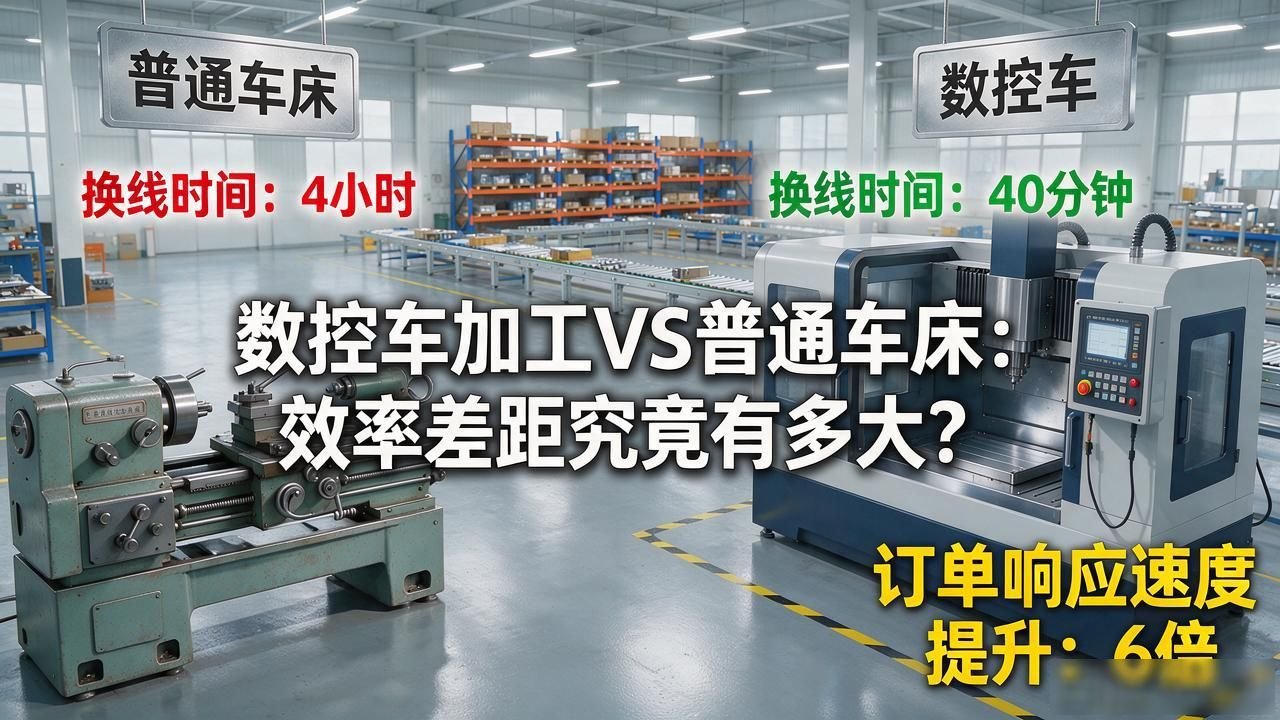
There is a medical device accessories company in Shenzhen. It operates more than 120 SKUs, and all production scheduling work is completed by CNC machines. In 2025, this company will compress the product line change time from the original four hours to forty minutes, directly increasing the order response speed by six times.
Calculate a long-term account
The retail price of a five-axis CNC lathe is 1.8 to 2.5 million, which seems very expensive at first glance. But if calculated based on full production for sixteen hours a day, the number of operators has been reduced from three to one, and the material loss has been reduced by 70%.
Under such circumstances, the cost can be earned back in more than three years. Although the initial cost of purchasing ordinary lathe equipment is cheap, its hidden costs in actual production are relatively high.
By 2025, the monthly salary of manufacturing workers in coastal areas can reach 8,000 yuan, and they will also need to pay social insurance fees as required. The operating efficiency of a CNC machine tool is equivalent to that of three skilled workers working normally, and these workers do not need to take leave or suffer from emotional fluctuations. The more serious the labor shortage becomes, the more cost-effective it is to use mechanical automation for production.
Not all parts should be CNC machined
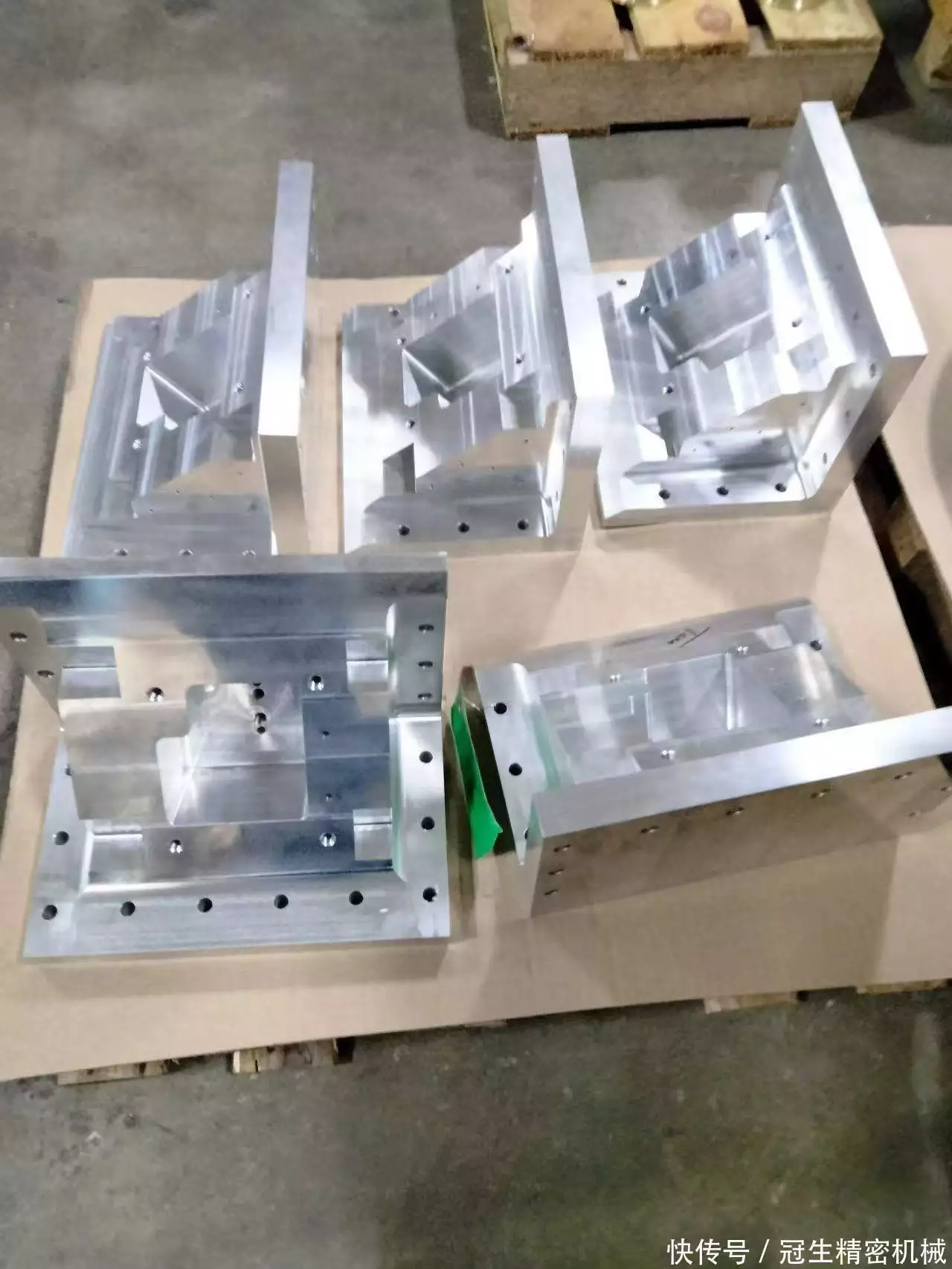
If it is a minor repair of a single piece, an ordinary machine tool can handle it in twenty minutes. There is no need to start programming for processing. The real dividends of CNC technology are when the monthly output reaches more than 2,000 pieces. The difference between CNC turning and ordinary lathes , and the tolerance requirement is within one hundred millimeters. When the entry threshold has not been reached, if you have to forcefully purchase high-end equipment for production, the result will only be unnecessary losses.
The trend in 2026 is very clear. Medium-scale factories in the Yangtze River Delta and Pearl River Delta regions have basically completed the replacement of CNC technology, resulting in a growing gap. Those companies that still use manual machine tools do so not because of a lack of business orders, but because it is difficult to undertake production tasks that have extremely high requirements for processing accuracy and delivery deadlines.
In your factory, what is the current proportion of ordinary lathes and CNC lathes? If you are planning to replace equipment, what is the factor that worries you most? Everyone is welcome to go to the comment area for exchange and discussion. If you find this content meaningful, give it a like and forward it to your peers.




暂无评论内容