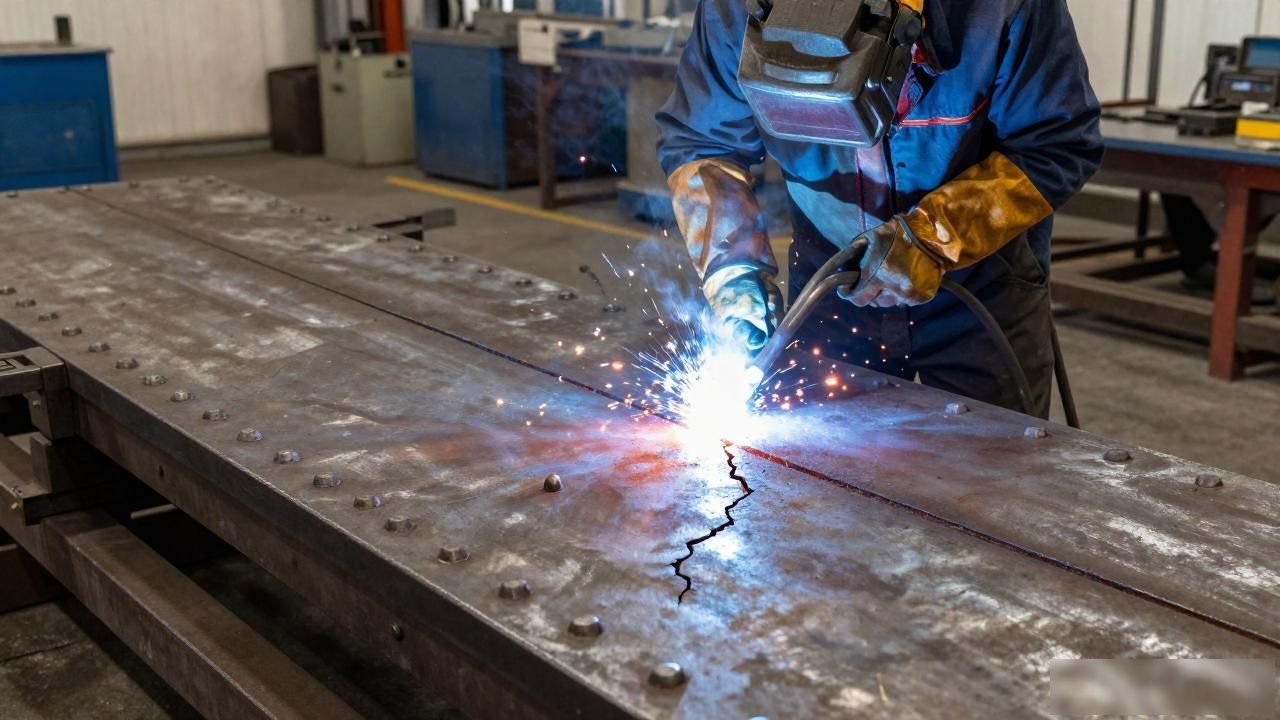


Cast iron riveting and welding platform> HD pictures
Cast iron agricultural machinery casings are riveted and welded, and they crack as soon as they are welded. The rework cost is more expensive than buying a new one. This is almost the biggest headache for agricultural machinery maintenance workshops.
Why is it difficult to rivet and weld cast iron casings?
The carbon content in cast iron is relatively high, so it is also very brittle. The thickness of the tractor gearbox and the gearbox shell of the harvester is usually within the range of six to twelve millimeters. Because local heating is uneven, this causes the concentration of thermal stress. It is very easy to produce cracks around the weld. The difficulty of this welding is much higher than that of steel parts.
The thermal conductivity of cast iron is very low, only one-third that of carbon steel. This causes a huge temperature difference area to be formed on both sides of the weld bead during welding. The metallographic structure will also change directly from pearlite to white. The hardness suddenly soars above HRC70. Subsequent turning and milling processes are basically impossible, and the scrap rate is much higher than that of steel shells.
How to do preheating before welding
Before starting the welding operation, the entire structure must be preheated to a temperature in the range of 250 to 300 degrees Celsius. During the specific implementation, an acetylene flame or a resistance heater should be used to uniformly heat the shell, and it should be noted that the heating coverage cannot be limited to the local weld, but the heating area should extend more than 100 mm on both sides of the weld.
As for whether the actual temperature value reaches the standard, it must be measured on-site with the help of a point thermometer. It is absolutely not possible to simply rely on feeling to make an estimate by touching it with your hands. This is because there are big differences in the thermal conductivity of different batches of cast iron materials.

Insufficient preheating is the biggest cause of rollover. Some experienced masters just preheated a few centimeters away from the surface of the weld because they didn't want the trouble. Since the thick meat part at the bottom is not fully heated and penetrated, the internal stress cannot be released during the cooling stage after the welding is completed. This resulted in the shell cracking along the weld the next day, thus making all the results of the whole day's work in vain, which was equivalent to a day's work in vain.
Don’t reverse the order of riveting and welding
The structure of the agricultural machinery casing is very complex. At the same time, the positions of the rivets and the positions of the welds are cross-distributed and numerous. Therefore, the correct order of operations is to rivet first and then weld. After the rivets are drilled, arc plates need to be added around the rivet holes to serve as a transition. Do not hit the arc directly on the head of the rivet. Otherwise, it is very likely that subtle cracks will grow at the intersection between the root of the rivet and the base material.
If the reverse order of first welding and then riveting is adopted, the impact force generated when the hammer is driven in will cause invisible micro-cracks in the newly welded seam. When the machine shell is assembled to the agricultural machinery and bears the workload, the shell will break. This will forcefully extend the repair cycle to nearly half a month, and the economic losses caused by the production line being unable to operate normally are actually greater than before.
How to choose welding materials and current
When choosing cold welding rods, everyone chooses the model A002, and its corresponding brand is E5015CF. When choosing a hot welding rod, choose the model A001, which is E5015C. If the diameter of the welding rod is between 1.5 mm and 2 mm, the welding current must be controlled within the range of 90 amps to 130 amps.
When performing welding operations, a short arc must be used and a fast pace must be maintained. The length of each weld is not allowed to exceed 50 mm. Once this limit is reached, the arc must be stopped. Do not be tempted to increase the length.
Never use high current to weld the entire weld in one go, because cast iron cannot withstand continuous heat input. The interlayer temperature must not drop below 100 degrees. You must quickly weld the next weld while it is still hot. Otherwise, the previously welded weld will turn white. At this point, you will not be able to weld it again if you want to.
Post-weld slow cooling and stress relief
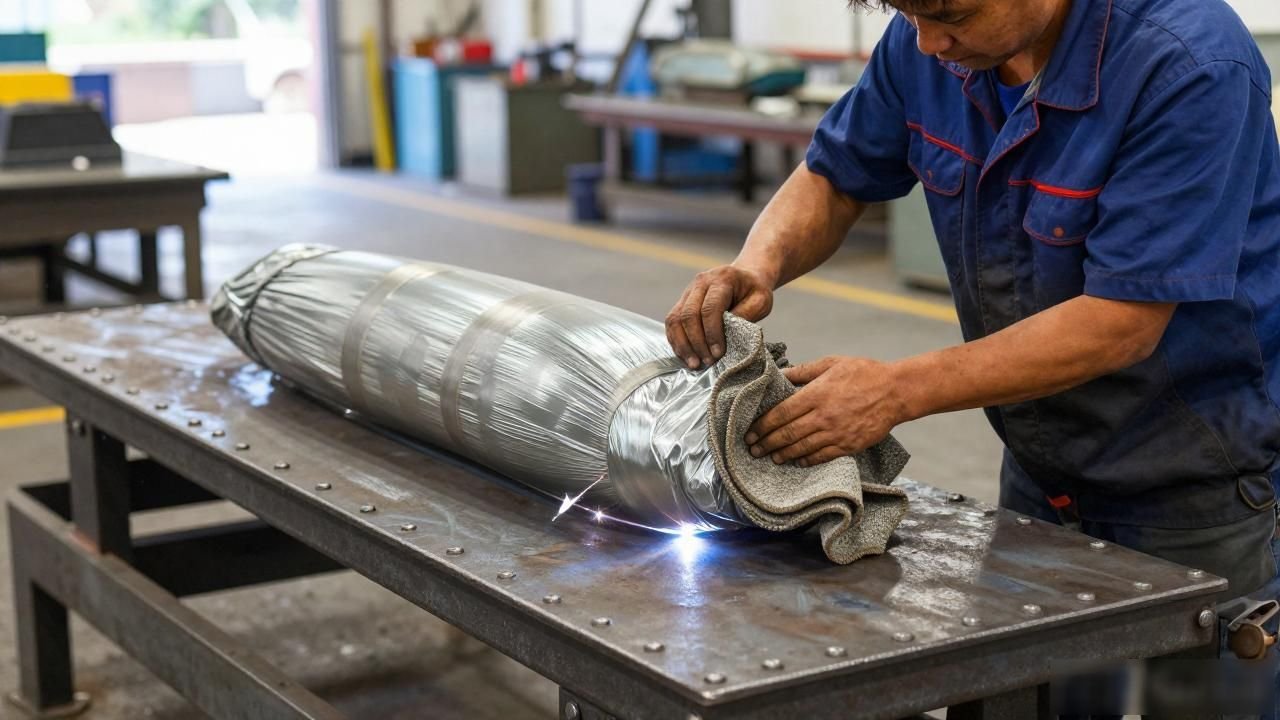
After the welding is completed, asbestos cloth or thermal insulation wool should be brought immediately to wrap the entire shell, and then let it cool down naturally. The cooling rate here needs to be controlled within a range of no more than 80 degrees Celsius every hour. If rapid cooling is performed, all the previous welding work will be in vain. This is because the stress generated by the temperature difference will directly tear the weld apart, causing all previous efforts to be in vain.
Reduce the temperature to within 200 degrees, and then put the product into the furnace for stress relief annealing. The temperature needs to be kept between 550 degrees and 600 degrees, and kept warm for 2 hours.
Wait for the temperature to slowly cool down with the furnace and drop below 300 degrees before taking the workpiece out of the furnace. Because the vibration frequency of agricultural machinery is very high during operation, if the residual stress is not eliminated, the shell will not last long and it will crack.
Common rollover points and acceptance methods
The most typical case of overturning is that without doing any spectral analysis to confirm whether the shell is gray cast iron or ductile iron, we went straight to welding. As a result, the entire shell was reworked because of the wrong selection of welding materials. There was also the case of rivet holes, which were welded directly without enlarging the holes. The rivets became loose, resulting in delamination and falling off of the welds, which greatly reduced the strength of the shell.
During the acceptance process, magnetic particle inspection is used to check whether the crack is on the surface or near the surface. Ultrasonic inspection is then used to check whether the internal pores are not fused. Finally, the machine is installed and run with no load for 2 hours to listen for abnormal sounds. If there is any abnormality, remove it and reprocess it. Do not leave the factory sick.
When your factory is riveting and welding cast iron shells, which work step is most likely to make errors and cause problems and losses? Everyone is welcome to communicate and discuss in the comment area. If you think this content is helpful to you, please give it a like and forward it to the masters in your workshop for a look.



暂无评论内容