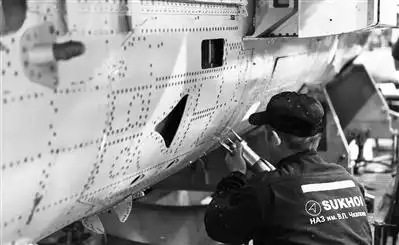


Riveting technology – "threading the needle and threading the thread" to assemble the fuselage

If a steel plate is welded to the hull, it can withstand seawater immersion for decades. However, the skin part of the aircraft must be firmly fixed with millions of rivets. When in a violent vibration environment, which of the two connecting parts, welding seams and riveting seams, can withstand the test better? The answer to this question is actually hidden in the characteristics of the material itself.
Aluminum alloy becomes brittle once welded. This is determined by physical properties.
The ship is built on steel plates, and because those welding technologies are quite mature, the strength of the welds is very high, and there will be no problem even if they are soaked in seawater for decades. However, the main material used for the outer skin of the aircraft is aluminum alloy, which are two completely different things compared with steel.
When the designer first designed, he did not consider welding as an option at all. It was not that he did not want to use welding, but because the materials used did not allow it. In the field of civil aviation aircraft worldwide, all aluminum alloy skin parts have so far adopted the riveting process. This established technical route has been verified over the long years and has a history of more than half a century.
Airborne vibrations can repeatedly crack welds
During cruise, the skin is continuously subjected to aerodynamic tension, and the fuselage is vibrating at a frequency of several meters per second. If there is even a microcrack in the weld, the vibration will repeatedly hit it like a hammer, and the crack will rapidly extend along the direction of the weld, and its expansion rate is an order of magnitude higher than under static load conditions.
In 1988, the wing of United Airlines Flight 811 fell off due to metal fatigue. Although this was not caused by a pure welding problem, it did expose the fact that in a vibration environment, cracks at the connection points would expand and eventually cause fatal risks. You must know that there is no continuous weld at the riveting point, so there is no path for the crack to "run" along a certain line. This makes the final failure mode completely different from what was mentioned previously.
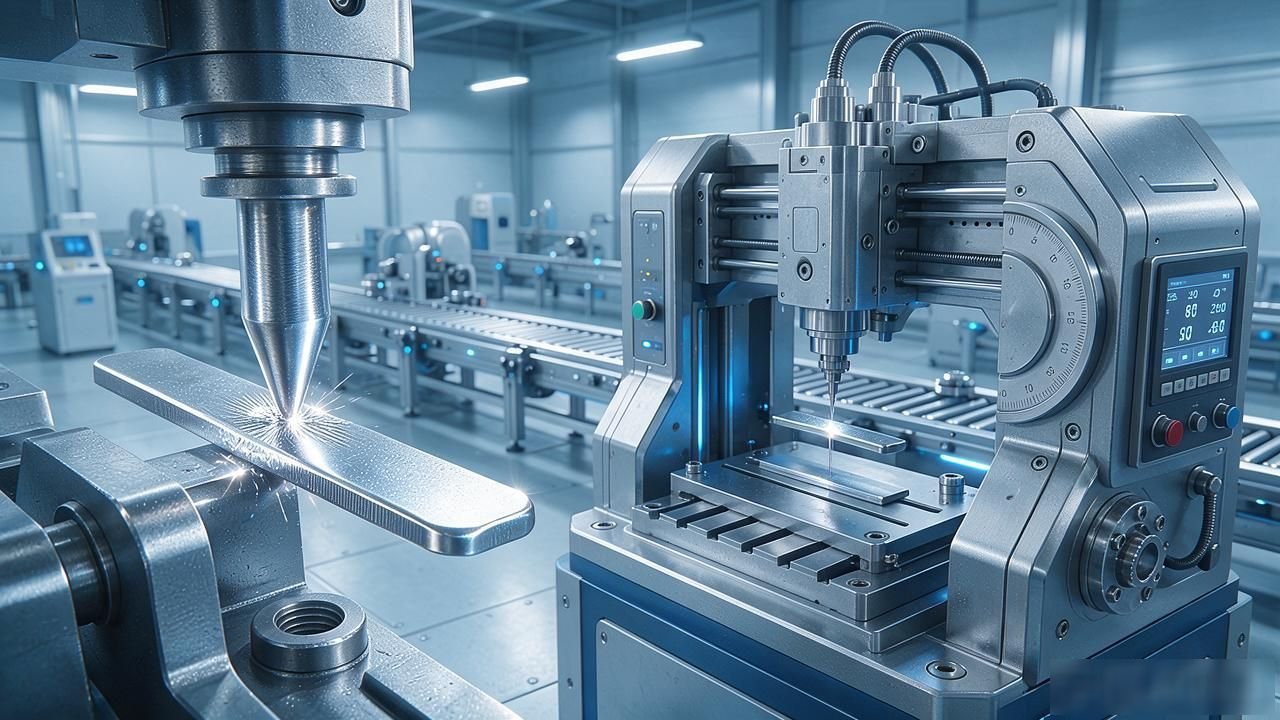
Rivet processing accuracy can reach micron level
Welding is particularly dependent on the worker's feel. As a result, the penetration depth of the same weld in different locations can vary by more than ten percent, so it is difficult to guarantee the consistency of mass-produced products.
Rivets are the kind of parts that are stamped on the assembly line. The dimensional tolerance of a single rivet is controlled at the micron level. After millions of rivets are installed, the overall accuracy is very uniform, and each rivet can be traced individually.
Carry out quantitative production, which means that the quality control points will become very clear, and each product must be individually inspected before leaving the factory. There are at least hundreds of thousands of rivets on the skin. If we rely entirely on manual welding , there is absolutely no way to ensure that the quality of every weld is consistent.
Therefore, in mass production processes that require large-scale control, the riveting method will have the advantage of rolling over the welding method.
Rivets can withstand 1100 MPa pressure
The maximum pressure value endured by rivets on the aircraft skin can reach 111 MPa. This data is far higher than the relevant indicators of ordinary steel structure connectors. The function of the rivet head is to disperse the stress to the surrounding skin. In this way, there will be no stress concentration points within the connection area. In terms of fatigue resistance, vibration resistance and crack extension resistance, its performance is better than that of welds.
The thermal cycle process during welding operations will generate and maintain residual stress at the joint. When subjected to repeatedly changing load environments for a long time, this stress condition will become a starting point for fatigue cracks.
In contrast, the riveting process does not have a decent heat-affected zone, and its associated material performance properties basically remain unchanged before and after the connection action is implemented. Therefore, the fatigue service life displayed will be significantly increased.
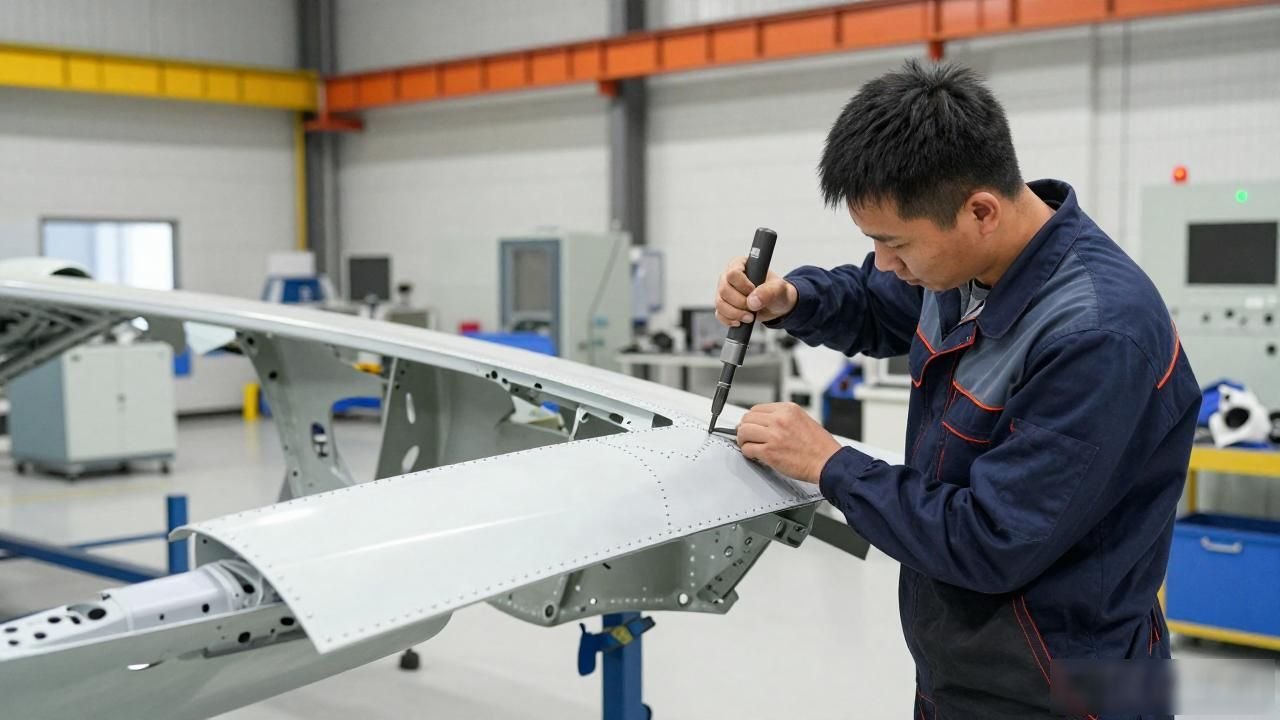
Replacing a piece of skin without dismantling half the aircraft
Welding is a permanent connection method. When the skin is damaged by welding, a large area around it must be cut off and re-welded . Which is more reliable, welding or riveting, in a vibration environment? The riveting technology – "threading needles and wires" to assemble the fuselage, and the unit price of the skin made of composite materials is very expensive, often as high as hundreds of thousands of yuan, and the related repair work is also very long, usually taking several days to complete.
In contrast, the riveting method is obviously more convenient in terms of disassembly. The operation process is roughly to remove the old rivets through stamping, install new skin parts, and perform the riveting action again. After these steps are completed, the entire work can often be completed successfully in a few hours.
For the airline group, if a wide-body passenger aircraft causes millions of losses every day it is parked at the airport, then the riveting process can significantly shorten the repair time window, and its full life cycle cost will be much lower than the welding solution. This is a real monetary gain for airlines that are very good at calculating profits.
Millions of rivets sew the fuselage into a redundant iron barrel
Take out the more than 600,000 rivets on the fuselage and wings of a Boeing 787. They are like needles and threads, densely sewing the thin aluminum sheets together. Each individual rivet is an independent stress point. Even if one of them breaks, the load it has to bear will be immediately shared by several adjacent rivets, so the entire structure will never collapse at that moment.
Welds are continuous lines. If there is a problem at one point, the entire weld may undergo a chain failure reaction. Rivets exist in the form of discrete single points. Even if one of them is broken, the scope of its impact will be extremely small. Therefore, in a vibrating environment, this distributed failure mode is much safer than continuous welds. This is the key reason why the global civil aviation field has always insisted on riveting as the core reason.
You wonder in your mind, when titanium alloys and carbon fiber skins slowly become regular configurations in the future, will riveting technology be reliable and will it be able to stabilize your territory? Feel free to say whatever you want in the comment section. If you think this point of view is valuable, please like it and forward it to the aviation enthusiasts you know.



暂无评论内容