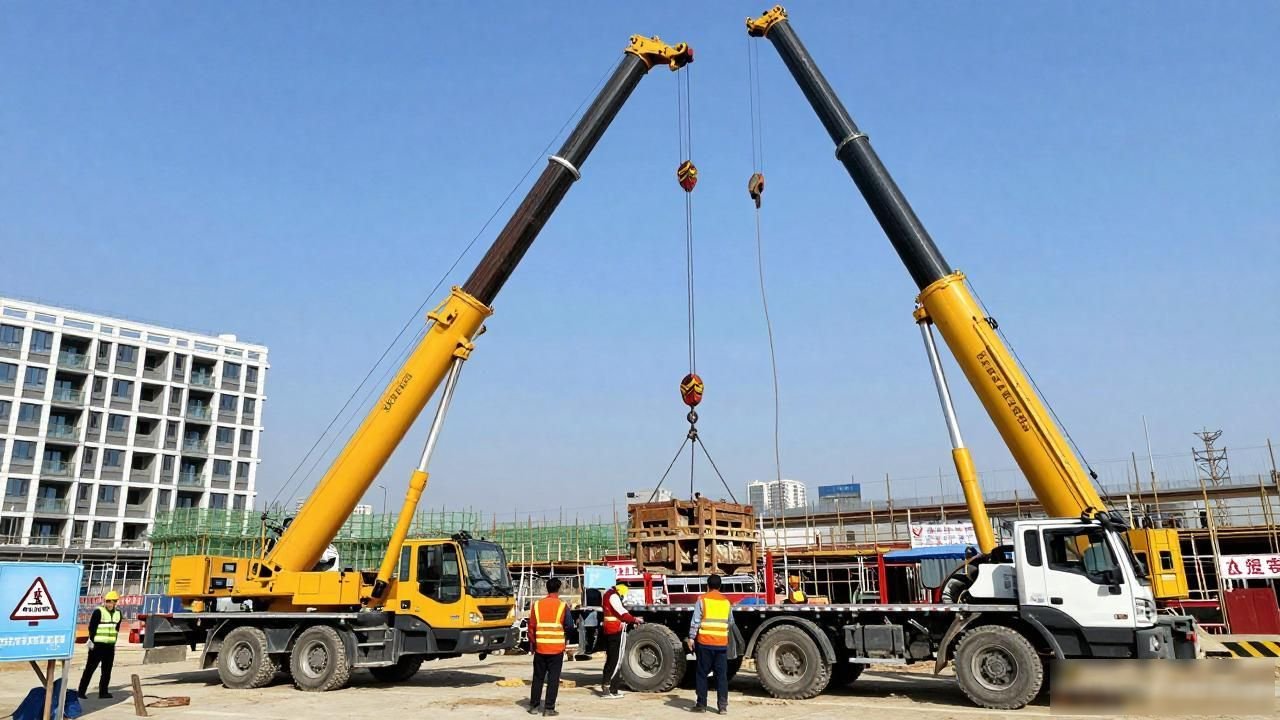


Riveted and welded flat plate lifting and transportation
As long as the 50-ton riveted and welded flat plate is hoisted, the cost is hundreds of thousands. If the lifting point is chosen in the wrong direction, or the construction process is skipped, it will cause serious problems of warping and deformation of the entire plate. Then all the subsequent inspection steps will be in vain.
How many times does it take to lift from rough to finished product?
A piece of cast iron riveted and welded flat plate needs to go through at least three large-scale lifting operations from the state of forming a casting blank to the final product. The first time is to lift it away from the mold after removing the sand. The second time is to lift it and place it on the inspection plane after completing fine processing. The third time is to lift and transport the product before it is delivered to the user. The weight of the equipment and the position of the center of gravity will be different at each stage.
In a riveting and welding factory in Botou, Hebei Province in 2024, when the blanks were first produced, the operators directly used a single-point spreader for lifting operations. The result was that the 8-ton steel plate had a two-millimeter dent in the middle. In order to restore this accuracy, it took two weeks of sanding, which ultimately resulted in labor costs that were even higher than the price of the plate itself.
Emergency preparation before 50-ton hoisting
When the weight of the finished riveted-welded flat plate reaches 50 tons, the angle between the steel wire ropes must be confirmed before the lifting operation. You must know that the angle cannot be less than 60 degrees, and the lifting points must be evenly distributed. At the same time, two sets of spare slings need to be prepared in advance, and a 25-ton forklift truck should be on standby. This is to be able to respond to various emergencies that occur on site.

In 2025, there was a specific project site in Jinan, Shandong. During the lifting operation of a fifty-ton flatbed, one of the slings was slightly kinkted. Since the replacement set of rigging had been prepared in advance, the damaged rigging was replaced in fifteen minutes, which did not cause the loading operation of the day to be delayed.
How to find and use the surrounding lifting openings
There are two symmetrical lifting openings on each side of the four sides of the cast iron riveted-welded flat plate. There are steel plates embedded inside these lifting openings. The thickness of the steel plate is not less than 12 mm. When lifting, only the lifting openings that match the current corresponding process can be used. In the rough stage, side openings are used, and in the finished product stage, the bottom reinforcement openings are used.
The most common mistake people make now is to use the wrong lifting port. The most typical example is to lift the finished board as a blank block, which causes the direction of the force on the bottom of the board to be reversed. The four corners of the board bear too much pressure. In mild cases, stress lines will appear on the bottom. In serious cases, it will directly crack, and the entire board will be completely scrapped.
Movement according to process cannot be skipped
There is a fixed sequence in the transportation of riveted and welded flat plates from rough to finished products. This sequence starts with the appearance. Then comes deburring. Next comes rough machining. Welding and riveting will be done later. The next step is finishing. Then comes testing. Finally, packaging is carried out. Before each process is completely completed, the operator must record the current status. At the same time, the specific location of the next lifting point must also be recorded.
The most dangerous situation in skipping is to directly skip the two steps of welding and riveting, and then proceed directly to fine grinding. Because the stress inside the board has not been completely released at this time. After fine grinding, the board surface will slowly arch the next day. In this way, when the customer accepts the product, they will directly request a return.
Transport fastening and anti-deformation details
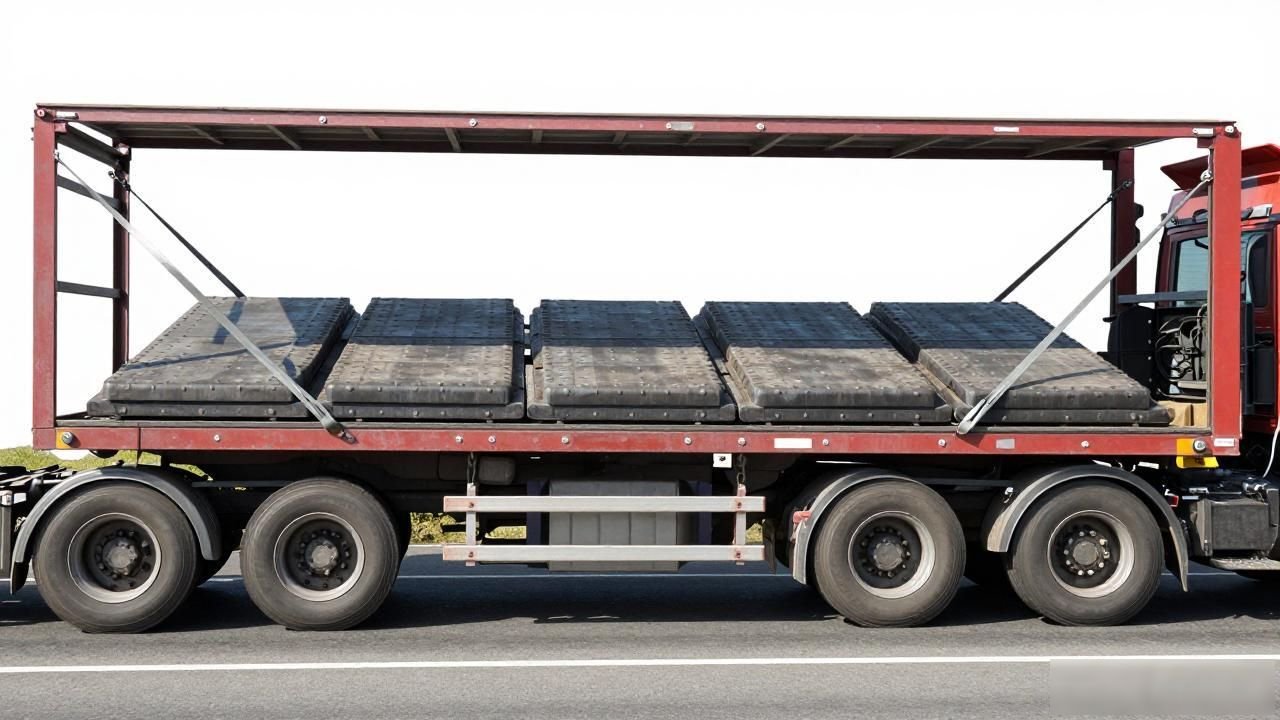
To transport a 50-ton flat plate on the road, you need to use a low semi-trailer, and put six rubber pads on the bottom of the board. These six rubber pads must be arranged at equal intervals. At the same time, steel belts must be used on both sides of the board to pull diagonally to fix it. The pulling force must also be controlled within a range. This range is so that the board body will not produce a bending moment. Generally, the pulling force on each side should not exceed three tons.
In 2025, the batch of testing platforms sent from Bodi to Xi'an went through three consecutive downhill slopes during transportation. Due to a problem with the fixing strap, the skateboard body was displaced by as much as five centimeters. After the goods arrived at their destination, it took two days to re-implement the leveling operation.
The latest batch of testing platforms has been shipped
By the end of October 2026, after this stage has passed, the final inspection of the cast iron riveting and welding inspection platform ordered by Manager Li in Kaifeng has been completed and passed the review. In the process of lifting and loading, the whole process is operated according to the symmetrical plan of four lifting ports. The flatness of the board was also controlled within 0.02 mm, so the goods were shipped that day.
The weight of this batch of panels is 38 tons. During the operation, two 50-ton truck cranes are used to operate together. The horizontal movement distance from the workshop to the loading port cannot exceed 20 meters. During the entire process, the goods are always suspended in the air and are not put down halfway.
In your factory, when lifting and installing riveted flat plates, is it currently carried out according to the content written on the process description sheet, or does it rely on the personal experience of the master? Everyone is welcome to share your views in the comment area. If you find this content useful, please click like to support it, and forward it to colleagues in the workshop to take a look.



暂无评论内容