


In-depth analysis of the classification and installation of embedded parts in building curtain walls
Because the embedded parts were not riveted and welded correctly, the curtain wall felt unreliable after it was hung up. Once something went wrong, the construction site would be blamed entirely for accountability. As for how to choose between trough type and plate type, and how much their bearing capacity differs, many steel structure masters still don't know clearly.
The core role of embedded parts in curtain walls

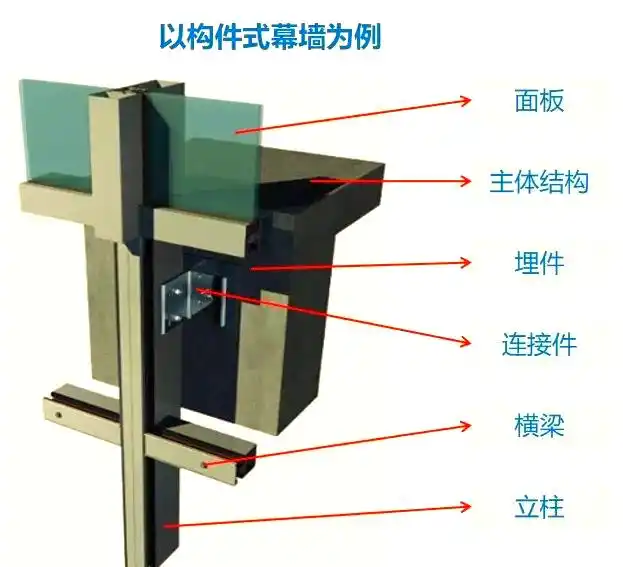
During the concrete pouring stage, the embedded parts will be welded into the main structure, and it is also the only rigid docking node position connecting the curtain wall keel and the building structure. If this thing is missing, the entire curtain wall system will be in a suspended state, resulting in no place to transmit and share the wind load and the weight of the structure itself.
In current actual construction sites, it is actually very common for the center position of embedded parts to deviate by more than five millimeters and the elevation error to reach three millimeters. If this misalignment occurs, all adapters that need to be used later must be reprocessed and manufactured. The resulting construction delay will last one to two weeks, and the additional cost of materials alone will cost tens of thousands of yuan.
Structure of plate embedded parts
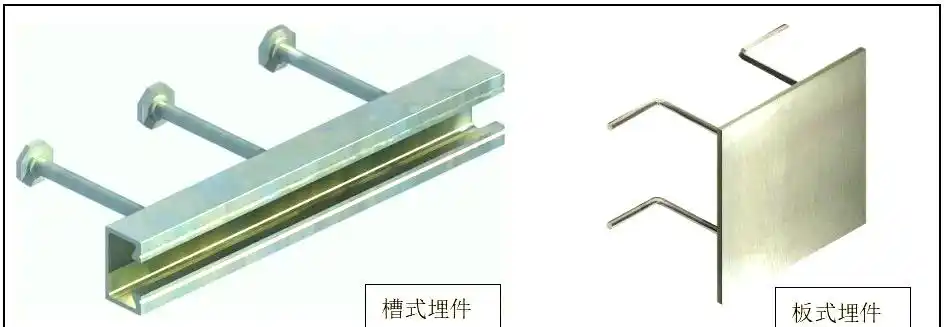
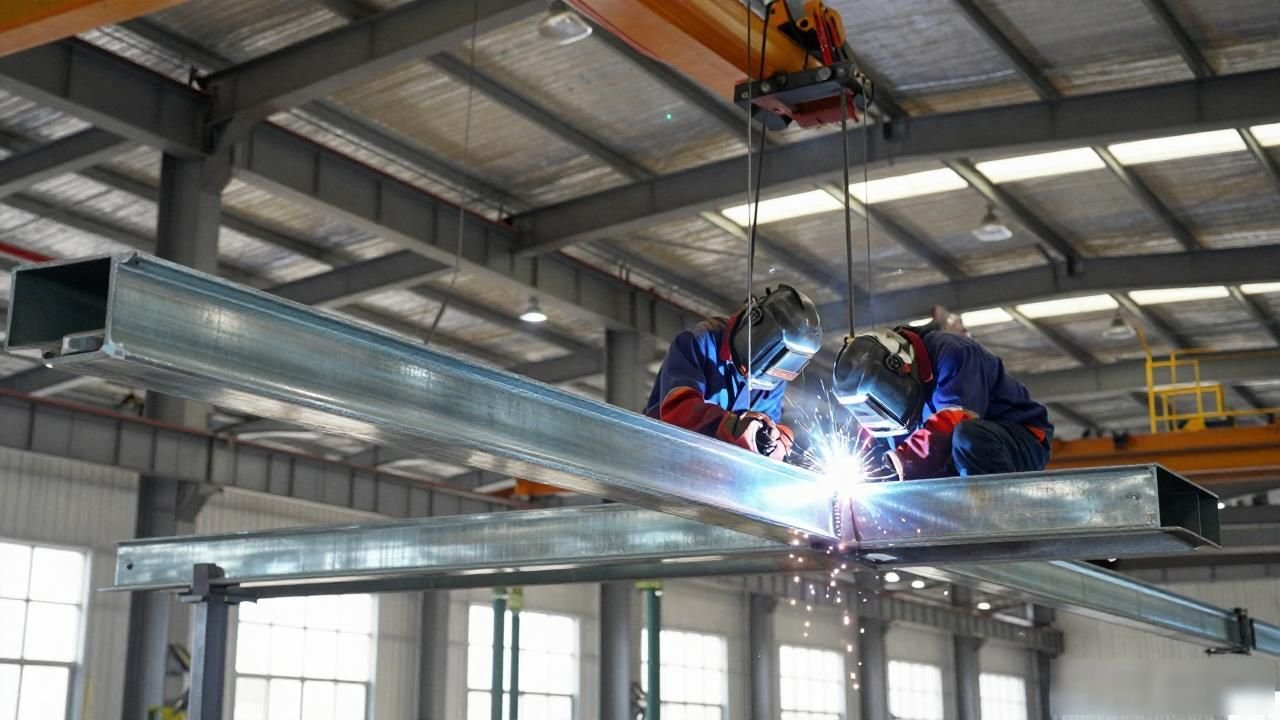
The so-called plate embedded parts are actually very simple in composition. They are just composed of an anchor plate and several anchor bars. At the construction site, rivet welders need to weld these anchor bars and that anchor plate tightly together, and then transport the welded object to the designated entry site. What are the types of anchor bars mentioned here? They can be roughly divided into four different types: straight bars, L-shaped bent bars, U-shaped hook bars, and bent hook bars. The three types of anchor bars mentioned above are the most frequently used during actual construction sites.
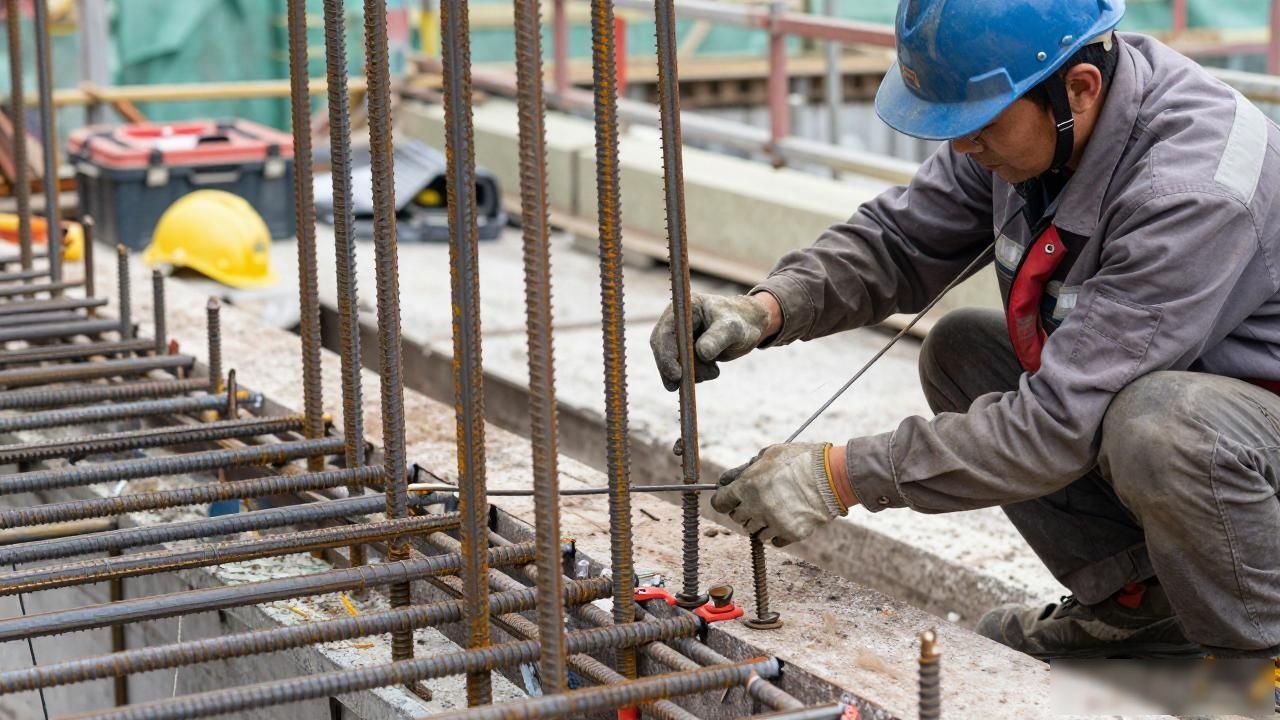
During the installation and construction process, rivet welders will pick up No. 22 steel wire, and then tie components such as anchor bars to the main frame steel bars one by one. At the same time, they also need to deliberately set aside a relatively short steel bar for bridging and connect this steel bar to the lightning protection grounding grid system of the entire building. In this way, the work completed at only one point will fix the structural anchorage. As well as the two important tasks of maintaining electrical continuity, they were solved together.
Load-bearing performance of plate embedded parts
The tensile design value of plate embedded parts can reach up to 140 kN, and the shear resistance is 55 kN. Since the area of the anchor plate is relatively large, the contact surface is relatively extensive. It can be adjusted up, down, left and right, and the adjustment range can reach more than ten millimeters. In this case, errors generated during the installation process can basically be digested. This feature makes it suitable for use in large-span and high-rise curtain wall structures.
The cost is that the amount of on-site welding work is very large. One embedded part may need to be welded with seven or eight joints, binding, positioning, welding and grinding. It requires at least four processes. If the project is rushed, the quality of the welds will easily go wrong, so special personnel must be sent to do re-inspections.
Structure of trough embedded parts
Trough-type embedded parts use C-shaped steel as the trough body, and then weld the anchor bars at both ends. When leaving the factory, riveting and welding workers will weld the trough body, anchor bars, and end plates. After arriving at the construction site, only a set of T-bolts are needed for direct installation. Basically, there is no need to use a welding gun for welding work.
Its three-dimensional direction can be finely adjusted. The T-shaped bolts can be adjusted in the up and down and front and rear directions in the slot. You only need to snap the adapter in to complete the installation. This will make it more convenient to do the later anti-corrosion paint painting work, and the processing and inspection speed is twice as fast as that of the plate structure.
Load-bearing limitations of trough-type embedded parts
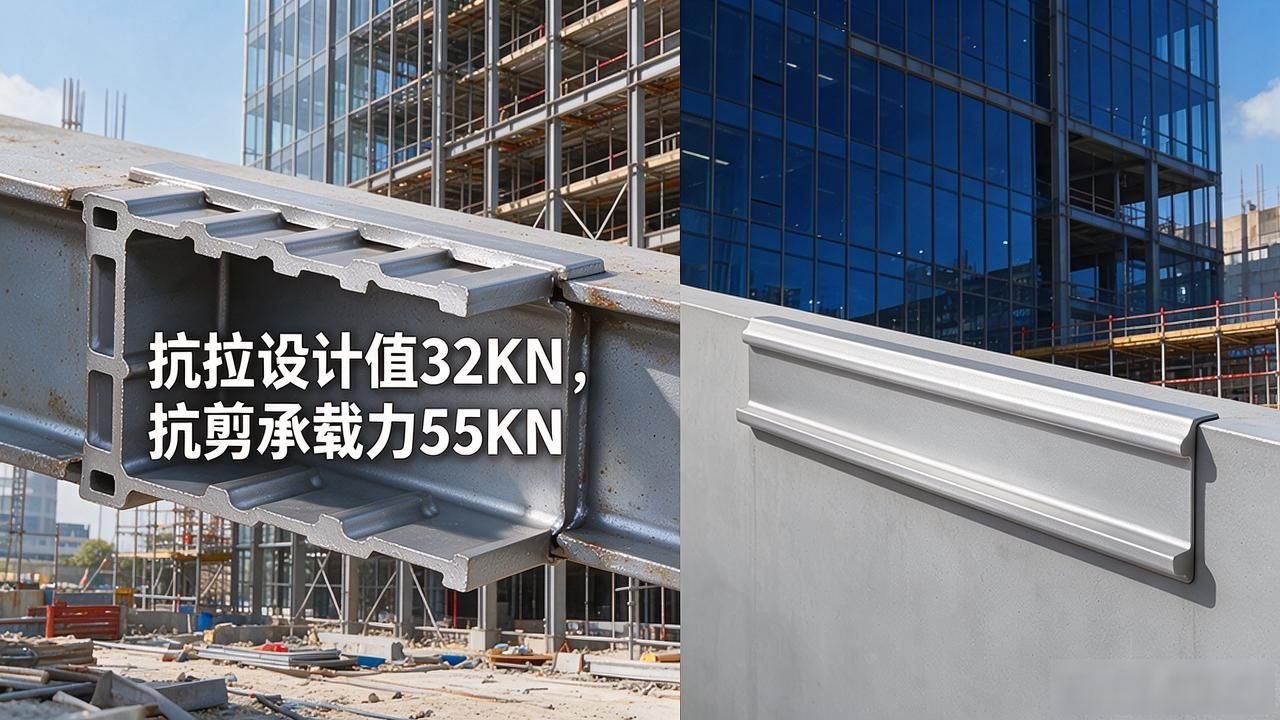
The tensile design value of the trough-type embedded parts is only 32KN, while the shear bearing capacity is 55KN. This makes its overall bearing capacity much lower than that of plate-type embedded parts, and its tensile performance is even worse by nearly half. Therefore, if it is used on high-rise facades and long-span atriums, it feels a little inadequate.
In the low-rise podium, inside the transfer layer, and where there are transfer beams at the back, it is enough to use trough components, which can save labor and materials. However, for the stress-bearing points of the main beams, as well as the parts with a cantilever length exceeding 2 meters, plate components must be used honestly, and do not take the risk of shouldering the trough pressure in order to keep up with the construction progress.
Key actions in the installation process
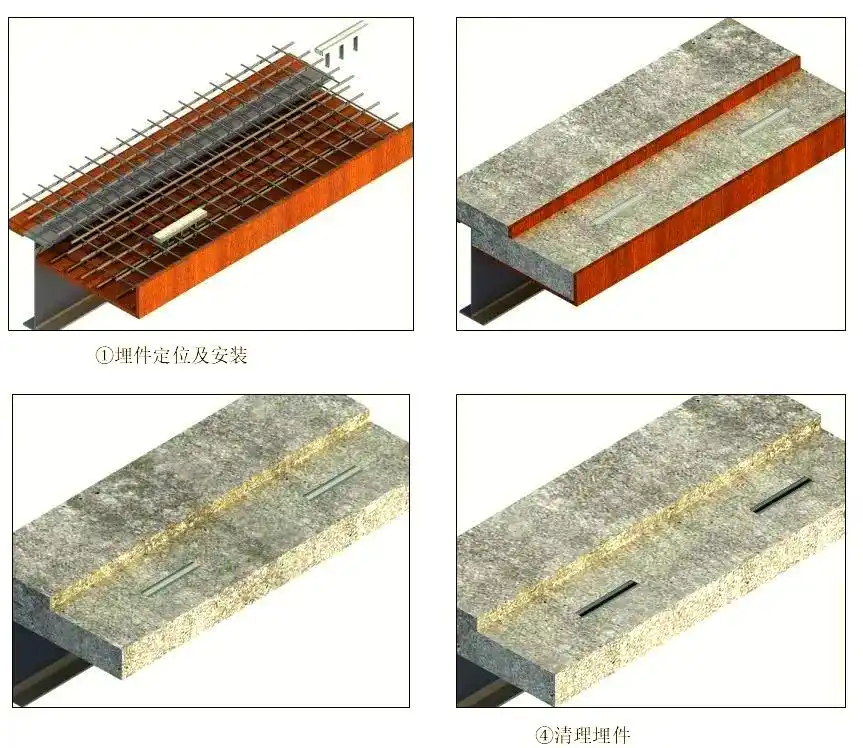
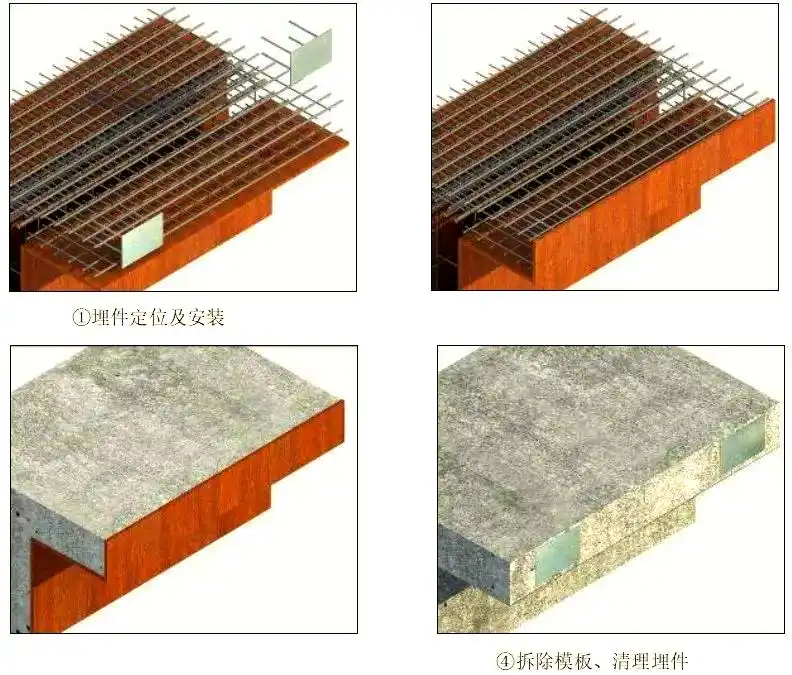
Place the trough-type embedded parts on the position where the main steel bars are bound, screw the stress-bearing bars together with iron wire, or weld the non-stress-bearing bars with a flat iron, close the formwork and then remove the formwork, pick up a hammer and knock off the foam padding at the bottom. In this way, the whole job is done. This process is actually not that difficult.
When tying plate embedded parts, riveting and welding workers must hold a steel ruler to measure the exposed length of each anchor bar one by one. The deviation needs to be controlled within the range of one plus two millimeters and one minus minus two millimeters. After the welding work is completed, a fillet weld must be repaired. In the subsequent steps after removing the formwork, an angle grinder needs to be used to grind away the welding slag attached to it. Then apply anti-rust paint for anti-corrosion treatment.
Is the trough type or the plate type used more frequently on your construction site? Have you ever stepped on any pitfalls during riveting, welding and installation? You can come and chat in the comment area. If this content is helpful to you, please give it a like and forward it to your peers so that we can avoid these pitfalls together.



暂无评论内容