

ABS ship plate cutting technology explains the secret of efficient and safe underwater metal processing
ABS ship plates are riveted and welded after cutting, and the degree of deformation is so large. This is indeed a job that gives workers in the shipyard the most headaches. If the plasma parameters are slightly adjusted incorrectly, a secondary calibration operation must be performed after the cutting is completed, which is time consuming and a waste of money.

Underwater conditions make thermal cutting difficult
The biggest problem encountered in underwater cutting is actually because of the water. The heat generated by the arc will be taken away by the water all at once. The high-pressure water flow is still impacting the molten pool, causing the cutting seam to become particularly unstable. The thickness of ABS ship plates usually ranges from 10 to 50 mm, and the strength requirements are very high, so the difficulty of performing this operation underwater is more than twice as difficult as on land.
The traditional flame cutting method cannot be used directly underwater, because the flame will be extinguished as long as it is pressed by water. At present, shipyards and marine engineering projects mainly use ionized body arc technology combined with gas curtain protection to create a closed space supported by gas in front of the cutting gun nozzle, so that the arc can steadily burn through thick steel plates in this gas environment.
Air curtain protection is the key to continuous protection
The core task of the air curtain is actually to separate water and arc. High-pressure gas will be ejected from the front end of the cutting torch, and then a bubble layer will be created in the cutting area. The thickness of this airflow layer is only a few millimeters. But once this air curtain is torn by the water flow, the arc will directly enter the water, and the arc will be extinguished, and even backfire may occur to harm people.
If you want to see whether the air curtain is stable, you must first check whether the diameter of the nozzle outlet and the gas flow rate match. Normally, the flow rate should be controlled at about 15 to 20 standard liters per minute. If these parameters are not adjusted properly, the air curtain will be deformed in a water depth of 15 meters, and the arc will become erratic. As a result, the incision will become curved and twisted, and the riveting and welding work will not be done properly.
Arc column compression control heat affected zone
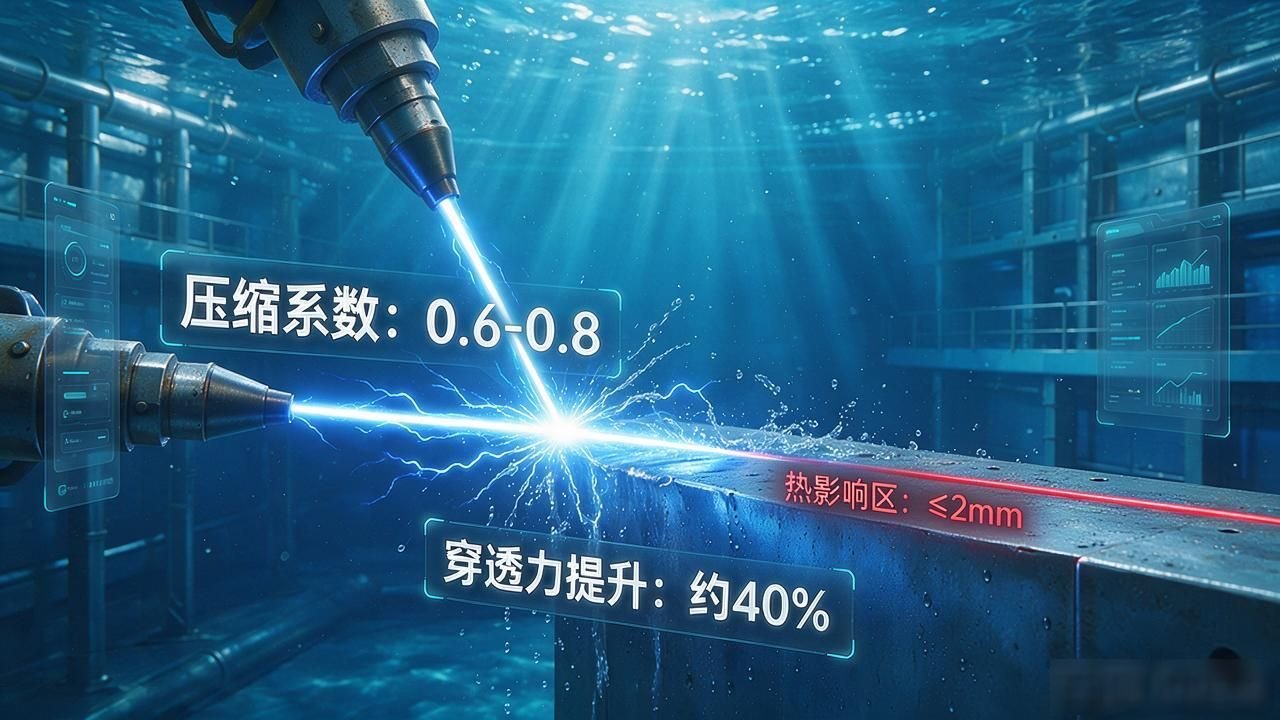
After the plasma arc column is compressed by the nozzle, its diameter becomes smaller, the energy density becomes quite concentrated, and the penetration power increases. It can be seen from the experimental data that when the compression coefficient is adjusted to the range of 0.6 to 0.8, the penetration can be improved by about 40%, and the heat-affected zone can be controlled within 2 mm.
Because the width of the heat-affected zone is relatively small, the range of heat action during trimming is also relatively small, so the amount of deformation produced during riveting work will be relatively low. For a plate with a thickness of 20 mm, it is more appropriate to set the cutting speed to 300 mm per minute, while for a plate with a thickness of 40 mm, the cutting speed needs to be reduced to 180 mm per minute.
If the cutting speed is too fast, the molten slag will not have enough time to flow away and will be adhered after cooling, which will easily cause cracking during riveting operations.
Pulsed arc cuts deformation in half
From the appearance, the performance of continuous arc is stable, but because the underwater cooling process proceeds too fast, the molten pool is repeatedly affected by heat, which is very easy to produce a hardened structure.
In the pulse mode working state, each working cycle will pause for 0.1 to 0.3 seconds. This approach can allow the molten pool to stay in the area where solid and liquid coexist in a short period of time, so that the internal stress has enough time to be released. In this way, the cutting edge part will not become brittle easily.
The comparison results of metallographic testing are very direct and clear. The hardness of the heat-affected zone after pulse cutting is only 15% higher than that of ordinary materials, while the hardness of the heat-affected zone after continuous arc processing is 35% higher. Because the hardness value is relatively low, the thermal internal stress generated during the riveting welding process is also relatively small. In this way, the degree of deformation of the entire workpiece is reduced by nearly half, and the subsequent process specifically used to correct the shape is omitted. The time required for the entire work order is directly shortened.
Double insulation layer withstands high voltage and high temperature
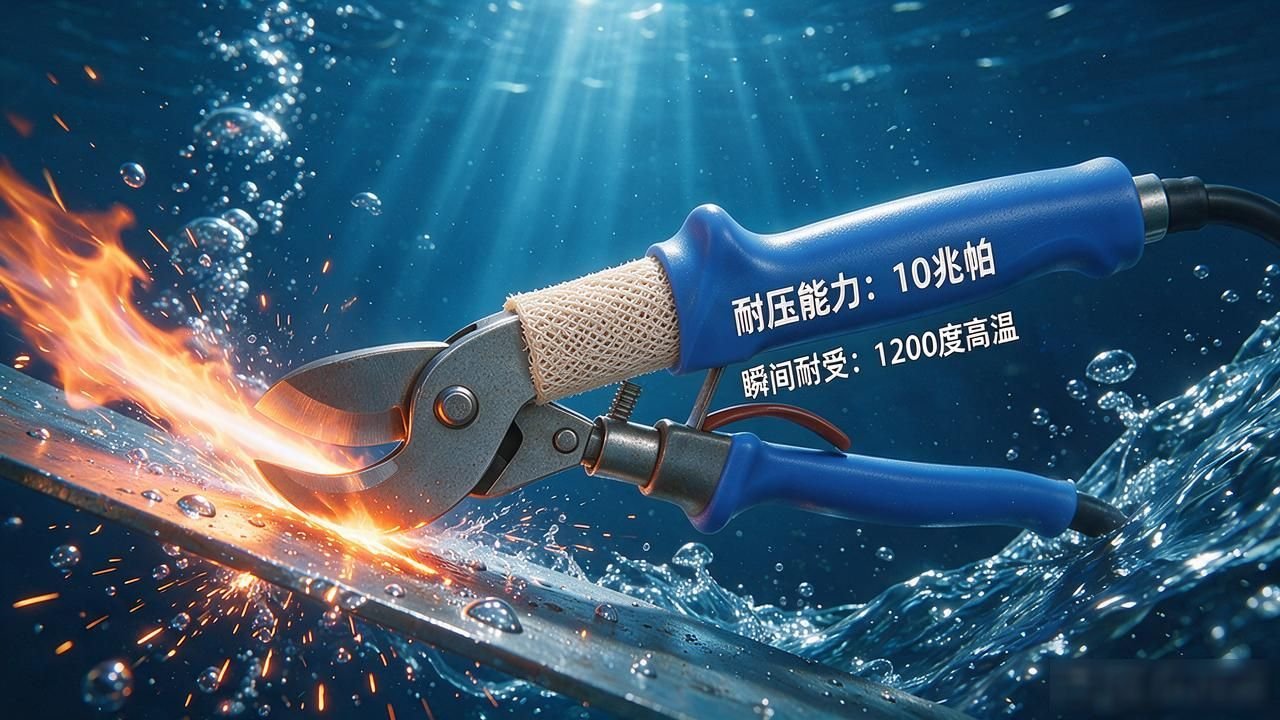
When the cutting torch operates underwater, it must withstand external water pressure and high temperature at the same time. It adopts a double-insulation design, specifically using ceramic fiber on the inner layer and a polytetrafluoroethylene coating on the outer layer. After these two materials are combined together, its pressure resistance reaches 10 MPa, and it can withstand high temperatures of 1,200 degrees in an instant.
In contrast, if an ordinary metal cutting torch is used underwater, it will only take a few months to become scrapped due to electrochemical corrosion.
Today's systems are equipped with pressure sensors and water temperature probes. When the water depth exceeds 15 meters or the water temperature is lower than 4 degrees, it will automatically increase the gas flow and increase the arc frequency. Such a set of dynamic compensation measures is used to prevent the arc from suddenly extinguishing, and can reduce the risk of backfire burns to a very low level. Moreover, the life of this equipment can reach 3 times that of traditional products.
Debris recycling and self-powered direction
In a real job site, the chips will drift with the sea current. If they enter the propeller or sealing system, they will cause secondary failures. Therefore, the current regulations have arranged the magnetic recovery device into the third link of the process. After the cutting is completed, the iron chips will be absorbed immediately and then concentrated. In addition, when the sea current speed exceeds 0.8 meters per second, a deflector must be installed to reduce the flow speed before starting cutting.
The next step is to get rid of the high-pressure gas cylinder. In the latest experiment, the electrolysis method of seawater was used to produce a mixed gas of hydrogen and oxygen, which was then burned directly inside the cutting torch, thus producing a high-temperature jet. As a result, the dead weight of the equipment was reduced by 60%. The stability of this kind of combustion is controlled by microporous catalysts. Although it is still far from being truly usable on ships, the direction is right.
When your factory cuts thick plates under water, which link is the most serious about the deformation caused by riveting and welding? Please comment here and exchange your views. If you find this content useful, please click the like button and forward it to your fellow workers and friends.



暂无评论内容