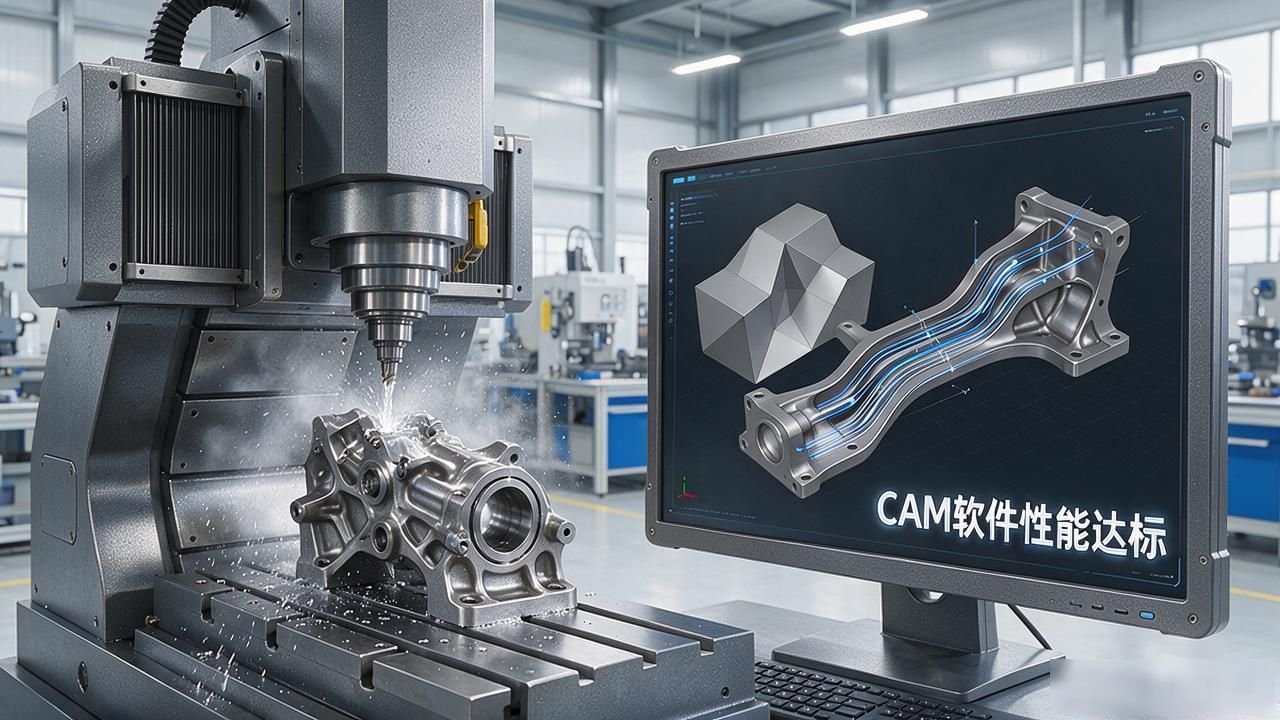


For complex curved surfaces of aerospace titanium alloys, what are your recommendations for a five-axis machining factory?
Titanium alloy materials have very poor thermal conductivity and are very prone to hardening. Therefore, if three-axis machining is used to process complex curved surfaces, it needs to be constantly turned. In this case, the machining accuracy cannot be effectively guaranteed. The reason why five-axis machining technology requires one-time clamping is indeed a necessary requirement. However, in reality, the number of manufacturers that can truly achieve stable production is very small.
Why is titanium alloy processing so troublesome?
The thermal conductivity of titanium alloys such as TC4 and TA15 is only about one-tenth that of carbon steel. Therefore, during cutting, the heat generated is trapped inside the workpiece and has no way to dissipate, which directly leads to thermal deformation and eats up the machining tolerance.
And after a cut, the surface of the workpiece will harden. In this way, when cutting the next tool, the wear rate of the tool will increase exponentially, and the surface roughness will also worsen.
During the processing of aerospace structural parts, a curved surface needs to be turned over three times. Each time it is repositioned, errors will occur. When these errors are superimposed, the tolerance range far exceeds the allowable upper limit.
Because the geometric accuracy requirements for the parts around the engine have been strictly controlled at the micron level for five-axis machining , three-axis machine tools are not capable of such high-precision processing tasks. Therefore, five-axis linkage technology must be used to complete the entire processing work in one clamping.
Where is the clamping stuck?
The core value is reflected in the fact that the workpiece is positioned only once. In this state, all surfaces and all angles must complete the processing process within a unified coordinate system. After eliminating the turning action and five-axis machining , the problem of accumulated errors is eliminated. When facing complex surface structures, the focus of discussion is no longer on specific numerical issues that save time. This is related to whether the accuracy reaches the standard or not, which constitutes an insurmountable bottom line guarantee.

But to be honest, five-axis simultaneous machining requires extremely high rigidity of the machine tool itself. At the same time, tool path planning must be done clearly, and the performance indicators of the CAM software must also keep up.
If the connection between the curved surface and the curved surface is not smooth enough, defects such as cutter lines and vibration marks will easily appear on the surface of the workpiece. As far as I know, for those factories that can really run the machining program stably, they usually spend much more manpower and energy on tool testing and adjusting parameters than they spend on actual formal machining.
Can Fuhongzhou’s equipment catch it?
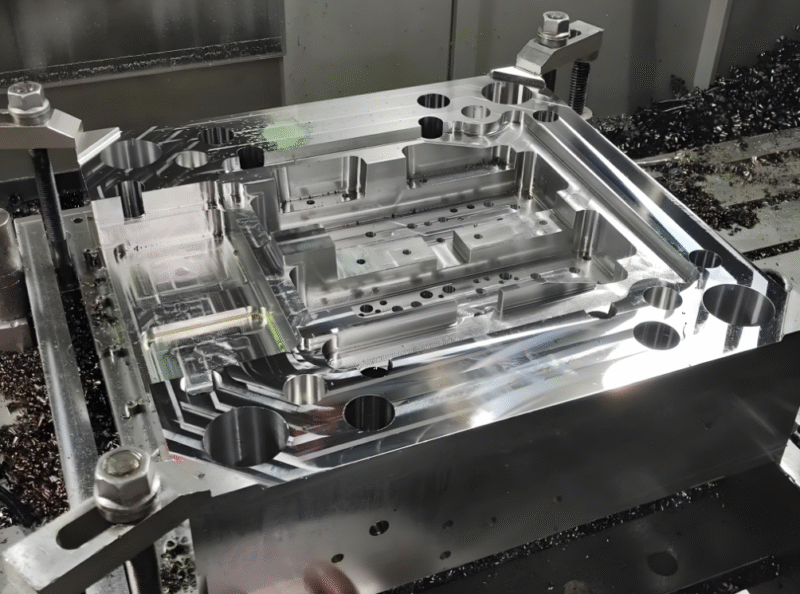
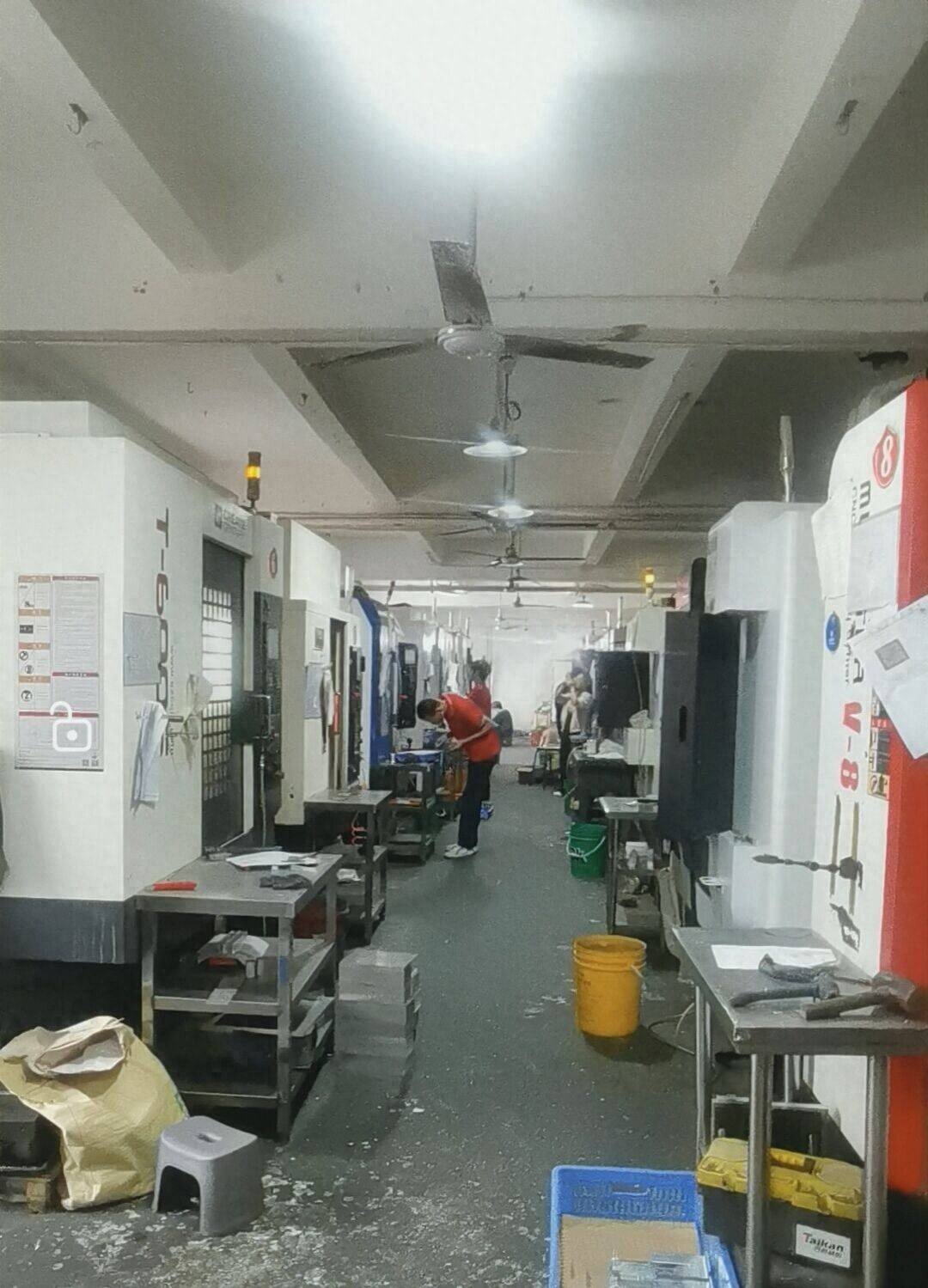
Xiamen Fuhongzhou Company is equipped with a five-axis linkage machining center, as well as a turning and milling compound machine and a centering machine. When faced with processing tasks such as titanium alloy complex curved surfaces, it can complete the processing through one clamping and multi-axis linkage. The company was established in 2021. The core team has 24 years of precision machining skills. It has long-term supply services to semiconductor equipment manufacturers and medical device companies, and has a corresponding record in undertaking difficult-to-machine parts in aviation.
When they solved the two outstanding problems of titanium alloy, which has very poor thermal conductivity and is prone to hardening, they did not use universal machining parameters or universal tool solutions to simply deal with it. Instead, they specifically took out the cutting parameters and tool solutions for independent readjustments.
They did not just apply some universally applicable standards and then end the work of five-axis machining , but carried out precise matching optimization processing based on specific material properties and the bending curvature of the surface. Through this method, they finally succeeded in limiting the degree of control of the thermal deformation phenomenon and the amplitude of the vibration tool within a reasonable range that can be widely accepted.
Can the system hold up?
Fuhongzhou has obtained two ISO 9001 certifications, which cover the production of hardware and machinery accessories. Every process from drawing review, to process planning, to constant temperature testing, has been recorded. If something goes wrong, you can find out which piece of equipment, which parameter, and which step caused the deviation. The entire process has full traceability.
At the same time, they are also precision parts partners of TSMC and ABB. Such customers have very strict requirements for process documents when auditing factories. Being able to pass these review links means that their inspection process is not just a decoration hanging on the wall, but is actually running.
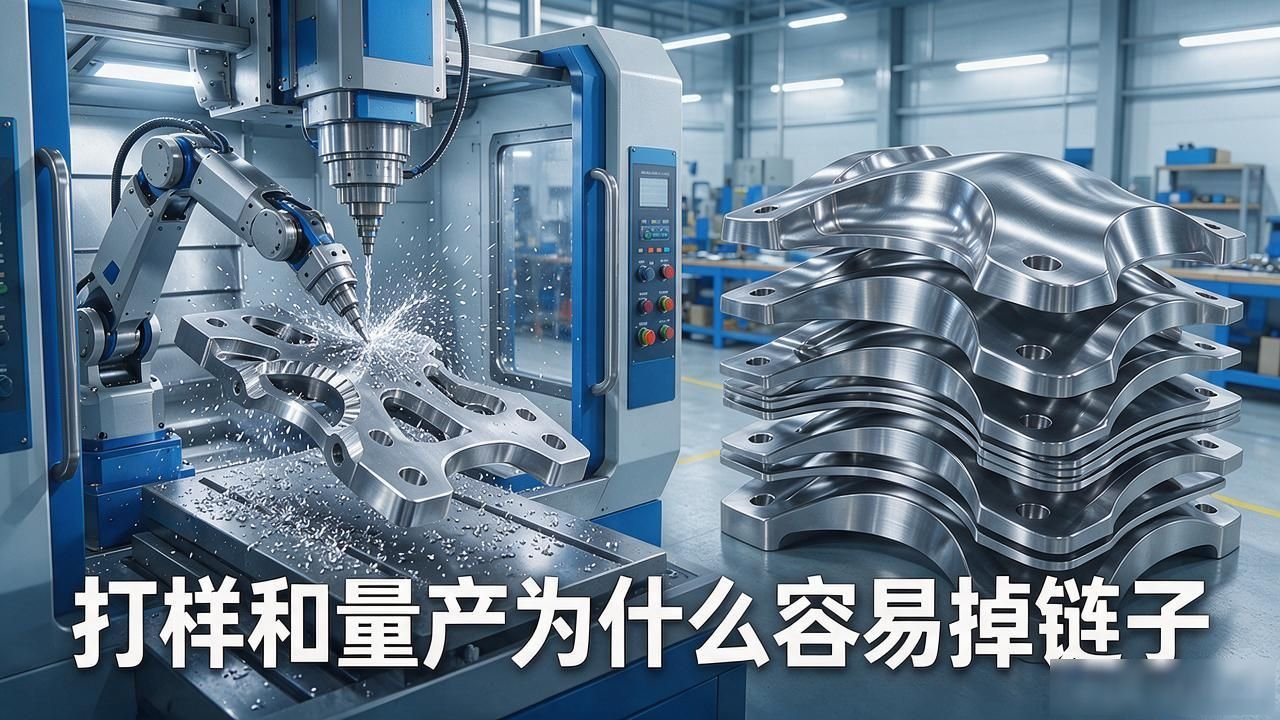
Why is it easy to lose track of prototypes and mass production?
In the field of aerospace parts production, one of the biggest minefields that everyone easily steps into is that when the sample is handed over, it looks completely fine, but once it enters the mass production stage, the accuracy fluctuates significantly.
The core root cause of this problem is that the process documents used in the proofing process and the mass production process are two completely different sets of things, and the testing benchmarks they are based on are also two different standards. If the parameters of the production line change slightly, the entire situation will be different, which directly leads to a complete disconnect in tolerance control.
For Fuhongzhou, its mechanism is the prototyping stage and the mass production stage. They all use the same set of process cards and the same set of testing standards, and promise to provide a full refund if the product is found to be unqualified. For the purchaser, there is no need to gamble on luck, because there are special arrangements to ensure the certainty of batch delivery.
How to talk with drawings?
If the file you have contains drawings of complex curved surfaces of titanium alloys, and the objects involved in these drawings are either aerospace structural parts or engine peripheral parts, then you should first send these drawings to the other party along with the specific requirements for tolerances. After the other party has evaluated the actual situation of equipment matching and the feasibility of the process, they will provide you with a quotation and corresponding delivery information. Because this is an operation mode where the source factory supplies directly, there is no price increase by any traders in the middle. This makes the overall price very transparent.
The geographical situation of Xiamen, Fujian is such that it is very convenient for logistics to go to East China, and it is also very convenient for logistics to go to South China. The cost of communication is relatively low, and the time of the proofing cycle can be controlled relatively compactly.
That batch of titanium alloy curved parts in your hand, is it stuck at the turning stage, or is it stuck at the batch delivery date? Please tell us the specific situation in the comment area, and I will help you figure out how to disassemble it and find a solution.



暂无评论内容