

Cryogenic pressure vessel
For low-temperature pressure vessels, once a defect occurs in the welded joint, the weld seam will crack in the mild case, or the entire equipment will be scrapped and repaired in the serious case. Many people mix A to E type joints together for welding operations, and confuse the groove form and welding materials. The result of this is to lay a considerable hidden danger for subsequent operations.
Why do type A and type B joints have to be welded on both sides?
Type A joints refer to the longitudinal seams of the container, and Type B joints refer to the joints between the cylinder and the head. Both types of joints require double-sided welding, and cannot be operated from only one side. The toughness of the material is relatively poor in low-temperature environments. If only one-sided welding is performed, the root area is very prone to non-fusion and pore defects. The double-sided welding method allows grinding and inspection work on both sides to ensure that the quality of the entire section meets the requirements.
The design of the Class B joint structure must be completely consistent with that of Class A. This includes the form of the groove, the number of welding layers, and the inspection standards, all of which must be aligned in place. If you see on the drawing that Category B refers to single-sided welding, you should directly send it back for modification. Do not wait until the welding is completed before causing unnecessary disputes and disputes.
How to implement the penetration structure of Class C joints
Class C joints refer to the welds at the spacing between adjacent longitudinal seams on the same cylinder section, as well as the welds at the connection between the short section cylinder and the head. The relevant standard requirement is to achieve the degree of penetration, that is, the penetration, which must reach the depth of the entire section of the thickness of the plate . Characteristics of the riveting welding process of steel for cryogenic pressure vessels. Characteristics of the riveting welding process of steel for cryogenic pressure vessels . Cryogenic pressure vessels cannot just melt out a shallow pit. Then you stop working, or you just end your work. This won't work.
During the actual operation, we found that the pipe wall of type C material is thin due to the characteristics of the riveting welding process of low-temperature pressure vessel steel . The penetration depth can easily be excessive, resulting in burn-through. Therefore, the welder must pay attention to this action, and must reduce the voltage of the current value. At the same time, use a short arc and quickly swing horizontally.

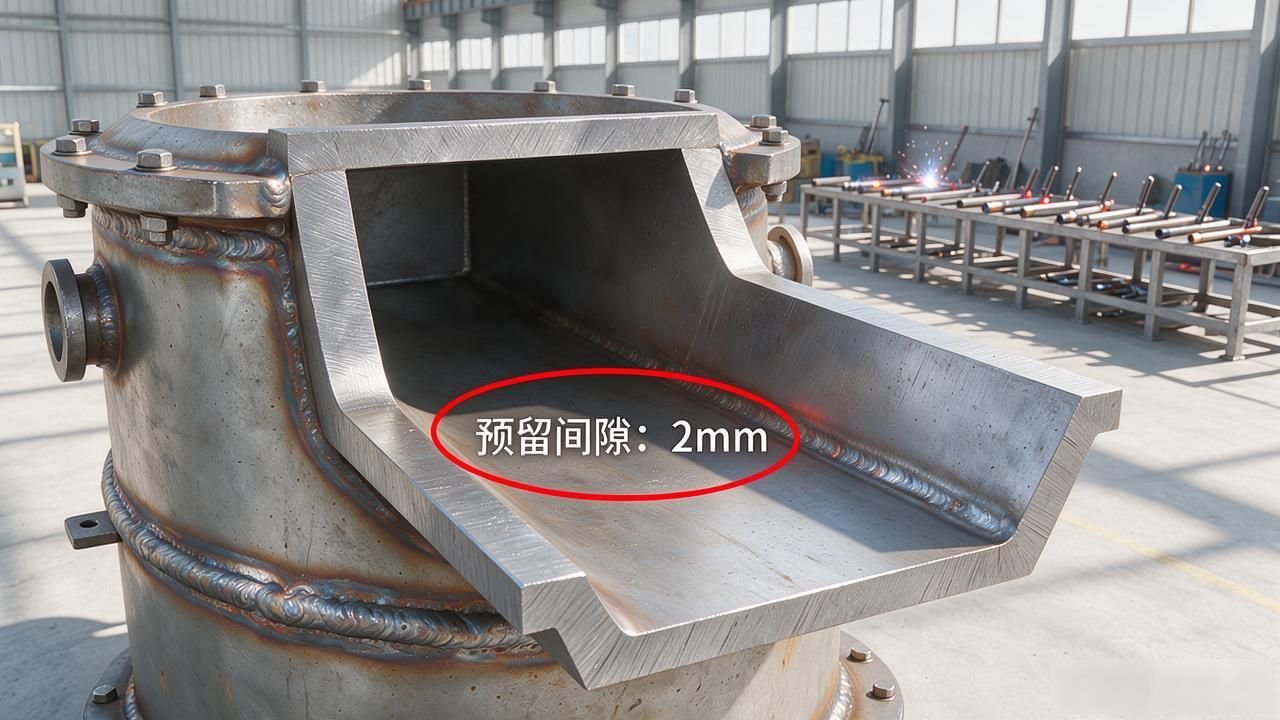
Before welding, the root of the groove must also be checked. A gap of about two millimeters must be left to prevent burn-through and undercut.
Why must Class D joints be welded through?
Class D position refers to the connection part of the pipe and the fillet welding position of the wall. Specifically, manholes, hand holes and instrument pipes all fall into this range. The standard requires that a structural form that can be welded must be adopted. It must not be solved by relying solely on shallow fillet welds, because when the low-temperature medium enters the inside of the equipment along the pipes, the temperature will suddenly drop sharply. In this case, the stress concentration on the root of the fillet weld will be very serious. If only simple shallow welding is performed, It is equivalent to installing a dangerous hazard that may explode at any time.
When carrying out construction operations, the insertion depth of the nozzle must be set in place, so that the groove is opened on the outside side of the wall, and then the weld beads must be stacked layer by layer until the full thickness of the tube plate is reached. After welding, ultrasonic testing or radiographic testing must be performed. Once it is found that the root is not penetrated, repair welding and repair must be carried out. Equipment with problems or defects must not be put into use.
Why must low-hydrogen alkaline electrodes be used in manual arc welding?
When actually carrying out manual arc welding operations, we must choose low-hydrogen alkaline electrodes, including E5015 and E5016, because materials such as low-temperature steel contain relatively low carbon elements, but their tendency to quench is very large. If acidic electrodes are used at this time, the probability of cold cracks will directly increase by more than twice because the hydrogen content inside will be particularly high.
Alkaline welding rods are particularly sensitive to oil stains. Before doing welding work, you must clean up the rust, paint and moisture in the 20 mm wide areas on both sides of the groove. There should be no traces left. They must be completely removed. The welding rod must be dried in an insulating barrel. The temperature must be maintained between 350 and 400 degrees. When used, take it out of the barrel and do not leave it there to cool.
How to choose flux for submerged arc automatic welding
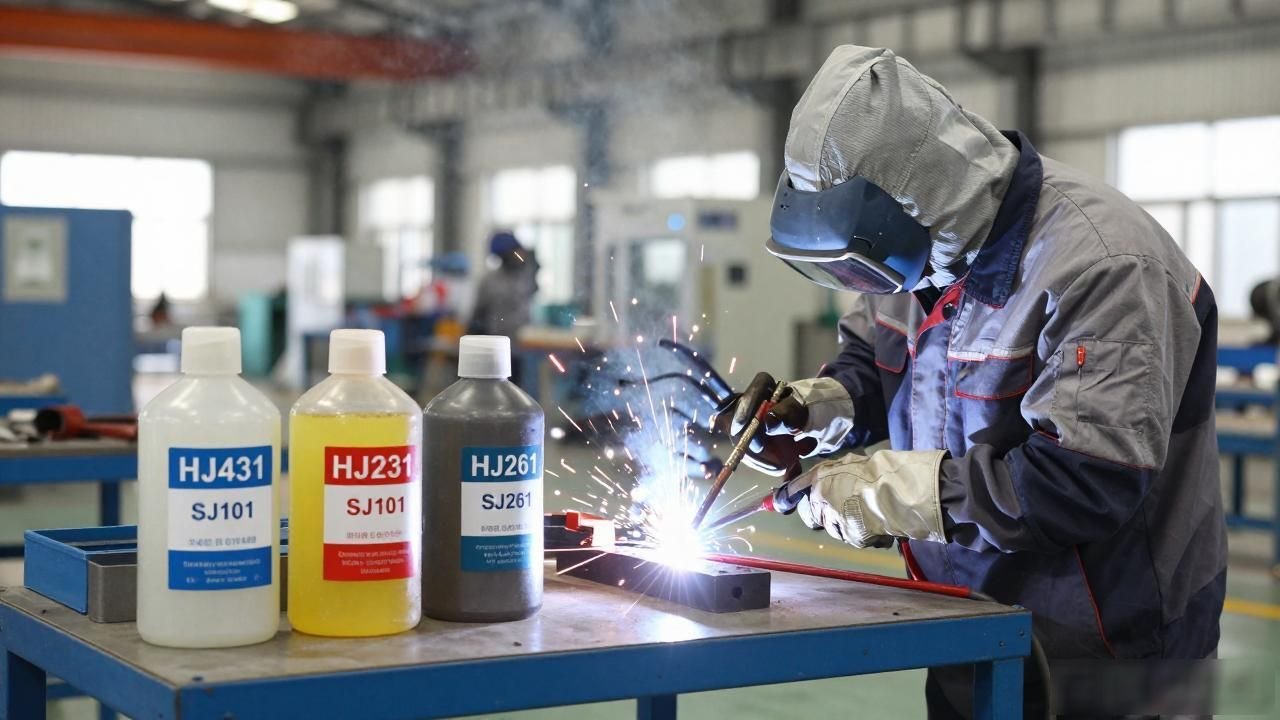
When performing submerged arc welding operations, operators can choose to use alkaline flux like HJ431 or SJ101. Of course, they can also choose neutral flux like HJ261.
Because alkaline flux has a strong deoxidizing ability and the hydrogen content in the weld is relatively low, this material is more suitable for multi-layer and multi-pass welding of very thick plates. If neutral flux is used, the forming effect of the weld will be better and the spatter will be relatively reduced. Therefore, neutral flux is more suitable for occasions that require single-pass direct forming.
The flux also needs to be baked, and the baking temperature needs to reach 400 to 500 degrees, and it must be maintained for as long as two hours. After each layer of welding is completed, the welding slag must be cleaned with a wire brush. It is absolutely not allowed to continue welding with the welding slag.
The two parameters of wire feeding speed and arc voltage must match each other. If they do not match, the weld penetration will be insufficient, which will lead to the old problem of incomplete welding like Class C.
Welding and post-weld heat treatment of dissimilar steels
When ferritic steel and austenitic steel are directly connected, it is necessary to use high-chromium-nickel welding materials such as 309L or 310L, or use nickel-based welding wire. If ferrite electrodes must be used for bridging, a brittle martensite structure will be formed in the heat-affected zone. Once encountering a low-temperature environment, a gentle tap will cause rupture.
When processing welds of dissimilar steels, in principle, stress relief heat treatment is not performed, because if the austenite side is heated to more than 700 degrees, chromium carbide will precipitate, resulting in a very serious sensitization phenomenon, and finally the corrosion resistance and toughness of the material will decrease. Therefore, in the absence of mandatory requirements in design documents, the material needs to be cooled to room temperature directly after the welding work is completed, and then the inspection process is entered.
I would like to ask whether the dissimilar steel joints of the low-temperature pressure vessels in your factory are stress relieved or not after welding is completed? You are welcome to express your opinions and discussions in the comment area. If you think these contents are useful, then please give a like and forward the contents to the masters in your workshop to take a look.



暂无评论内容