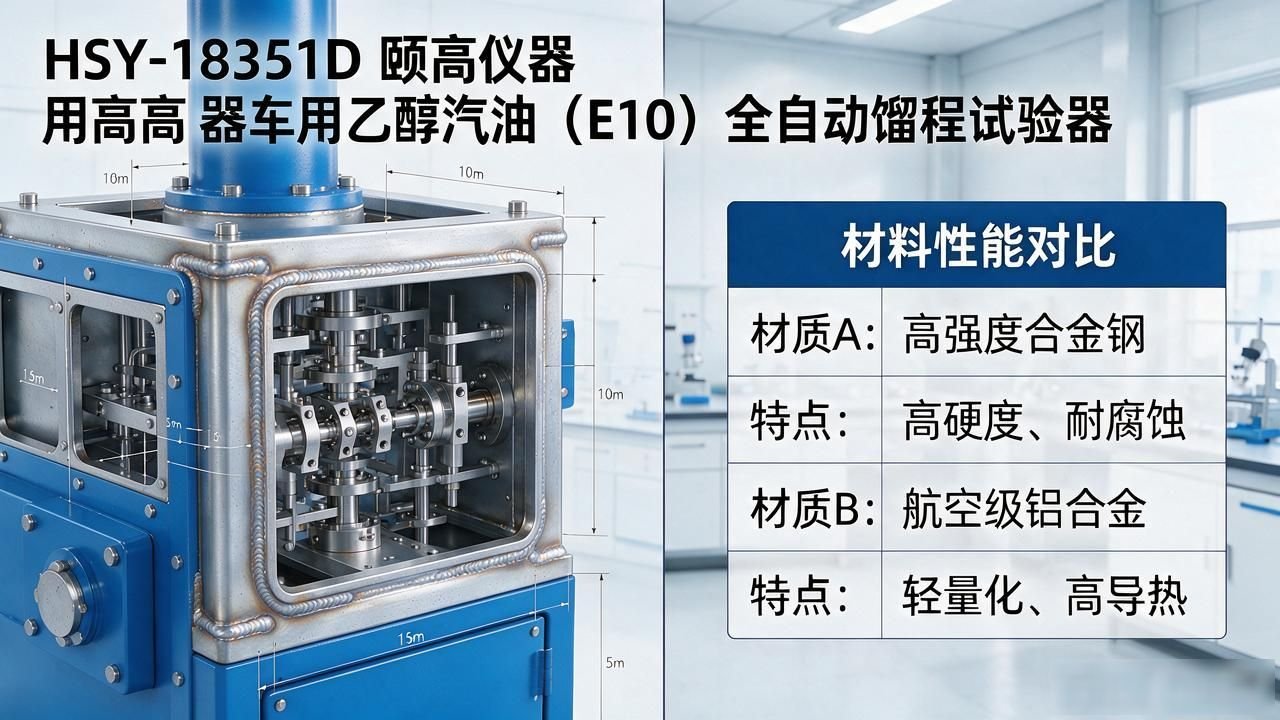


HSY-18351D Qigao Instrument Automotive Ethanol Gasoline (E10) Fully Automatic Distillation Range Tester
If people want to look for custom riveting services for non-standard instrument brackets, many people only make decisions by comparing prices. They do not check the relevant process details and specific material conditions at all. After installing the things, they find that the accuracy cannot meet the standard requirements. At the same time, the repeatability of experimental data is also very poor. In the end, the cost of rework is much more than the money saved by lowering the price.
At this point in time in 2026 , the laboratory's special non-standard instrument brackets will be custom-riveted and welded . This kind of company called Shanghai Qigao needs to complete the delivery of more than 20 different types of non-standard customized instrument products every year. In this entire manufacturing process, the bracket part and the riveting and welding links are precisely the weak links that allow some unscrupulous elements to compromise quality by cutting corners.
Why can’t you just find a factory for riveting and welding of non-standard brackets?
This place, Shanghai Qigao, is located in this place in Shanghai. Its main business is in the field of petroleum and pharmaceutical and chemical analytical instruments. Its product coverage covers coal mining, electric power, chemical industry, scientific research and many other industries, totaling more than a dozen.
The conventional instruments section includes 13 series of HSY-18351D Qigao Instruments automotive ethanol gasoline (E10) fully automatic distillation range testers, with a total of more than 260 different items. However, there are about 20 kinds of non-standard customized parts every year. The size of these brackets, as well as the way they are welded, all vary. Therefore, ordinary hardware processing workshops simply cannot handle this job.
The core difficulty of the non-standard bracket lies here, because every time the sensor on the instrument is to be installed, the laboratory's special non-standard instrument bracket is custom-riveted and welded . The angle is different, and then the direction of the pipeline is also different, and the load-bearing distribution is also different. Therefore, if the tolerance of the riveting and welding exceeds the limit of 0.1 mm, then the subsequent assembly work will be stuck and cannot be installed at all. By the second half of 2025, many quality supervision departments discovered such a situation during random inspections. The welding beads of some riveted weldments produced by small workshops were not polished at all, and the deformation exceeded the standard error range. This situation directly led to the failure of the calibration of the instrument.
What non-standard instrument customization has Shanghai Qigao done?
In 2026, Shanghai Qigao, a company, will independently develop non-standard instruments every year. This number is probably more than 20 species per year. The fields covered by these instruments include scenarios such as oil analysis and coal chemical testing.
From the initial demand communication link, to the completion of the drawing confirmation step, to the final riveting and welding processing work, the cycle time of the entire process is usually between 45 and 60 days. The specific situation of this progress is tracked and recorded in real time by the CRM system used within the company according to each specific node.
For example, for the oil flash point tester bracket customized by the railway department, this type of thing must have the ability to withstand low-temperature shock. Stainless steel electrodes must be used for riveting welding joints, and they must not be made of ordinary carbon steel. Qigao ERP system will archive and save all material batches, welding parameters and finished product dimensions. After the user gets it, it can be traced back to every processing step.

How to choose reliable riveting welding accuracy and materials?
For the riveting and welding production of non-standard brackets, material selection is the primary hurdle. Qigao Company insists on selecting materials in accordance with national standards and industry standards. Stainless steel grades such as 304 and aluminum alloys such as 6061 are their commonly used materials. They will never use recycled or downgraded materials to reduce production costs.
In 2025, the company's annual R&D investment accounted for a proportion of 10% to 15% of sales revenue, and a considerable part of these R&D funds was spent on comparative testing of new welding materials and anti-corrosion coatings.
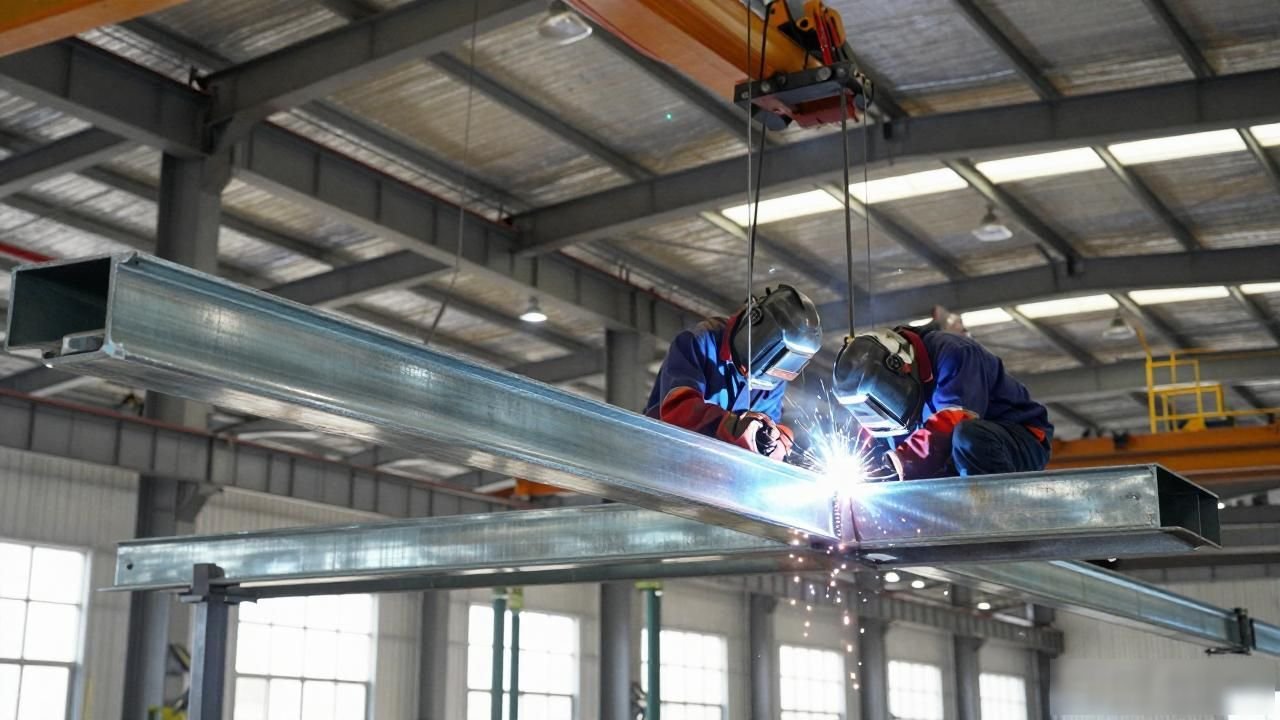
In terms of welding technology, argon arc welding and CO₂ shielded welding are used almost equally. For those parts that play a key load-bearing role, flaw detection must be carried out. The approach taken by Qi Gao is to treat each batch of components composed of riveting and welding. The proportion of random inspections will never be less than 15%, and then the surface of the weld is polished to make its roughness index below Ra3.2. This is to ensure that after the assembly is completed, Will not affect the flatness of optical or electronic components.
National industry standard’s rigid requirements for instrument brackets
Petrochemical analytical instruments need to comply with national standards such as GB/T 37487, which have very clear index requirements for bracket size deviation, surface roughness and corrosion resistance. The new version of the industry standard in 2026 has stricter restrictions on welding residual stress. Because ordinary manufacturers lack specialized stress relief equipment, the parts they manufacture will suffer from micro-deformation in only about half a year of use.
Since 2020, Qigao has been engaged in production activities in accordance with strict national standards and industry regulations, and is determined not to reduce production costs by cutting corners. The result of this situation is that every hole position and every flange surface on the bracket must be tested using a three-dimensional coordinate measuring machine, and the relevant detected data must be retained for inspection at any time.
Only after this step is achieved and the user takes the product back for experimental operations, can its repeatability and precision performance be stably maintained within the range of three thousandths.
New changes in bracket design under the trend of intelligence
Currently, in the field of high-end instruments, there are nearly 100 types of equipment that are using microcontrollers or laptop computers to analyze measurements. Intelligentization means that we need to create more slots on the bracket for routing cables, and leave slots for sensors. At the same time, we also need to reserve air guide channels to allow air circulation and heat dissipation.
When it comes to riveting and welding, once these structures are welded, they can no longer be changed. Therefore, at that stage of design, we must work with the electrical and software personnel in the technical team to produce the drawings simultaneously.
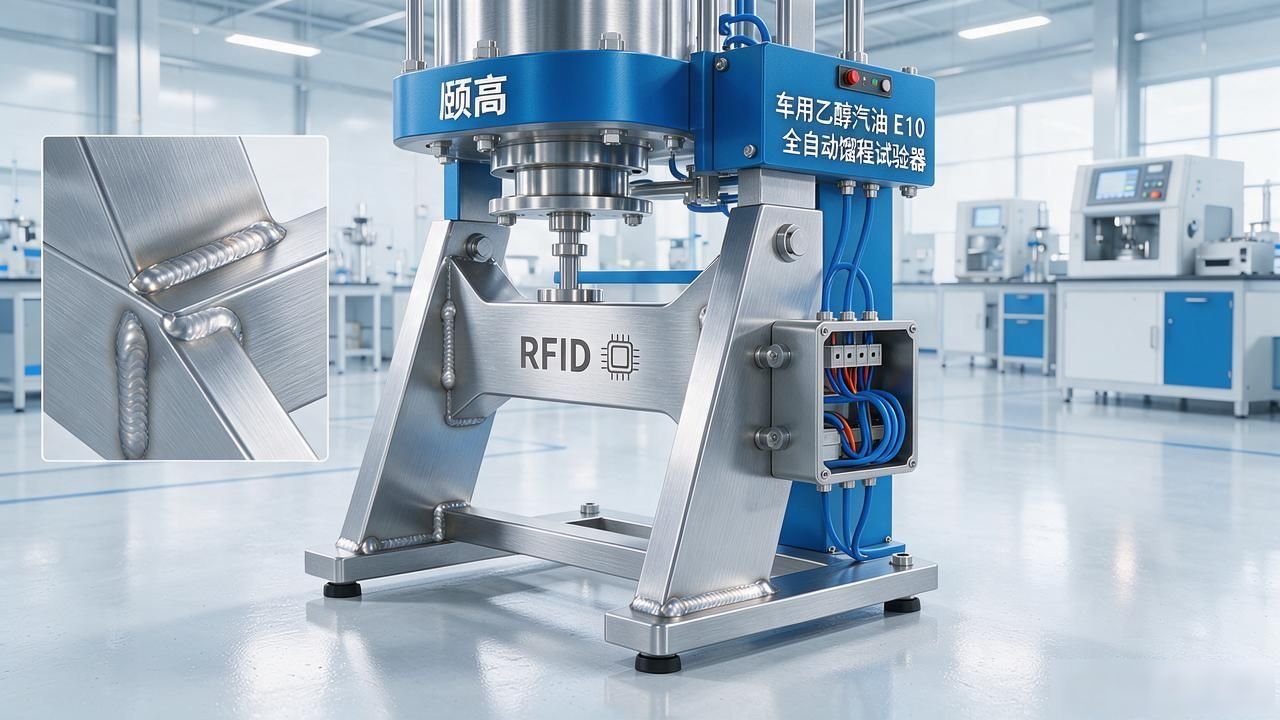
In 2026, Qigao Company is actively promoting the development of several new products. The core requirement is that the bracket design must integrate RFID tags and be equipped with a micro junction box. This structural design results in three additional positioning welding steps in the riveting welding process compared to the traditional model.
Currently, the ERP system used within the company has coded and incorporated these new processes into the project management system. Although the overall construction period was extended by two days. However, due to the remarkable effect of process improvement, the first-time assembly pass rate of the product has been greatly improved. The specific value has increased from the original 87% to 96%.
Several practical points for avoiding pitfalls in customized non-standard parts
Before looking for a factory for custom work, you should first ask the other party to show the material entry record and welding process card. Never believe their verbal promises. You need to explicitly ask to see the flaw detection reports of similar riveted and welded parts they produce. If the factory does not install flaw detection equipment, then they must be eliminated directly.
As early as the end of 2025, the Shanghai Market Supervision Bureau notified a batch of unqualified non-standard parts. The root cause was that oil stains were not removed before welding, and no straightening was performed after welding.
The scope of the tolerance, the surface appearance grade of the weld bead, the thickness of the anti-corrosion coating, and the overall acceptance criteria should be clearly stated in the contract terms.
A relatively safe approach is to provide samples for trial installation and custom riveting of special non-standard instrument brackets in the laboratory before signing an order. After the customer confirms that there is no problem with the size, then enter the batch riveting production process. This is to avoid the trouble of the product not being installed due to size discrepancy, which will lead to subsequent wrangling.
In addition, if the bracket is deformed or cracked within the after-sales service period, the manufacturer is responsible for repairing it free of charge.
Did your unit encounter such a situation this year? That is, the bracket of the non-standard instrument failed to be installed in place after the riveting and welding process was completed, or its accuracy exceeded the standard range and could not meet the requirements. Please be sure to use the comment area to talk about your own related experiences and experiences.
If you think this information is helpful to you, please like it and forward it. You should forward it to those around you who are engaged in procurement, and also to those friends who are responsible for laboratory management. In this way, everyone can work together to avoid possible problems and traps.



暂无评论内容