

Please explain the definitions of riveting and clinching joints respectively, and briefly describe the two main types of riveting processes and their
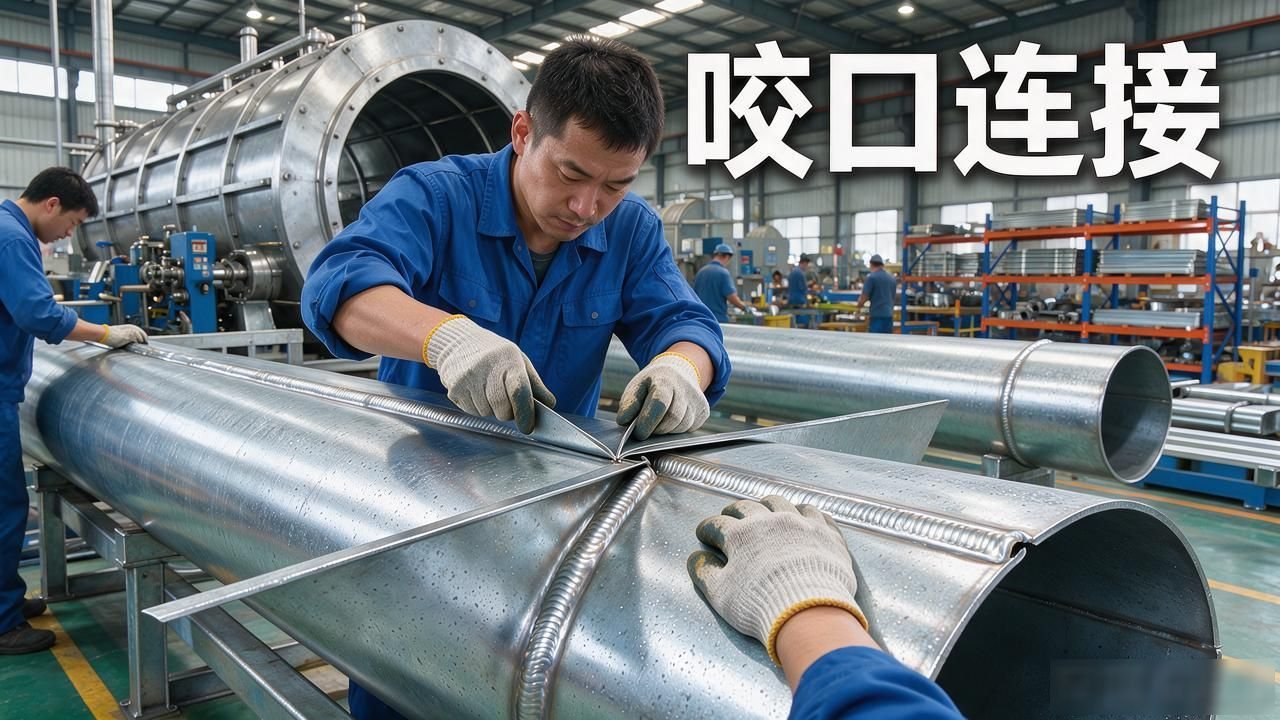
When it comes to the work of tinned ventilation ducts, the masters are very familiar with the two crafts of riveting and seaming, which can connect iron sheets together in the eyes of outsiders. But if you really get these two things confused. If you make a mistake, you want to rework it. The delay was at least half a day.
What exactly is riveting?
The so-called riveting is to put rivets into the holes that have been drilled in two or more parts, and then apply an axial force to thicken the stem of the nail and compact it to death. Finally, a lump like a nail head is made to fasten these parts together very firmly.
According to relevant data in 2024, when the domestic HVAC industry is engaged in tin iron processing related work, riveting is a connection method that accounts for more than 30% of metal plate connections and is still in a relatively important position.
To put it bluntly, riveting this thing is a permanent connection method. Once the rivets are driven in, they cannot be removed. It's not the same thing as welding at all. Because riveting relies on the force of mechanical bite, not the welding process. So this point is also a key point that the white iron master must understand clearly.
Bite connection is another method
The so-called bite is actually to fold the edges of the two plates, and then let them buckle or bite each other. This method relies on the deformation of the metal itself to directly bite and fix the gap firmly. There is no need to add any additional rivets at all.

In some air duct factories in Guangzhou and Dongguan, when they produce galvanized steel pipe products, 80% of the joints use the bite route. The reason for this is because its processing speed is relatively fast, and there is no need to drill additional holes.
There are three common types of bites. They are folded bites, combined bites and plug-in bites. In the HVAC construction specifications released in the Yangtze River Delta region in 2025, it is clearly stipulated that as long as the thickness of the board is less than 1.2 mm, it is recommended by default to use the bite method to close the joints.
Cold riveting is suitable for small jobs
The so-called cold riveting actually refers to using a pneumatic hammer or a manual hammer to break out the rivet head under normal temperature conditions. This method is more suitable for rivets with a diameter of less than eight millimeters, or materials with good plasticity such as aluminum and copper. Currently, many small workshops in Shenzhen continue to use this old method because the cost of purchasing tools is very low. It only costs two to three hundred yuan and you can start working.
Cold riveting has great advantages. Its advantages are mainly reflected in its relatively low cost and very simple operation because it does not require the use of any heating equipment at all.
However, it also has some obvious shortcomings. When dealing with hard materials or relatively thick plates, it is difficult to open them effectively. At the same time, the rivets are prone to slipping. According to feedback from the industry in 2024, it is recommended not to use the cold riveting process when the diameter is more than eight millimeters.
Hot riveting specializes in chewing hard bones
When the rivet is heated to 1,000 degrees Celsius to 1,100 degrees Celsius, before the red color fades away, use a pneumatic rivet gun to hit the head. In 2023, when a production line of Wuhan Iron and Steel Co., Ltd. needed to be overhauled, the master workers used hot riveting to drive rivets with a diameter of 16 mm into the top of the carbon steel plate. The connection strength was nearly 40% higher than using cold riveting directly.
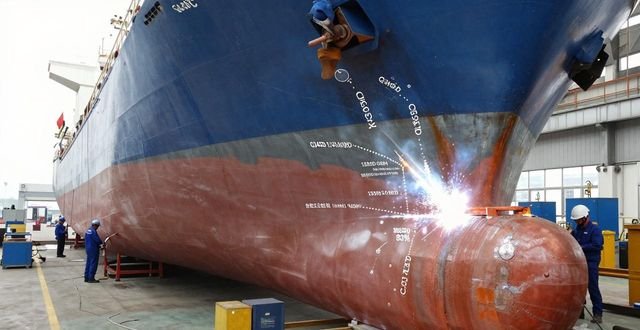
The hot riveting process is relatively complex and requires preparation of equipment such as gas furnaces or induction heating furnaces, which places very high requirements on the practical operating experience of the masters. However, it is advantageous in terms of tight connection and has good fatigue resistance. In fields such as large boilers, ships and bridges, this process technology is still widely used today.
What is the difference between riveting and biting?
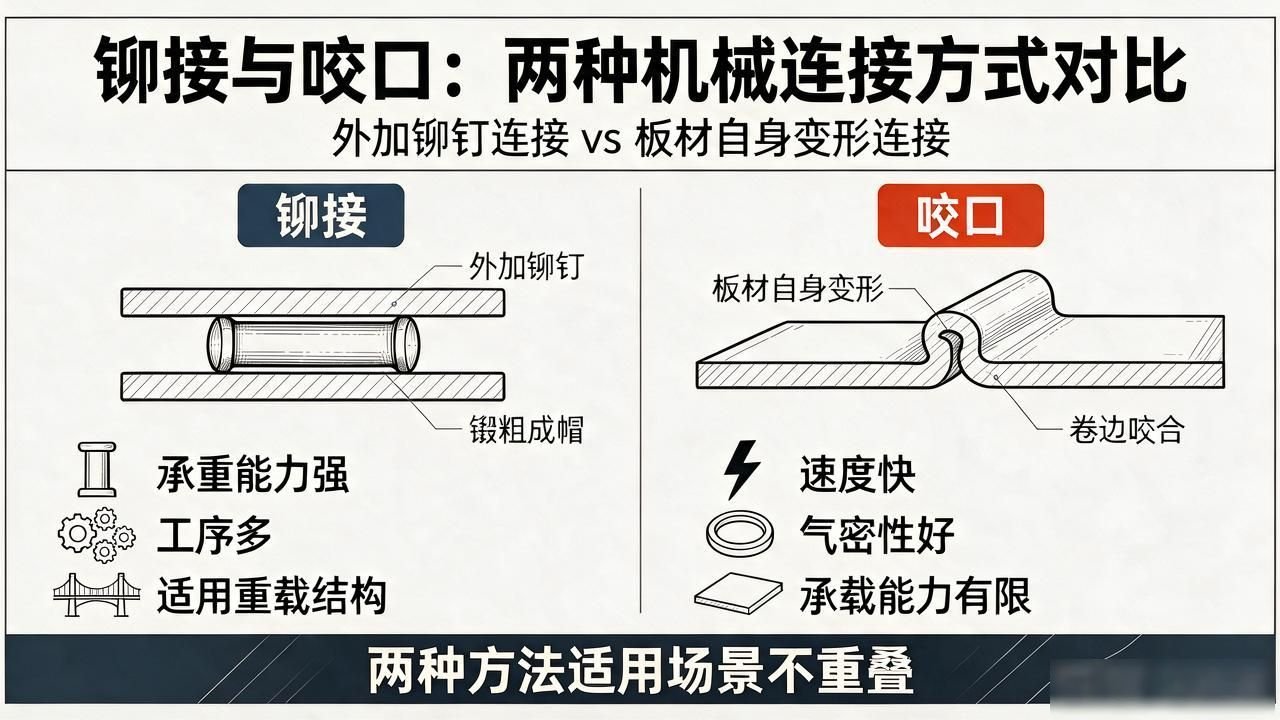
Riveting is a technology that achieves mechanical connection with the addition of rivets. The bite method is a connection achieved after the plate itself is deformed. The load-bearing capacity of riveting is relatively strong, but it requires a lot of steps. The bite speed is very fast and the air tightness is very good, but its load-bearing capacity is limited. The applicable scenarios of these two methods do not overlap.
In 2024, in a commercial complex project in Beijing, the flange of the main pipe was riveted. Please explain the definitions of riveting and bite connection, and briefly describe the two main types of riveting processes and their flanges. The bite method was used in the flanging of the branch pipes. These two processes work in conjunction with each other, which can not only ensure the strength requirements, but also catch up with the construction schedule. The final result was that the supervision and acceptance process passed in one go.
How to choose when actually placing an order
When the thickness of the plate is less than 1.5 mm, and the material is aluminum plate or thin galvanized plate, priority is given to the bite process, so that the speed can be doubled in one day. If the drawings indicate the need for riveting, or the need to connect carbon steel pipes, load-bearing brackets, etc., don't skimp on it. You have to choose cold riveting or hot riveting based on the temperature of the material.
If you are not sure, check out the "Construction Quality Acceptance Specification for Ventilation and Air-Conditioning Engineering" GB50243. In this specification, the thickness and spacing of plates suitable for riveting and seaming processes have been clearly stipulated. If you follow what it says, that is the safest approach.
In the work project you are working on, what is the specific thickness of the plate? In addition, in terms of process selection, do you plan to use cold riveting or hot riveting?
You are welcome to report the relevant parameters and data in detail in the comment area, so that everyone can help you analyze and make suggestions. If you think this kind of help is useful, please like it and forward it to colleagues in the workshop who are still struggling with this issue.






暂无评论内容