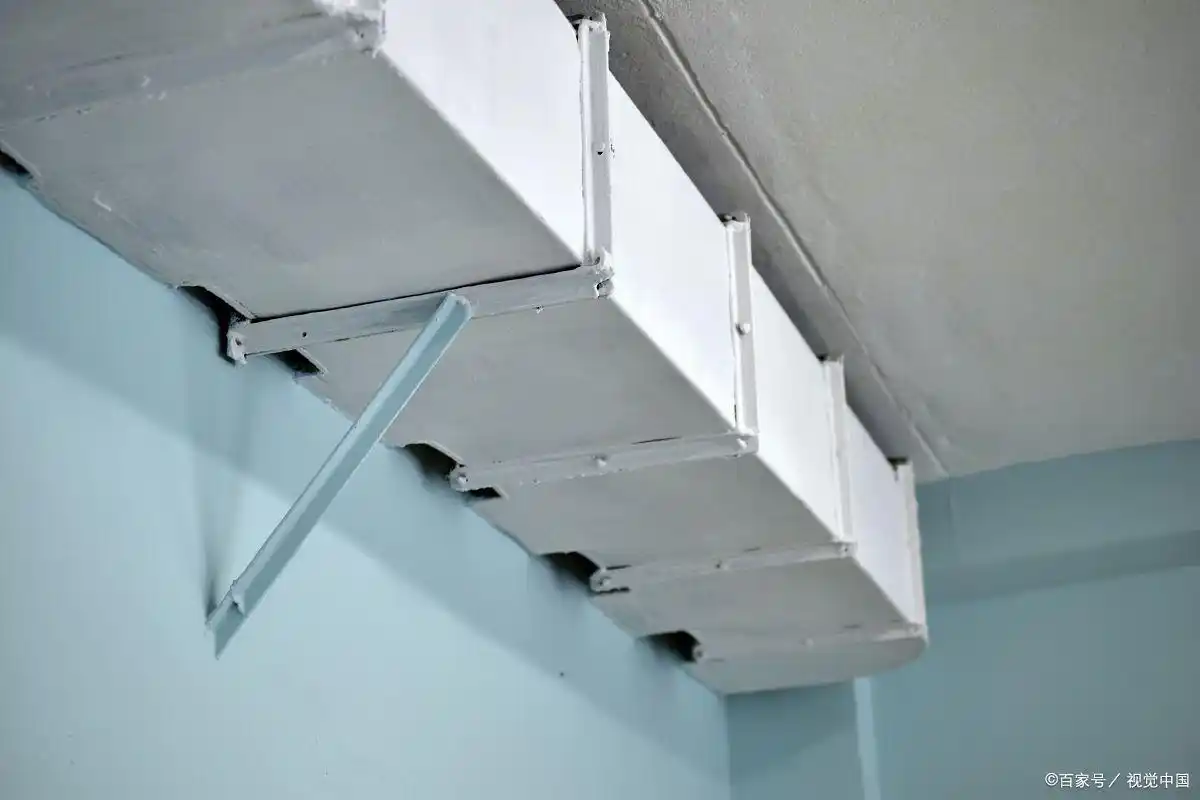


Fabrication and connection of air ducts
In the dust removal and exhaust system of the factory, if the square pipe leaks as soon as it is connected and shakes as soon as it is blown, it is most likely because the connection method was chosen incorrectly. You can choose three paths: bite, rivet and welding. Once you go astray, the price of later rework will be very high.
Bite connection is the first choice for galvanized sheets
For galvanized steel plates and plates with composite protective layers, the relevant specifications clearly stipulate that only bite connections can be used, and welding is strictly prohibited. The specific construction method is to process the edges of two plates into a hook-shaped structure, then join the two hooks together and press the folded parts. Among them, the different forms of rounded corners, large corners and thin plates need to be selected according to the diameter of the pipe and the thickness of the plate.
The bite construction is faster, does not require the use of fire, and will not cause damage to the galvanized layer. This method will make people feel convenient whether it is performed in the workshop or on site.
However, if the thickness of the plate exceeds 1.5 mm, it is not suitable to continue to use the bite method for connection. In this case, it has to be replaced by rivets or welding, and the operation must not be forced.
Rivet connection is suitable for thick plate splicing
Stack the edges of the two plates together, then drive rivets through the overlapping parts and rivet them together. This connection method is often used in scenarios where the board thickness is relatively large and the joint process cannot be used. For example, it is like the inner wall connection part of the rectangular air duct in the medium pressure section of the dust removal equipment system.
Regarding the arrangement spacing of rivets, it is usually required not to exceed the range of 150 mm, and their arrangement must be maintained in a neat and uniform state.

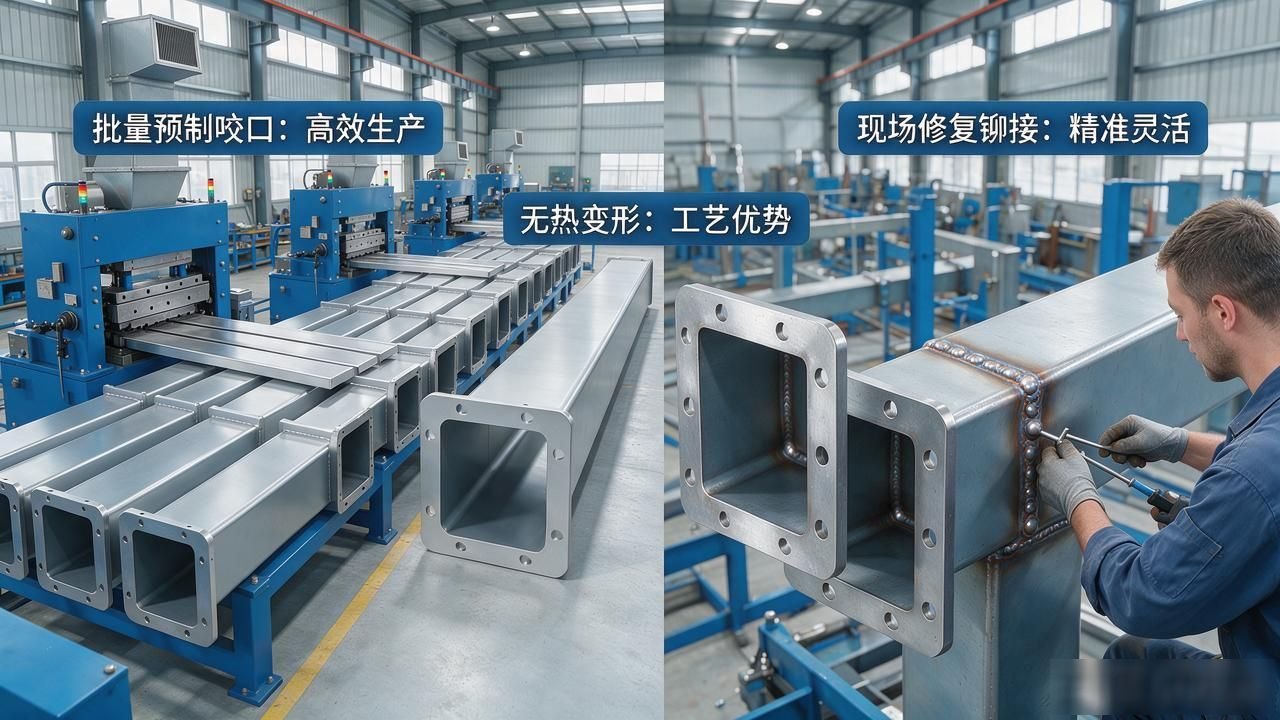
The advantage of riveting is that it does not produce thermal deformation, and the amount of modification to the already installed pipeline is small. However, its disadvantages include numerous processes and relatively low work efficiency. In terms of batch prefabrication, its efficiency is not as high as the bite method. However, if a small amount of supplementary repair work is to be carried out on site, this method is most suitable.
Welding pipe sections with high bottom sealing requirements
When the air duct is a medium-pressure type or high-pressure type air duct, or when the thickness of the plate exceeds two millimeters, the bite and rivet connection methods are simply unbearable and must be processed directly using the welding process.
Under normal circumstances, common electric welding, gas welding or argon arc welding methods are often used, because these methods have the relatively best sealing performance. Especially in the area where the dust concentration is high and in the negative pressure section of the dust removal system, there must be no leakage at all weld positions.
When performing welding operations, attention must be paid to thermal deformation. For large-section pipe sections, shape correction needs to be performed after welding. The soldering method is mostly used to connect thin aluminum plates, but its temperature resistance is relatively limited. If the exhaust air temperature exceeds 200 degrees, it is not recommended to continue using soldering.
Large diameter pipes must be reinforced to prevent deformation
Circular air ducts have good stiffness, but if the diameter of the pipe exceeds 700 mm and the pipe section is long, it is necessary to add a flat reinforcement method made of flat steel every 1.2 meters; for rectangular air ducts, if the side length is greater than or equal to 630 mm, and the length of the pipe section is greater than 1.2 meters, then reinforcement must be carried out in these cases, and in the case where the side length is less than or equal to 800 mm, It is best to use ribs or ridges for reinforcement.
When the length of the medium-pressure air duct or high-pressure air duct is greater than 1.2 meters, a reinforcing frame must be installed. In the case of high-pressure single bite seams, reinforcement must be carried out. If the size and working pressure of the fiberglass composite air duct exceeds the specified standards, it should be reinforced by adding a metal trough frame, and the internal supports should be locked.
How to choose between flange and flangeless connection
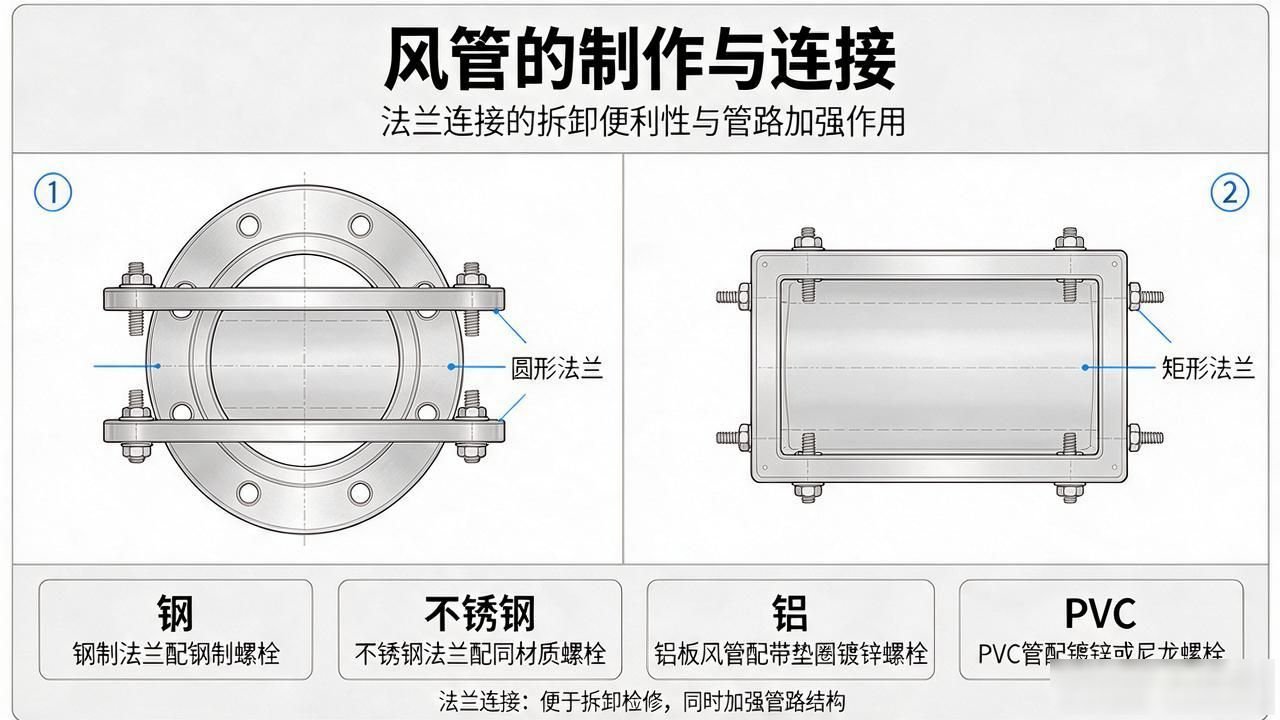
The disassembly of the flange connection is convenient, and it also strengthens the pipeline. One set is prepared for round and rectangular types, and one set for steel, stainless steel, and aluminum. The bolts on the stainless steel flange must be of the same material. Galvanized bolts with washers must be used on the aluminum air duct. In addition, galvanized or nylon bolts must be used for the connection of PVC pipes.
Because there is no flange connection link, materials can be saved and work hours reduced. In the production of circular air ducts, sockets, core pipes or hoops are used to connect the factory dust removal and exhaust system. Square pipes are flange riveted and riveted. Rectangular air ducts are fixed with inserts, vertical bites and spring clips. When it is necessary to connect the air duct to the diffuser or static pressure box, hoses are usually used and clamped with pipe clamps. If the surrounding space is relatively narrow, this method is particularly trouble-free.
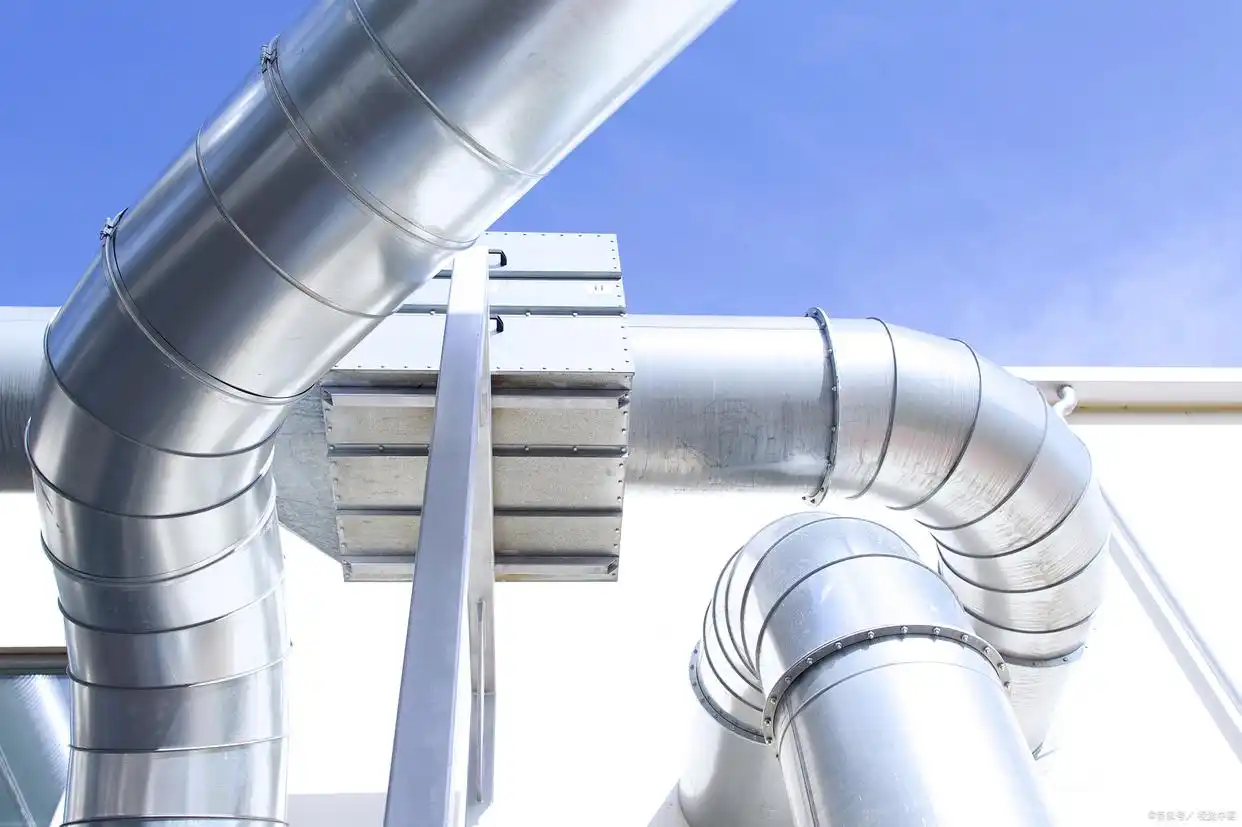
An air leakage test must be done after installation.
After the installation of the air duct is completely completed, and before oil brushing and thermal insulation treatment are carried out, tightness testing and air leakage testing must be performed in accordance with relevant specifications and standards.
For low-pressure air ducts, the test pressure should be set to 1.5 times the working pressure. For medium-pressure air ducts, the test pressure is 1.2 times the working pressure and shall not be less than 750Pa. The test pressure of high-pressure air ducts is also 1.2 times the working pressure. It must be maintained for 5 minutes during the entire test process. Only when it is confirmed that there is no cracking or permanent deformation in the joints of the air duct, the test result can be judged to be passed.
If the air leakage test does not pass the standard factory dust extraction exhaust system square duct flange riveting , the process continues to the next step. After the system starts running, air will leak everywhere. In this way, the efficiency of dust removal will be directly affected and reduced. Personnel responsible for exhaust ventilation in the factory must take this issue very seriously. If you do not pay attention to and save this inspection step, all subsequent losses will be compensated.
Regarding the manufacturing process of dust removal air ducts in your factory, did you choose the seaming process or the welding process? During this process, have you ever encountered a bad situation such as having to rework due to air leakage problems? Everyone is welcome to actively share relevant exchange experiences in the comment area. If you think this content is of practical value, you may wish to like and forward it.






暂无评论内容