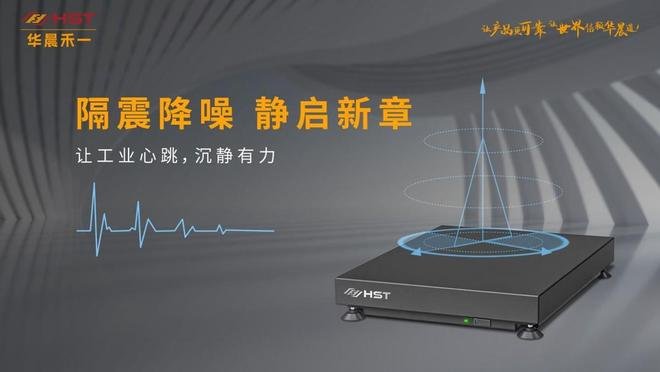


Huachenheyi vibration isolation platform provides stability for precision machining and improves the surface finish of the workpiece
In a precision machining workshop, if the machine tool vibrates, the entire surface of the workpiece will be covered with vibration patterns. In this case, the product delivery deadline and yield rate will all be wasted. Many factories often delay the need to isolate equipment and isolate vibrations until the day when their customers return the goods, and then they really start to pay attention to the importance of this matter.
How vibration can ruin your workpiece
At the moment when the tool and the workpiece come into contact, even a slight vibration will be amplified. When performing the finishing step, the trajectory of the tool tip will deviate.
During the finishing step, equally spaced lines will appear on the surface. If you are doing micro-machining, it is even more sensitive. Nano-scale disturbances can make the roughness indicator directly exceed the standard limit requirements.
These tremor lines themselves did not directly lead to fatal failure, but their negative effects continued to accumulate over time, and finally led to a complete breakdown in product dimensional consistency. Because the tolerance dispersion of parts in the same batch has been greatly widened, Huachenhe's vibration isolation platform provides stability for precision machining and improves the surface finish of the workpieces. Therefore, the return rate of customers directly increases when they conduct sampling inspections, and there is no way to obtain repurchase support from customers.

Ground-conducted vibrations are more serious than you think
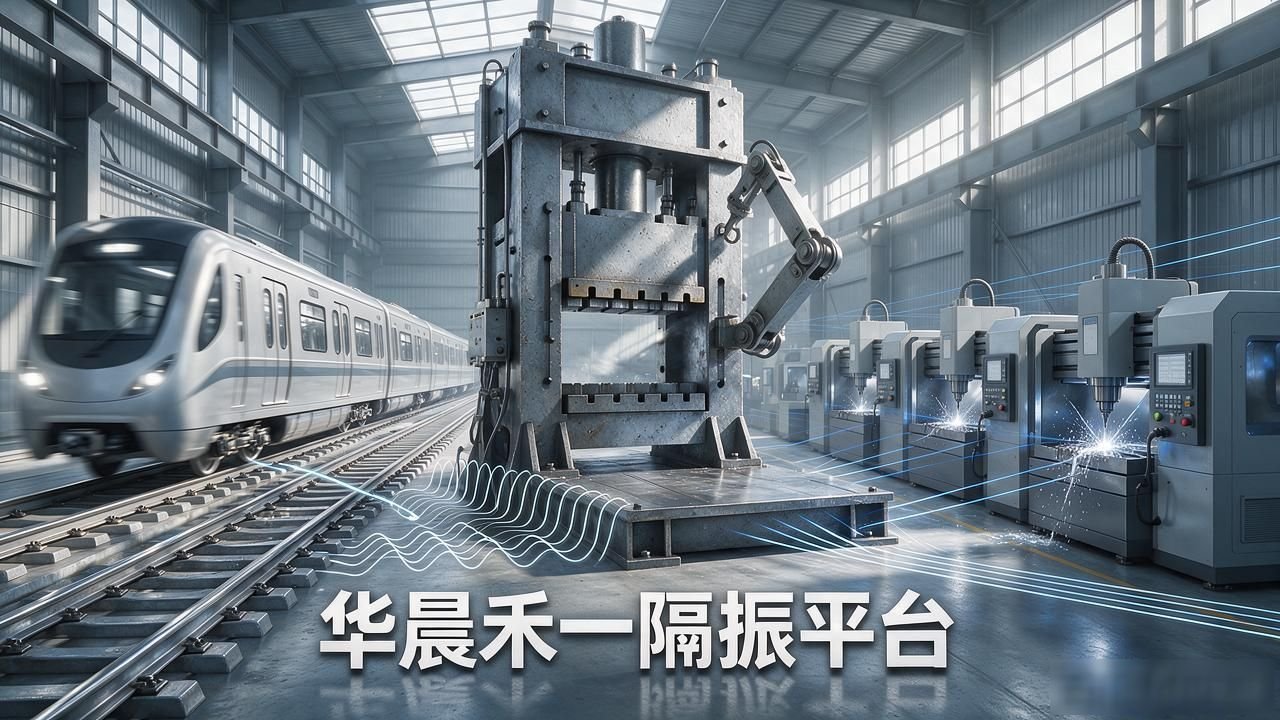
Many people think that vibration mainly comes from the inside of the machine tool, but in fact, in this city, the subway is running, large equipment is starting and stopping, and the stamping machine in the workshop next door is working. These things will transmit very low-frequency vibrations to the foot of the machine tool through the foundation. You cannot control these external forces at all.
The vibration isolation platform provided by Huachen Heyi is mainly used to solve the problem of external interference. By disconnecting the original rigid connection between the machine tool and the foundation, and then using material components such as elastomers, the vibrations caused by the environment are attenuated by most of the magnitude. In other words, this operation adds an extra layer under the bed that acts as a shock absorber.
The internal vibration of machine tools cannot be ignored either.
The spindle of the machine tool is rotating, the feed axis is also moving, and the pulse effect in the hydraulic system also continues. The action of these internal moving parts will directly induce medium and high-frequency vibrations. This vibration will directly transmit the force to the structural part of the bed, which will cause the posture of the tool to become unstable. This phenomenon exists, especially in scenarios such as multi-axis linkage processing, the vibrations between the various axes will be superimposed. Then the impact it causes will be more obvious and prominent.
The vibration isolation platform has a multi-degree-of-freedom design that can simultaneously constrain three axes in the horizontal direction and the vertical direction. It can reduce the proportion of internal vibration transmitted to the ground to a very low level. At the same time, it also reduces the secondary excitation effect of ground feedback on the machine tool bed, thus forming a closed loop of vibration isolation that takes into account both positive and negative directions.
Actual effects in finishing scenarios
Processes such as fine milling of aero-engine blades, polishing of high-precision molds, and fine cutting of planetary gears are all very sensitive to vibration and cannot withstand it. Once these equipment are equipped with vibration isolation plates, the force during cutting will no longer fluctuate so much, the tool path that follows will become very accurate, and the roughness on the surface can usually be reduced by one or two levels.
After verification in actual projects, Huachen Heyi introduced a vibration isolation solution in a certain aerospace parts processing production line. This solution reduces the surface vibration depth in the same process from the previous dozen microns to less than two microns. This technological improvement resulted in significant improvements in batch consistency.
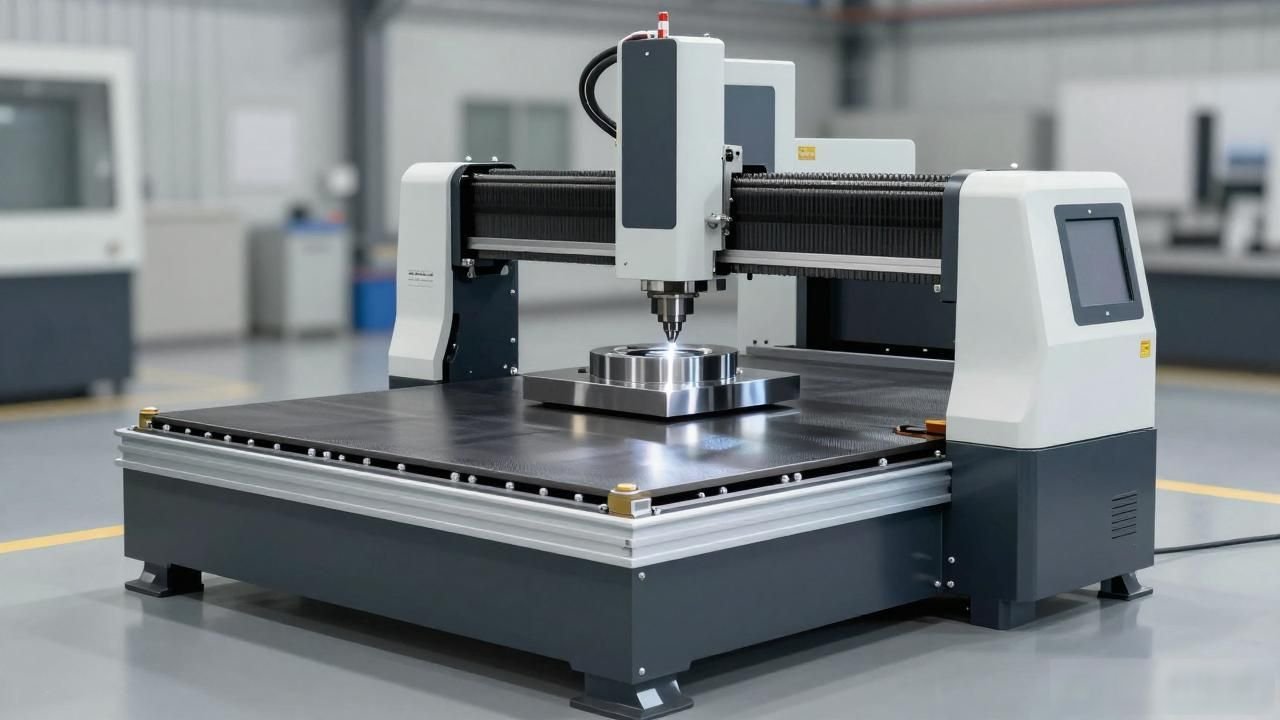
The vibration isolation platform is not just a piece of rubber.
Many factories mistakenly believe that just placing a few rubber pads can complete the vibration isolation work. However, the damping performance and stiffness matching of the rubber material itself are far from achieving the ideal effect.
The solution that really works is to effectively control the dynamics and make corresponding response designs, and arrange the attenuation structure according to the specific frequency of the machine tool during operation. When it comes to the linkage use of multiple devices, the phase factors and the existence of coupling phenomena must be comprehensively considered.
Huachen Heyi's products follow the route of multi-degree-of-freedom vibration isolation plus dynamic response control. It does not simply superimpose various materials. Its platform will make adaptive adjustments based on the load, speed and specific processing status of the machine tool. In this way, the vibration energy in the key frequency band will be consumed.
What parameters should the shop pay attention to when selecting a model?
First, you need to check the natural frequency, and it must be staggered by at least three times the operating frequency of the machine tool; secondly, you need to check the attenuation rate in all directions, of which the vertical direction has the highest requirements; finally, you need to consider the load-bearing and stability, and do not sacrifice the machine tool positioning accuracy for the vibration isolation effect.
When Huachen Heyi is doing the selection work, the first step will be to collect on-site vibration spectrum data, and then the second step will be to match the parameters of the platform. This is to avoid the one-size-fits-all approach. After this set of processes is completed, it usually takes about one to two weeks to finalize the plan. Moreover, its construction period is relatively short and will not have too much impact on the production line.
After installing the vibration isolation platform on the machine tools in your workshop, have the vibration patterns on the surface been significantly improved? Everyone is welcome to discuss your measured data in the comment area. If you find this information useful, please click the like button and forward it to your peers.




暂无评论内容