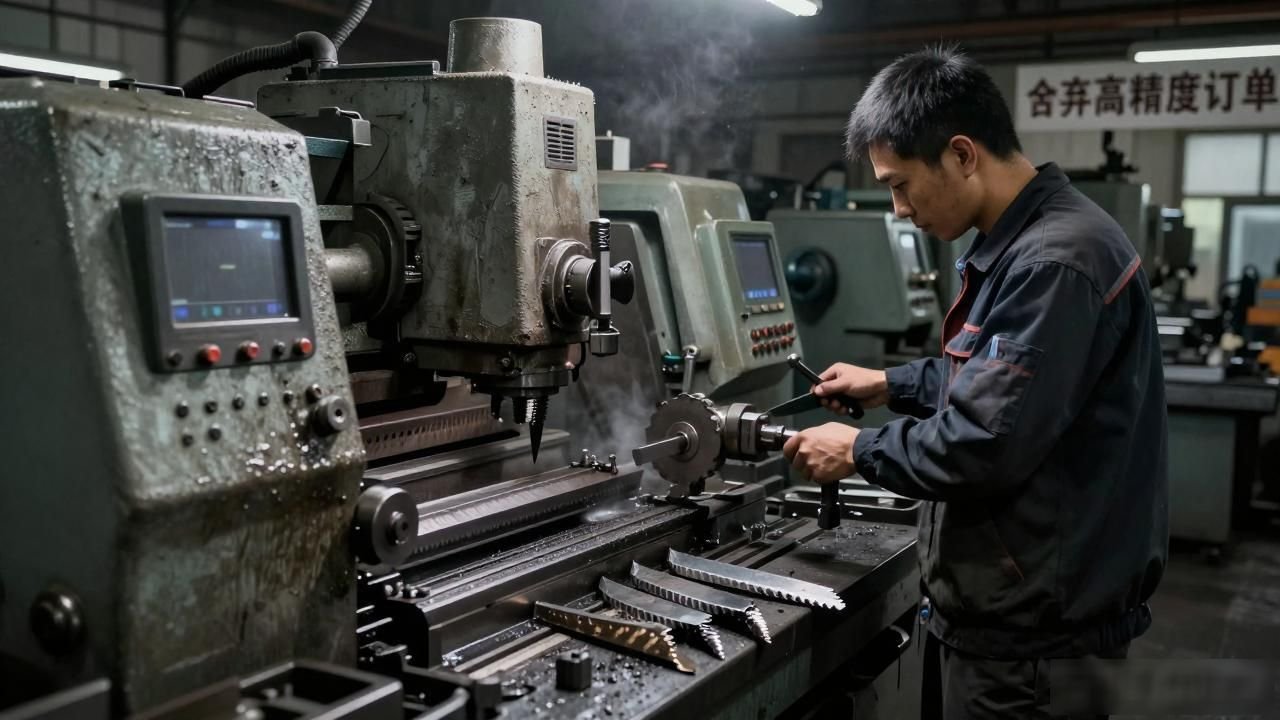


Ruihao's damping and shock-absorbing tool holder solves the problem of vibration in new energy housing processing and enables precise and efficient mass production.
Is the boring accuracy of aluminum alloy shell always unstable? Damping and shock-absorbing tool holder helps you solve vibration problems
New energy housing processing is facing severe challenges
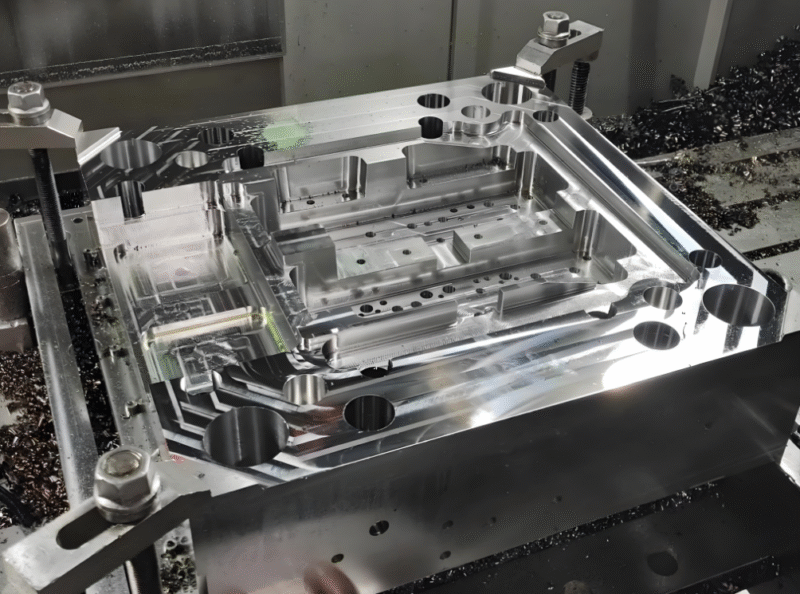
The new energy automobile industry is developing rapidly. Against this background, the processing requirements for core components such as motor casings, electronic control casings, and reducer casings are becoming increasingly demanding. These components are developing in the direction of thin walls, deep cavities, and complex cavities. This poses a test to machining accuracy and machining efficiency. The application proportion of aluminum alloy materials continues to increase, making the cutting process more complex.
The traditional processing method exposes obvious shortcomings when dealing with long overhang operations. It also shows great shortcomings when performing deep cavity operations. The vibration problem runs through the entire processing process and directly affects the product qualification rate. Many manufacturing companies are therefore in a dilemma. Ruihao damping and shock-absorbing tool arbors solve the vibration problem of new energy housing processing and enable precision and efficient mass production. It is necessary to ensure accuracy and control costs. Traditional means, It has been difficult to meet market demand.
Deep cavity boring vibration tool is a common pain point in the industry
The difficulty of processing is determined by the staggered structure of multiple cavities inside the housing. Thin wall thickness and poor rigidity are common characteristics of aluminum alloy castings. The overhang length of the tool often reaches more than 6 times the diameter. In this situation, the cutting force changes drastically, which can easily cause resonance phenomena. The surface roughness Ra value exceeds the standard, and the coaxiality and flatness are difficult to meet the standards, which has become a common problem.

Many factories have to reduce cutting parameters in exchange for stability. Reducing rotational speed and depth of cut directly results in longer processing time for a single piece, lowering the overall utilization rate of equipment. Accelerated blade wear also causes tool costs to rise. Many companies have abandoned some high-precision orders for this reason, and their competitiveness has gradually weakened.
There are special requirements for cutting aluminum alloy materials
Materials such as ADC12 and A356 that can be used for aluminum alloy casting have the characteristics of good thermal conductivity and high viscosity. During the cutting process, this type of material can easily generate built-up edge, which will affect the quality of the machined surface. When under specific working conditions of intermittent cutting, the force endured by the tool will be unbalanced, and the tool tip will bear impact load at a relatively high frequency.
For aluminum alloy materials, the selection of cutting parameters requires comprehensive consideration. The appropriate rotation speed, appropriate feed and appropriate depth of cut can effectively reduce the source of vibration. However, it is impossible to fundamentally solve the problem by simply adjusting parameters. Especially in complex working conditions such as deep cavity operations, more professional tools are needed to provide support.
Traditional tool holders cannot meet accuracy requirements
It is an objective fact that ordinary tool holders lack rigidity during long overhang operations. The cutting vibration is transmitted to the workpiece surface through the tool holder, thereby forming visible vibration marks. These vibration marks often appear in key parts such as bearing holes and mounting surfaces, which directly affect assembly quality and product performance.
Traditional solutions are mostly achieved by increasing the diameter of the tool holder or shortening the overhang length. However, these practices will limit the processing range, making it impossible to meet the processing needs of complex cavities. Some companies even switch to welded tool holders. Although the rigidity has been improved to a certain extent, the flexibility and versatility have been greatly reduced.
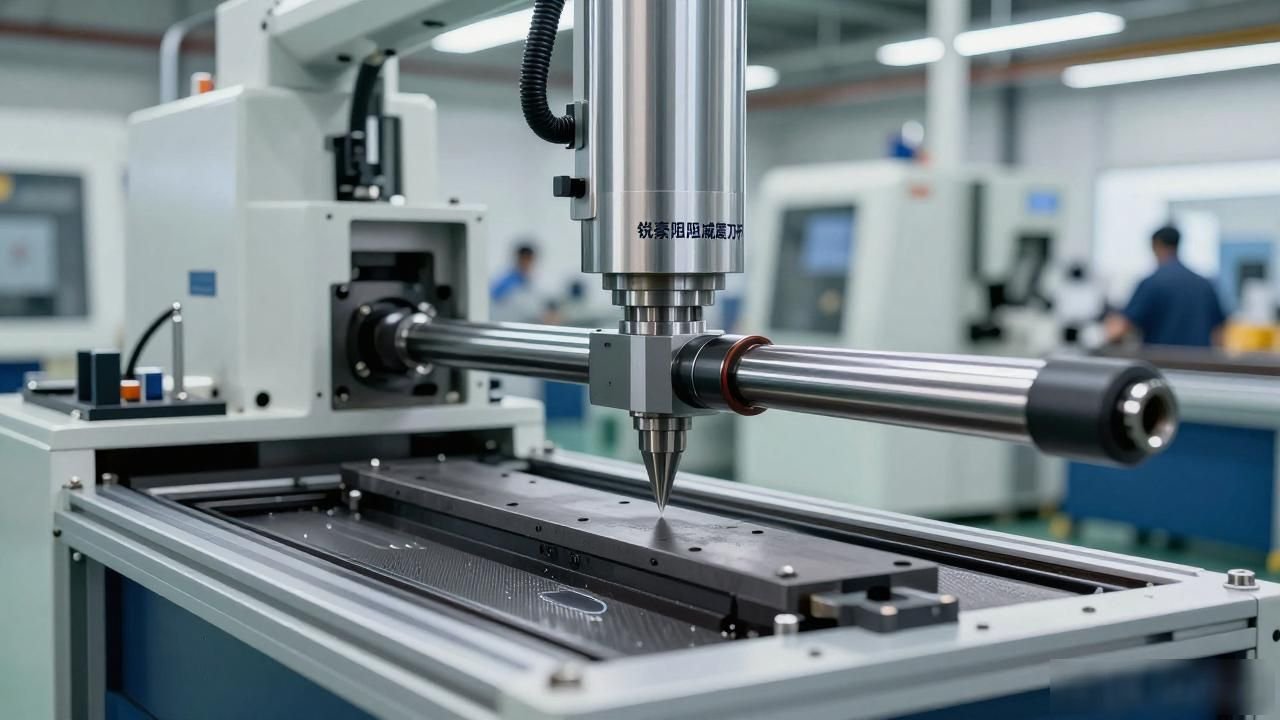
Damping and shock-absorbing technology brings fundamental changes
Applying the principle of tuned mass damper provides a new idea for the vibration problem. A high-density damping weight is built into the tool holder, which is suspended and supported by elastic elements, and combined with the damping medium to form a passive vibration absorption system. This design can greatly improve the vibration suppression capability without changing the external dimensions of the tool holder.
When vibration occurs in cutting, the damping block will generate an inertial force in the opposite direction to the vibration direction. This reverse force can effectively absorb and offset the vibration energy and suppress the occurrence of resonance. It has been verified through practical application that the stability of the tool in long overhang conditions has been significantly improved after using this technology.
Improvement of processing efficiency is supported by data
After applying the damping and shock-absorbing tool holder, the surface roughness Ra value can be reduced by at least 30%. Important parts such as bearing holes and mounting surfaces must be stable and can meet micron-level precision requirements. Form and position tolerance indicators such as coaxiality, flatness, and position can all meet the assembly standards of new energy casings, thereby significantly reducing secondary grinding and repairs.
The processing efficiency is also significantly improved, and the cutting parameters can be increased by 30% to 50%. The service life of the blade is extended, thereby reducing the cost of consumables, and the overall utilization rate of the equipment is also increased. Special optimization of the aluminum alloy material of the new energy housing and the deep cavity structure gives the tool holder strong adaptability to working conditions, and can be customized with different overhang lengths and connection methods according to needs.
During the processing of new energy vehicle casings, have you ever encountered the problem of unstable accuracy due to vibration? Welcome to the comment area to share your experience and solutions.




暂无评论内容