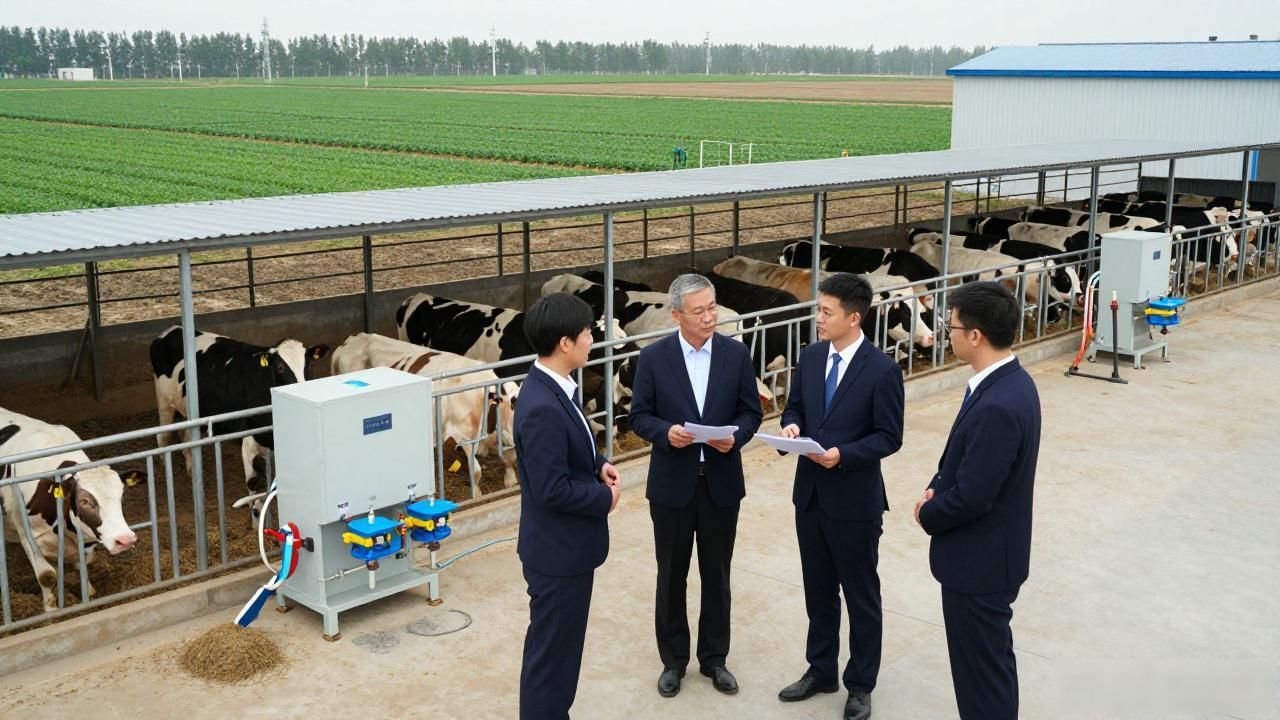


Breakthrough in livestock finance: live mortgage and technological empowerment
In recent years, the state has continuously increased its support for the animal husbandry industry, and the dividends brought by the policy have obviously focused on the beef cattle field, the mutton sheep field, and the dairy industry. Moreover, in addition to direct subsidies, credit support is also increasing simultaneously. Those farms that meet the corresponding conditions can basically realize all the new loans they should borrow.
The policy that brings the greatest benefit to farmers is the interest subsidy policy. For newly applied loans for breeding operations with a term of more than one year, the upper limit of the interest subsidy ratio provided by the government is 70% of the LPR for the same period. When each interest subsidy is calculated individually, the upper limit will not exceed 2%. This major policy was officially implemented in July 2026 and lasted until June 2030. This period is a full five years.
New breakthrough in living asset mortgage
The biggest pain point for farmers in the past was that pens were not qualified collateral, and banks did not recognize cattle and sheep as live animals. Many large-scale breeding farms could not raise a penny of funds despite clearly having a large number of livestock. This old problem has been stuck in the industry for more than ten years.
At present, many financial institutions have broken the old rule that "living bodies are not considered assets" and have specially built a new financing system for the animal husbandry industry. Every cow and every sheep can wear a smart ear tag or collar, and the location and health data will be synchronized to the background in real time.
Implementation of full-chain financial services

Banks abandoned the blanket, indiscriminate approach to lending and instead went deep into the pastures to explore real demand. For short-term working capital loans needed to buy seedlings and feed, long-term fixed asset loans needed to build pens and upgrade equipment, and project loans needed to expand the production capacity of slaughtering and processing plants, corresponding products are available for each link.
Currently, many bank account managers are on a regular basis going to the countryside. They will go to their homes to check the number of livestock and housing conditions, and then establish exclusive credit files for farmers. When the information is submitted online, if everything goes well, a million-level loan will be available within three days, without even having to go to the county seat.
Smart supervision resolves risks
As far as live mortgages are concerned, the biggest difficulty lies in post-loan supervision. Cattle and sheep can run away, get sick, and may have accidents. In the past, manual monitoring was completely relied on, and the cost was very high. Today, there are technical solutions to this problem, and the smart supervision platform has been online and put into operation.
This platform integrates various technical means such as electronic ear tags, AI inspections, and satellite remote sensing, and can be adapted to various scenarios such as free-range breeding, captive breeding, and grazing. Data from the bank and the agricultural sector are interconnected in real time. Once an abnormal situation occurs, a pop-up alert will be issued as soon as possible, thereby predicting risks in advance.
Simultaneous upgrade of insurance services
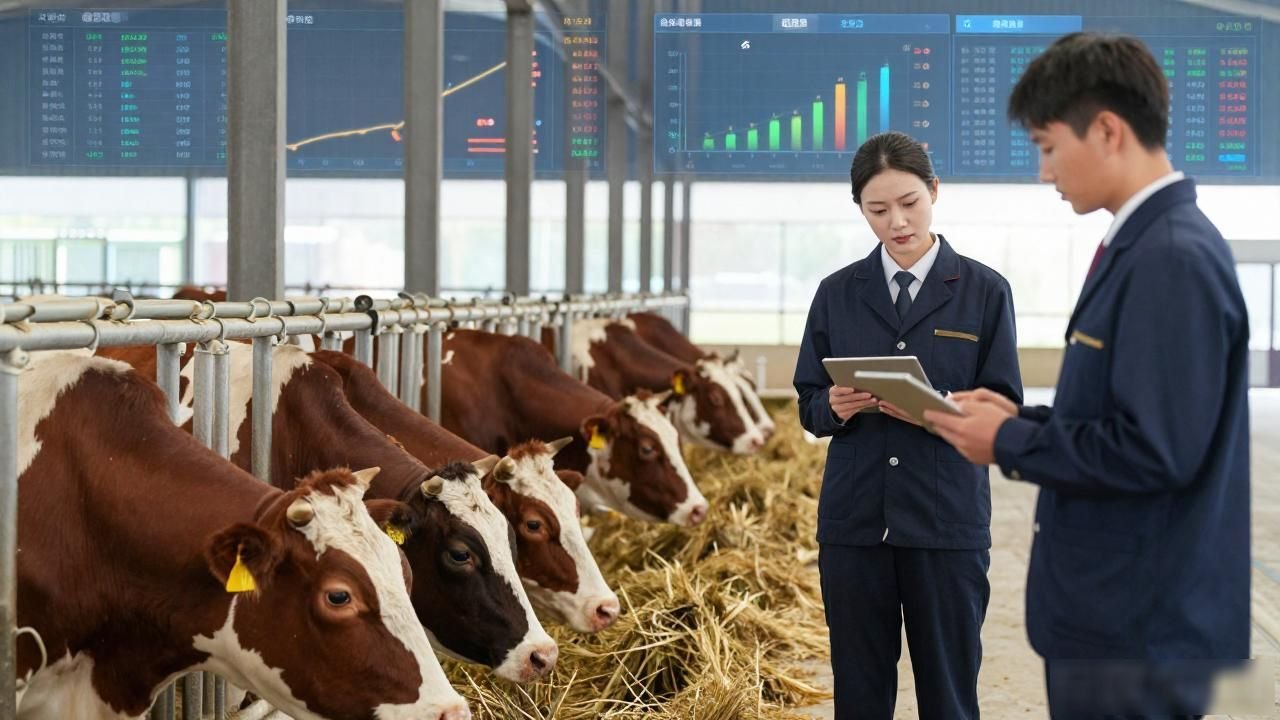
Credit support alone is not enough. Breeding industry insurance is also being upgraded in accordance with policy requirements. Insurance institutions are required to shift their original focus from competing on price and insured amount to competing on services. They not only carry out underwriting work based on the actual value of cows, but also develop more new types of insurance.
At present, insurance types such as fattening insurance, breeding stock insurance, multiple-birth sheep breeding insurance, and price insurance are gradually being promoted. At the same time, loans and insurance are bundled with each other. Once an epidemic or natural disaster occurs, losses can be minimized. This provides reassurance to both farmers and banks.
Households in difficulty will not have their loans cut off
For those farmers who are currently experiencing temporary operating difficulties, the policy clearly states that arbitrary loan extraction measures, loan suspensions, and loan limit restrictions are not allowed. In the future, we will gradually advance the work related to the confirmation of farm rights and start building a trading platform for livestock assets.
This shows that those dead assets that seemed illiquid in the past can be revitalized and transformed into living money that can be circulated in the future. As long as financial institutions and farmers follow the direction guided by the policy and rely on practical innovation to solve problems, good things that benefit farmers can be truly implemented.
Within the area where you stay, has the loan situation related to livestock farming become easier to apply for recently? We sincerely look forward to sharing your experience in the comment area.






暂无评论内容