
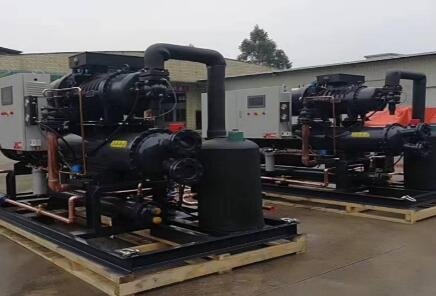
Precautions and summary of welding steps when repairing refrigeration pipelines
Repair welding is not just a simple welding operation. If it is not handled properly, it will leave hidden dangers. Many masters may not understand the normal remedies after welding errors.
Preparation work before repair welding
During the pressure test operation, once leakage is detected, repair welding must be carried out immediately. However, before repair welding, all nitrogen in the system must be discharged. This point is extremely critical. Welding under pressure will be extremely dangerous. After the welding work is completed, it must be ensured that there is no residual gas inside the system before re-testing the pressure.
Before carrying out repair welding, it is necessary to completely and thoroughly wipe away the oxide layer on the surface of the pipe. This action is the most critical step to ensure that the welding quality can meet the standards. If the oxide layer is not treated cleanly, the weld will be prone to problems such as virtual welding and pores, which will affect the sealing effect.
Processing process after repair welding
After welding, the oxide scale must be cleaned cleanly. This is an extremely critical part of surface treatment. If there is residual oxide scale , the surface treatment method after partial repair of the riveted weldment will not only affect the appearance, but also may fall off when it is subsequently put into use, causing the pipeline to be blocked or the system medium to be contaminated.

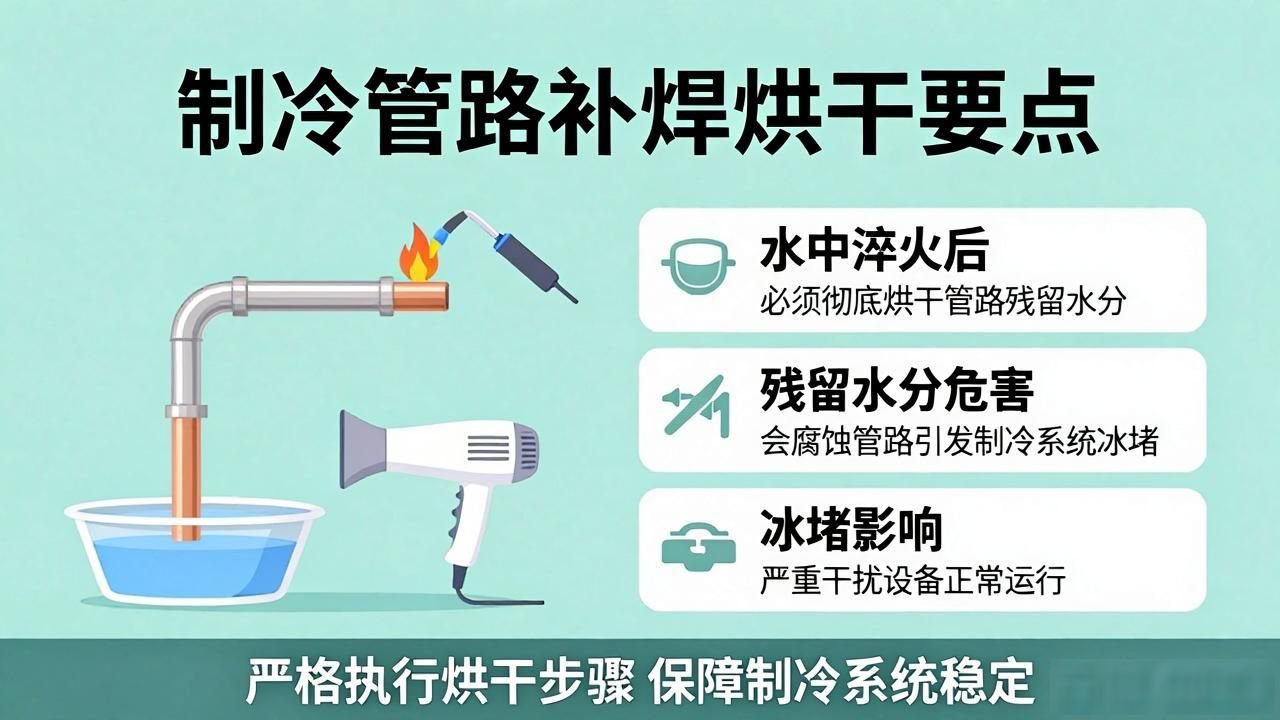
When welding copper pipes, the pipes must be thoroughly dried after quenching in water. If water droplets remain in the pipe, it will corrode the pipe and cause ice blockage in the refrigeration system, which will seriously affect the normal operation of the equipment.
System purge and inspection
After all repair welding operations are completed, nitrogen must be used to purge the inside of the system to a clean state. This step can remove impurities such as welding slag and oxides produced during welding, thereby ensuring a clean environment inside the system.
During purging, it is necessary to control the flow rate and pressure of nitrogen to prevent secondary pollution due to too severe impact. After purging, the final leak detection work must be carried out. Only by confirming that there is no leakage in the welded parts can the full repair welding process be considered complete.
Welding material equipment preparation
Before performing welding operations, be sure to prepare all required materials and equipment, including welding rods, flux, oxygen acetylene bottles, etc. If the preparation of materials is not sufficient at this time and the work is started rashly, this situation may easily lead to a stoppage in the middle, which will have a negative impact on the welding-related quality and the overall progress.
Check whether the welding equipment and corresponding tools are operating normally, and whether the oxygen meter and acetylene meter are sensitive and accurate. If the equipment is working with faults, it will not only affect the welding effect, but also may cause safety accidents, so you must check it in advance.
Gas pressure adjustment tips
After opening the bottle valve, adjust the pressure reducer so that the pressure at the oxygen outlet is controlled in the range of 0.15 to 0.2 MPa. This pressure range can ensure a stable supply of oxygen during welding. If the pressure is too low, the flame will be weak, and if it is too high, gas will be wasted.
The pressure at the outlet of the acetylene pressure reducer is controlled within the range of 0.01 to 0.02 MPa. If the acetylene pressure is too high , it will easily produce carbon black, which will affect the quality of the weld. If the pressure is too low, the flame will not be stable enough, making the welding work more difficult.
Flame adjustment and welding operations
After lighting the fire, first adjust the acetylene to control the size of the flame, and then adjust the oxygen until a neutral flame is achieved. Flame adjustment needs to follow the order from smaller to larger to avoid the risk of backfire or explosion caused by sudden changes in the flame.
During the welding operation , the surface treatment method after partial repair of the riveted weldment is to control the distance between the top of the flame core and the weldment within the range of two to four millimeters, and to maintain a vertical state between the welding gun and the pipe, so that the weld joint is heated evenly until it appears dark red. This approach can ensure good welding fusion and promote the high strength of the weld.
Wrong welding is not terrible, but what is worrying is the lack of correct ways to remedy it. What kind of surface treatment actions do you usually perform after repair welding? Welcome to share your various experiences and insights in the comment area.
Leave a Reply
You must be logged in to post a comment.