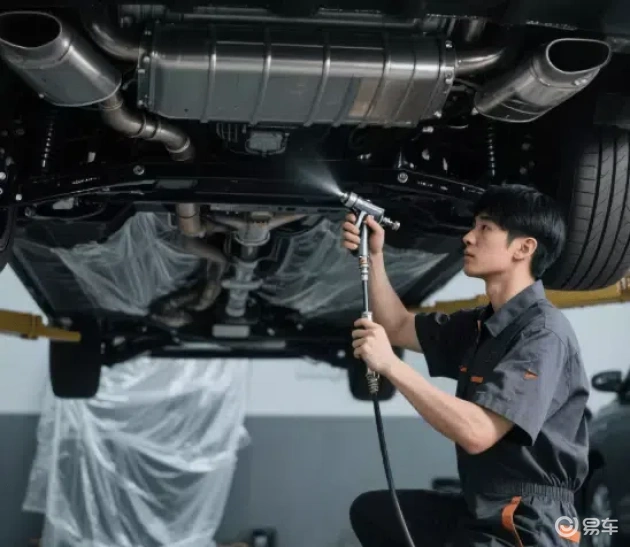


Add a protective cover to your car’s chassis. Don’t ignore these steps.

Many car owners think that chassis armor is just a random layer of paint, but this idea is actually extremely dangerous. My cousin's three-year-old car had rust on the corners of the chassis. The reason was that he did not treat it properly in order to save trouble. The car repairman removed the chassis guard and pointed at the rust stains and said that if the rust had been shot blasted and then sprayed with primer, such a situation would not have occurred at all.
Shot blasting is the first step in chassis armoring
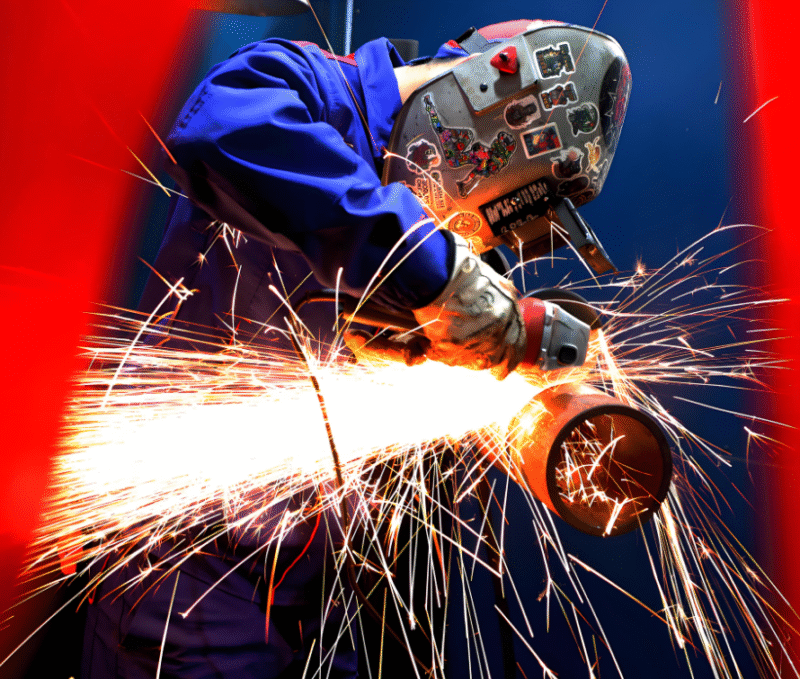
When making chassis armor, shot blasting must be carried out first. How long the coating can last is directly limited by this link. In March 2025, at a professional construction machinery factory in Linyi, Shandong Province, I witnessed such an operation scene. They used a shot blasting machine to remove rust from the excavator chassis and add a protective cover to the car chassis. Don’t ignore these steps. The steel shot hits the metal surface at a speed of 70 meters per second, knocking off all the oxide scale and rust layer. The entire treatment process lasted 15 minutes, and the surface of the chassis became as rough as frosted glass.
The key to strong coating adhesion is this rough surface. Factory technicians told me that the surface adhesion of the chassis after shot blasting can reach more than 2.5 MPa, which is three times higher than that without treatment. If you skip this step and spray directly, the coating will peel off after up to half a year, especially at welds and corners.
Primer spraying must be closely connected with shot blasting
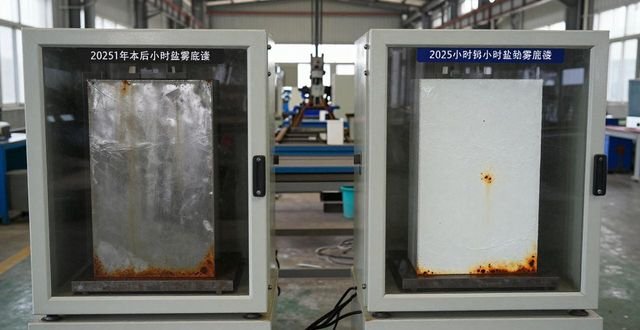
Within two hours after the shot blasting is completed, the primer must be sprayed, otherwise, the surface of the metal will continue to oxidize. During July 2025, corresponding comparative testing work was carried out in a factory specializing in the processing and production of rivet weldments in Xuzhou City, Jiangsu Province. Those test blocks that were sprayed with primer immediately after shot blasting did not show any signs of corrosion after being subjected to salt spray tests for up to 500 hours. However, other test blocks that were left overnight after shot blasting began to have rust spots after only 240 hours.
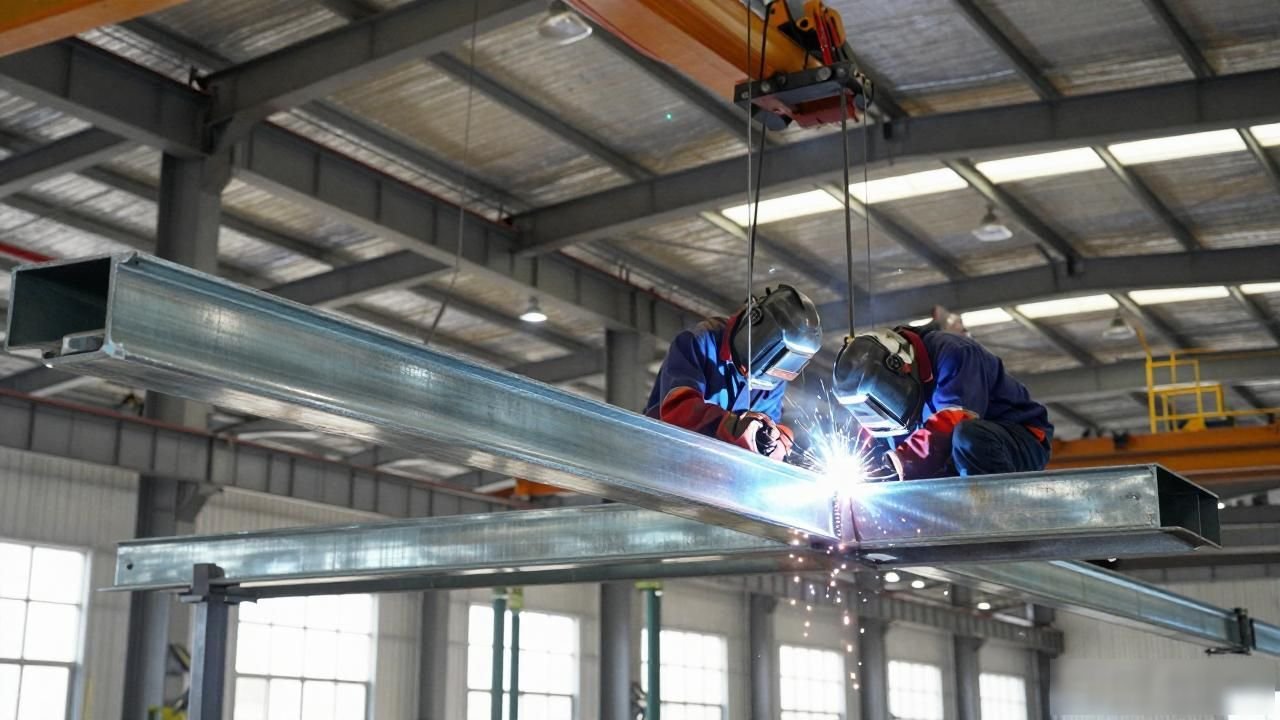
There are strict requirements for primer thickness. In terms of construction machinery chassis, the usually required dry film thickness is 60 to 80 microns. During the spraying operation, an airless sprayer is used for shot blasting and primer treatment of riveted weldments of engineering machinery . The spray gun pressure is adjusted to 15 MPa. The spray gun is kept 30 cm away from the surface of the chassis, and then moves at a constant speed. Welds and corners should be coated in advance to increase the thickness, because the paint in these parts is prone to sagging, and corners are prone to uneven coating, so it is usually necessary to apply a layer of paint first.
The construction environment directly affects the coating quality
You can't just find a place to carry out shot blasting and primer construction, because shot blasting and primer construction have very high environmental requirements. In October 2024, I saw the relevant situation in a repair shop in Zhengzhou, Henan. They built a specially closed spray booth and controlled the temperature between 20 and 25 degrees Celsius, and the humidity was less than 75 percent. The master said that if the humidity exceeds 85%, the water in the primer will evaporate slowly, and the coating will easily turn white.
Equally important is air cleanliness. For the air inlet of the spray paint room, a filter cotton is installed, which can block dust particles with a diameter greater than 5 microns, preventing them from entering the spray paint room. If there is a lot of dust in the construction environment, then after the workpiece is sprayed with primer, its surface will be covered with particles. These particle-filled locations may be prone to rust in the subsequent period of time. Regular factories will use wet mops to clean the floor before spraying activities to reduce dust.
There are differences in primer treatments for different parts
For engineering machinery chassis, different locations have different requirements for primer. Some parts such as frame beams and support arms that are the main load-bearing parts must use epoxy zinc-rich primer, and the zinc powder content must reach more than 70%. In May 2025, at Sany Heavy Industry's factory in Changsha, Hunan, technicians showed their standards. The thickness of the primer on the beams must reach 100 microns, which is 40% thicker than ordinary locations.
Only phosphating primer can be used on the surface of oil tanks and hydraulic oil tanks. This is because the solvents contained in the epoxy primer will corrode the weld sealant, thereby causing the risk of oil leakage. Primer cannot be sprayed around the drive shaft and brake disc. These are moving parts and they need to maintain the original color of the metal. If spray paint is applied, it will cause safety hazards due to high temperature friction.
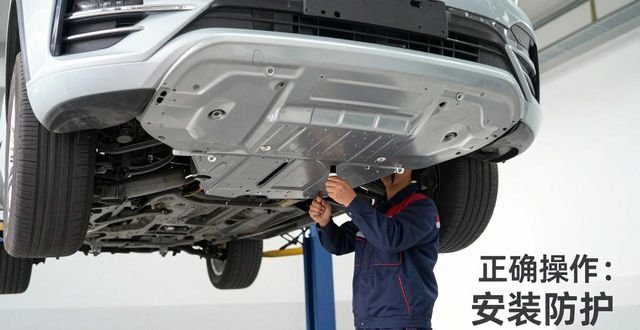
Common incorrect operations can destroy the entire chassis
In order to save money, many people have led roadside shops to spray armor directly on the rusty chassis. This is extremely stupid behavior. In August 2024, a car owner in Baoding, Hebei Province spent 800 yuan on chassis armor construction. Before construction, the master only used a high-pressure water gun to rinse it and then started spraying. After two months, the rust on the chassis became more serious. The reason was that the coating trapped moisture inside, which accelerated the corrosion rate.
Another common mistake is that the coating is too thick when spraying. Some people think that a thicker coating can provide better protection, so they spray the coating to more than 200 microns at once. The result is that the solvent inside the coating It cannot be volatilized, thus forming bubbles and pinholes. The correct approach should be to spray in two passes. The first pass is only sprayed to 30 to 40 microns. Wait until the surface is dry for 15 minutes before spraying the second pass. Finally, the total thickness is controlled at 60 to 80 microns.
Post-construction inspection and acceptance criteria
After the primer is sprayed, two indicators need to be checked, one is the dry film thickness, and the other is the adhesion. In January 2025, I met at a testing agency in Hangzhou, Zhejiang. They used a magnetic thickness gauge to randomly select ten points on the chassis to measure. Only when the average value reaches the design thickness is the shot blasting and primer treatment of engineering machinery riveted weldments considered qualified. The adhesion test uses the cross-hatch method, using a hundred-grid knife to draw a grid on the coating. After pasting with tape, the peeling area is less than 5%, which means it is qualified.
Also check to see if there are leaks or sags. Use a flashlight to illuminate the surface of the chassis in an oblique manner. The areas where the spray has leaked will be reflective and shiny, which requires re-spraying. The sagging paint will form bulges in the shape of water droplets, which need to be polished to a flat state with sandpaper. After the acceptance criteria are met, the chassis must be left for 24 hours before being loaded into the car. The purpose is to ensure that the primer can be completely cured.
Before the chassis armoring of your car is carried out , the shot blasting and primer treatment of construction machinery rivets and welds have been witnessed. Have you ever witnessed the master doing various shot blasting operations to remove rust? You are welcome to give or share your relevant experiences in the comment area, like and forward so that more car owners can avoid these trouble-prone areas.




暂无评论内容