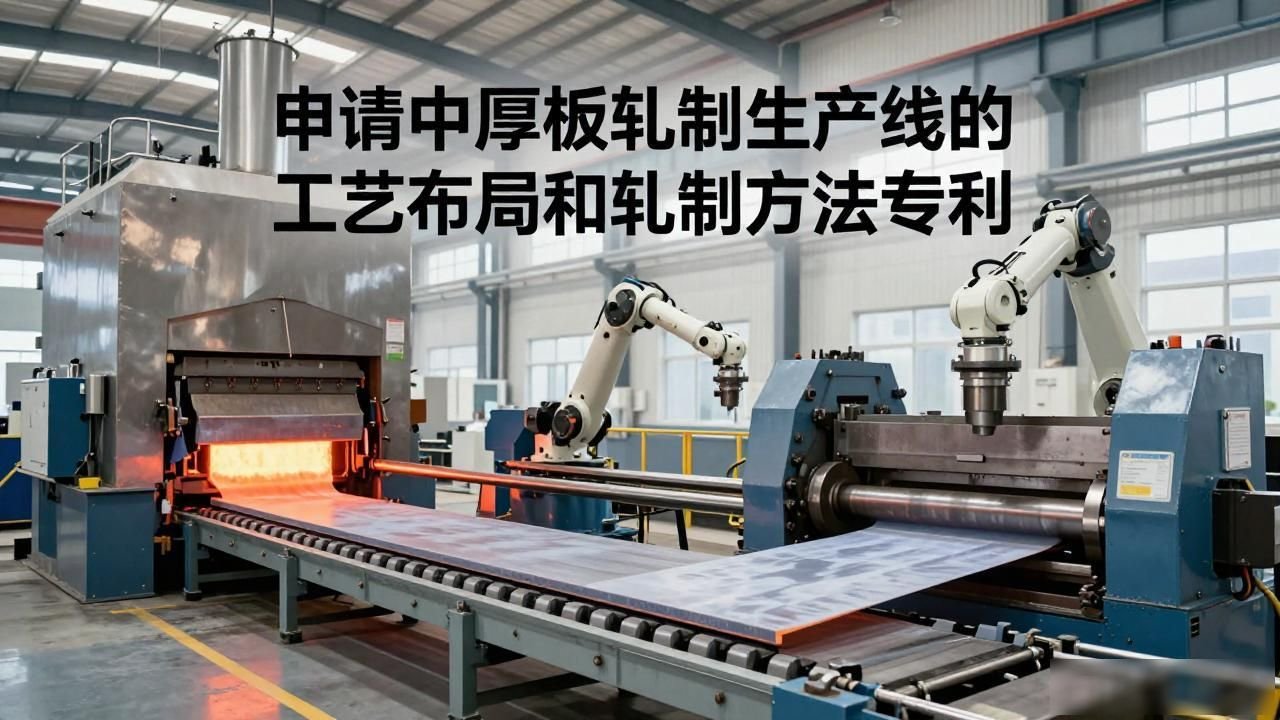


Apply for a patent for the process layout and rolling method of the medium and heavy plate rolling production line, significantly improving the rolling mill utilization rate and comprehensive production capacity
Medium and heavy plate production lines usher in major upgrades
The State Intellectual Property Office has disclosed a new patent, which was published on September 25, 2024. This patent involves the process layout and rolling method of the medium and heavy plate rolling production line. The patent application date is July 2024. It mainly solves the problems of long waiting time and low capacity utilization in traditional medium and heavy plate production.
Medium and thick plates are widely used in shipbuilding, bridge construction, heavy machinery and other fields. In the past, the bottleneck of steel mill production lines was that the slabs had to wait for a suitable temperature before rolling. During that time, they were basically in a blank stage, wasting time and energy for no reason.
New layout makes slab flow smoother
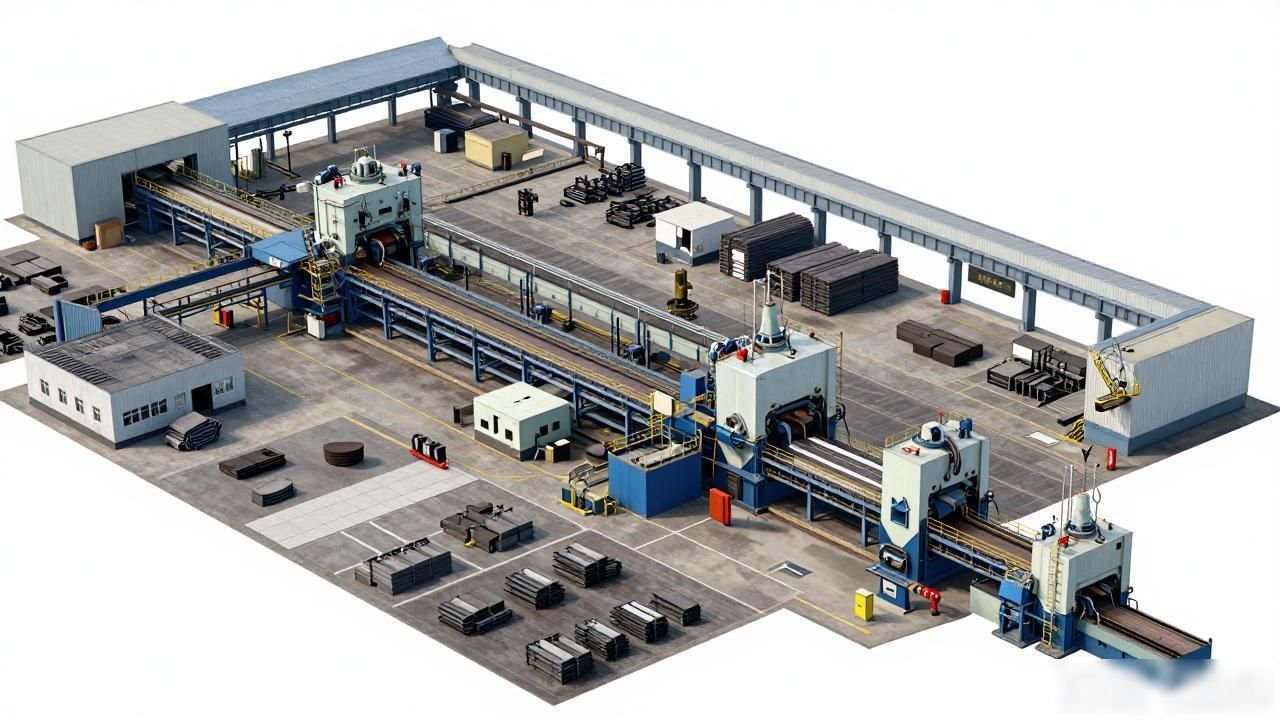
This patent has a completely new process layout design, the core of which is to add a bypass roller system in addition to the through roller. The bypass roller table consists of three parts: the first traversing roller table, the second traversing roller table and the warm-up transfer roller table. They are respectively installed on both sides of the rolling mill, and the straight-through roller table and the warm-up transfer roller table are connected by means of the traverse roller table.
This design allows the slab to make full use of the waiting period during the rolling process to achieve the transportation process before and after the rolling mill. There is almost no need to wait when multiple steel plates are continuously rolled, which significantly improves the utilization rate and overall production capacity of the rolling mill.
Improved efficiency brings economic benefits

In the production process of traditional medium and heavy plate production lines, since the slab has to be transferred from the heating furnace to the rolling mill, there is often a long waiting time. During this time, the rolling mill is idle and the production capacity just slips away. The new patented design completely changes this current situation.
There are traversing roller tables on both sides of the rolling mill, as well as warm-up transfer roller tables. With their help, the slabs can be flexibly scheduled in the rolling gap, the warm-up time is overlapped, and the transportation time is also overlapped. This shows that when the same equipment is configured, the output can be significantly increased, and the output per unit time is greatly increased, which can bring considerable economic benefits to the steel mill.
Impact on raw material procurement
The promotion of this technology will directly change the supply pattern of medium and thick plates, and the production capacity will be improved, which means that the same production line can produce more finished products. In the short term, there is hope for an increase in the supply of medium and thick plates in the market. This is good news for those manufacturing companies that need to purchase large quantities of medium and thick plates.
At the same time, the release of energy efficiency is also very likely to bring about price competition. If multiple steel mills adopt a similar process layout, the supply in the market will increase, and the purchase cost of mid-thickness plates may show a downward trend. When formulating procurement plans, enterprises can pay attention to the changes in the market brought about by these technological changes and upgrades, and arrange and set the pace required for order placement and payment according to reasonable and appropriate scopes.
The blanking, riveting and welding process is also critical.
Among those companies that are committed to purchasing, blanking, and riveting and welding-related services for medium and thick plate raw materials, the progress made in technology not only has a certain qualitative impact on the acquisition of raw materials, but can also improve the efficiency of the processing link. More production capacity in this area means that we can have a more stable supply situation, and the procurement cycle can become shorter. We can provide medium and thick plate raw material purchasing, blanking, riveting and welding services , and the pressure caused by inventory can be reduced.
The subsequent steps include thick plate processing, including blanking and riveting and welding. When the supply of raw materials becomes more stable, it can help companies make better arrangements for production schedules and reduce waiting time. The overall smooth process can improve service efficiency and speed up delivery, thereby serving customers with higher requirements.
Technological innovation drives industry development
The innovative changes in medium and heavy plate rolling technology are a concrete reflection of the development of the steel industry in the direction of improving quality and efficiency. Using corresponding optimization of process layout as a means to achieve production capacity improvement without additional investment in equipment, this idea is worth learning from more companies. In the future, similar innovative measures are likely to be promoted and applied in more production lines.
For those downstream companies that need medium and thick plates, it is necessary to pay attention to these technological developments. Knowing the impact of new technologies on market supply and prices and providing medium and thick plate raw material purchasing, blanking, riveting and welding services can help companies better formulate procurement strategies. Provide medium and heavy plate raw material purchasing, blanking, riveting and welding services to control costs and enhance competitiveness.
What are your thoughts on the use of this new technology in procurement? Welcome to leave a message for discussion.





暂无评论内容