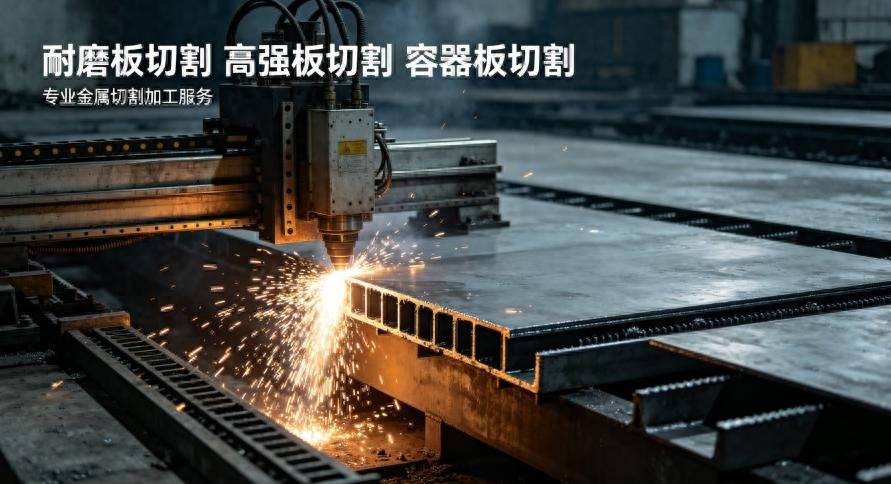


Hongzuan Metal | Heavy industry manufacturing thick plate blanking quality control and process optimization plan
When cutting the extra thick plate, the dimensions were off. It was impossible to see the problem on the quotation. However, after the finished product was installed, I was dumbfounded. The quality of outsourced blanking directly plays a decisive role in whether subsequent welding and assembly can proceed smoothly. What is wasted by many factories on repeated rectifications is time and cost.
Causes of deviation in cutting size of extra thick plate
The amount of heat input when cutting thick plates is very large. The plates expand due to heat and then shrink after cooling. Coupled with the internal stress caused by hot rolling itself, when the thickness exceeds 60mm, the size deviation can be obvious. In order to meet the delivery deadline, small processing plants hoist and transfer the workpieces before they have completely cooled down, further aggravating the deformation.
The formal method is that after cutting is completed, the workpiece is naturally aged and cooled on the table, and the workpiece is then transferred after the entire temperature is lowered. The sequence of typesetting and cutting also requires reasonable planning and arrangement. At the stage of generating drawings, machining allowance must be reserved accordingly. This can more effectively alleviate the problem of dimensional deviation caused by stress deformation.
How to define slag burrs on the cutting surface

Due to the characteristics of the flame cutting process, there will be slag hanging on the bottom. If it is a medium-thick plate, it can only be polished and cleaned. However, for extra-thick plates, zero slag hanging is a problem that is difficult to overcome in this industry. Many contradictions between supply and demand are due to the lack of confirmation of grinding requirements in the early stage. Therefore, before placing an order, be sure to find out whether slag removal and polishing are required before delivery.
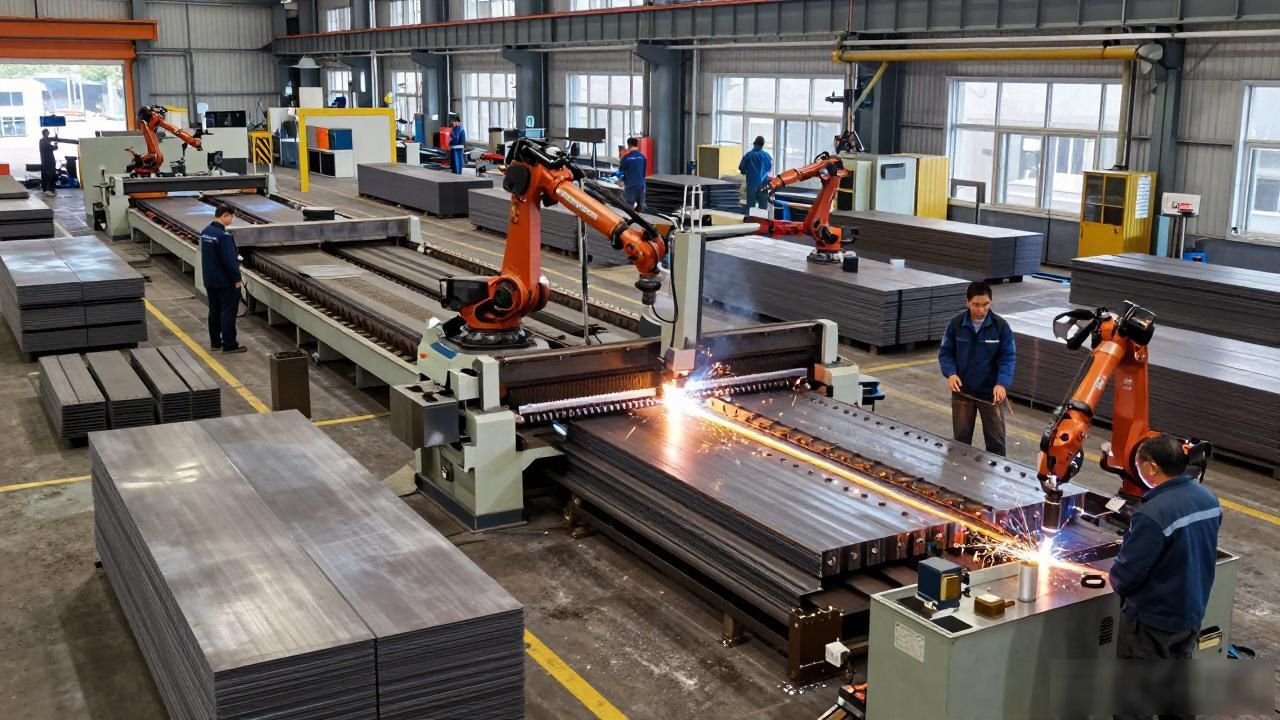
Assuming that the finished product is to be directly assembled and provided with medium-thick plate raw material purchasing, blanking, riveting and welding services , you must first inform us and put forward polishing requirements. This process will bring about labor time costs, and the quotation will also increase accordingly. If there is still machining and milling in the future, but a small amount of slag hanging at the bottom will not affect the use , we provide medium and thick plate raw material purchasing, blanking and riveting services , so there is no need to pay extra for this.
How to avoid cracks in thick plate cutting
When cutting high-strength materials such as alloy steel and manganese plates, the area where the cut is located will heat up extremely sharply, and then cool down very quickly. As a result, this situation is prone to thermal cracks, which is a high-risk quality issue. Ordinary Q235 carbon steel rarely has cutting cracks under normal process conditions.
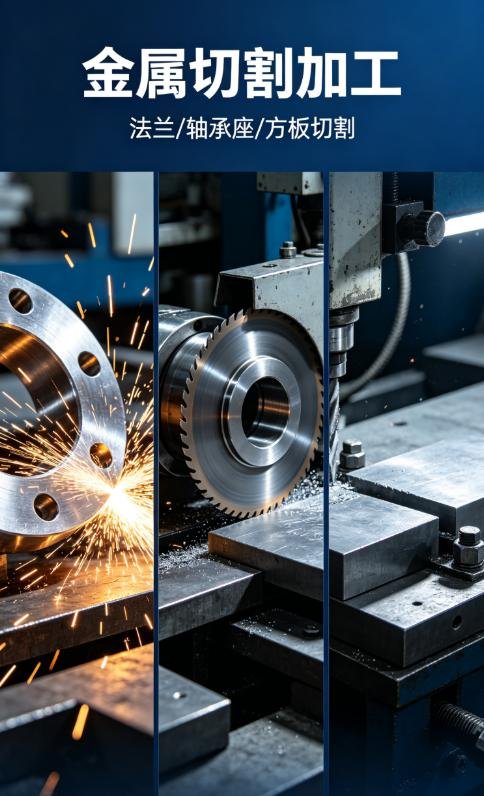
For orders of high-strength alloy steel thick plates, a preheating operation must be performed before cutting, and a slow cooling process must be performed after cutting, so as to effectively avoid the risk of cracks. For those workpieces with strict working conditions, subsequent flaw detection can also be carried out to ensure that their internal quality meets standard requirements.
Bevel processing has process boundaries
Square plates and ordinary medium-thick plate special-shaped parts can be processed directly and simultaneously during the cutting action. However, for particularly thick plates, it is very difficult to cut the bevel directly with the help of flames. The accuracy is quite difficult to meet the standard requirements. The bevel angle and width are not consistent. In contrast, the industry prefers to use an edge milling machine to mill the bevel after cutting the blank.
Many client drawings directly indicate the flame cutting bevel of extra thick plates, but it is extremely difficult to achieve assembly accuracy during actual processing. Technical personnel must discuss with the design department in advance to optimize process measures Hongzuan Metal | Heavy Industry Manufacturing Thick Plate Cutting Quality Control and Process Optimization Plans to prevent subsequent rework and assembly from being hindered.
Confusion in cutting process selection
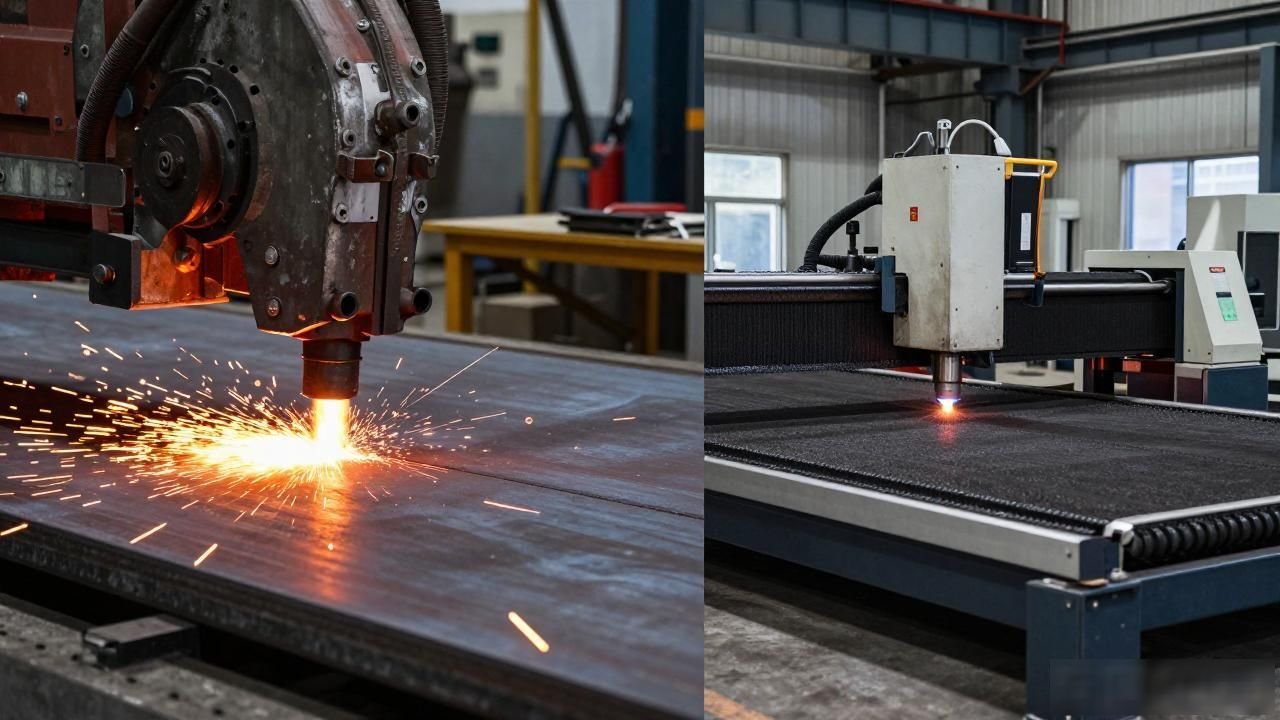
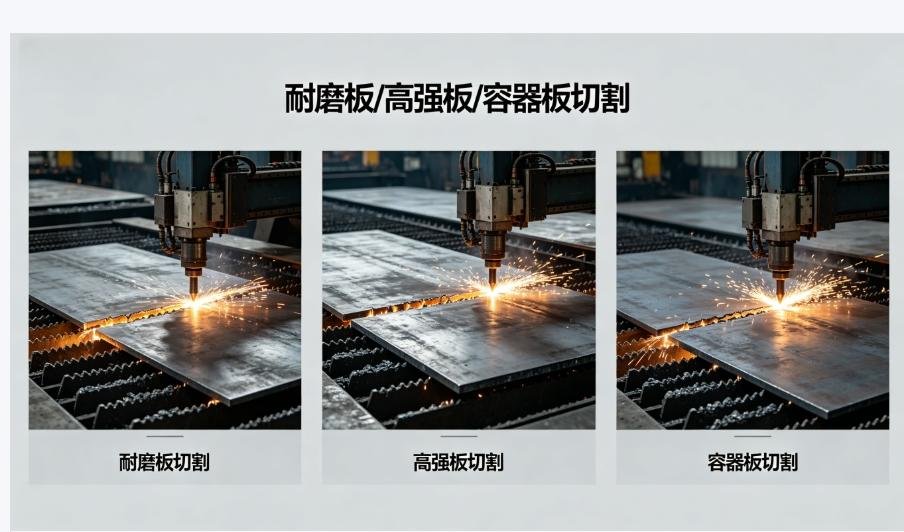
Laser cutting is suitable for precision machining of thin plates, but when dealing with extra-thick plates above 60mm, the efficiency will be low and the economy will become worse. When dealing with ultra-thick plates, plasma cutting has the disadvantages of being unable to cut through and having a large taper. Flame cutting is the main process for processing extra-thick plates.
Waterjet does not produce thermal deformation, but its cost is high and it is suitable for use on niche special workpieces. A complete equipment matrix can match the most superior solution according to the thickness, material and usage requirements of the workpiece to provide medium and thick plate raw material purchasing, blanking and riveting services . It is not a matter of forcing a single equipment to undertake all orders. This is what a professional processing factory should do.
Material selection affects cutting method
It is only suitable for flame cutting of carbon steel and low-alloy manganese plates. It cannot be used for stainless steel and high-alloy steel. Plasma or waterjet processes must be used. After cutting, a heat-affected zone measuring several millimeters will be formed on the edge of the workpiece, which can be removed by subsequent welding or milling.
If the workpiece is put into use directly after cutting and there is no secondary processing, then the impact of the heat-affected zone on the working conditions must be evaluated. When outsourcing cutting materials, you can't just look at the size of the drawing, and process feasibility assessment is absolutely indispensable. It is extremely difficult to process the small holes and sharp corners on the drawing on the extra thick plate.
What kind of traps did you encounter when you collaborated with others for blanking operations? You are sincerely welcome to share your own experiences in the comment area. If you like and follow, you will be able to get more information about heavy manufacturing.






暂无评论内容