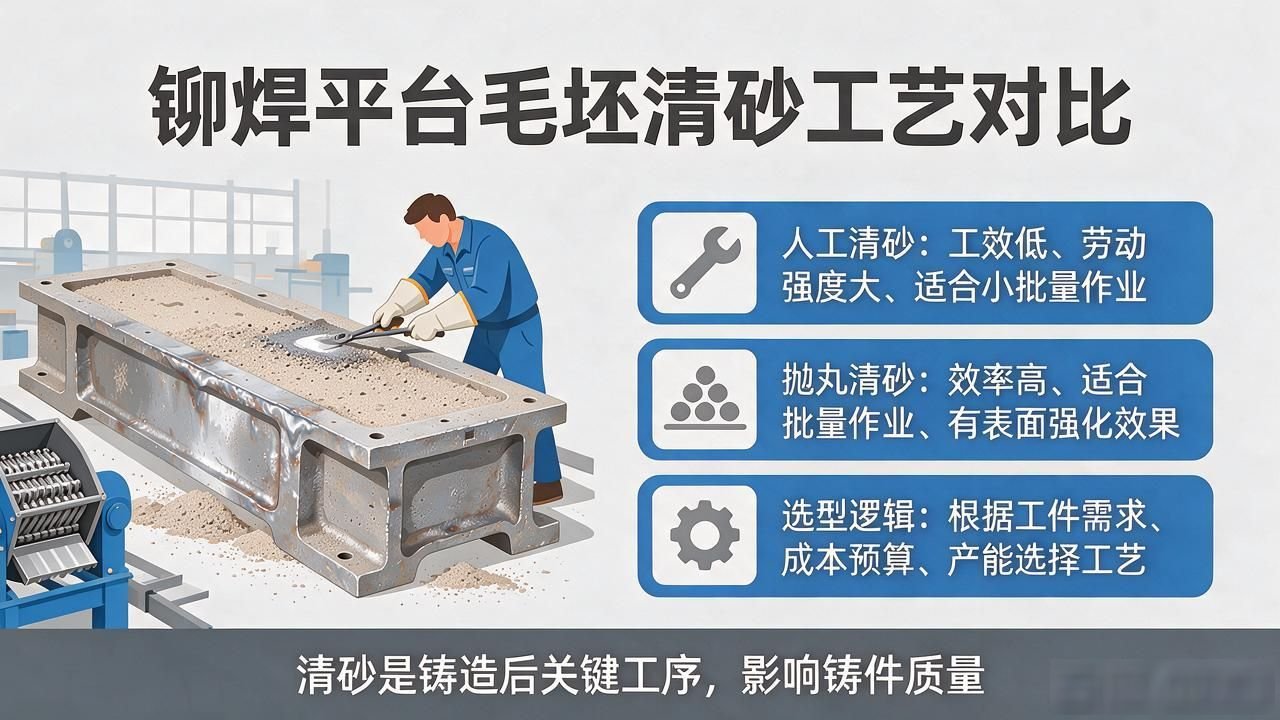


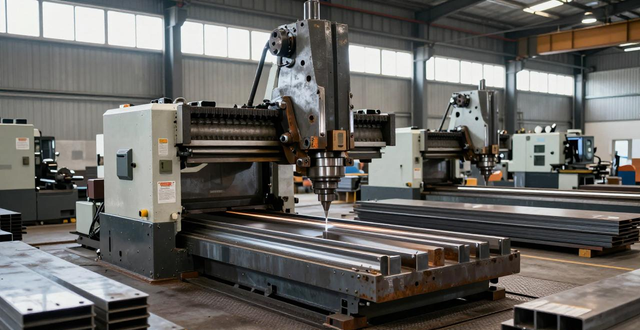
The riveting and welding platform goes through the blank during the production process
Inspection process to control quality
From the beginning of casting to the finished product, the riveting and welding platform needs to go through three inspection levels. Each level is related to the accuracy and service life of the final product. Many customers only focus on the price of the finished product, but ignore the quality control at the rough stage. Buyers who truly know the inside story of the industry will start from the source to ensure that every link is up to standard.
If the inspection is rough, the defects will be hidden inside, and no matter how fine the subsequent processing is, they will not be able to make up for it. Therefore, enterprises must pay attention to the first three inspections, especially the basic link of rough inspection. Only by laying a good foundation can subsequent machining and finished product inspection be achieved with twice the result with half the effort.
What to look for in blank inspection
The blank inspection mainly looks at the appearance specifications and internal defects. Cast iron parts are prone to problems such as sand holes, pores, cracks, sand inclusions, and shrinkage. If these defects are not discovered in time, they will cause the platform to deform or break during subsequent use. Processing errors are also within the scope of inspection. If the size does not meet the requirements, it needs to be reworked directly.
The core index refers to the flatness of the riveting and welding platform. If the flatness does not meet the usage requirements at the rough stage, the subsequent processing costs will increase significantly. In addition to the surface quality, the appearance inspection must also check whether it meets the specifications and dimensions of the technical drawings. The inspector needs to rely on experience and instruments to make comprehensive judgments.
Choice of sand cleaning methods

The finished castings must be sand cleaned. There are basically two sand cleaning methods: two-person sand cleaning and shot blasting. Each of these two methods has its own advantages and disadvantages. Enterprises have to make a selection based on their own needs and cost budget. If the sand cleaning method is not selected, the subsequent processing efficiency and user experience will be affected.
Some manufacturers, in order to save costs, choose manual sand cleaning. As a result, the surface treatment failed to reach a clean level. The remaining sand will cause damage to the tool during machining, thereby affecting the machining accuracy. Although the cost of shot blasting is relatively high, the cleaning effect is very thorough and the surface quality is good. From a long-term perspective, it is more cost-effective.
Temperature requirements for shot blasting and sand cleaning
The shot blasting and sand cleaning of castings has strict requirements on its temperature. It is best to clean under conditions close to the ambient temperature. However, different foundries have different cooling times, resulting in large differences in the temperature of castings when they enter the shot blasting chamber. This requires that when designing the shot blasting machine, extreme high temperatures must be taken into account to avoid equipment failure.
Putting high-temperature castings directly into the shot blasting machine will cause many safety hazards. Hot parts, hot machines and hot abrasives put forward special requirements for equipment maintenance. Bearing lubrication, conveyor belt design, consumable parts materials, ventilation and control systems must be specially treated, otherwise the life of the equipment will be greatly shortened.
Challenges of working at high temperatures
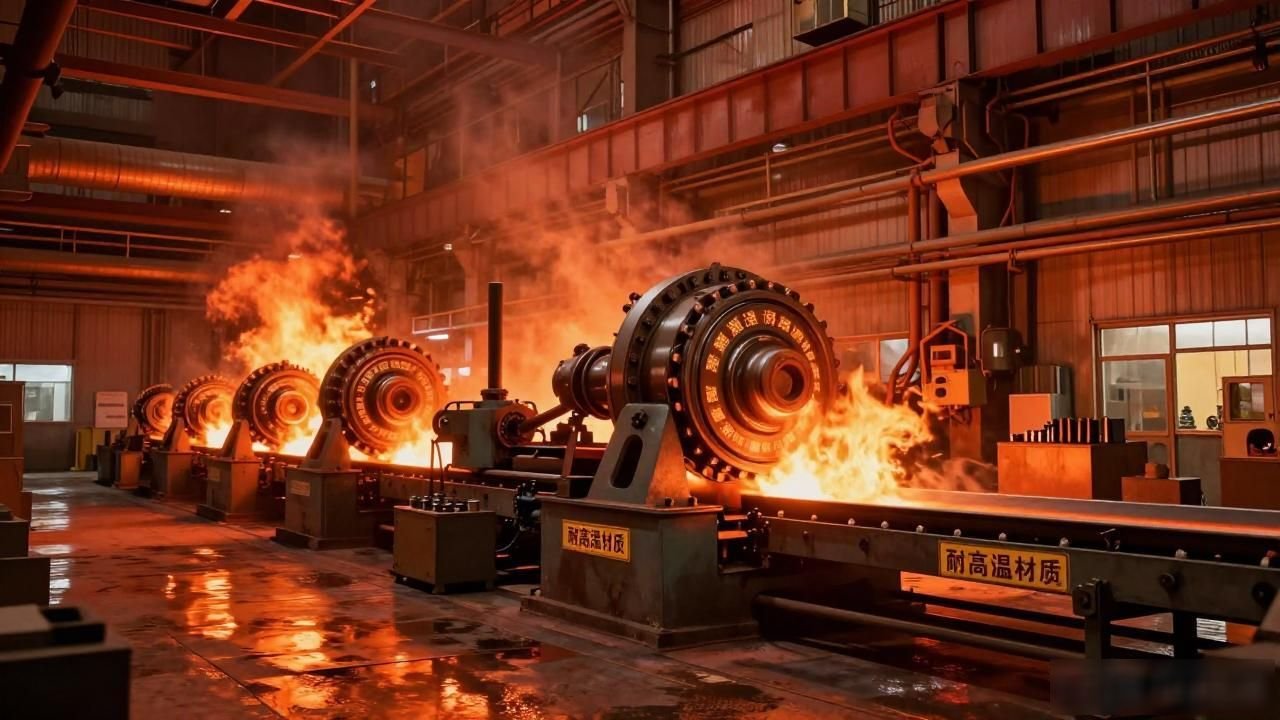
In extremely high-temperature environments, all components of the equipment will face tests. Bearings are prone to failure under high-temperature conditions, so special lubricating materials that are resistant to high temperatures need to be used. Conveyor belts are prone to deformation and aging under repeated impacts from hot castings, so high-temperature-resistant materials must be used. At the same time, the frequency of replacement of wearing parts will also increase significantly.
In high-temperature operations, the ventilation system plays a key role. Its excellent ventilation performance can discharge hot air and dust in a timely manner, thereby protecting the normal operation of the equipment. The control system must also be designed to withstand high temperatures, otherwise the electronic components will be easily damaged. These special requirements will increase the cost of equipment and make maintenance more difficult.
Quality determines product life
You can't just look at the price. When purchasing, companies must pay attention to the manufacturer's inspection process and process level, because the final inspection alone cannot guarantee the quality of the riveting and welding platform. Starting from the strict control of the rough blank stage to the reasonable selection of the sand cleaning process, every link will have an impact on the performance of the final product.
For riveting and welding proofing services for rapid prototyping , quality control should be focused on. If problems are discovered during the proofing stage, losses incurred during mass production can be effectively avoided. Only by choosing a manufacturer with a complete inspection system can we ensure that the platform will not deform during long-term use and that the accuracy can be maintained at a high level.
When you are in the process of purchasing a riveting and welding platform, what problems are you most worried about? You are welcome to share your experience and suggestions in the comment area!






暂无评论内容