

D317A wear-resistant electrode D287 wear-resistant electrode
The most troublesome problem in crusher maintenance is that cracks appear after the surfacing of wear parts, and they break again not long after being repaired. The D317A welding rod is used to resist impact, while the D287 welding rod is used to resist cavitation. If these two welding rods are used incorrectly, there will be no effect at all, and the loss caused by downtime will be even greater.
Why is the alloy formula of D317A able to withstand impacts?
The tungsten content in the welding core is between 6% and 8%, the chromium content is between 3% and 4%, the molybdenum content is between 2% and 3.5%, the vanadium content is between 1.5% and 2.5%, and the carbon content is controlled within the range of 0.3% and 0.8%. After the surfacing layer is air-cooled, the hardness reaches HRC58~62. The red hardness of this material is relatively good. The change in hardness is not obvious in high temperature environments, and the workpiece is not prone to thinning after repeated heating.
Using low hydrogen sodium type coating and high alloy welding core, the crack resistance is the most prominent feature in the cold welding process. When carrying out large-area cladding welding operations on large workpieces, the welding operation can be carried out directly without preheating, thereby omitting the overall heating process. This can reduce the waiting time in the workshop, specifically saving two to three hours.
Key points for cold welding without preheating
DC reverse connection must be used. When using an electrode with a length of 3.2mm, the corresponding current should be between 90 and 110 amps; if it is a 4.0mm electrode, the current should be in the range of 150 to 180 amps; if a 5.0mm electrode is used, the current should be between 180 and 210 amps.
It is fully applicable in all-position welding operation scenarios. There are no difficult situations in vertical welding, horizontal welding and overhead welding. This allows the work to be completed at the construction site without turning the workpiece.
Before welding, the welding rod needs to be baked in an oven with a temperature in the range of 300 to 350 degrees Celsius. The best time is 1 hour to 2 hours. This is to remove all the moisture adsorbed on the coating.
If it is used directly without baking, pores in the welds and cracks at the microscopic level will occur sooner or later. Especially during the rainy season, such problems will be more obvious.
Under which working conditions should D317A be used?
Single-toothed roller crushers, double-toothed roller crushers, blast furnace bells, and screw conveyor blades. These components must withstand strong impact and sand wear. D317A is their standard choice. Its impact resistance toughness is stronger than those of general cladding electrodes, and is a higher level.
This material is not only suitable for the blades of induced draft fans, but also for the sealing surfaces of medium and high-pressure valves. It has strong corrosion resistance and outstanding cavitation resistance. Under normal circumstances, only one surfacing operation is needed to withstand two or three repeated repairs. From the overall calculation point of view, the comprehensive cost is actually lower.
D287 specializes in cavitation and sediment wear
The chromium content of this deposited metal is within the range of 12% to 16%, the nickel content is within the range of 4% to 6%, and the carbon content does not exceed 0.15%. Its hardness after surfacing is HV400.
Its performance during machining is very good. After welding is completed, turning and grinding operations can be performed, and there is no need to perform additional grinding work at all.
This material is very suitable for use in the manufacture of pump impellers and flow-passing parts. It is also suitable for welding of runner made of the same material for hydraulic turbines. Its anti-cavitation effect is much stronger than ordinary low-alloy welding rods, and its service life will be significantly extended in situations where there is wear and tear caused by sediment.
How to compare welding hardness and current parameters
The hardness range of D317A after air cooling is HRC58 to 62, while the hardness data of D287 in the welded state is HV400. Before choosing a welding rod, you must first thoroughly understand the material of the workpiece, the specific wear type, and the temperature conditions of the working condition, and then make a matching selection based on these parameters. Never use the same type all at once.
If the diameter becomes larger, the current level will also increase accordingly. Do not rely solely on subjective feelings to estimate. You must use a clamp meter for actual measurement. Once there is a large deviation in the current, it will affect the penetration depth and the dilution rate of the base metal. If the composition of the cladding layer deviates, its hardness and toughness will be significantly affected and reduced.
The easiest pit to step into during construction
The most common situation that people usually encounter now is to use the welding rod immediately without baking it first. As a result, the coating is stained with moisture, which eventually leads to the occurrence of pores and micro-cracks. Considering the operation method of cold welding, the initial welding temperature is not high, so the above-mentioned defects are more likely to be exposed. When the weld is opened, you will see that all the shrinkage holes are inside.
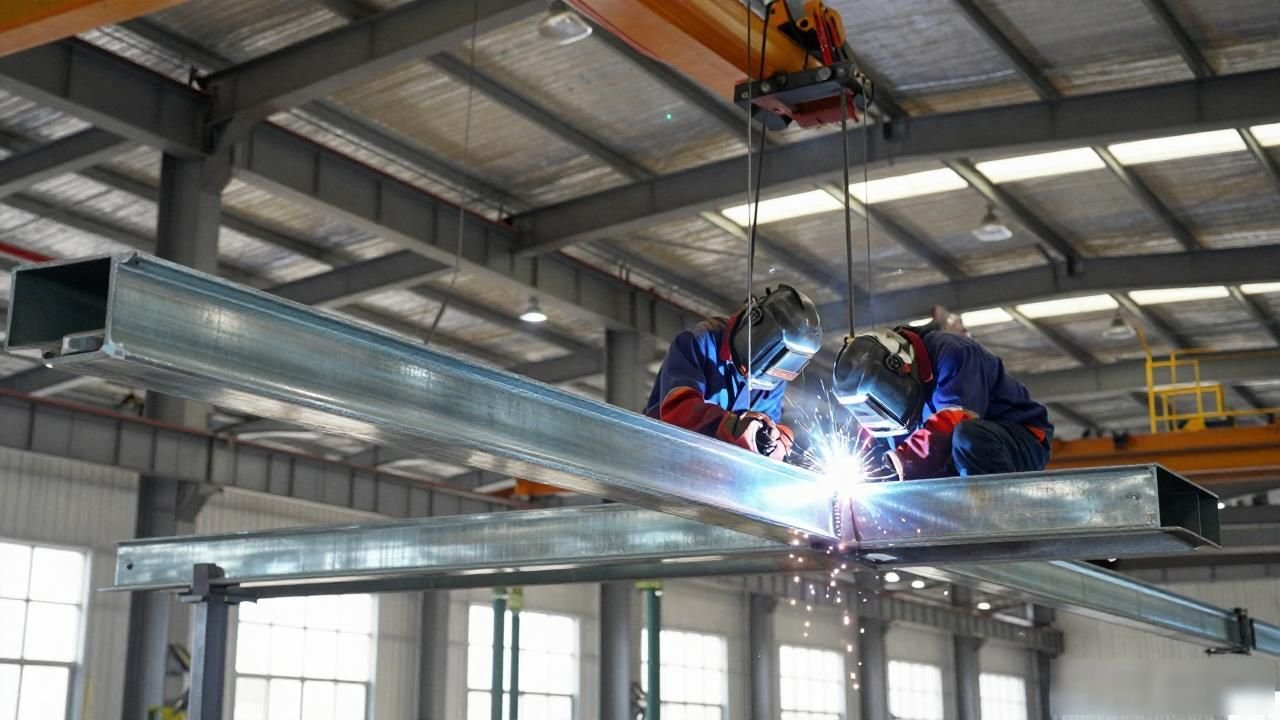
When carrying out large-area surfacing operations, you cannot complete all the work at one go, but must control the interlayer temperature in layers. Although the D317A material itself does not require preheating, if the interlayer temperature exceeds the specified value, it will still cause cracking. This very critical detail is often ignored by even many experienced technicians. If the crack is discovered by the time it is discovered, it will be too late.
Which type of welding rod is used for surfacing the toothed roller part of the crusher used in your factory in daily life? And then how long is the wear cycle of this part in actual work? You are very welcome to exchange your operating experience in the comment section. If you think this content is valuable to you, then click like and forward it to those peers like you.


No comments yet