

Turning and milling are "all done in one clamping". What are the actual production benefits?
Mill-turn is promoted as being able to complete all processing in one clamping. However, many shop managers are still skeptical about this. They think this is just a salesperson's rhetoric. Now we use the actual operation data of the workshop to conduct detailed accounting and analysis, so as to clearly observe where the cost savings are achieved.
How frustrating is the traditional process?
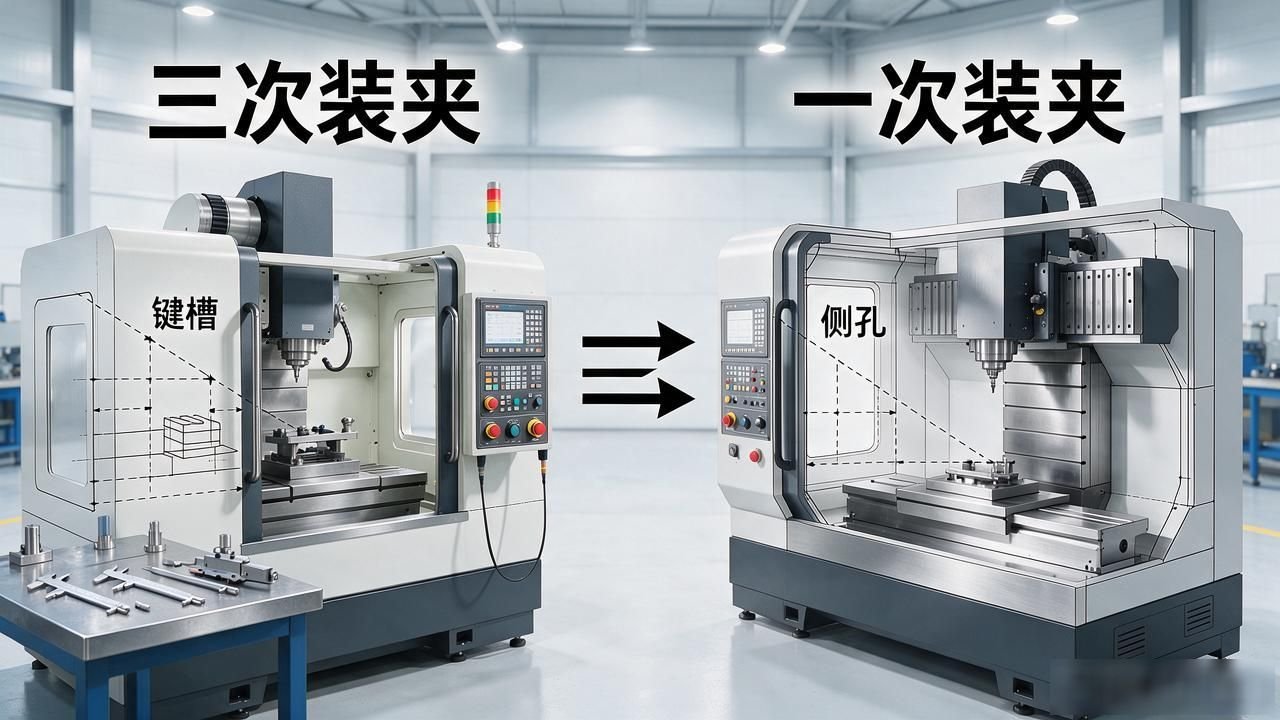
Let’s talk about a common process step that everyone knows. After the CNC lathe completes the cutting of the outer circle, it removes the workpiece, moves it to the milling machine, searches for the reference position again, and then mills the keyway. Then it is removed again and drills and taps the side holes. Because every installation and fixation requires tool setting and alignment, the operator needs to constantly run back and forth. How accurate can the turning-milling composite machining be ? It takes at least half an hour for the workpiece to change hands throughout the entire workshop.
Because multiple clamping operations are required, cumulative errors occur, and positioning repeatability cannot be guaranteed at all. When the number of processes increases, the delivery period for a batch of 500 pieces will be directly extended by two to three days. The customer's push was so urgent that the production schedule in the workshop became very confusing and frustrating, and all profits were consumed by the transfer process and waiting time.
How to run a clamping operation
The workpiece is clamped onto the turning-milling compound, and turning, indexing milling, drilling, and tapping are all done on the same machine tool. There is no need to dismantle or transfer the machine in the middle, and the benchmark remains unchanged from beginning to end. It uses an inclined rail structure and is equipped with a Y-axis and a B-axis. The side holes and keyways only need one positioning, and there is no need to turn over the parts.
When choosing products from source manufacturers like Tengzhou Borui, people often pay attention to the rigidity of the inclined rails of the turn-milling compound machine tools they produce. This design ensures a tight fit between the spindle and the turret, enabling a high degree of stability during the production and processing of large-scale batch parts.
However, when consumers start purchasing, they should focus on the two key parameters of the travel range of the Y-axis and the indexing accuracy of the B-axis, because it is these specific numerical indicators that directly determine how complex tasks the user can control and perform.
How many wires can be pressed with precision?

The traditional process requires three clamping operations, and the resulting positioning error value fluctuates between three wires and five wires. This will lead to a high possibility of deviations between the keyway position and the side hole position.
After adopting the one-time clamping method, the relevant errors were successfully suppressed to within a range of one wire, which significantly reduced the scrap rate of complex parts from the original five-point level to about one point. At the same time, the additional time consumption of rework was almost completely eliminated.
It can be seen from the actual measurement data in the workshop that for the same batch of shaft parts, the scrap rate of traditional processing methods remains between four and five percent. However, after using the turning and milling composite process, the scrap rate is stably controlled within one percent.
The cost saved by doing so not only includes the cost of materials, but more importantly, it is reflected in the fact that the time occupied by manpower due to re-inspection and rework repairs is reduced.
How much can you save on manual seats?
A piece of equipment capable of turning and milling combined processing can directly replace a lathe and a milling machine in the traditional configuration. This can directly reduce the number of machine positions required in the workshop by half. On-site operators no longer have to go through the back and forth loading and unloading operations and the transfer of workpieces. The situation that originally required two staff members to jointly supervise three different pieces of equipment has now transformed into a working state where only one staff member can focus on one piece of equipment.
If we calculate according to the three-shift model, hiring one less experienced worker can save about 50,000 to 60,000 yuan a year. Everyone in the mechanical processing industry is well aware of this. You know how difficult it is to recruit a master who can both program and operate. Moreover, the location cost of the machine has also dropped. In addition, the cost of electricity has also been reduced. The accuracy of these hidden costs in turning and milling composite machining can be achieved . If it is accumulated in a year, it is definitely not a small amount.
How to shorten delivery time
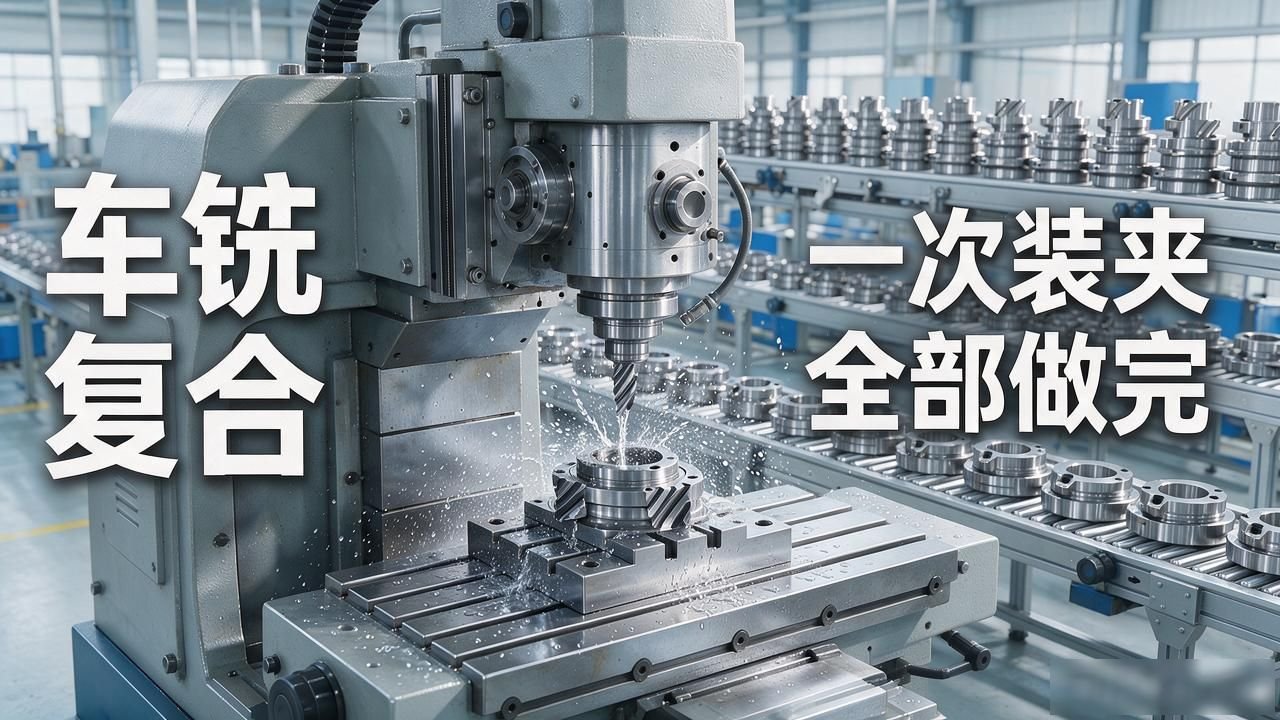
For batch orders, there will no longer be a situation where the process flow of finishing turning and waiting for milling, finishing milling and waiting for drilling, finishing drilling and then waiting for drilling, etc. has been completely cut off. The time for 500 pieces of work has been reduced from three days to one and a half days. The pressure of production scheduling has become much less. During the peak season, we can deliver the goods on time without having to work overtime.
When the customer is urging the delivery date, the workshop should stop saying that the equipment is not fully booked and that we need to wait for the milling machine to be free. As long as the output speed is increased, the confidence to take new orders will be increased. At the end of the year, when there is a need to rush sales, or when a particularly urgent order is received, the production capacity can completely keep up with the pace of customers, so customer loyalty will naturally become different.
Don’t just look at equipment quotations
Putting the shortcomings in front of us objectively, the purchase price of a single turning-milling machine is much more expensive than an ordinary inclined rail lathe. As for programming, it requires the technical level of the operator. Not everyone can start doing this right away. If there are no milling processes in your parts at all. Then the advantages mentioned before cannot be used at all. Don't force yourself to use this device at this time.
When you are calculating accounts, don't just focus on the purchase price.
Based on your actual situation, you need to look at the total number of similar parts you produce in a year and the accuracy of the turning and milling compound machining . Then add the labor costs, the amount of losses caused by scraps, and the machine space costs incurred by equipment occupation, all to the cost. Finally, conduct a comprehensive comparative analysis with the purchase price difference. In this way, you will naturally know whether it is worth upgrading.
For those workshops where profits are largely eaten up due to sequencing links and scrap problems during the processing process, the improvement effect obtained by calculating and adjusting in this way will be the most obvious.
What is the current data on the scrap rate of the same type of parts in your workshop? You can discuss and interact here. If you think the content provided has certain value, you can like it and forward it to people in the industry.





No comments yet