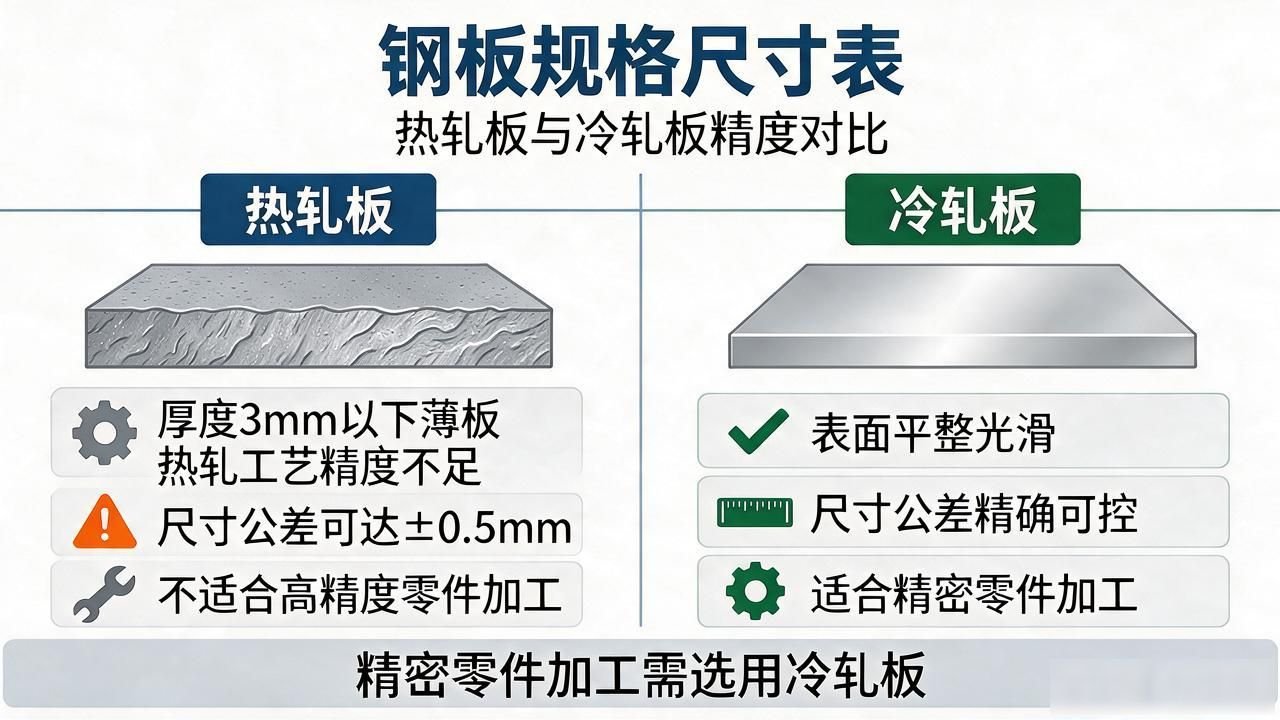


Steel plate specifications and dimensions table
When the riveting welders are working on projects, the most troublesome problem for them is that the specifications of the steel plates are not selected correctly, resulting in deformation after welding, and the bearing capacity is not enough, requiring rework. This situation is more expensive than remanufacturing.
How to choose commonly used steel plate materials
Q235 is the most commonly used material in riveting and welding. Its cost is relatively low and its welding performance is also very good. It is especially suitable for use in structural parts that do not bear weight. Q345B has a higher strength and is the preferred material for building bridges and selecting heavy-duty frames. 45# steel has high hardness and is suitable for making shaft parts and gear parts. However, the workpiece must be preheated before welding. If not, The workpiece is very prone to cracking.
Stainless steel plate is a material that is usually used in food processing machinery and some scenes that need to prevent corrosion. If you find that the 304 model is enough to meet your needs when considering whether to use it, then do not choose the 316L model, because there is about double the cost difference between the two.
As for the weathering steel SP700, it is more suitable for use on outdoor construction machinery, because it has the ability to prevent rust, and there is no need to spray paint at all, which saves one processing step.
Hot rolled steel plate specifications and dimensions
Hot rolling is the most commonly used feeding method in riveting and welding workshops. Its thickness can range from 3 mm to 200 mm, and common widths include 1000 mm, 1250 mm, 1500 mm, 1800 mm, and 2000 mm. According to the national standard, the length is generally 6 meters or 12 meters. There are also manufacturers that can cut it into 4 meters or 8 meters long. Be sure to confirm the specific dimensions with the steel factory before placing an order.

Because for thin plates with a thickness of less than 3 mm, the precision produced by the hot rolling process is very poor, so the dimensional tolerance range can be as large as plus or minus 0.5 mm. If you want to make those precision parts with high requirements, you must change the material to cold-rolled plates.
In addition, the material specifications of steel plates commonly used in engineering machinery riveting and welding processing . When the thickness of the plate exceeds 10 mm, that is, that kind of thick plate, its own weight is very large. Therefore, before hoisting, transporting and cutting, the entire work station must be planned properly in advance.
Cold rolled steel plate specifications and dimensions
The thickness of cold-rolled plates is mainly concentrated in the range of 0.3mm to 6mm. Its accuracy is one level higher than that of hot-rolled plates, so the tolerance can be controlled very strictly, within ±0.1mm.
As for the width, the two or three specifications are mainly 1000, 1250, and 1500mm. In terms of length, generally speaking, it is an arrangement of two meters per board or two and a half meters per board.
In the riveting and welding process, cold-rolled plates are mainly used in the shell parts, shield parts and decorative parts of the equipment. Because its surface is very smooth, it does not need to be polished. It is just that there will be a large springback phenomenon after the bending process, which requires the mold to reserve a corresponding amount of compensation. In short, it is absolutely not allowed to directly refer to the drawings for forced operations.
High strength steel plate specifications
High-strength plates like Q460C and Q690D are widely used in mining dump trucks. On the shield machine cutterhead, the amount is also very large. Its thickness is generally between 12 mm and 100 mm. The width does not exceed 2000 mm. As for the length, it is generally 6 meters.
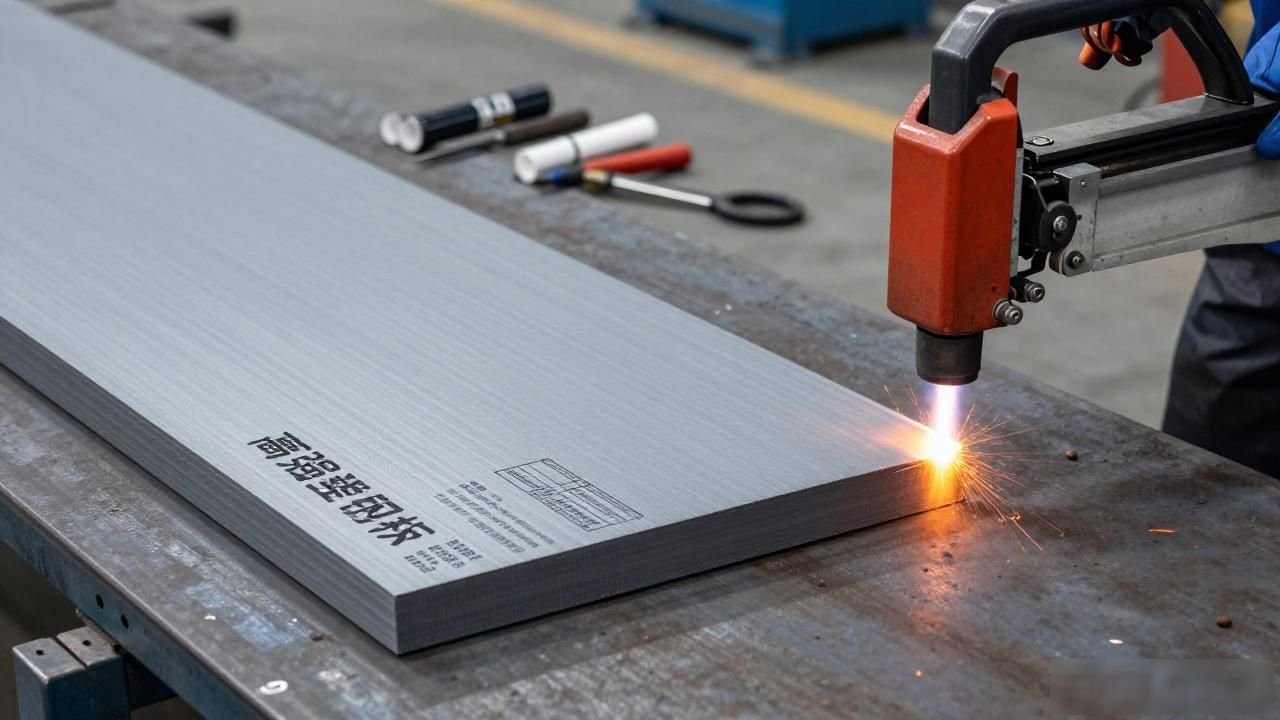
The hardness of high-strength boards is very high, and ordinary oxygen cutting methods cannot cut them at all, so plasma cutting or laser cutting must be used. When welding, it is necessary to use low-hydrogen welding rods to complete the welding operation, and stress relief treatment is required after the welding is completed, otherwise cracks will easily appear around the weld.
Stainless steel plate specifications and dimensions
The current thickness of 304 stainless steel plates is in the range of 0.5mm to 20mm, the maximum width can be 1500mm, and the length is 6 meters. If you need to be resistant to chloride ion corrosion, choose 316L material. It can be used in seawater conditions or chemical equipment, but the price will be 30 to 50% more expensive than 304.
When riveting stainless steel, the most worrying thing is to mix it with carbon steel, because once welding spatter adheres to it, rust spots will form. Therefore, the cutting operation must be carried out in a separate work station, and the grinding wheel discs cannot be mixed with those used for cutting carbon steel. This often causes mistakes in the workshop and leads to overturning.
How to avoid choosing the wrong specifications
According to the national standard GB/T 709-2019, the dimensional tolerance of hot-rolled plates has clear requirements. There will be negative deviations during the actual measurement and judgment process. In this case, the greater the value of the negative deviation, it means that the actual thickness of the plate will become relatively thinner. When these materials are used to make load-bearing components, they must be strictly controlled within the range of positive deviations. Therefore, when placing a purchase order, purchasing personnel should clearly write down the details of the material grade, the negative deviation requirements for thickness, and the indicated surface grade. Do not simply and crudely use the general name "medium plate" instead.
After receiving the goods, first take out three pieces for random inspection, use a caliper to measure the actual thickness, and then compare it with the tolerance table in the national standard. If it is found that the error exceeds the specified range, just return it and replace it with a new batch. Don't just make do with the next step. If you only find out that it is 0.3 mm thin after the welding is completed, the strength is not enough, and there are all hidden dangers.
In the recent projects your workshop has done, what pitfalls have you encountered in terms of steel plate specifications? In the comment area, let’s talk about the material specifications of steel plates commonly used in riveting and welding processing of engineering machinery. Steel plate specifications and dimensions table. If you find it useful, please like it and forward it to your colleagues.



暂无评论内容