

Commonly used welded steel plate materials
In the manufacturing process of engineering machinery, as long as a certain key steel plate is selected incorrectly, the entire riveted and welded parts related to it will have to be dismantled and re-produced. The resulting large man-hour costs cannot be avoided and will not be saved.
The most distressing and headache for technicians engaged in riveting and welding work is that the types of materials and specific specifications and standards can never be clearly confirmed. Now we will explain in detail all the material specifications commonly used in the industry. As long as readers fully read these contents, they can go directly to the corresponding material library to accurately select the required goods.
How to choose between Q235 and Q345
Q235 steel plate is one of the most frequently used material choices on construction sites and in the manufacturing of small mechanical parts. The steel's yield strength can reach a level of 235 MPa. Regarding its welding performance, the evaluation is very high, so there is no need to worry at all. When performing manual arc welding operations, the operation is very straightforward, and one person can successfully complete the entire welding process.
Statistics show that at this point in time in 2024, the total domestic crude steel production has exceeded the billion-ton mark. As far as market transactions are concerned, the price of Q235 plates is usually in the range of 3,200 yuan to 3,800 yuan per ton. Taken together, the cost-effective advantages presented by this steel are extremely significant.
At present, Q345 steel has been renamed Q355. Its yield strength value rises directly to 355 MPa, so now the key parts of construction machinery, such as the main boom and bottom chassis frame, and the common steel plate material specifications for riveting and welding processing of construction machinery , basically rely on it for support.
However, the carbon equivalent of this material is slightly higher, so before starting the welding operation, a preheating process must be strictly implemented to increase the temperature to a range of 100 degrees Celsius to 150 degrees Celsius. If this step is omitted without preheating, the weldment is very prone to a defect called cold cracking.
The material specifications of steel plates commonly used in riveting and welding processing of engineering machinery at this fault point happen to be the typical place where novice welders who have just entered the factory in 2025 are most likely to make mistakes and most often stumble. Everyone should be careful!
Where are hot rolling and cold rolling used?
The surface of the hot-rolled plate will have a layer of iron oxide scale. The common thickness is between 8 mm and 50 mm. Because it is relatively cheap, it is easy to process. Many beams, side guards, and lifting lugs in many engineering machinery are almost all made of this material.
The thickness of cold-rolled plate is generally about 0.5 mm to 6 mm. Its surface is very smooth and flat, so it is especially suitable for panels and decorative parts that have high appearance requirements.

In actual factory operations, after hot-rolled steel plates enter the production process, they must be sandblasted and rust removed before the welding process can be implemented. This is because if this is not done, quality problems such as coating peeling and blistering will easily occur in the area around the solder joints.
As for cold-rolled plates, due to their relatively large rebound strength, they are prone to edge warping and overall deformation after the riveting and welding processes are completed. Therefore, it is best to leave a processing allowance of about two to three millimeters when cutting and blanking. Customer complaints caused by such problems rank relatively high in the 2025 statistics.
What is the difference between carbon steel and low alloy steel?
High-quality carbon steel, such as the No. 20 steel and No. 45 steel we often talk about, because these steels contain very little impurities and have a relatively uniform internal structure, they are very stable when used to make precision bushings and gear blanks.
Among them, the hardness of No. 45 steel is relatively high. When welding, low-hydrogen electrodes such as E5015 must be used, and the preheating step must not be omitted. Otherwise, brittle cracks will easily occur in the heat-affected zone.
For example, when using low-alloy high-strength steels such as Q460 and Q550, under the same load, the thickness of the plates used can be reduced by about 20%, so the weight of the entire machine can be significantly reduced.
According to a report released by the Ministry of Industry and Information Technology in 2024, the use of this type of steel in the chassis of large construction machinery is still rising. However, the process window for welding is relatively narrow, which means that the control of relevant parameters must become more refined.
Where are stainless steel and heat-resistant and wear-resistant steel used?
304 stainless steel plates are widely used in food machinery and chemical storage tanks, but its resistance to chloride ion corrosion is only average. Because of the addition of molybdenum, 316 can withstand sulfuric acid and hydrochloric acid.
In the new chemical industry park projects in 2025, this is basically standard equipment. Its price is about 30% more expensive than 304, so when purchasing, be sure not to confuse the two brands.
This kind of heat-resistant steel is called 12Cr1MoV. It can still maintain sufficient strength in the steel plate material specifications commonly used for riveting and welding processing of engineering machinery in high-temperature environments above 600 degrees. Because of this characteristic, neither boiler equipment nor high-temperature furnace bodies can be separated from the use of this material.
The hardness value of wear-resistant steel NM400 exceeds 500HV. When this material is used in the bucket of a mining excavator or used as a lining for a crusher, it can be used for more than three years without wear and tear. As a result, the time period for replacing these parts is directly doubled.
How to match thickness and welding process
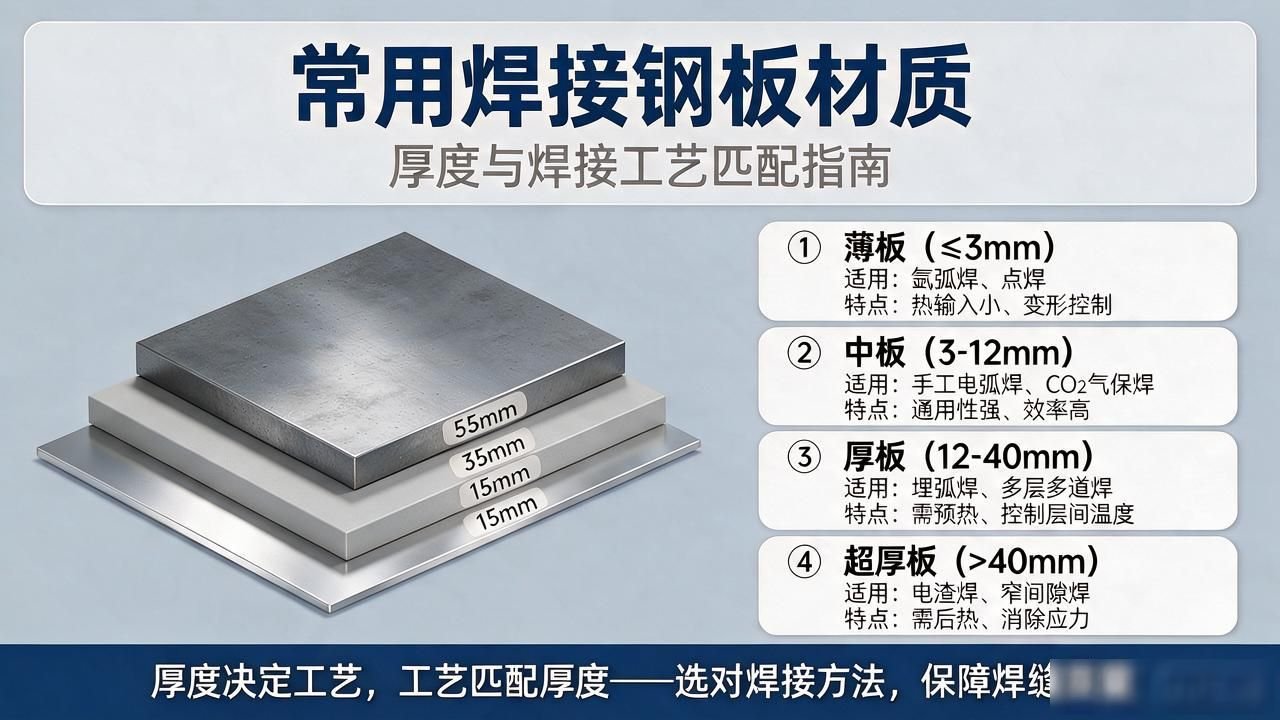
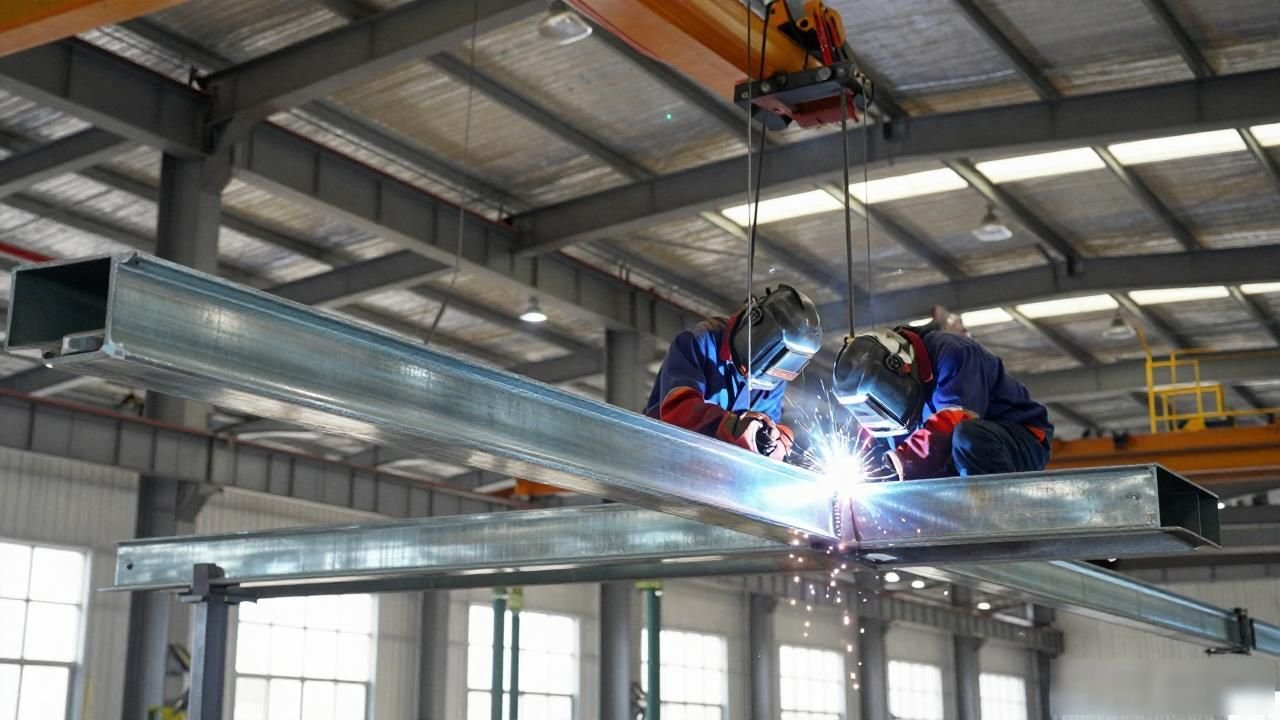
For thin plates less than 3 mm thick, MIG gas shielded welding is recommended. The heat input of this method is relatively small. It is not easy to deform during welding. For medium-thick plates between 5 mm and 20 mm thick, manual arc welding is the most flexible option. It can be operated at will at the construction site or in the wild environment.
For thick plate materials exceeding 20 mm, the usual practice is to first use gas shielding for base welding of commonly used welded steel plate materials, and then use submerged arc welding for filling. In 2025, mainstream manufacturing plants will use the above combination as their standard process flow for Q355 materials with specifications ranging from 10 mm to 16 mm.
When the thickness difference between the two plates is greater than 5 mm, if tailor welding is performed, the angle of the groove must be recalculated clearly. If not calculated clearly, stress concentration will directly lead to cracks.
After all the welding work is completed, ultrasonic flaw detection such as UT must be carried out. This is carried out in accordance with the very strict regulations on quality acceptance proposed in 2025. If this flaw detection is not done, the product cannot leave the factory.
Pre-welding pre-treatment and parameter adjustment
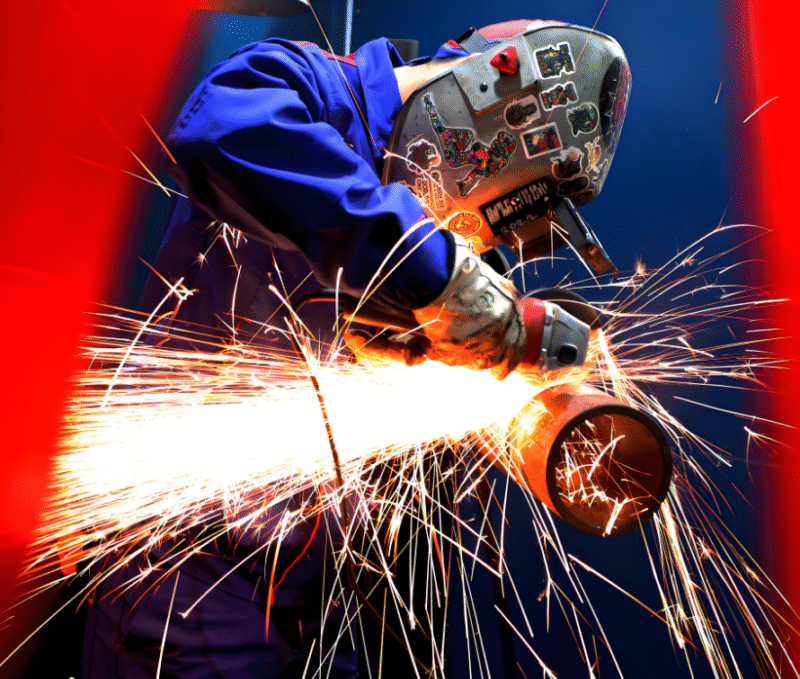
There are rust, oil stains and oxide scale on the surface of the steel plate, so the surface must be polished before starting the welding work until the gloss of the metal itself can be seen. This factor is the number one culprit in welding quality accidents in 2024. For materials like Q345, the preheating temperature needs to be controlled within the range of 100 to 150 degrees. But for materials like Q460, the temperature must be raised to a range of 150 to 200 degrees. As long as the temperature difference is even a few dozen degrees, the probability of cracks will be twice as much.
For Q355 steel plates of the same material, if the thickness is 8 mm, it is completely sufficient to use only 220 volts and 160 amps. However, if you want to deal with 20 mm thick materials, you have to increase the parameters to 280 volts and 320 amps. Therefore, you must not apply a set of standards to the welding parameters.
The latest regulations in 2025 clearly require that all welders must hold a certificate before they can work, and the weld parameters corresponding to each process must be recorded and archived for future review and inspection. If quality problems arise in the future, they must be traced to the specific responsible person.
Is it the material numbered Q235 or the material numbered Q355 that is most commonly used for welding steel plates in our factory? Which type of material gives you the most headaches and troubles?
You can chat in the comment area. If you think this content is useful, please click the like button and forward it to your colleagues who work together.


暂无评论内容