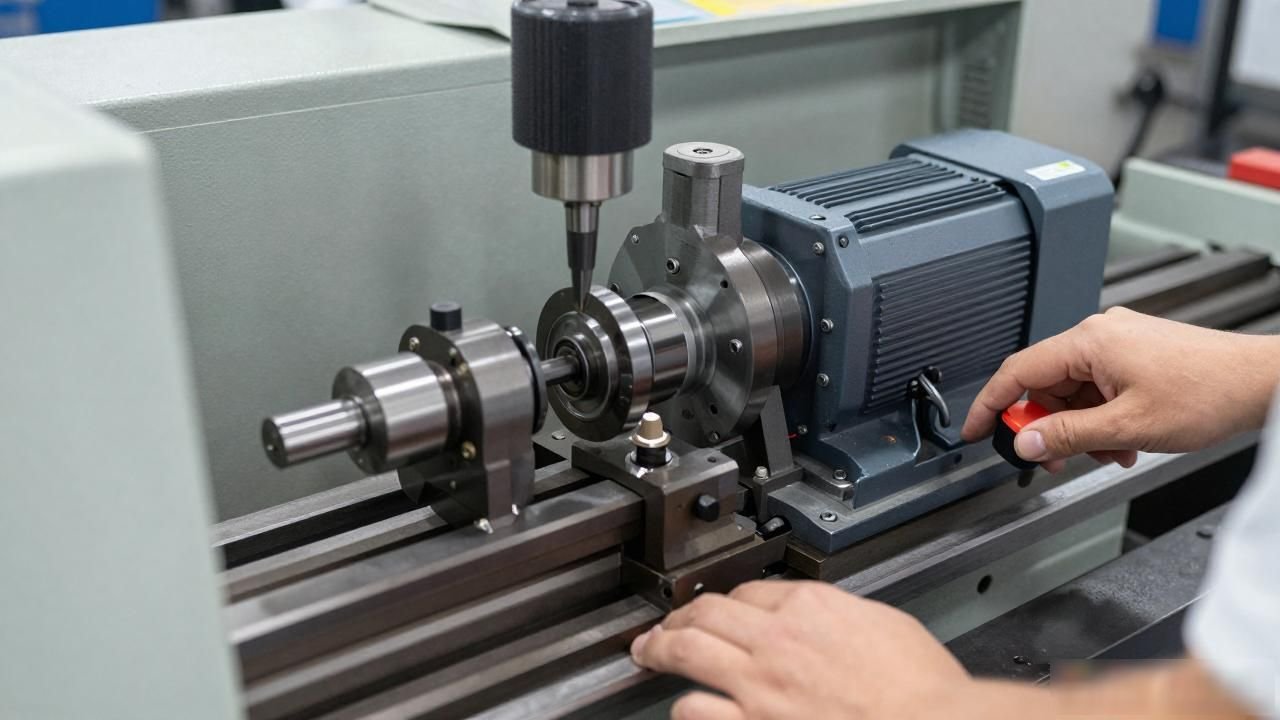


How does the instrument lathe achieve precise control of the stepper motor?
In the process of precision machining, vibration control has always been considered the enemy that affects accuracy the most. At the same time, there is a specific plan of directly connecting the stepper motor to the screw. It starts from those aspects of structural design. The source of the vibration was directly eliminated. And the cost of using this solution. It will also save about 40% of the cost compared to the full-service system.
Open-loop structure cuts off feedback oscillation
Stepper motors do not require encoders and feedback loops. They lack a whole set of dynamic response adjustment links in the machine tool system. When the cutting force changes, no additional vibration will be generated to transmit signals back. If the spindle speed fluctuates, the interference caused to the surface of the workpiece will be greatly compressed, so the roundness of the final machine will be more stable.
The open-loop control accuracy of the bushings and bearing rings machined by the instrument lathe can fully handle them. In the debugging process, we don't need to adjust the gain parameter, and we don't have to worry about resonance at all. Even if it is a new operator, he can run it on the first day. The maintenance cycle has also been postponed from once a month to once every quarter, which saves the trouble of arranging special personnel to keep an eye on the equipment.
Low speed torque stabilizes cutting vibration
86BYG series two-phase hybrid stepper motor, its step angle is 1.8 degrees. After it adjusts the subdivision to the maximum value, the pulse equivalent can reach 0.01 mm. In working areas with relatively low operating speeds, it can provide sufficient torque. In this way, when performing small-diameter metal turning, the cutting force will be very stable, and the tool will not give way due to a sudden drop in torque, and it will not cause periodic vibration.

The feature of blocking and not burning actually acts as an implicit safety valve. If the tool hits a hard point or the workpiece is stuck, the motor will stop, so that sudden shock and vibration will not occur. When the operator presses reset to continue processing, the workpiece will not be scrapped and the equipment will not be damaged.
Directly connected screw eliminates transmission gap
The stepper motor directly drives the ball screw through an elastic coupling. There is no gear pair installed in the middle position of the head. Since the backlash error and periodic impact vibration generated during gear meshing are avoided, these effects are completely removed. Therefore, the transmission stiffness is very high, making the positioning repeatability accuracy of the X-axis and Z-axis more stable.
The actual measured comparison data is very intuitive. When comparing the direct connection solution and the gear transmission method together, the radial runout index is reduced by about 60%, and the turning surface roughness is reduced from Ra1.6 to Ra0.8. For precision parts, the absence of a fine grinding process saves a lot of investment in terms of time, materials, and labor.
Acceleration and deceleration curve suppresses overshoot
Sudden changes in pulse frequency are the primary cause of out-of-step phenomena and overshoot vibration problems. When programming the CNC system, an acceleration and deceleration curve in the form of a trapezoidal or S-shaped design should be set to allow the rotational speed to rise gently, thereby avoiding the impact effect caused by acceleration from stimulating structural resonance within the mating mechanism composed of the screw and nut.
Kaindi and Guangshu are all mainstream systems on the market. They have built-in acceleration and deceleration algorithms. So for the operator, the only action they need to do now is to set the acceleration and deceleration time parameters. Then after an instruction such as thread cutting is completely executed from beginning to end, you will find that the entire tool holder will become very smooth when starting and stopping, and the tooth surface of the final machined workpiece will be smooth. It is a great improvement that can be clearly felt by direct observation with the naked eye.
Closed-loop long-term accuracy
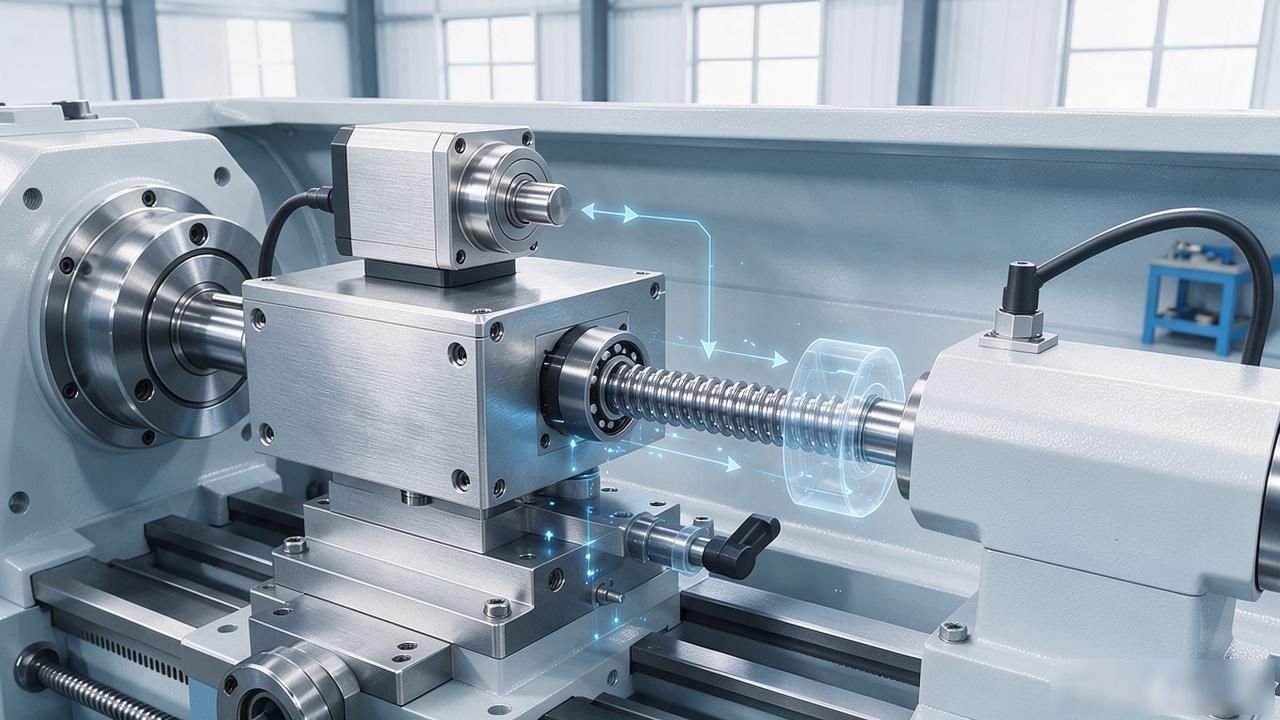
High-end models are equipped with a closed-loop stepping system with an encoder. The encoder monitors the rotor position in real time, and the driver immediately compensates for deviations found. Accumulated errors such as thermal drift and screw creep are automatically corrected, so long-term running accuracy will not drift.
At the moment when a power outage occurs, the brake will directly lock the tool holder to prevent impact and subsequent impact vibration caused by the tool holder sliding downward due to gravity.
Then it works with a closed-loop feedback mechanism, so when the frequency of each start and stop is very high, the final positioning deviation will not exceed two microns. For precision instrument parts, this performance requirement is fully satisfied.
40% cost difference in exchange for flexibility
If a full-servo solution is adopted, the cost of a system will be very high. However, if the purchase cost is replaced by a stepper solution, the purchase cost can be directly reduced by more than 40%. The price of the drive is only about one-third of that of the servo drive. The installation process does not require the configuration of misaligned components or the need to debug the robot. For a small factory, it only takes half a day to install the thing with a pair of pliers.
In the scenario of multiple varieties and small batches, changing products only requires adjusting the program and does not require reconfiguration of parameters. Hardware, electronic components, and micro-pump bodies are all handled in one vehicle. The model change time is reduced from two hours to twenty minutes, and the equipment utilization rate is maximized.
The instrument lathe in your factory is equipped with either a stepper motor or a servo motor. Everyone thinks that the most troublesome process regarding vibration is the outer circle of the car or the ribbing. Please have a good chat in the comment area. If you find the content useful, please give it a like. Then pass it on to your colleagues in the workshop.



暂无评论内容