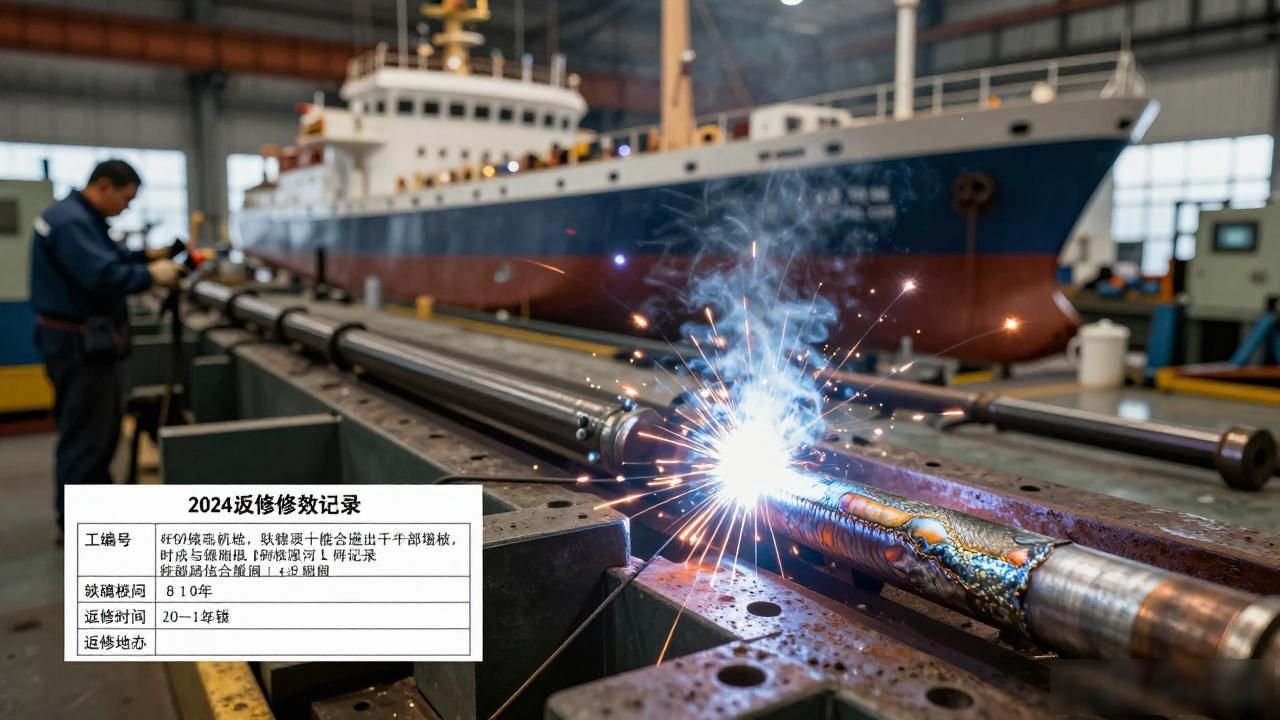


Standard specification for ship welding procedures
Problems with riveting and welding accuracy in shipyards are most likely to be attributed to inadequate preparatory work at the beginning of welding. If the material selection is wrong and the bevel processing is not done well, even if the subsequent process is improved, it will have no effect.
How to choose welding rods and wires so as not to overturn
For general structural parts of the hull, you can use E4303 carbon steel welding rods for welding. This method is sufficient. However, for those critical load-bearing parts, E5015 low alloy steel electrodes must be used so that the strength and toughness can keep up with actual requirements.
When selecting the diameter of the welding wire, you must match the plate thickness according to the actual situation. If you are welding thin plates, it is usually more appropriate to choose a welding wire of 0.8 to 1.2 mm. When facing a thick plate, you should use a specification of 2.0 to 5.0 mm. Never use a large-sized welding wire to weld thin plates.
When selecting welding materials, don't just look at the model. You must also confirm the tensile strength level to see if it can match the base material.
Let's take a ship plate as an example. If the thickness of the ship plate is 16 mm and the grade is Q345B, then the tensile strength of the selected welding material cannot be lower than the strength of the base metal. If this condition is not met, once external force is applied, the weld will break first.
When welding materials arrive, check three things first
After each batch of welding rods and welding wires enter the factory, they need to first check their appearance, focusing on whether there are cracks, rust, or peeling coatings. Then they check the heat number, batch and specific production date. Finally, they need to conduct sampling tests on the chemical composition and mechanical properties. Only if these three items have passed the inspection standards can these materials be allowed to enter the warehouse and be put into use.

In 2024, a shipyard failed to detect the oxide scale on the surface of a batch of welding wires, which resulted in a large number of welds with defects such as slag inclusions. The final repairs cost more than 400,000 yuan, so the arrival inspection cannot be omitted. It is the lowest-cost quality check.
Damp welding rods must be dried before use
Once the welding rod becomes damp, the arc will become unstable and a large number of pores will appear inside the weld. For welding rods such as E4303, it needs to be heated to a temperature range of 150 to 200 degrees and baked for 1 to 2 hours.
For E5015, the requirements are different. The temperature must be controlled between 300 and 350 degrees, and then the baking operation can be performed for up to 2 hours. After the baking process is completed, the welding rod must be placed in a special thermal insulation barrel. The purpose of this is to ensure that it can be used at any time.
In order to save trouble, many shipwrights take the welding rods out of the barrel and leave them outdoors for a long time before welding. This practice is actually equivalent to no baking. If the temperature of the insulation barrel is maintained between 80 and 100 degrees, once the welding rod is taken out, it must be returned to the baking oven for re-baking after more than an hour.
Thin and thick plate bevels are completely different
For thicknesses below 12 mm, it is sufficient to use a V-shaped groove with an angle ranging from 60 to 70 degrees, and a blunt edge of 1 to 2 mm needs to be reserved.
When the plate thickness is between 12 and 20 mm, U-shaped grooves should be selected to reduce the number of layers required for welding. If the thickness exceeds 20 mm, an X-shaped groove or a U-shaped groove must be adopted, and welding operations are required on both sides, otherwise the root will not be fully penetrated.
When the deviation of the groove angle exceeds 2 degrees, the distribution of the weld reinforcement will become uneven, which will lead to stress concentration and increase the accuracy control standard of hull riveting welding exponentially. Therefore, after the processing is completed, it is necessary to use a square ruler and calipers to measure each workpiece one by one. Those products that are detected as unqualified need to be reworked directly.
The groove surface treatment has hard indicators
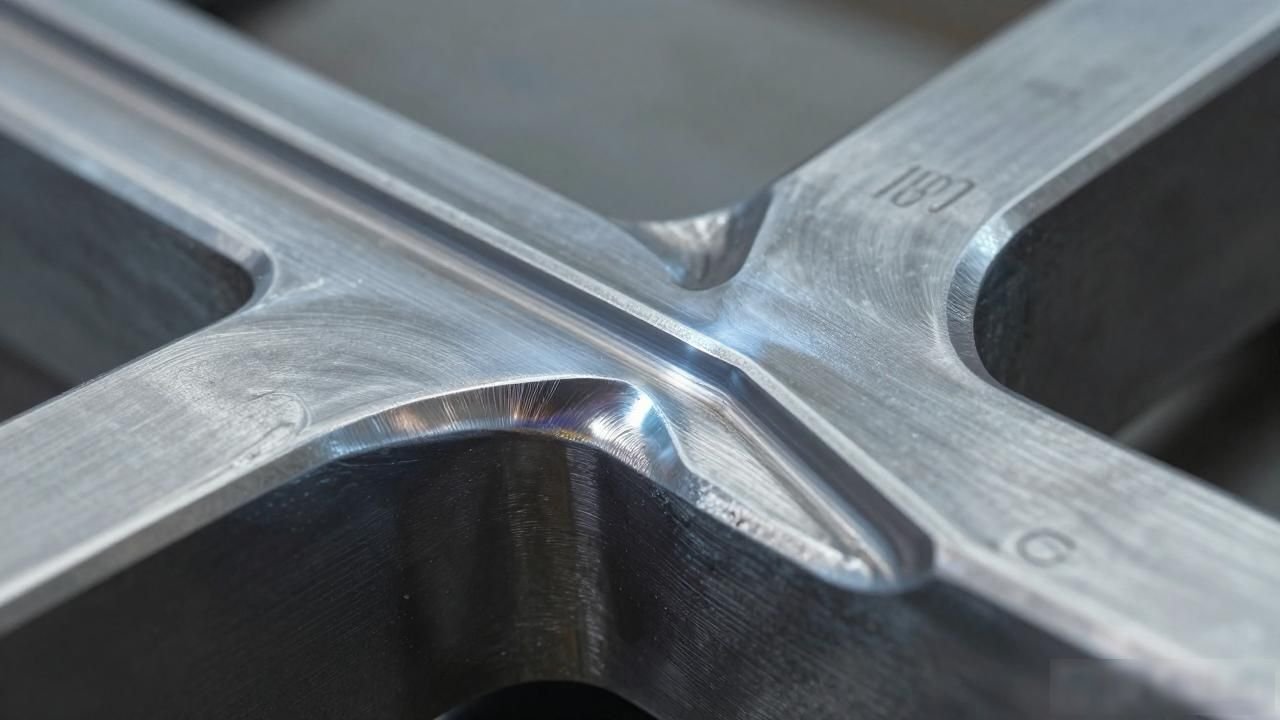
The bevel and its two sides, including everything within a range of twenty millimeters wide, must be polished to expose the original shine of the metal.
The specific method is to use a combination tool such as a grinder and a wire brush to work. During the final inspection, you need to look carefully with your eyes to ensure that there is still that dark oxide layer there. At the same time, it should be noted that the surface roughness cannot exceed a value of 12.5 microns.
The new classification society plan review regulations in 2025 require that if cracks or interlayers appear anywhere on the groove surface, the entire weld will be scrapped and the cutting work must be carried out again. After the groove processing is completed, it must be scanned with ultrasonic waves. If defects are found, it will be scrapped directly and the process will need to be restarted.
Poor storage conditions equal waste preparation
The humidity in the welding materials warehouse must be controlled below 60%, and the temperature range should be maintained between 5 and 30 degrees. Ventilation must be maintained but the wind must not blow directly onto things. Store the welding rods more than 200 mm above the ground, with a partition between each layer. If the temperature difference between the workshop and the warehouse is too great , the welding rod must be warmed up before taking it into the workshop.
For shipyards in coastal areas, the situation during the rainy season is very difficult. When the humidity in the warehouse exceeds 80%, the entire box of welding rod coatings will crack. Therefore, an industrial dehumidifier must be equipped. Once the humidity alarm sounds, take action immediately. Failure to do so could result in several tons worth of welding material being destroyed throughout the rainy season.
I would like to ask if the welding materials warehouse of your shipyard is equipped with equipment that can monitor humidity online? Everyone is welcome to chat in the comment area.



暂无评论内容