

Riveter Quality Acceptance Specifications
In the process of riveting and welding of the hull, the quality of the riveting will directly determine the safety of the hull structure. However, there are currently many production workshops in actual work. In terms of controlling various details, it is still very easy for various errors or mistakes to occur.
Before riveting, you must thoroughly understand the drawings and process documents.
Before production, the drawings must be carefully checked one by one to make it clear where each rivet is and what its specifications are. Process discipline is not just slogans posted on the wall, but the implementation of each production process to the right specific responsible person.
The instructions issued during assembly and the essentials for riveting operations must be distributed to the corresponding teams at the same time, so that operators can start working immediately after receiving them. They cannot be allowed to rely on personal experience to guess what to do.
In terms of the choice of riveting method, the positive riveting method should be treated as the preferred solution. This is because the operation process of the forward riveting method is relatively stable, the stress situation is relatively balanced, and the residual hole left after the riveting is completed is very small.
However, if the space where the workpiece is located is limited, you can consider using the anti-riveting method, but you must not skip the demonstration process of the method just because of convenience. Before each process is officially started, the squad leader needs to confirm whether the riveting method and pattern are completely consistent.
Pressure riveting instead of riveting hammer is the general direction
In the current shipbuilding industry, everyone is gradually replacing the traditional riveting hammers and turning to new equipment such as hydraulic riveting machines. When this kind of machine is performing riveting operations, the pressure can remain stable and the working rhythm is also very fast.
If a worker is relatively skilled, he can complete more than 300 riveting tasks in one day. Compared with the previous riveting hammer, the efficiency has increased by almost 40%. In addition, by performing riveting in this way, the deformation of the rivet can be controlled more accurately. This can effectively reduce those residual stresses.

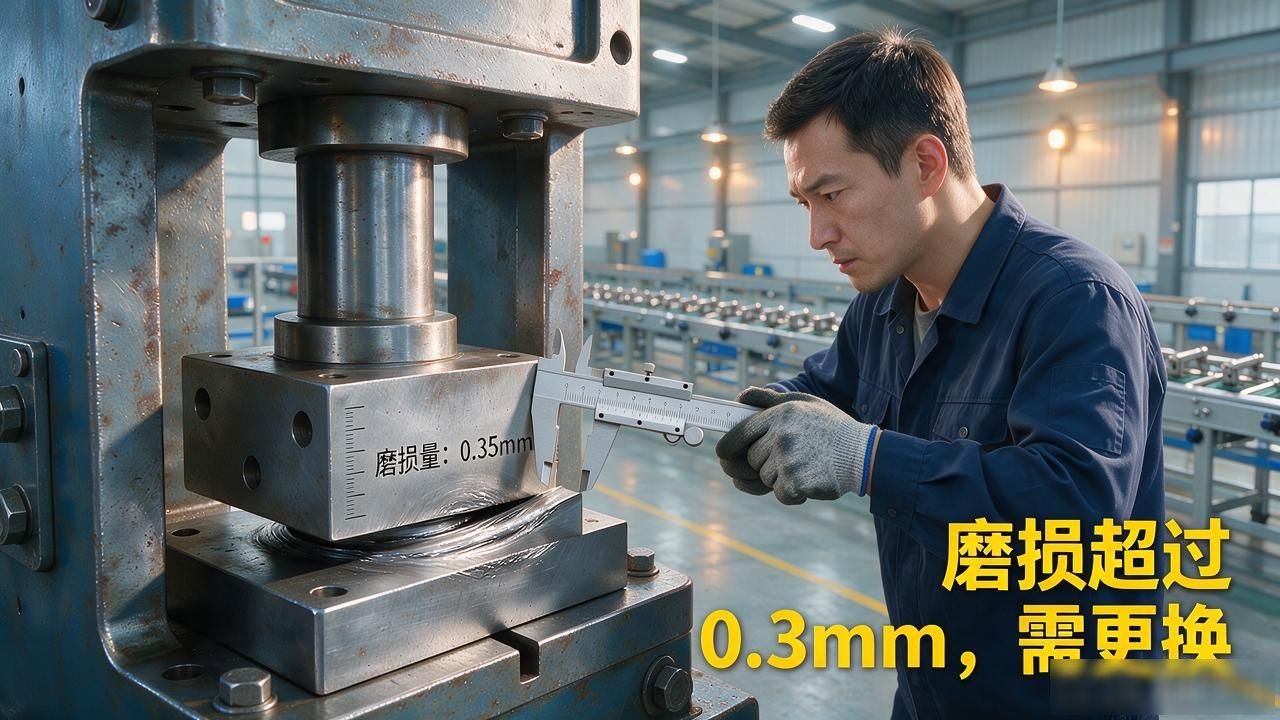
However, riveting equipment requires regular calibration. We recommend checking the indenter for wear once a week. Do a pressure calibration once a month. Because the equipment status will directly affect the final forging quality of the rivets. If the indenter wear exceeds 0.3 mm, it must be replaced. Otherwise, there will be pits or warping on the rivet heads.
No damage is allowed on the surface of the rivet head
After the riveting operation is completed, the surface condition of the rivet head must be inspected to ensure that it is flat and smooth.
If defects such as scratches, pits and cracks are discovered during this process, all the batches of rivets involved must be treated as scrapped and cannot be used again. They cannot be inspected in very important areas such as the outer plates and internal bulkhead plates of the bottom of the ship. Even if there are only 0.1 millimeter deep pits, they may evolve into stress concentration points. This situation will directly have a negative impact on the fatigue life of the hull.
The rivet head and the surface of the rivet must fit tightly together. When inspecting visually, you should use your fingernail to scratch along the rivet seam. There should be no obvious feeling of stagnation.
If the fit is not good, it usually means that during the riveting process, the plate was not clamped in place, or the rivet was skewed when it was inserted into the hole. If this happens, it must be disassembled and then re-aligned. You cannot make do with it casually or make do with it.
If the gap exceeds 0.05 mm, rework will be required.
A gap is allowed between the rivet head and the plate surface, but the scope of this gap must not exceed half the length of the circumference. At the same time, the specific value of this gap must be controlled within a standard of less than or equal to 0.05 mm. Using feeler gauges to conduct one-by-one inspection is the most basic means of quality control. When conducting spot inspections in each batch of goods, the proportion of samples taken must not be less than 15%.
In the same rivet seam, the number of rivets with gap problems must not exceed 10% of the total number, and it is absolutely not allowed to have two adjacent rivets with this gap at the same time.
If it is found that the situation exceeds the specified standard, then this section of the riveting seam must be reworked, stamping and riveting operations must be performed again, or new rivets must be replaced, and all these conditions must be recorded in the quality ledger for future reference.
Countersunk rivets cannot sink or protrude too much
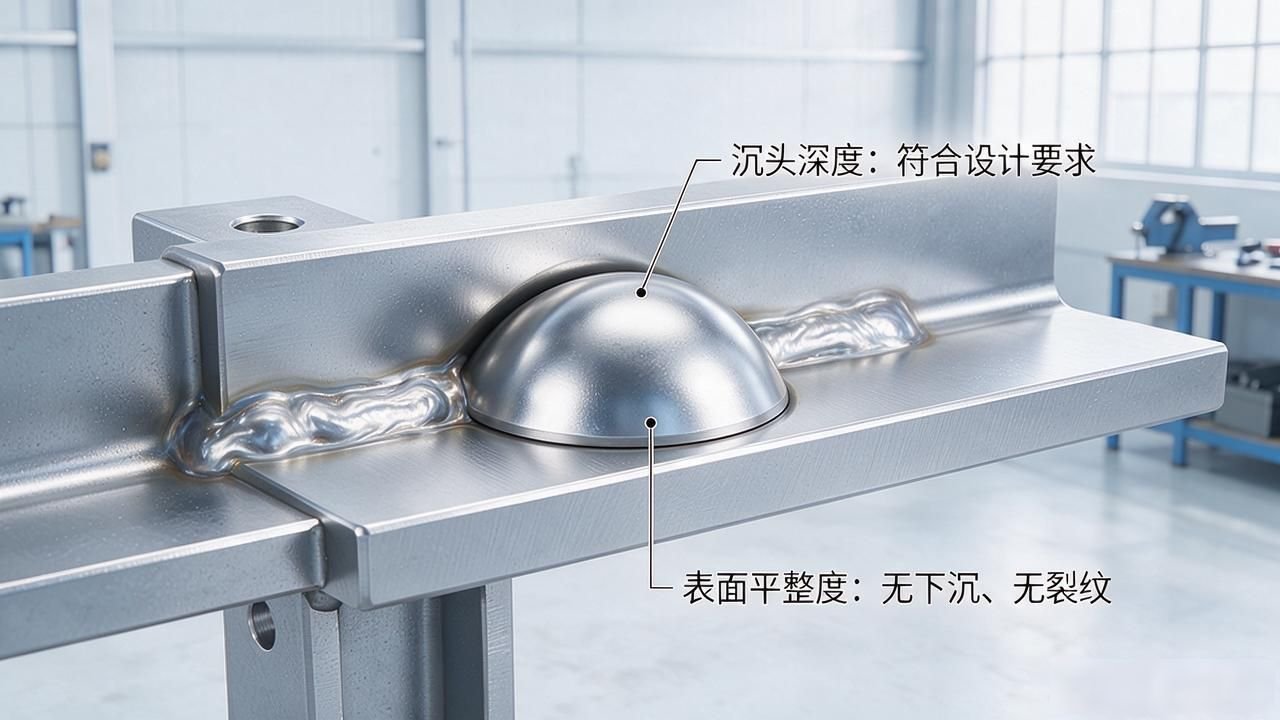
For all rivets with a countersunk head design, no sinking can be observed in the appearance position after the riveting operation is completed. The occurrence of this phenomenon is usually caused by the fact that the depth of the rivets embedded in the structure does not reach the standard value or the surface force distribution of the load-bearing plate is uneven.
Especially in the area where the ship's outer plate is located, this sinking problem will directly have a negative impact on the overall watertight performance and the appearance quality of the product. Once a similar subsidence situation is discovered during the construction process, relevant operators must immediately take marking measures, and at the same time make detailed registration and filing in the designated record form, and must perform rework and repair operations on these defective parts in accordance with process requirements.
There is a standard value for the height of the head of the countersunk rivet protruding from the skin surface, which ranges from 0.02 mm to 0.05 mm. If there are other allowable deviation provisions in the drawings or technical conditions, they shall be implemented in accordance with the spirit of the relevant documents.
Use a dial indicator to measure each rivet one by one. If the deviation is found to be beyond the specified range, the rivets must be replaced and the riveting operation must be performed again. It should never be treated simply by sanding.
Both people and equipment have to pass
Riveting operators must ensure that they hold the appropriate certificates of qualification when performing their duties. At the same time, you need to complete at least 16 hours of practical training courses, pass relevant assessments, and obtain passing results. For new employees, they must be arranged to supervise and observe the operation process next to the master within the first three working days.
Before you are ready to work independently, you must have an operation record of at least 500 rivets, and these operations must meet quality standards. People are the final guarantee level in the production process. That is to say, no matter how powerful and easy-to-use the equipment is, it cannot replace the judgment ability of on-site personnel.
When quality problems occur, you can never just replace a nail and be done. In response to the unqualified sampling in each batch, it is necessary to trace the factors in the five dimensions of man, machine, material, law, and environment, and issue a special 8D report. At the same time, the implementation of corrective measures needs to be tracked.
Process optimization is not a simple one-time transaction, but a review and summary must be conducted after the completion of each project, and effective improvements must be written into the next version of the work instructions.
When actually doing riveting work, which defect do you think is the most troublesome and difficult to solve? You can express your opinions in the comment area and talk about your experience. If you think what I said is helpful to you, please give it a like. At the same time, please also forward this video to your colleagues.






暂无评论内容