


Key points of steel structure beam and column connection
If the position of the beam and column stiffeners is not installed accurately, it will cause cracks in the welds and cause node failure. All of this is caused by improper setting of the stiffeners. Here, the requirements for the required spacing of stiffener thickness and the specific requirements for welds will be broken down and explained in detail.
Where are the stiffeners located?
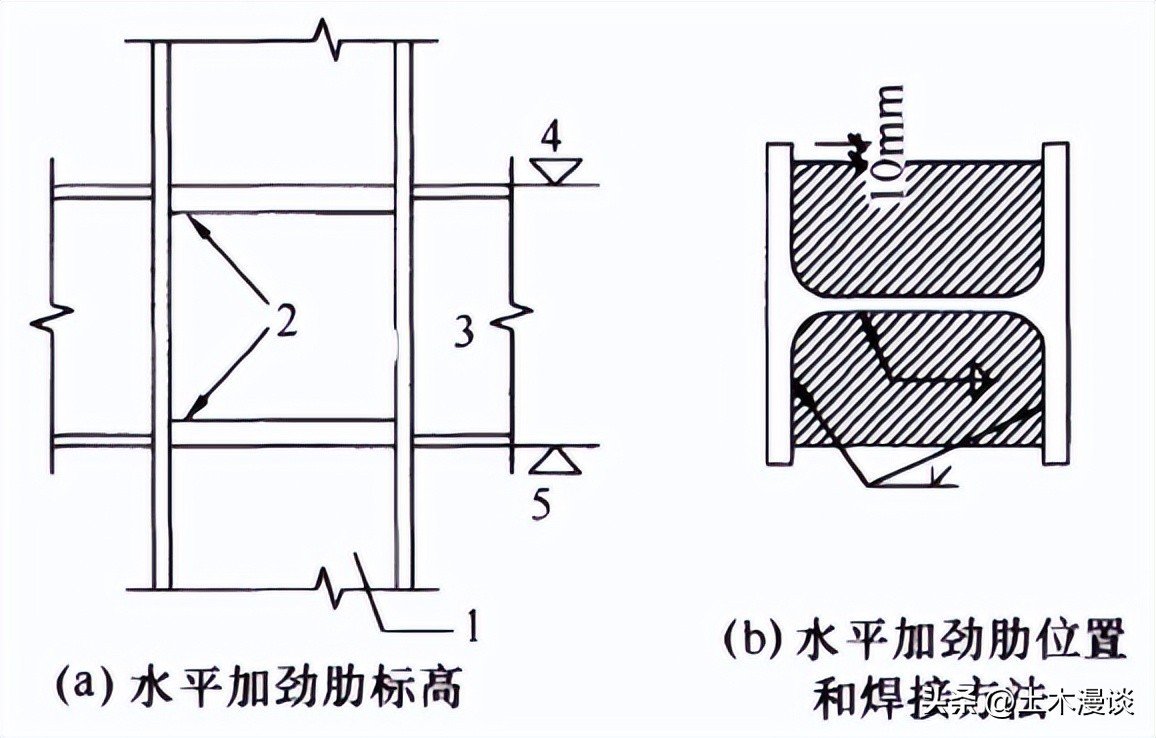
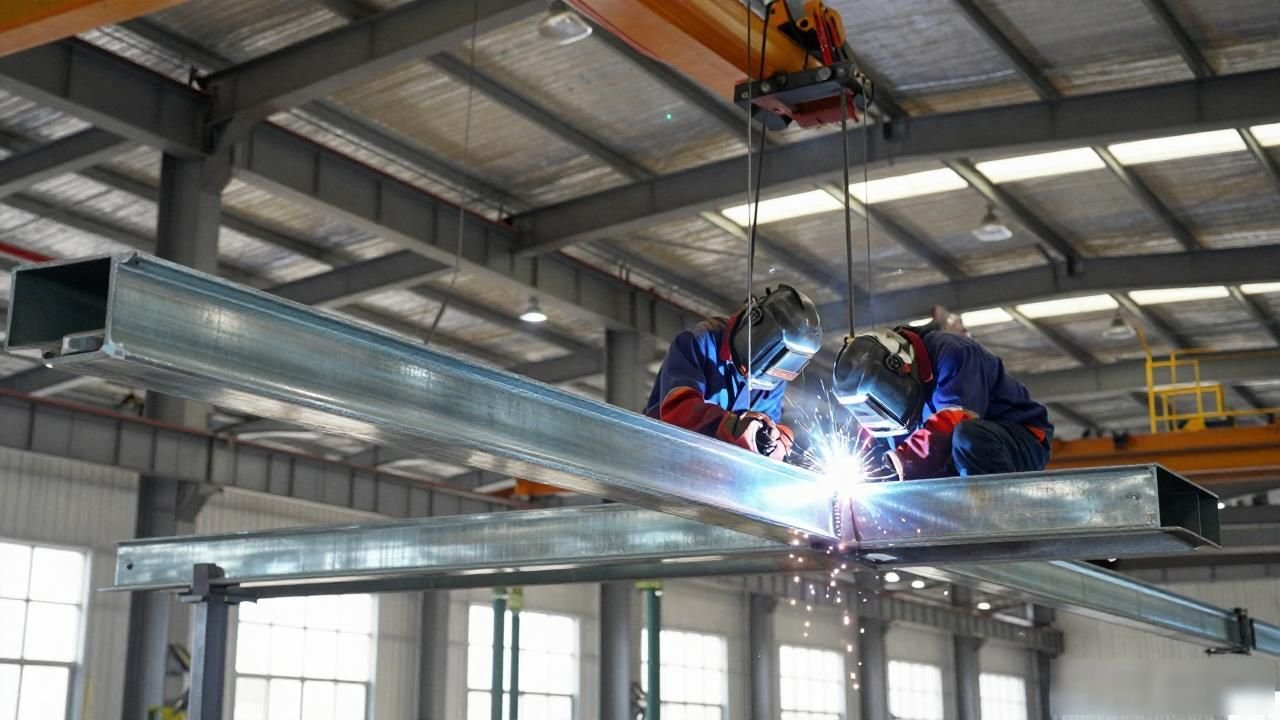
When the frame beams and columns are rigidly connected, horizontal stiffeners must be set up at the position corresponding to the beam flange. In seismic structures, the thickness of the stiffener must not be less than the beam flange plus 2 mm. At the same time, the strength of the steel used for the stiffeners cannot be lower than the strength of the beam flange itself.
However, in the case of non-seismic structures, the thickness of the stiffeners needs to be determined through calculation. If the internal force is small, then its thickness cannot be less than half of the flange thickness. And it must also meet the limit requirements of the width-to-thickness ratio.
The outer part of the stiffener should be kept on the same straight line as the outer part of the beam flange, so that it is aligned. Its inner part should be set back 10mm from the edge of the post. This retreat distance is used to leave enough operating space for the circumferential surrounding welding process, and the purpose is to prevent stress concentration at the position of the welding leg.
The master who does the riveting and welding work needs to clearly mark the setback line on the material before cutting off the material, and then set out the work. This can avoid the need to disassemble and rework the welded parts on site due to errors.

How to determine thickness
When the seismic resistance level is Class I or II, the flange of the beam and the flange of the column should be connected by full penetration groove welding. In this case, V-notch impact inspection must be done.
The -20 degree summer ratio referred to here cannot be lower than the standard of 27J. For the steel used in stiffeners, common choices are Q355B or Q390B. The strength grade of these steels must not be lower than the strength grade of the flange.
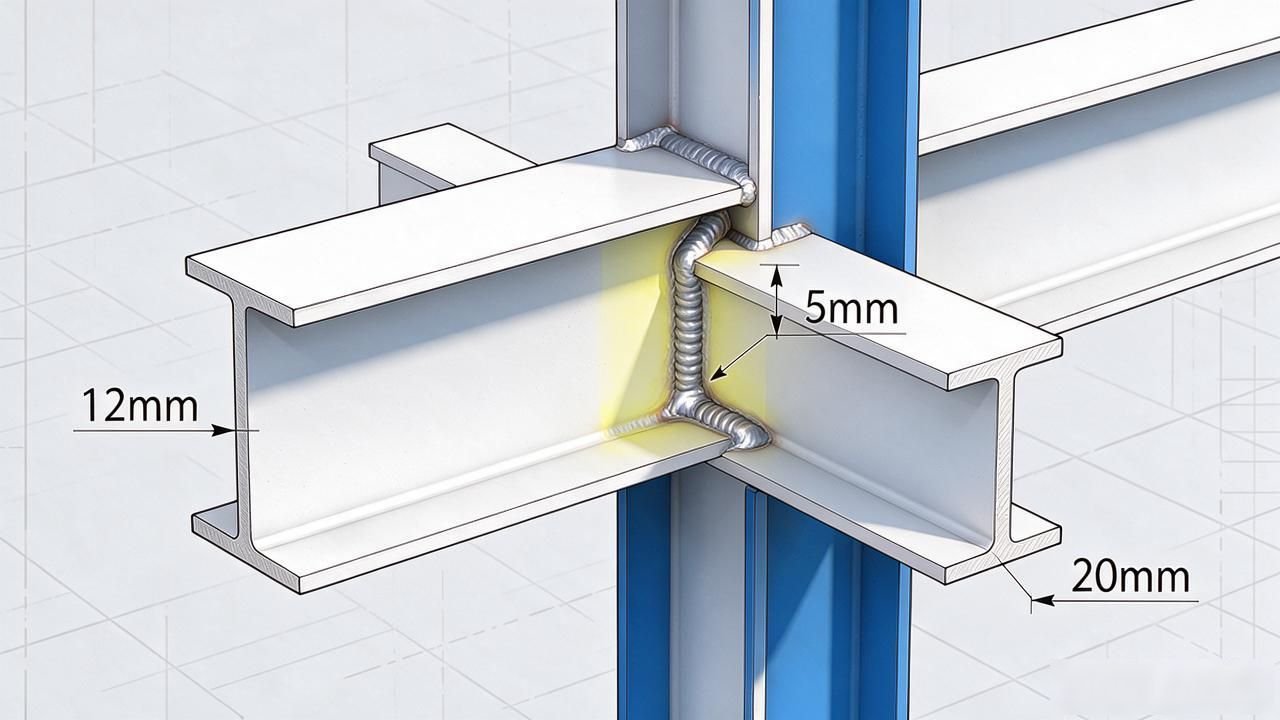
For webs or connecting plates, if they are welded to columns, double-sided fillet welds need to be used when the thickness of the plate is less than 16mm, and the height of the effective section cannot be less than 5mm. If the thickness of the plate is greater than or equal to 16mm, K-shaped groove welding must be used.
width and setback
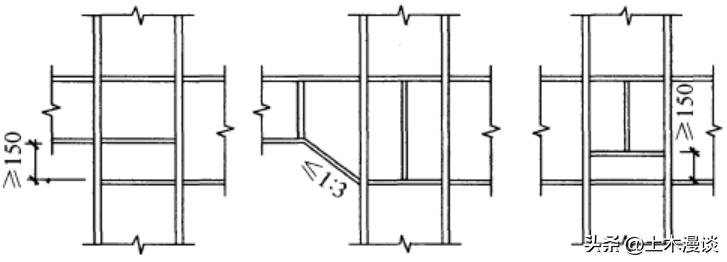
The width of the horizontal stiffener needs to be able to transmit the concentrated force in the beam flange. This size is not determined by feeling on the head. When the heights of the beams on both sides of the column are different, stiffeners must be installed at the specific positions corresponding to each flange. The spacing between them must not be less than 150 mm, and at the same time, a condition must be met, that is, it must not be less than the width of the stiffener itself. .
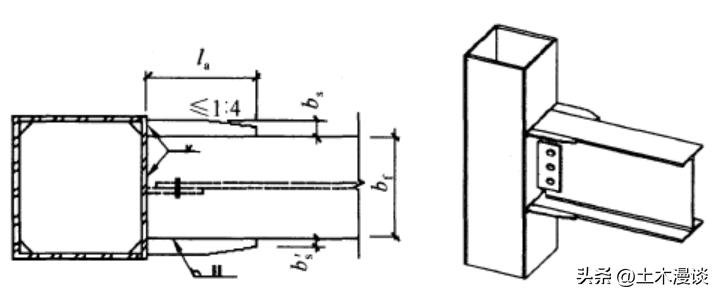
When the spacing does not meet the requirements, the height of the beam end must be adjusted. The web of the beam with a smaller cross-section is heightened in a local area, and the slope of the axillary flange should be controlled within 1:3. If the beam heights in two vertical directions are not equal, stiffeners need to be set separately and cannot share the same plate.
Box column partition
For cold-formed box columns, partitions are set at the positions of corresponding beams, and a partition-through connection method is adopted. Full penetration butt welds are used between the columns and bulkheads. As for the material of the partition, it is recommended to choose Z-direction steel as its material. The extended length of the partition is kept within the range of 25 mm to 30 mm. The main purpose of this is to separate the heat-affected zones of two adjacent welds.
When the wall plate thickness of the box column is less than 16 mm, it is not suitable to use electroslag pressure welding to weld the partition. In this case, other welding methods such as arc welding or manual arc welding should be used instead.
If the thickness of the wall panel reaches 16 mm or more, it is technically feasible to use electroslag welding, but in this case it is necessary to ensure that the thickness of the partition must match the thickness of the wall panel, and at the same time, the heat input must be strictly controlled to prevent structural deformation.
Weak axis connection stiffener
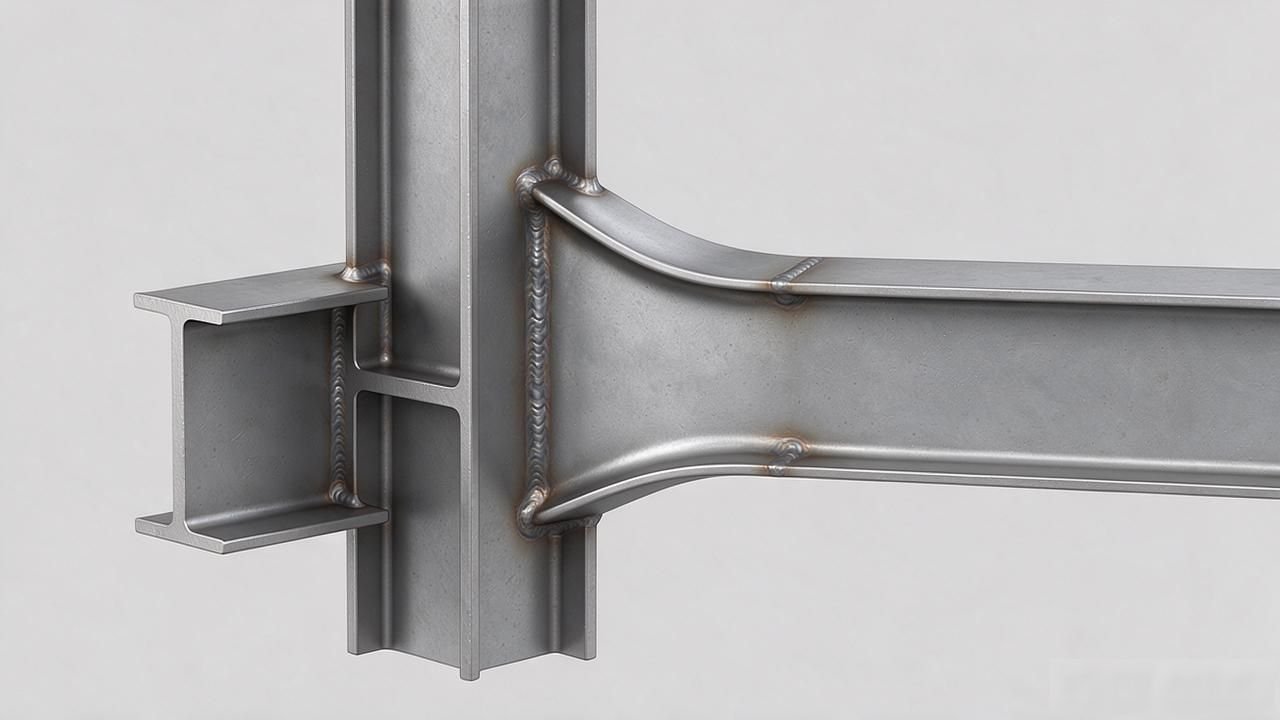
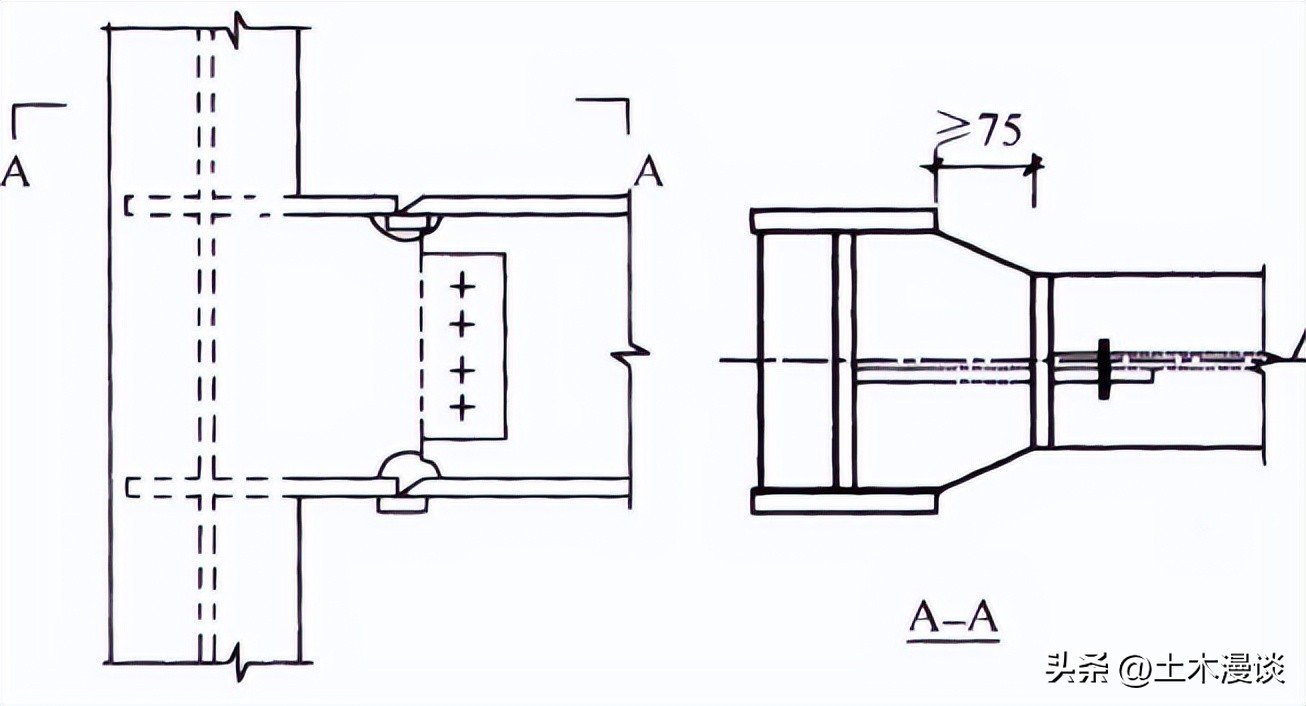
When the beam and H-shaped column are rigidly connected in the direction around the weak axis, the position of the stiffener must extend to the outside of the column flange, and the extension length needs to reach 75 mm. This part must be changed into a variable-width shape and extended to the beam flange, and must be fully penetrated butt welded with the flange.
Stiffeners should be provided on both sides. For those sides where there are no beams, the thickness of the stiffeners must not be less than half the flange thickness.
The thickness of the flange stiffener is 2mm larger than the flange of the beam. The purpose of this is to coordinate the dimensional deviation that may occur during the processing process, thereby avoiding the occurrence of misalignment.
The beam web and column connecting plate are connected using high-strength bolts, and the pretensioning force needs to be controlled according to the design value. After the installation work is completed, use a torque wrench to recheck each bolt one by one, and record this information and keep it properly.
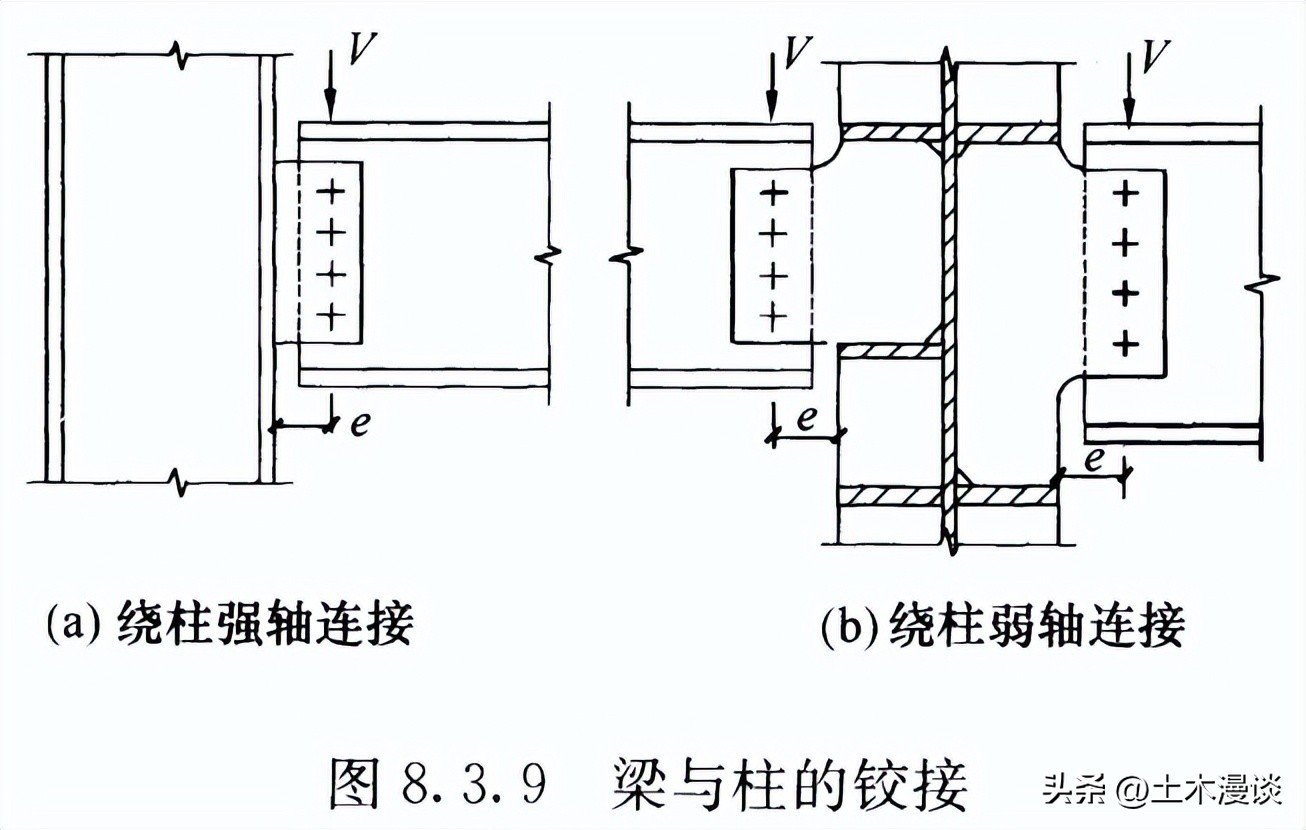
Eccentric bending moment of hinged nodes
When the beam and column are hinged, the high-strength bolts connected to the web must not only bear the shear force at the end of the beam, but also deal with the bending moment caused by eccentricity. This is called the bending moment M equals V times e.
However, if the main beam and the secondary beam are connected together through cast-in-place concrete floor slabs to form an overall structure, then there is no need to consider the impact of the bending moment generated under the eccentricity, so the verification of this project can be omitted.
Partial widening of the beam flange is the most commonly used strengthening method. The extension length of the widened plate is 1/4 to 1/3 of the flange width. The width is 2 times the flange thickness plus 6mm, and the thickness is the same as the flange. When the node space is limited, the expanded wing type or cover type can be used instead.
In the engineering project you participated in, was the thickness of the stiffeners calculated and determined using seismic standards or non-seismic standards? You are welcome to express your opinions in the comment area for interactive communication. If you are interested in this content, please give it a like and share this content with your colleagues who are engaged in riveting and welding work at the construction site.




暂无评论内容