

How to improve the efficiency of hardware machining and reduce costs?
During the machining process of hardware parts, the proportion of scrap products is high and the cost cannot be reduced. This is a very difficult and old problem that many small and medium-sized factories have been facing. If the key links mentioned below can be firmly grasped, the scrap rate can be significantly reduced, and the cost can also be significantly reduced.
Equipment upgrades improve efficiency
In 2025, many hardware factories are still using old-fashioned three-axis machine tools for processing to complete parts manufacturing tasks with relatively complex structures. However, the efficiency level and final processing accuracy requirements brought by this method are no longer able to meet the current actual production needs.
If it is replaced with a CNC machining center with five-axis linkage function, the continuous processing process of multiple surfaces of the workpiece can be realized by performing only one part clamping operation, thereby reducing the average processing time of a single product by about 30% to 40%.
After the equipment is equipped with an automatic loading and unloading device, this guy can run continuously around the clock. A company that manufactures hinges in Dongguan installed this system. As a result, the monthly production capacity on the same equipment suddenly doubled than the original. At the same time, it also directly saved the need for two operators.
If the technological process should be cut, it should be cut.
Many processing procedures were developed ten years ago, during which several redundant processes were added. After re-planning the tool path, the idle stroke and redundant tool changes can be eliminated, which can save two to three minutes of single-piece processing time.

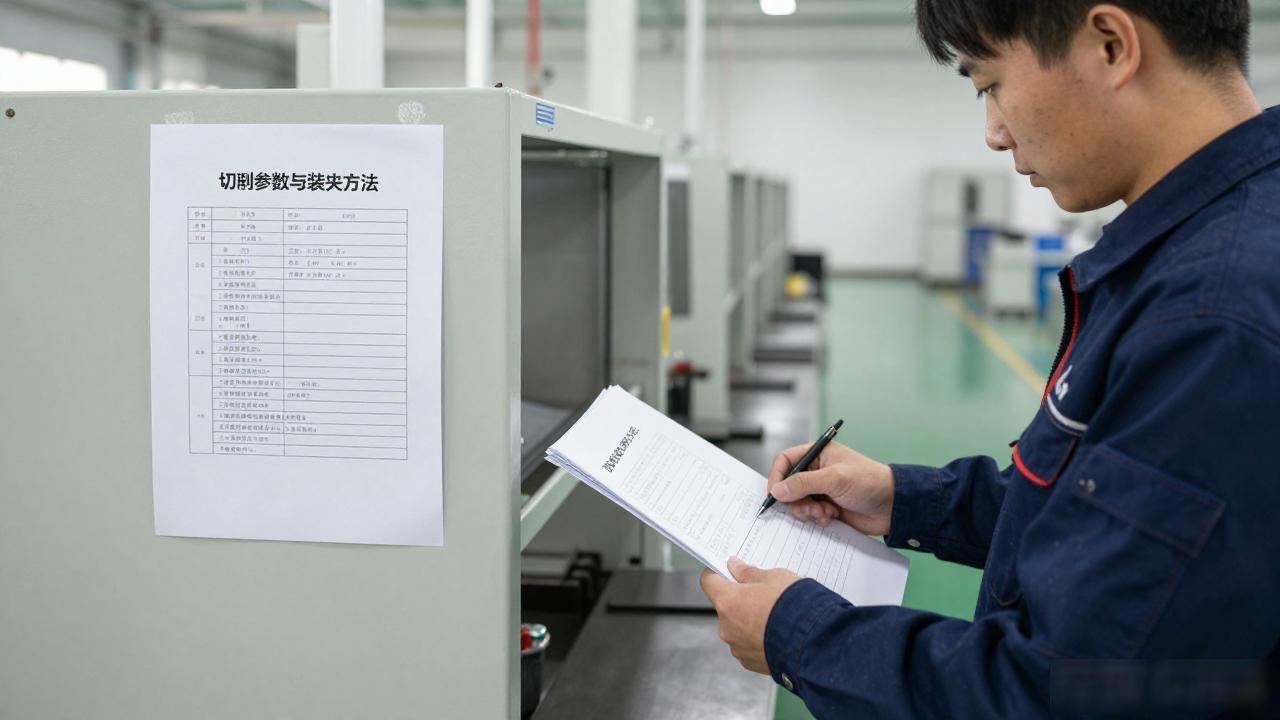
The cutting parameters and clamping methods used in each process are posted on the corresponding workstation in the form of standardized documents. In this way, operators can no longer rely on personal feelings to adjust relevant production parameters at will. Because the process has a clear basis to follow, the proportion of final waste products can be reduced by two to three percentage points. Accordingly, the cost of rework required will naturally be reduced.
Don’t settle for tool holders
When processing stainless steel and titanium alloys, if you use ordinary high-speed steel tools, they will become very dull after just a few cuts. When the tools used are replaced with coated carbide materials, their wear resistance can be improved several times. This changes the frequency of tool changes from the original need to change the tool once every two hours to the need to change the tool once every eight hours.
We can use spring clamps or vacuum adsorption methods to replace the traditional pressure plate. In this case, the clamping time is compressed from the previous five minutes to just thirty seconds. At the same time, the positioning accuracy becomes very stable, and the probability of part size deviation will be much smaller and more obvious.
Digitalization is not a gimmick
Using CAD to perform three-dimensional modeling operations, and then using the CAM system to automatically generate tool travel paths is much more efficient and faster than manually writing G code line by line. Moreover, this method can also simulate and test possible collisions in advance before processing.
After a precision parts manufacturer in Suzhou introduced this technology, its programming time was reduced from the previous two days to just half a day.
The MES system monitors the utilization rate and scrap data in real time. If a certain work station produces three consecutive unqualified items, it will automatically alarm. Problems are caught in the bud, without having to wait until the entire batch is scrapped.
Save money in advance on design and material selection
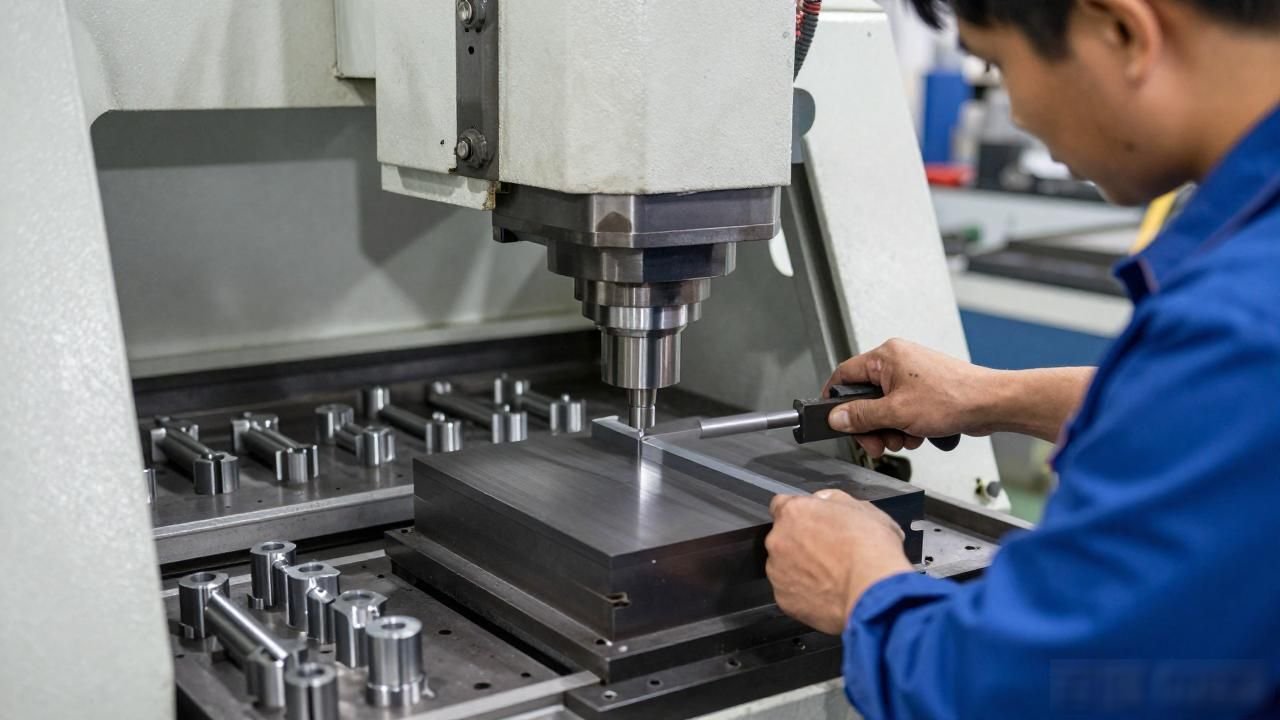
During the drawing operation, the value of the bottom plane cutting depth must be strictly controlled within the range of two millimeters to avoid the occurrence of deep cavity milling. For those parts that are not subject to stress, the thickness should be reduced by one to two millimeters, thus saving two cuts per board. When production becomes a batch operation mode, the capital investment saved is very considerable.
Negotiate long-term cooperation prices with suppliers, and arrange for engineers to evaluate whether it is possible to use lower-cost alternative materials as a solution. Taking some structural parts as an example, the material can be changed from 45 steel to Q235 steel. In this way, the material cost of a single piece can be saved by nearly 20%, and the processing process will also become easier.
Manage supply chain together
By introducing the lean production method and conducting value stream analysis every week, hidden waste such as waiting and transportation can be found. A hardware factory in Shanghai adopted this approach and persisted in it for half a year. In the end, the overall processing cost was reduced by about 15%.
Operators must be trained on new equipment and new processes every quarter, and communication within the team must be strengthened. In terms of supply chain management, it is necessary to sign a framework agreement with two or three core suppliers to lock in price and quantity, so that when faced with sudden demand, the response speed will be much faster.
In your workshop, which processing link produces the most scrap? Everyone is welcome to leave a message in the comment area for discussion, and like it and share it with other industry colleagues for reference.






暂无评论内容