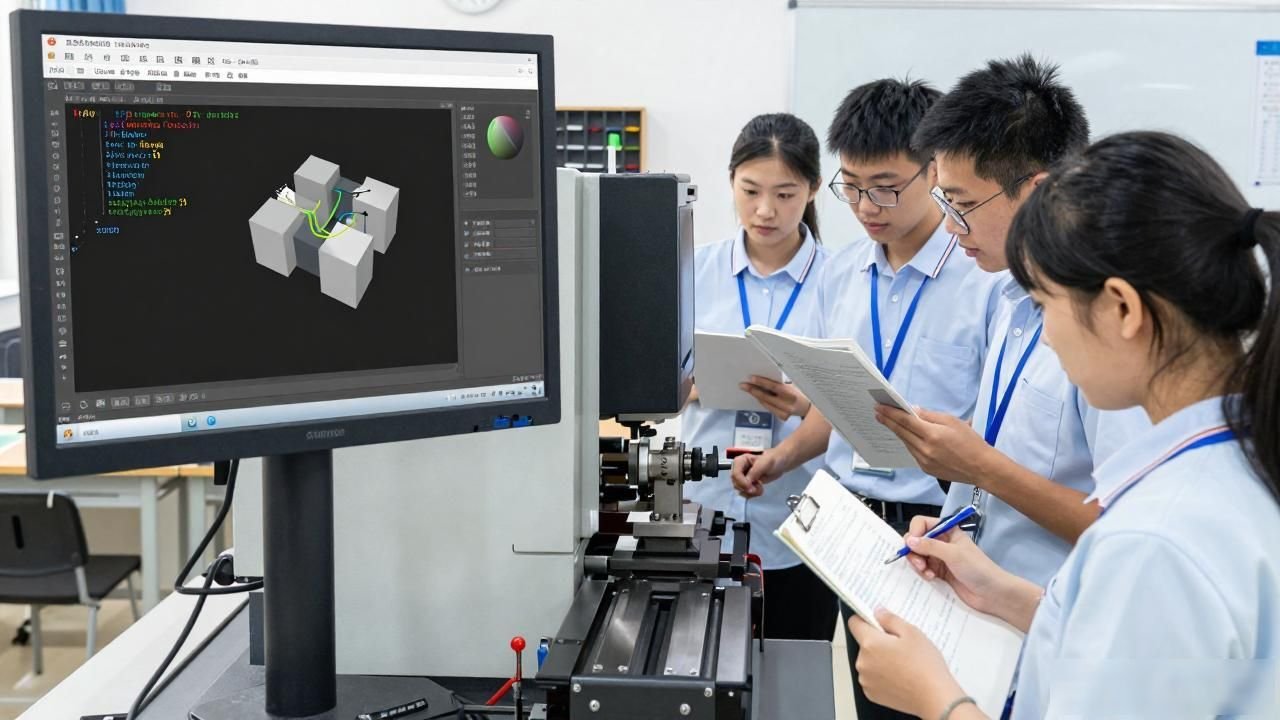


Application of Keller software in CNC turning programming teaching (educational paper materials)
Regarding the question of what software to use to learn CNC turning programming, Keller simulation software has been promoted and applied in higher vocational classrooms in the education sector for more than five years. The relevant controversy has never stopped. The core of these disputes is to question whether this model really reduces the difficulty of entry into the technology, or whether it uses simulation to replace actual hands-on training, which ultimately leads to training students to become "paper masters" who can only click the mouse to operate.
What practical problems does Keller software solve?
Keller CNC turning simulation software came to many higher vocational colleges in Zhejiang and Guangdong around 2019 and was used in their practical training courses. It makes the G code, coordinate system and tool path into a visible and tangible visual operation method, so that students can repeatedly try and make adjustments without waiting for machine tool scheduling. After one class, students can run three to four more complete workpiece processing processes.
In the past, once a program crashed when running a program on a real machine, it would take a long time to reset. But now, if a crash occurs in software simulation, a direct restart can solve the problem. This greatly improves the efficiency of teaching work, and also allows students who have no foundation at all to dare to adjust various parameters.
How to help students get started with general programming architecture
In Keller, there is a standard process template from rough turning, semi-finishing turning to finishing turning. Students first follow this template, and then gradually replace parameters. This architecture is basically aligned with the programming logic of mainstream systems such as FANUC and SIEMENS, and is not tied to a certain brand.
Some teachers gave feedback and said that after using the template to learn, if those students switch to a different brand of machine tool to modify the program, their adaptation time will be shortened from the original two weeks to three to four days. The underlying logic has universal characteristics, which is why it is better than the stand-alone simulation mode.

How to teach the integration of theory and practice
The so-called "integration of theory and virtual reality" refers to the fact that theoretical classes and virtual simulation technology are conducted in the same classroom and completed on the same computer equipment.
After listening to an explanation about the meaning of G code, students can immediately run it in the software environment of Kellery, and can clearly see the movement trajectory of the tool in actual operation. In this way, the link between understanding and operation can be continuously connected.
In 2023, a certain higher vocational college conducted a controlled experiment. For groups using this model, the final practical scores were 11 to 14 points higher, which was better than traditional groups. The main difference lies in the closed loop of "reading pictures, programming, and verification" instead of just memorizing code.
How did students react after the assessment method was changed?
In the past, when assessing CNC programming, everyone would only focus on whether the program itself was correct. But now the Keller platform can automatically record the operating steps, the number of modifications and the number of collisions, thereby generating complete log data. Teachers have to score based on these logs. It is no longer enough to just write the final code.
Students' resistance was more obvious at the beginning. They felt that the so-called "process points" were too strict. But after a whole semester of study, most students gave feedback that the muscle memory they formed in writing programs has become stronger, and then when they actually operate the real machine equipment, the probability of making relatively low-level and basic errors has indeed been reduced a lot.
What shortcomings does Keller Software currently have?
This software is not strong enough in supporting more advanced processing technologies such as multi-axis linkage and turning and milling. When encountering parts with complex structures, simplified models have to be used instead of actual objects.
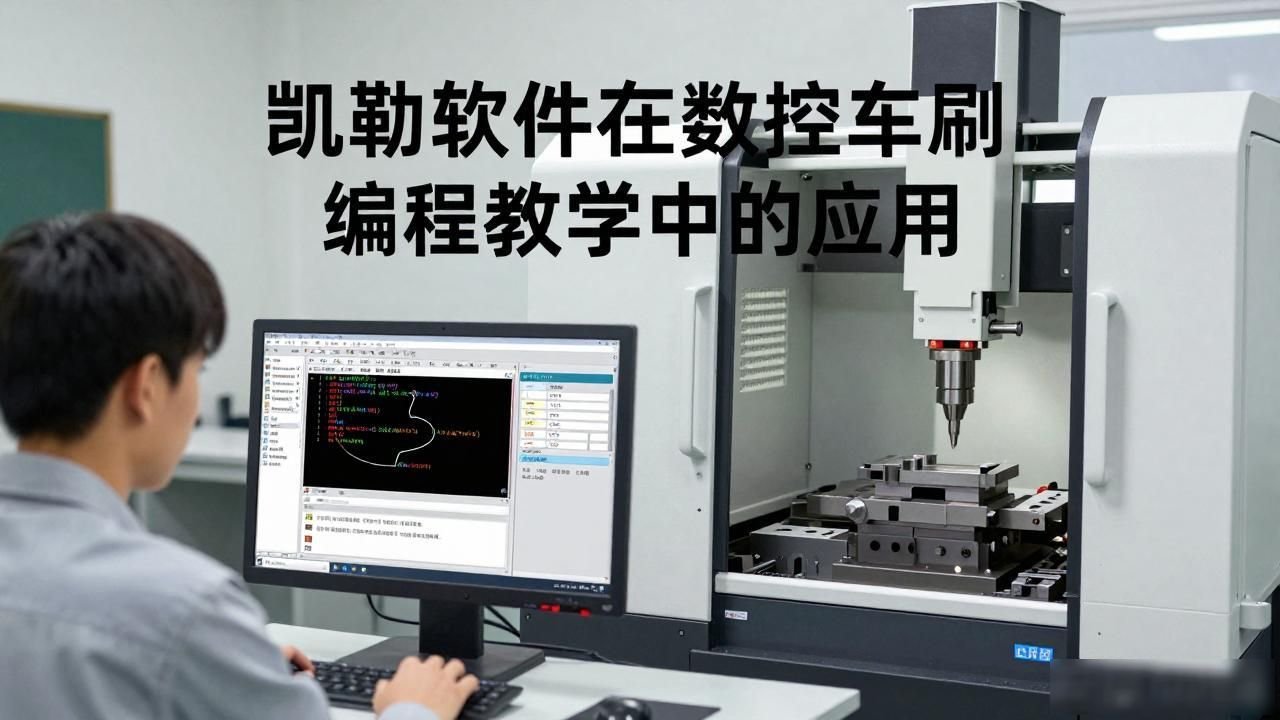
Some students once complained that they felt that after learning the relevant content, they would understand the application of Keller software in CNC turning programming teaching (educational paper materials), but when they actually faced the operation of the five-axis machine tool, they were still in a state of confusion. This shows that there is indeed a certain limit to the upper limit of the software's capabilities.
This interface is different from the operation panel used by the latest machine tool manufacturers in the domestic market, and the layout positions of some buttons cannot completely correspond, so students need additional mapping learning to master it. The update frequency of this software version is approximately once a year, which has a certain gap or mismatch compared with the iteration speed of hardware devices.
What should you think about when choosing software?
Currently, there is no software that can completely replace the actual operation of mechanical equipment. The real core value of Keller's platform is that it can conduct trial and error drills at a relatively low cost and make the entire operation process clearly visible.
If in the practical training session of the school, the number of real hardware equipment is relatively scarce, and the class schedule is relatively tight, then at this stage, it is indeed a cost-effective and temporary transition solution.
However, if the teacher can definitely keep the linking class of "converting simulation to actual operation", this will have to leave at least two times of the whole real machine following the car. Software is like a scaffolding thing. It is not the house itself. Therefore, when choosing a course, you must write all of this into the syllabus in the teaching plan.
The place you are in is a school or a factory. Which CNC simulation software are you currently using for work? When you are transitioning from the simulation environment to the real machine operation link, which specific part or step is most prone to the disconnection phenomenon, that is, where is the most serious disconnection problem that everyone often says?
Everyone is welcome to communicate and discuss in the comment area. If you think this content is indeed useful, remember to give it a like and forward it to your colleagues and friends.



暂无评论内容